

Examining European Engagement With North Korea
This article was written and researched as part of the second cohort of 38 North’s Emerging Scholars Fellowship Program, under the mentorship of senior experts on North Korean affairs. The program and series were made possible through generous support by the Henry Luce Foundation. For more papers in this series, click here.
The Korean Peninsula has seen many diplomatic openings emerge and recede, the latest include South Korea’s “END” policy to try to improve inter-Korean relations and the UN approving sanctions exemptions for select humanitarian projects for North Korea. The more relevant question is not whether political will exists, but what forms of engagement can endure a constantly fluctuating political environment.
Functional, non-political exchanges, such as on health or agriculture, offer a potentially durable channel for engagement. This kind of “low politics” cooperation can preserve working relationships even when high-level diplomacy stalls, maintaining channels that can be valuable when political windows reopen. Reforestation is particularly well suited to this role: It is a practical and non-sensitive issue that allows for technical collaboration without raising security concerns. More importantly, it aligns with North Korea’s own priorities. Kim Jong Un’s emphasis on reforestation, combined with Pyongyang’s active participation in international climate and environmental forums compared to the other areas, suggests that reforestation has become a core survival issue.
Within this space, European private and nongovernmental actors are uniquely positioned for environmental engagement with North Korea. State-to-state cooperation remains constrained by the broader diplomatic environment, but some European nongovernmental organizations (NGOs) and political foundations have run long-standing humanitarian and development operations and built strong working relationships inside North Korea. Through years of technical collaboration, they have accumulated both institutional memory and a degree of trust with their North Korean counterparts.
In the current geopolitical context, European non-governmental actors are among the few viable actors able to still engage with North Korea on issues of low-politics, such as reforestation. These opportunities have value in building the country’s resilience to changing climate conditions for both domestic and regional benefit, and may be one of the few opportunities to build a durable channel for technical engagement and diplomacy under highly constrained geopolitical conditions.
Reforestation as a Platform for Limited but Meaningful Cooperation
In the context of North Korea, environmental issues have largely been treated as secondary to traditional security concerns. Consequently, relatively little attention has been paid to North Korea’s evolving environmental threat perceptions, particularly the regime’s increasingly direct framing of climate change and environmental degradation as immediate security challenges since the 2010s. While some NGOs and international organizations have worked in this space and provided valuable technical documentation about their experiences, there is obviously room for greater cooperation as changing climate conditions pose serious threats to a number of socio-economic conditions in North Korea.
Among the potential climate issues to tackle, reforestation offers a limited but valuable avenue for engagement with North Korea. As a low-politics issue, it is largely detached from military or ideological tensions, allowing for technical cooperation without immediately triggering security sensitivities.
At the same time, environmental degradation has become an increasingly salient concern within North Korea itself. Not only has the leadership begun to recognize environmental pressures as direct threats to national stability, reforestation has also gained renewed significance in connection with the regime’s recent economic policy initiatives. Aligning with the leadership’s emphasis on the golden mountains, the state has developed so-called economic forests, whose outputs are intended to supply raw materials for local light-industry production.
This trend has intensified since January 2024, when Kim Jong Un introduced the “20×10 policy for regional development,” a program aimed at creating industrial bases in local communities throughout the country. Counties hosting factories in rural areas have been encouraged to develop economic forests to secure natural and cultivated raw materials, in accordance with Articles 21 and 22 of the County Development Law enacted in 2021. This reinforces the role of reforestation not only as an environmental priority but also as an economic input for regional industrialization.
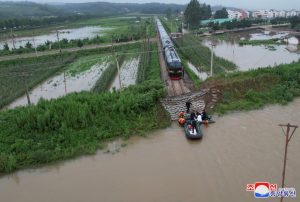
Beyond its domestic relevance, addressing North Korea’s environmental degradation also serves broader regional interests in Northeast Asia. Environmental vulnerabilities within North Korea already produce transboundary consequences for neighboring countries, including soil erosion, flooding, and ecological instability. In this sense, cooperation on reforestation has practical value for regional environmental stability and mitigating shared ecological risks.
It is important to note that past work suggests environmental cooperation does not automatically produce spillover effects into broader political dialogues. Such initiatives should therefore not be interpreted as stepping stones toward wider geopolitical breakthroughs, but rather as self-contained and pragmatic forms of engagement.
Nevertheless, engagement in the area of reforestation can help create communication channels and build technical cooperation and trust with North Korea. Rather than functioning as ambitious confidence-building measures that attempt to transform political relations, these initiatives may be better understood as practical mechanisms for stabilizing a fragile relationship while addressing shared ecological concerns.
Why Europe?
Europe remains uniquely positioned to engage with North Korea on environmental cooperation due to the trust built through a long history of engagement. Most European initiatives in North Korea have been led by political foundations and NGOs rather than governments pursuing geopolitical interests. These organizations have cultivated personal relationships with North Korean counterparts over years of collaboration. Notably, European programs that were operating in North Korea up until 2019, before COVID-19 border closures kicked in, were predominantly projects run by NGOs, particularly Irish, Swiss, and German organizations. Their deep institutional memory and personal networks will be critical in trying to restart cooperation with North Korea, where relationships matter as much as technical capacity.
A defining feature of European engagement is the institutional separation between humanitarian and environmental work on one hand, and sensitive politics on the other. In Europe, NGOs operate independently from governments’ foreign policy to some extent, allowing them to maintain dialogue on environmental issues even when official diplomatic relations are strained. For instance, while the French government has been among the most skeptical EU members toward North Korea, French NGOs have been among the most active on the ground. Also, despite the German Federal Foreign Office’s deeply skeptical stance toward any engagement with Pyongyang amid intensified military cooperation between North Korea and Russia, political foundations such as the Hanns Seidel Foundation in Seoul persisted in conducting online exchanges with its North Korean counterparts.
This ability to carry on work despite relations at the government-to-government level is increasingly rare when dealing with North Korea. By contrast, US-based organizations face stringent regulatory constraints. US passports cannot be used to travel to North Korea unless they are specially validated by the Secretary of State. Furthermore, activities falling outside the scope of the Office of Foreign Assets Control (OFAC) general license require additional vetting, adding further administrative burdens and delays. Similarly, inter-Korean exchanges are highly contingent on government-level approval and broader political relations and are typically carried out within formal intergovernmental frameworks. Since the collapse of US-DPRK and inter-Korean negotiations in 2019, North Korea has shown no interest in resuming engagement with US and ROK entities, even at the nongovernmental level. Whether this will change in near future is unclear.
However, since North Korea’s gradual reopening after its prolonged pandemic isolation, there have been concrete signs that at least some European re-engagement is becoming feasible. A few European political foundations have already resumed contact with Pyongyang through online exchanges focused on environmental issues, signaling good potential for further low-politics cooperation to be feasible as well.
The Need for Engagement Amid North Korea’s Geopolitical Reorientation
North Korea’s engagement with external actors has narrowed sharply in recent years, with its prolonged border closure since January 2020 effectively halting most international cooperation. These constraints have been reinforced by North Korea’s deepening alignment with Russia following Russia’s invasion of Ukraine in 2022, including arms transfers and eventual troop deployments. This growing cooperation and participation in current conflicts narrows the space for engagement with other external actors, particularly those perceived as politically aligned with Western interests.
Against this backdrop, a central question is what, if anything, would motivate North Korea to engage with external proposals at all. While no outside actor can guarantee receptivity, engagement is more likely when cooperation aligns with the regime’s internal priorities of self-reliance and does not introduce additional political risks. In this respect, European nongovernmental actors can provide exposure to Western techniques and equipment that remain less accessible through North Korea’s existing partnerships with Russia. Moreover, engagement with European actors allows North Korea to keep a foot in the door of the broader international community, rather than remaining confined to cooperation with a narrow set of sanctioned or restricted states. Engagement through private actors, operating without an explicit geopolitical stake on the Peninsula, may also be perceived as lower risk than cooperation with state actors.
For Europe, this approach carries added strategic significance. As North Korea has turned to Moscow as a strategic lifeline, Europe faces a growing imperative to explore low-risk avenues that might moderate this trajectory and offer Pyongyang alternatives to deepening its dependence on Russia and sustaining its involvement in the war in Ukraine. Reforestation projects offer exactly such a channel. With European governmental presence in North Korea diminished, non-state actors may be better-positioned to engage on environmental initiatives, addressing issues for which North Korea already seeks self-reliance. Stabilizing this fragile relationship could create marginal space to temper it deepening integration with Russia.
None of this suggests that a project on reforestation, for instance, can fundamentally alter North Korea’s strategic orientation toward Russia. However, it may create limited but meaningful space for engagement that remains viable within a constrained geopolitical environment. Precisely because such opportunities are narrow, they represent one of the few channels through which sustained interaction may still be possible.
Lessons Learned from Past Initiatives
In examining past European NGO-led initiatives in North Korea—particularly in environmental and related development sectors, including reforestation—several common challenges emerge. These insights, drawn in part from interviews with practitioners, are instructive for designing future projects. At least four key limitations to pursuing environmental cooperation with North Korea can be identified.
Gap Between What North Korea Wants and What NGOs Can Afford
An expert with field experience in North Korea noted that Pyongyang’s preference for development projects creates a fundamental mismatch with Western donor constraints. Full-scale development cooperation remains politically untenable due to sanctions regimes and dual-use technology concerns, leading to project phase-out.
One potential way to address this mismatch is adopting a “rehabilitation” approach that simultaneously addresses immediate needs while building long-term capacity. Rather than providing physical infrastructure or equipment that could raise dual-use concerns, this middle-ground approach would focus specifically on human capacity enhancement through technical knowledge transfer, management system improvements, and skilled workforce development. Rehabilitation programs would incorporate international training, technical workshops, professional exchanges, and on-the-job training during field implementation. For example, slope-land management projects used to provide practical training in erosion control and agroforestry while simultaneously addressing immediate landslide risks, which have been a massive problem in North Korea.
This approach can help to address what North Korea perceives as urgent threats with fewer risks for Western donors. It minimizes procurement, export control, and dual-use compliance issues that complicate equipment-heavy programs, although “knowledge transfer” can also fall under sanctions scrutiny and the reputational risks of being associated with North Korea-related work still persist.
Sanctions Barriers
Large-scale, long-term projects are particularly vulnerable to sanctions complications, and delays or rejections of any one component could halt or derail the entire initiative.
A phased or modular approach may help address this vulnerability, disaggregating these exposure points from the outset. While the long-term goal may be more ambitious, planning smaller phases or modules can help increase the potential for project success, especially starting with elements within categories already covered by existing sanctions exemptions. For instance, a module focused on nursery rehabilitation and forester training requires native seedlings and training materials—both classifiable under EU humanitarian exemption frameworks—without triggering specialized export authorizations.
Crucially, this disaggregation also distributes sanctions risk across independent phases rather than concentrating it in a single program architecture. If sanctions complications prevent the second module from proceeding, the first module’s outputs—a rehabilitated nursery, trained foresters, an established agroforestry plot—remain intact inside North Korea and continue to generate value independently. Each module is designed to be complete on its own terms, so that progress made is preserved regardless of what follows. Modularity does not narrow the goal—it enhances its ability to be achieved within the sanctions constraints that prevent more ambitious programs from delivering on their potential.
Donor Country Political Shifts
Shifting political landscapes in donor countries often force abrupt changes in programming, such as when domestic opposition compelled the Swiss Development Cooperation to revert from development cooperation back to humanitarian aid.
To address donor country political volatility, funding diversification offers essential resilience. One model of this is the Start Fund, a pooled, multi-donor fund managed by an international NGO network. Multiple donor countries contribute simultaneously, and the fund’s governance and operational mechanisms ensure that the withdrawal of any single donor has limited impact on overall program continuity. For projects in North Korea, European development funds could be pooled and managed by a neutral international NGO consortium, with disbursements tied to pre-agreed milestones for capacity-building rather than direct transfers to the North Korean government.
A practical governance framework could consist of a Steering Committee with representatives from each contributing donor to set strategy and approve disbursements; a Fund Management Unit operated by the NGO network to handle day-to-day operations, contracting, and financial reporting; Independent Monitoring & Audit by external auditors can review program performance and fund usage for transparency; and a Dispute Resolution Mechanism with predefined processes to resolve conflicts among donors or with local partners without interrupting program delivery.
This multi-donor structure, emphasizing NGO-led management, could build resilience against political fluctuations in individual donor countries. Granted, all of this is easier said than done when dealing with a country as heavily sanctioned as North Korea and because exemptions exist for humanitarian work but not development or technical assistance. Finding donors willing to take on those risks, alone or in consortia, has become more difficult over time as sanctions persist and North Korea has become actively involved in current conflicts.
Institutional Memory Loss
Knowledge loss and lack of continuity are also frequent operational challenges. As one practitioner noted, project managers typically remain in positions for two to three years, and when personnel change, hard-won relationships and institutional knowledge leave with them. The result is a persistent pattern of reinventing the wheel, with successive implementers unaware of what has already been attempted and what lessons have been learned.
This is not necessarily unique to European NGOs or other types of engagements with North Korea. The people, the learned experiences, the cultural exchange, the trial and error—all of these contribute to a project’s success or failure. As a general best practice, every project should include documentation and knowledge management components. When possible, sharing these experiences across organizations and actors could also be beneficial to improving understanding, coordination, and efficiencies. Such practices may face significant resistance, as NGOs and other actors working inside North Korea have often been reluctant to publicly share detailed information about their activities due to concerns about jeopardizing their relationships with North Korean counterparts. However, within these constraints, different approaches to knowledge sharing should be considered, such as controlled-access platforms among trusted networks of European actors, rather than fully public databases. Documentation could cover not only what worked but also what failed and why, preventing successive generations from repeating mistakes and allowing new implementers to conduct thorough desk reviews of previous efforts in similar domains and to directly consult with former practitioners where feasible.
Policy Implications
While the preceding analysis identified key programmatic challenges and the operational strategies private or nongovernmental actors can develop to navigate them, translating these approaches into sustainable practice depends on the broader political environment in which such actors operate. In this context, government policies shape that environment and can create both space for—or barriers to—success. Should they see value in continued low-politics engagement despite the complex geopolitical environment, there are steps they can take to enable European NGOs and political foundations to rebuild or build new cooperation with North Korea.
First, as demonstrated by North Korea’s participation in the 2025 Conference of the Parties to the United Nations Framework Convention on Climate Change, environmental forums are among the few contexts in which technical contact with North Korean counterparts can be developed with minimal friction. Where there is political willingness to engage, governments could formalize an environment-focused dialogue channel that mandates European delegations to convene structured technical side sessions with North Korean counterparts on issues such as forestry management and land degradation—pre-coordinated and followed up through designated focal points. This would provide NGOs and political foundations with a stable, predictable entry point for the non-political environmental discussion.
Second, rather than leaving organizations to navigate sanctions regimes independently, governments could establish a fast-track legal review mechanism for NGO initiatives. This could be a dedicated interagency review unit providing binding legal guidance within a fixed timeframe—for example, 30 to 45 days. NGOs would submit project proposals including activity descriptions, procurement plans, financial flows, and counterpart institutions for simultaneous review by relevant foreign policy and treasury departments. Replacing ad hoc uncertainty with structured pre-authorization could help lower compliance costs and enable nongovernmental actors to engage with greater legal certainty.
Third, given the structural barriers to establishing or reopening embassies in Pyongyang, alternative liaison office models could be considered, such as the former Swiss Cooperation Office. Unlike a formal embassy, the office operated as a technical presence—managing agricultural, food security, and environmental programs on the ground—without the sensitivities that formal diplomatic relations entail. A similar office could help coordinate across European NGOs, handling liaison functions and administrative facilitation.
Way Forward
This research does not claim that reforestation cooperation will transform North Korea’s broader political relationships. A more modest—and more credible—conclusion is that technically grounded, politically realistic environmental cooperation can create or preserve working channels and deliver tangible ecological benefits, regardless of whether high-level diplomacy advances or stalls. In a relationship as volatile as that with North Korea, building such resilient channels may itself be a meaningful outcome.
As time goes on, climate change and environmental degradation in North Korea will only worsen, making this issue increasingly urgent and central to any meaningful policy discussion or engagement strategy. Thus, the challenge is not to wait for ideal political conditions that may never arrive, but to prepare by building durable and politically resilient engagement structures that can survive fluctuations on the Korean Peninsula and contribute to addressing worsening ecological problems. Ultimately, we will need a new generation of analysts and practitioners willing to engage seriously with these challenges.