

North Korea Completes the Second Year of the 20×10 Project
The second year of North Korea’s 20×10 regional development plan, which seeks to build regional industrial hubs in 20 counties every year for ten years, has been completed. Compared to the first year, the second year’s projects were completed earlier and received more attention from Kim Jong Un. Notably, the scope of the plan expanded beyond local manufacturing to include three core areas: science and technology facilities, grain management stations, and hospitals.
The state appears satisfied with the progress to-date, based on the continued exposure and profile it has received in state media. The project will likely continue to diversify the types of facilities constructed in 2026 based on state priorities that will be announced at the upcoming Ninth Party Congress.
However, despite the construction successes depicted in North Korean state media coverage, there are still questions regarding the long-term viability of these facilities, given how locally-sourced inputs are generally in short supply.
The Locations
The locations chosen for the 20×10 project in 2025 were spread across the nation with two counties chosen in each of North and South Hamgyong, North and South Hwanghae, North and South Phyongan, Jagang and Kangwon provinces. A single county was chosen in each of Ryanggang, Kaesong and Nampho. For the first time, the project included the Pyongyang area, specifically Kangdong, located about 30 kilometers from the city center.
The geographical spread more or less mirrors projects constructed in the first year of the plan and means that work has been done in all cities and provinces—with the exception of Rason—over the first two years of the project. Although with around 160 remaining counties and districts to choose from over the next eight years, there is plenty of time for Rason to still be included in the 20×10 plan.
Note: This analysis only covers projects and locations that carry the “20×10” name in North Korean state media. There are other regional development projects taking place in North Korea that are not included, such as the large greenhouse project in Sinuiju.
Earlier Completion
All the second year’s projects were opened before the end of the year. This stands in contrast to the first slate of projects which, with one exception, were all started in 2024 but opened in January and February of 2025.
The main driver for this rapid performance was likely Kim Jong Un’s instructions delivered at the party plenary meeting in early December 2025, calling for all projects to be completed and launched by year end.
The result was a series of openings that appeared somewhat rushed. At the end of the first year, the 20 projects were opened over 20 days, allowing for maximum publicity for each one, but the 2025 round of projects were opened over ten days. On December 15 for instance, five projects were opened on the same day: Kangdong, Taegwan, Rangnim, Sinyang and Puryong
The on-time openings were likely helped by experience learned during the first year, and presumably a longer time to plan and prepare for the second year of the project.
The following chart shows locations and opening days.
As in the previous year, each opening ceremony was a community occasion with local people brought out to hear speeches and look around the factories under the eye of state media.
At many of the ceremonies, the soldier-builders of the 124th Regiment of the Korean People’s Army, who had been responsible for construction at the sites, were also present.
Kim in Attendance
One notable aspect of the second year of the plan was the increased involvement of Kim Jong Un in opening of the tranche of 20×10 locations.
In both 2024 and 2025, Kim attended groundbreaking ceremonies to kick off the new phase and throughout, state media reported four construction site visits per year.
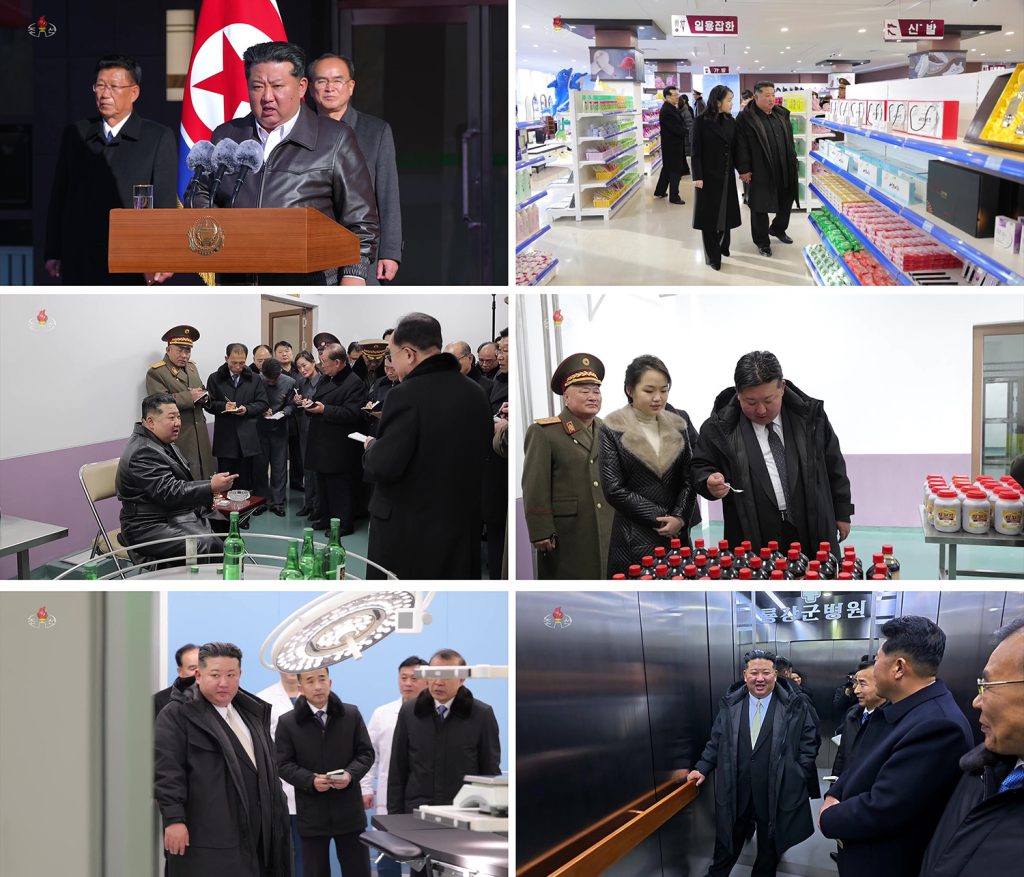
At the end of the first year, he attended just two opening ceremonies: Songchon in late 2024 and Jaeryong in early 2025. But at the end of 2025, Kim attended six ceremonies within five of the 20 sites (in Kangdong, the hospital and factories were opened on different days).
Kim brought his daughter, Kim Ju Ae, to the regional factory openings in both Kangdong and Sinpho.
Factories and More
Mirroring the first year of the project, each of the 2025 locations received the same three factories: a foodstuff factory, a clothing factory and a “daily necessities” factory, which makes household items, furniture and plastic products.
However, at the eleventh plenary meeting of the eighth party congress in January 2025, delegates voted to include additional “advanced health facilities, facilities for science, education and cultural activities and grain management facilities.”
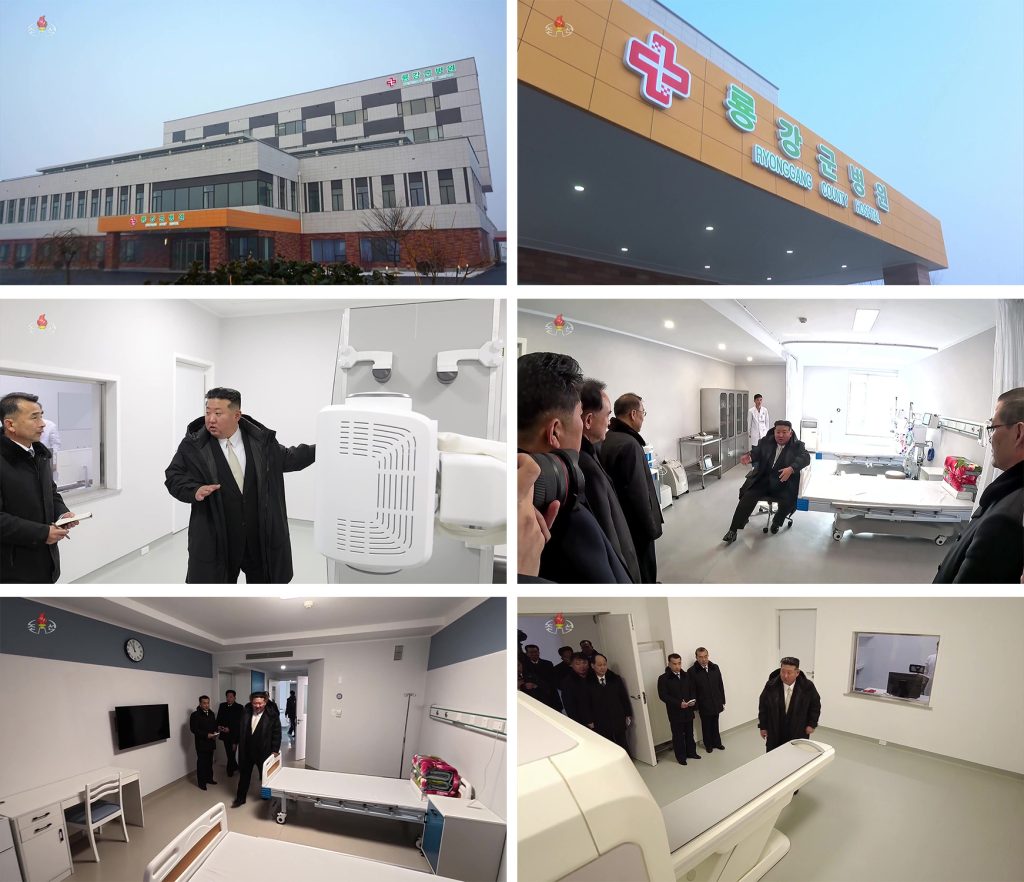
As a result, the 2025 project sites in Kangdong and Ryonggang also received new hospitals, construction crews returned to Kusong—which was among the 2024 locations—to build a hospital. It is unclear why the other locations were excluded.
These new hospitals join the Pyongyang General Hospital that was also opened in 2025 after several years of delays. Kim visited both the Kangdong and Ryonggang hospitals. State media coverage of these visits showed what appear to be modern hospitals with diagnostic rooms, imaging equipment such as a CT scanner, patient wards and an operating theater.
However, construction does not appear to have been completely smooth sailing. In September, as the project was nearing completion, Kim inspected the Kangdong Hospital, of which state media reported he highlighted “a series of deviations revealed in the construction.” The deviations were not specified.
Beyond hospitals, a new paper mill was constructed in Unsan, which was among the 2024 batch of 20×10 locations. The addition of a paper mill matches work in Kimhwa County in 2022, which was the original model for the 20×10 project. When the Kimhwa project was complete, the county had gained factories manufacturing food, clothing, daily necessities and paper.
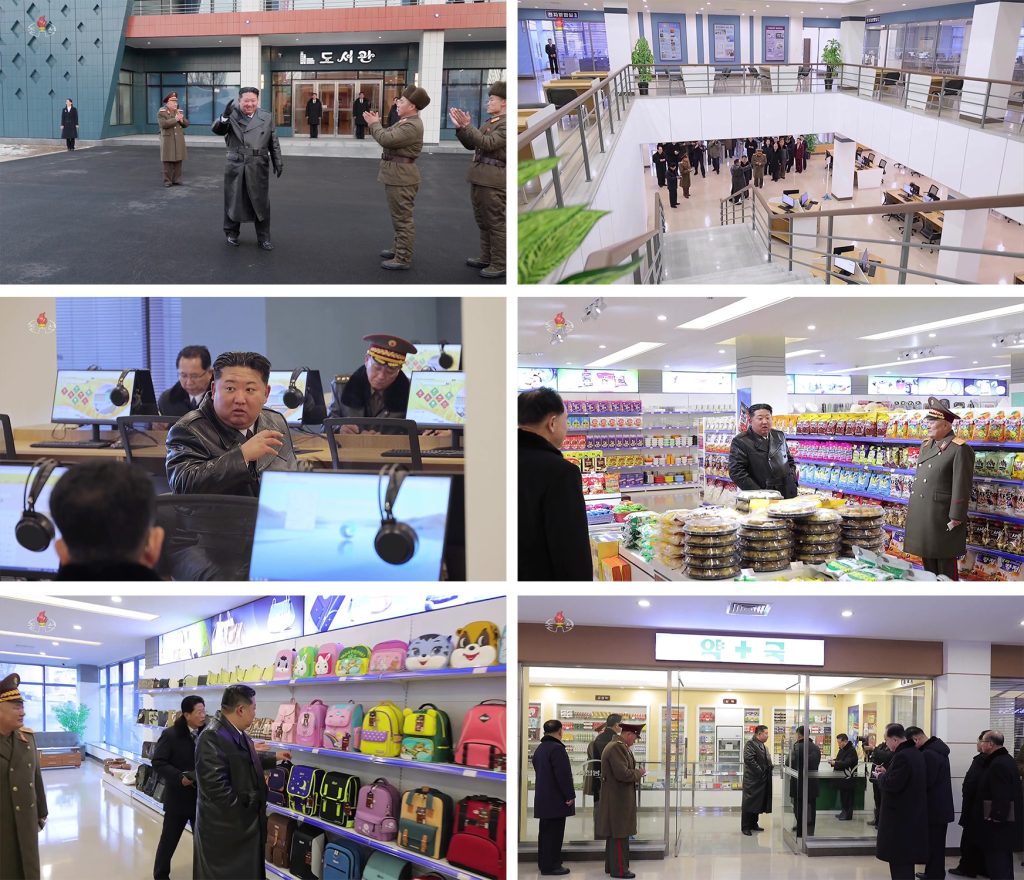
In Jongphyong and Ryonggang the projects also included leisure complexes. In the case of Jongphyong, the complex included a library, cinema, swimming pool, and a commercial area with a food shop, electronics store, general store, pharmacy, tailor and restaurant.
Looking Ahead
Based on the increased attention from Kim Jong Un and the vote of confidence the project received at the eleventh Party plenary, it appears almost certain that regional development and the 20×10 project will remain at the center of the state’s plans in 2026 and beyond.
The state has not announced locations for 2026 development, but the next batch can be expected to include the same factories and continue the new focus on health, leisure and grain distribution.
Kim Jong Un has also signaled that his development of Pyongyang will continue with new projects on the city’s east side, indicating the fast pace of development in the country will not be slowing down.