

Succession at the Crossroads: Scenarios for North Korea’s Future
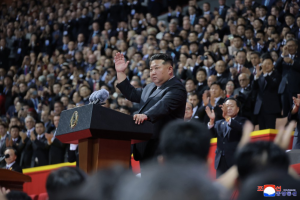
The growing public presence of Kim Jong Un’s daughter, Kim Ju Ae, combined with lingering doubts about the North Korean leader’s health, has fueled debates over who might one day succeed him. Whether her visibility signals the beginning of an orchestrated succession process is entirely unclear, and precedent offers little guidance. The public revelation of any Kim child at such a young age is unprecedented, and speculation about the existence and potential role of Kim’s other children, including a reported son, leaves ample room for caution in drawing conclusions at this stage.
However, what may be useful is examining how the past two successful campaigns were carried out: what were the key strategies and milestones, and how a new succession process might differ. The ongoing uncertainty means that intelligence agencies and policymakers should be cautious about assuming Ju Ae’s succession is predetermined. A female successor would face unique challenges in consolidating authority in North Korea’s deeply patriarchal system, requiring new propaganda campaigns, elite reshuffling, and military demonstrations to cement her legitimacy. A male heir, by contrast, might enjoy greater acceptance but could still face obstacles if introduced late in Kim’s life or without sufficient political and military credentials. Other factors that would impact how the transition proceeds include whether it resembles a long apprenticeship, akin to Kim Jong Il’s grooming, or a shorter, more abrupt process, like Kim Jong Un’s rise.
Given these possibilities, the more productive focus for analysis pertaining to succession is not just on who will succeed Kim Jong Un, but on how the struggle for succession among the current leading candidates might unfold and the turbulence it could produce. Each path carries distinct implications for domestic politics and for international security, particularly the risk of provocations against South Korea. By preparing for these scenarios, policymakers can move from responding reactively to planning proactively for the potential conditions that will likely accompany North Korea’s next leadership transition.
Determining Characteristics of Succession in North Korea
Succession in North Korea (Democratic People’s Republic of Korea, or DPRK) has relied on a delicate balancing act between cultivating elite loyalty, mobilizing propaganda, and demonstrating military strength. Yet, the leadership transitions from Kim Il Sung to Kim Jong Il and from Kim Jong Il to Kim Jong U n differed markedly in both duration and character. Therefore, it is necessary first to examine what the succession process itself entails. This includes the historical context in which these successions took place, how this context impacted the levers each candidate had at their disposal, and how successors created legitimacy.
Domestic and International Environment
Any assessment of a new succession process requires first an examination of past processes. Indeed, the geopolitical climate that Kim Jong Il found himself in during his succession process (1970s-1990s) and that of Kim Jong Un (2008-2011) are vastly different, influencing the type of succession mechanisms employed.
Kim Jong Il
When Kim Il Sung began considering whom to select as his successor in the mid-1970s, North Korea’s domestic and international environment was vastly different from what it is today. Despite the ongoing Cold War between the Soviet Union and the US, this was a relatively stable time, both politically and economically, for North Korea. Internationally, the 1970s saw the normalization of relations between the DPRK and its allies, China and the Soviet Union, following a series of political disputes in the 1960s.[1] Similarly, the international detente between US President Richard Nixon, Beijing, and Moscow following the former’s visits to Beijing and Moscow in 1972 had a positive effect on inter-Korean Peninsula tension. Indeed, North and South Korean officials issued the first joint communique on July 4, 1972, which aimed to improve North-South relations and outlined the “Three Principles of National Reunification.”
Economically, Pyongyang’s successful 1950s- and 1960s-era economic development policies, such as the Chollima Movement[2], created a favorable environment for future policies and the country’s economic development going into the 1970s.[3] Such a favorable domestic and international environment allowed Kim Jong Il to operate under less external pressure during the initial period when he was attempting to establish his political and military legitimacy.
However, this favor changed from the mid-1970s onwards, both politically and economically. For example, imbalanced spending on the DPRK’s military industrial complex, expanded access to foreign capital and debt, and failure to meet its Six-Year Plan’s goals negatively impacted North Korea’s economy. It led to a declining quality of life for average North Koreans. This trend persisted in the 1980s, when Kim Jong Il was officially appointed successor, leading to the collapse of the country’s socialist command economy and the famine (known as the “Arduous March”) of the 1990s.
Kim Jong Un
In contrast, Kim Jong Un inherited a very different North Korea from the one his father did. Internationally, the DPRK lost important allies with the fall of the Communist Bloc in the late 1980s and early 1990s. Meanwhile, despite relations with Beijing remaining strong, Pyongyang became more ideologically isolated due to China’s reform of its “socialist economic institutions” and its adoption of a market system. In addition, relations with geopolitical rivals, such as the US and South Korea, were also in decline following Pyongyang’s first nuclear test in 2006. This led to the UN Security Council imposing the first major sanctions against North Korea on October 14, 2006.
Domestically, the collapse of the command economy and the subsequent Arduous March led to widespread changes in the DPRK, most notably the emergence of black markets, known as “Jangmadang” (장마당). This resulted in the creation of a bottom-up marketization in the country, which in many ways, superseded North Korea’s formal economy. These informal markets created a backbone for the survival of average North Koreans during this economic decline. While the Sunshine Policy era between North and South Korea in the early 2000s helped alleviate some of these domestic concerns by providing North Korea with “unconditional aid,” the DPRK continues to face chronic food shortages and widespread poverty to this day. These political and economic conditions, both domestically and internationally, left Kim Jong Un with different levers to pull than his predecessors to highlight the success of the Kim family’s rule and justify its continued leadership.
Political Legitimacy
Kim Il Sung to Kim Jong Il Succession Period (1970s-1994)
When examining the Kim Il Sung to Kim Jong Il transition period through the aforementioned historical lens, it becomes clear how the latter Kim built his political legitimacy over several decades. Instead of building his legitimacy on the limited political or economic successes during his time as successor, he focused on other key aspects. These included creating a monolithic ideological system surrounding his father, solidifying his rule by linking his legitimacy to his father’s legacy, and outmaneuvering his succession rivals.
In Rüdiger Frank and Philip H. Park’s paper “From Monolithic Totalitarian to Collective Authoritarian Leadership? Performance-based Legitimacy and Power Transfer in North Korea,” they note that an important part of Kim Jong Il’s proving himself was in his work to reshape what constituted a legitimate leader in North Korea. Frank and Park suggest that “he [Kim Jong Il] earned and acquired his position as the successor rather than just receiving it. He did so by pushing the transition from a legitimacy that was based on economic performance to one based on ideological achievements.”[4]
A key example of this transition occurred during Kim Jong Il’s early years. He began gaining political experience in the Workers’ Party of Korea (WPK) Central Committee projects as a Director of the Organizational Bureau. From here, he moved on to the Propaganda and Agitation Bureau as a section leader. It was here that Jong Il cemented his legitimacy among the political and military elite by completing a series of propaganda films and campaigns that glorified his father and his guerrilla comrades, and spread the Juche ideology among the general public.[5] Kim Jong Il’s success in these campaigns reportedly “gave them [Kim Il Sung and the DPRK elite] the justification they needed to officially support him as the successor.”[6]
While such moves helped solidify his position among the ruling political and military elite, Kim Jong Il was still simultaneously plagued by obstacles, namely his stepmother, Kim Song-ae, and her attempts to gain influence to make her son, Kim Pyong-il, the successor. Kim Song Ae married Kim Il Sung sometime after the Korean War and began her rise to power in the mid-1960s as a vice chairman of the Democratic Women’s Union. Kim Song Ae attempted to fill the vacuum left by the retirement of Kim Yong Yuu. However, she was outmaneuvered by Kim Jong Il due to his backing by the political and military elites (e.g., ex-guerilla fighters) and Song Ae’s mismanagement of several initiatives, including one that would reduce governmental benefits for former guerrilla fighters without their consent.[7] This paved the way for Jong Il to be officially appointed his father’s successor in 1980.
Once Kim Jong Il was appointed Il Sung’s successor, he further reinforced his right to rule by professing the concept of “Kimilsungism” and the “Ten Principles for a Monolithic Ideological System” (also referred to as the Ten Principles).[8] The aim of these actions reflects Max Weber’s notion of traditional leadership by reinforcing “his own authority by strengthening the tradition that Kim Il-sung established and basing his legitimacy on it.” Within this framework, Kim Jong Il further expanded his power to include the military, cabinet, and security organizations by placing loyal individuals in key party and state positions, while purging disloyal ones. In addition, Kim Jong Il established new reporting mechanisms such as the “three-line and three-day reporting system,” which obligated the aforementioned parties to report to him every three days.[9]
Kim Jong Il to Kim Jong Un Succession Period (2008-2011)
When comparing the Kim Jong Il to the Kim Jong Un succession period to the previous one, it was a shorter time period (2008-2011) and occurred within a vastly different political and economic environment. Therefore, many of the structures used in the previous succession process could not be applied due to time constraints, such as the gradual buildup of Kim Jong Un’s administrative or military credentials over many years. Instead, the key characteristics that led to Jong-un’s appointment are the widespread internal infighting among multiple succession candidates, Kim Jong Il’s active intervention to solidify his youngest son’s succession due to the latter’s deteriorating health, and Kim Jong Un’s second round of political consolidation within Pyongyang’s old guard.
When examining this first characteristic, it is important to note that Kim Jong Un was not his father’s first choice to succeed him; that was his older brother Kim Jong Nam. Jong Nam was born in 1971 between Kim Jong Il and his mistress Song Hye Rim, who later reportedly “left in the mid-decade [1970s] to live abroad” due to alleged mental disorders. Shortly after this, Jong Il took on a new mistress, Ko Yong Hui, who had two sons and one daughter: Kim Jong Chol, Kim Jong Un, and Kim Yo Jong.[10]
Having distinguished himself in “information technology (IT) and military fields in the 1990s,” Kim Jong Nam furthered his cause as the prime successor candidate until the early 2000s.[11] In 2001, he was caught and deported from Japan’s Narita Airport for illegally entering on a forged passport and visa.[12] Ko and her children’s standings increased in the wake of Jong Nam’s isolation, with, for example, a 2002 propaganda campaign calling her the “respected mother.”[13]
It remains unclear why Kim Jong Un, Jong Il’s third son, was chosen over his brother Kim Jong Chol. However, Anna Fifield noted in her book that Kim Jong Un was preferred by his father because he was more masculine and ambitious.[14]
Once Kim Jong Il appeared to designate Kim Jong Un as his successor, steps were taken to ensure that his rule began smoothly. Unlike Kim Il Sung, Kim Jong Il took a far more active role in helping secure his son’s political power base. This departure from his own succession process appeared largely due to his declining health, which necessitated a shorter and more rushed succession process. In Edward Goldring and Peter Ward’s paper “Elite Management Before Autocratic Leader Succession: Evidence from North Korea,” they note that Kim Jong Il secured dynastic continuity by reshuffling elites to prevent challenges to Kim Jong Un’s rise. Kim Jong Il did this simultaneously while empowering a new network of loyalists who depend on the successor’s survival.
They found that, “elites who were outside Kim Jong-il’s inner circle […] became more prominent once Kim started preparing for succession” and were elevated to help “stabilize the [Kim Jong Un] regime once in power.” In practical terms, Kim Jong Il raised a younger generation of party and technocratic cadres around the successor, either replacing or sidelining long-standing elites who might question or challenge the successor’s authority. By granting new posts, symbolic promotions, and privileged access to the successor, these elites found their survival tethered to the regime’s new leadership. Such measures ensure that Kim Jong Un inherited not only the role of supreme leader but also a group of bureaucratic elites solely loyal to him.[15] This power base is then capable of enforcing his authority across critical government institutions, such as the Politburo, the Control Commission, or the Executive Policy Bureau.
However, this elevation of a new generation to support Kim Jong Un also meant that the old guard, with the political and/or military credentials to usurp Kim Jong Un, was pushed out once Kim Jong Un took power. Chief amongst these people was Kim’s uncle Jang Song-thaek. Jang held senior posts in the ruling party, serving as the vice-chairman of the National Defence Commission, and was considered by many inside the country to be the only true challenger to Kim Jong Un’s legitimate rule, given his extensive experience and international diplomatic background. For example, Anna Fifield noted in her book “The Great Successor: The Secret Rise and Rule of Kim Jong Un,” “he [Jang] had amassed too much power and was promoting too different a vision for North Korea’s future. Rivals within the regime began to whisper in Kim Jong-un’s ear about their concerns.”[16] Anna also noted that Kim Jong Un resented Jang for favoring Kim Jong Nam’s claim to rule.[17] This declining favor amongst Kim Jong Un and more conservative factions in the Workers’ Party resulted in the reduction of his influence and power and his ultimate execution in December 2013, establishing Kim Jong Un as the sole credible ruler in the DPRK.
Military Leadership
Kim Il Sung to Kim Jong Il Succession Period (1970s-1994)
North Korea’s general population and elite have long associated leadership with demonstrated military qualifications, which Kim Il Sung cultivated through guerrilla campaigns against the Japanese occupation and military-first (songun) politics. Unlike Kim Il Sung, Kim Jong Il did not cultivate his military credibility through guerrilla campaigns against the Japanese occupation. Instead, he initially established his legitimacy through propaganda campaigns, which linked his authority to Kim Il Sung’s military accomplishments. This action, in tandem with his control of key political and intelligence institutions, enabled him to circumvent the initial concerns about his lack of military experience.
Once Kim Jong Il took control in 1994, he implemented “military-first” policies (선군정치). This differed from his father in that “Kim Il- Sung governed the state using the ‘party-first and military-second’ in politics. Kim Jong Il’s policies gave “priority to the military in politics” and signaled a new era of North Korean politics. These changes entailed a new political structure, new political leaders, and a new emphasis on the military throughout society, all of which were positioned under Kim Jong Il.[18] However, Kim Jong Il stated that the party and the military “are indivisible and are important for the security of North Korea. Kim Jong Il went so far as to say that the dissolution of this unity, with a military-first approach, was one of the reasons for the collapse of the Soviet Union.[19] This shows that Kim Jong Il’s emphasis on military-first was directly tied to his regime’s preservation.
Kim Jong Il to Kim Jong Un Succession Period (2008-2011)
When Kim Jong Un came to power, he lacked the military credentials of his grandfather and, to a lesser extent, his father. This fact, coupled with Kim Jong Un’s short succession period (2008-2011), meant that he was required to “invent” his own expertise and qualifications rather than naturally build them up or through propaganda efforts similar to Kim Jong Il.
During the initial phase of succession (2008-2010), Kim Jong Il made efforts to strengthen Kim Jong Un’s credentials. For example, transforming the military from only “Kim Jong Il’s army” to “Kim Jong Il and Kim Jong Un’s army” or how Kim Jong Un gained control over the military elite by being appointed to a leadership position over the WPK and the Army in January 2009. Anna Fifield noted further attempts by the Kims to buff Jong Un’s credentials in her book “The Great Successor: The Secret Rise and Rule of Kim Jong Un,” namely, Kim Jong Un giving himself “a vast array of elongated titles,” including chairman of the party’s central military commission or first chairman of the National Defense Commission.[20] Kim Jong Un also launched several kinetic military operations during his transitional period (2010-2013).[21] Notable examples include the 2010 artillery strike against South Korean forces stationed at Yeonpyeong Island and the later volley of high-profile weapons tests, e.g., intercontinental ballistic missiles (ICBM), and demonstrations of nuclear capability from 2013 onwards.
Implications of Succession
The succession processes of Kim Il Sung to Kim Jong Il and Kim Jong Il to Kim Jong Un reveal that leadership transitions in the DPRK are never uniform but evolve in response to shifting domestic and international pressures. This section examines the potential challenges and indicators of a forthcoming leadership transition based on the historical patterns outlined earlier. These range from rivalries among potential successors, tensions between Kim Jong Un and his successors, and the impact this process will have within North Korea.
Struggle for Power Amongst Successor Candidates
Much of the media reporting on succession in North Korea over the last two-to-three years has speculated that Kim Ju Ae is the unofficial successor to her father. However, as Kim Jong Il’s and Kim Jong Un’s succession processes have highlighted, there are often other successor candidates waiting in the wings who could also be viable candidates.
Kim Yo Jong vs. Kim Ju Ae
The rise of Kim Jong Un’s sister, Kim Yo Jong, became particularly pronounced after the execution of Jang Song Thaek, with her becoming one of the regime’s most visible and influential figures and its de facto number two leader since then. Rumors of Kim Yo Jong being primed to take over for her brother emerged after speculation of Kim Jong Un’s declining health spread in 2020. Kim Yo Jong’s qualifications and experience within the WPK, as well as her membership in the Paektu bloodline, lent some credence to this speculation at the time, but lost steam just as quickly. In the same vein, Kim Yo Jong’s various party positions and prominent international profile are likely due to her being of the Paektu bloodline and her brother’s view of her as not an immediate threat to his rule, given the country’s preference for male heirs.
Therefore, despite Kim Yo Jong’s qualifications, the aforementioned considerations and ideological doctrines such as the “theory of revolutionary succession” and “generational transfer” argue that the heir must come from the next generation. These theories within a North Korea context postulate that “Kim Ju-ae, a member of the next generation, better aligns with the logic of dynastic continuity from Kim Il-sung to Kim Jong-il to Kim Jong-un.” Therefore, the possibility that Kim Ju Ae could be the current frontrunner for the successor cannot be ruled out.
Indeed, North Korean media outlets have increasingly heightened their propaganda campaigns surrounding Kim Ju Ae, many appearing to be aimed at overcoming the perceived vulnerability of a female in power. For example, Kim Ju Ae has been frequently seen at military parades in recent years, which US intelligence agents have claimed is Pyongyang’s “effort to portray Kim Ju-Ae as well-versed in military matters,” given the importance of military competence in the succession process.
In line with this, state media may have symbolically suggested that Kim Ju Ae may be the successor. For example, during a military parade on 8 February 2023, a narrator noted “:…our Marshal’s legendary paektu warhorse, who galloped through the Paektu front, leads the cavalry. Behind it, the most beloved daughter’s most beloved loyal horse joins the vibrant march.” This description is loaded with symbolic imagery deeply important for North Korea, such as emphasizing the Paektu bloodline or the Paektu horse. Both are key elements of the propaganda surrounding the Kim family’s right to rule in the North.
The Uncertainty of a Male Successor
In 2017 and 2023, South Korea’s Intelligence Service (NIS) assessed that Kim had three children: a firstborn son, a daughter (believed to be Kim Ju Ae), and a third child of unknown gender. However, there is also speculation amongst inter-Korean Affairs officials that Ju A e is the first child and the second is a son. Nevertheless, the public recognition of a son leaves ample room for consideration in the future succession process.
North Korea continues to operate under a heavily patriarchal society, raising questions about whether a female successor is a plausible likelihood even if Kim Jong Un takes steps to build long-term support for one. While both maintain a legitimate claim to succeed Kim Jong Un due to being a part of the Paektu bloodline, if a viable male heir is available, it would more align with North Korea’s pre-existing Confucian patriarchal societal structure and supporting propaganda.
Struggle for Power Between Kim Jong Un and His Successor Candidates
In tandem with the power struggle between the successor candidates, there is also a high likelihood of a power struggle emerging between Kim Jong Un and his potential successor candidates. This struggle will likely take the form of a delicate balance between elevating Kim’s successor to ensure a smooth transition and maintaining enough power to prevent being usurped before he is ready. Congyi Zhou’s report “Last Step to the Throne: The Conflict Between Rulers and Their Successors” further expands upon this trade-off. Zhou claimed, “On the one hand, allowing the heir apparent to accumulate power facilitates the transition when a ruler dies or steps down. On the other hand, a successor who is delegated too much power may seek to claim the throne earlier than the ruler desires.”[22]
Indeed, Kim Jong Un is only 41 years old, and his father and grandfather both ruled until 70 and 82, respectively. This means that Kim Jong Un may theoretically rule for another 30-40 years if we take his predecessors as a baseline. However, Kim’s attempts to elevate his successor, male or female, through means similar to those used by his father, for example, could weaken his own political position. This would be especially complicated if the early arrival of a male heir, particularly a politically astute one, could result in him acquiring power faster and earlier than Kim Jong Un intended. We did not see this during the Kim Jong Il to Kim Jong Un succession process due to the father’s health issues and the short transition period. However, Lee Seung Yeol’s paper, “North Korea’s Third Hereditary Succession: Determining Factors & Hidden Meanings” noted Kim Jong Il had effectively gained more control than his father by 1985, creating a “paradox of power” that is inherent with planned, long-term succession processes.
Zhou furthered his concept by claiming that during a transition period with multiple candidates, similar to what we see in North Korea, the ruler “prefers the weaker one if his capabilities differ little from those of the stronger candidate; if a stronger candidate is chosen, this tends to occur later and requires the ruler to monitor him strictly.”[23] As such, Kim may delay a decision on his successor until later in life, as his father did with him. However, by doing so, Kim heightens the risk that his successor will face a rushed transition period, just as he did.
Possible Indicators of a New Succession Process
Building on Zhou’s concept and the historical precedent of previous succession processes, Kim Jong Un is likely to adopt a multifaceted, pragmatic approach that incorporates key tactics from both his and his father’s successions to delegate power to his successor early enough to ensure a smooth transition. Yet not too early as to jeopardize his own rule.
As shown by the previous succession periods, Kim Jong Un’s successor will face a delicate balancing act between cultivating elite loyalty, mobilizing propaganda, and demonstrating military strength before and after taking over to justify their right to rule. In the pre-phase, propaganda will play a key role. This will likely manifest in increased state media coverage showcasing the successor’s presence at missile launches, military parades, “on-the-spot guidance,” and policies aimed at improving the country’s socio-economic situation. Such propaganda will portray them as strong, decisive, and protective of the nation. This would likely also blend authoritative imagery with militant symbolism to normalize their right to rule.
In tandem, Kim Jong Un will likely help facilitate the transition of his chosen successor by slowly but consistently surrounding his heir with a new generation of political and military elites invested in the continuation of his successor’s rule. The next Supreme Leader will likely initiate a set of policy initiatives aimed not only at addressing the socio-economic or security problems of the time but also at weeding out potential dissidents within their inner circle.
This could, in this regard, be similar to Kim Jong Un’s transition period, in which military action served both as a performance and a political strategy. As such, the successor may continue the Kim family’s “military-first” policies, including ramping up testing of new military equipment to gauge the armed forces’ loyalty to the new leader. Indeed, the Yeonpyeong Island and Cheonan incidents are believed to have been launched “in part to quiet voices of discontent about the succession and ensure the military would obey him [Kim Jong-un].”[24] The latter part is vital, as it will highlight where, within the system, resistance to their rule persists. Therefore, if elements of the military resist or show hesitation, the successor could initiate additional purges against dissenting generals or other members of the military bureaucracy to further centralize power within a tighter, more loyal circle of elites.
Possible Scenarios for Succession
With these factors and indicators in mind, the following scenarios are plausible if a power struggle unfolds. In the immediate term, more politically established candidates, like Kim Yo Jong, are more likely to succeed in the event of Kim Jong Un’s sudden death or serious illness. Other candidates, such as Kim Ju Ae or her undisclosed brother(s), are still too young and unestablished to realistically be considered for succession in the coming 5-15 years. Kim Yo Jong, for example, will be able to immediately outmaneuver the others due to the political and military support she has garnered within the WKP.
However, her chances of succeeding decrease significantly the longer a succession process continues. In this scenario, similar to Kim Jong Il’s succession, Kim Jong Un would have sufficient time to enact policies that give one of his children adequate support among the political and military elite. In addition to raising a new generation of cadres, this could include the establishment of a “KimJongunism” that connects their right to rule to their predecessors.
In a scenario where a younger male candidate is revealed, the prospects of a female successor become less likely. Most notably, North Korea’s deeply rooted Confucian patriarchal values present significant barriers to women in acquiring positions of power, with, for instance, only 501 of the 5,000 delegates at North Korea’s 8th Party Congress being women. Kim Jong Un has, at times, shown active support for increasing the number of women in WPK leadership positions. However, there is also a reasonable likelihood that this increase is because female delegates pose a lesser threat to Kim Jong Un’s rule due to North Korea’s patriarchal norms and values. Therefore, even if the number of female delegates is maintained after Kim Jong Un’s death, they are unlikely to wield any significant political power. Instead, more conservative factions of the WPK are likely to capitalize on such a scenario to exert greater influence over state affairs, including the selection of the next Supreme Leader.
Conclusion: What Can We Learn From This Approach?
The question of Kim Jong Un’s successor and when this transition period will occur will remain a concern for experts and policymakers in the years to come, especially as questions about Kim Jong Un’s health persist. Understanding key tenets of past succession campaigns is vital for anticipating considerations for a future succession, should it be attempted. While the exact process is unlikely to look the same, similar challenges are likely to drive decisions about who the next successor will be and how they gain legitimacy over time.
Considering these factors, the circumstances surrounding the successor’s rise to power, and the history of the political strategies employed to maintain them, will enable policymakers and experts to better understand and predict what the DPRK will be like under its 4th-generation leader. This last aspect is critical, as it will allow Western powers to build a more holistic and realistic understanding of the successor’s likely policies and outlook, and not misunderstand them, as was done when Kim Jong Un initially took power. Therefore, applying these lessons will help shape an environment that mitigates tensions and creates new opportunities during and after the transition process.
- [1]
Lim, Jae-Cheon. 2012. “North Korea’s Hereditary Succession: Comparing Two Key Transitions in the DPRK.” University of California Press 52 (3): 552.
- [2]
An economic program that utilized mass workers’ mobilization to resolve the DPRK’s post-Korean War shortages in capital, goods, and technology and boost its economy.
- [3]
Lim, Jae-Cheon. 2012. “North Korea’s Hereditary Succession: Comparing Two Key Transitions in the DPRK.” University of California Press 52 (3): 553.
- [4]
Frank, Rudiger, and Phillip H. Park. “From Monolithic Totalitarian to Collective Authoritarian Leadership? Performance-Based Legitimacy and Power Transfer in North Korea.” North Korean Review 8, no. 2 (2012): 41-42. http://www.jstor.org/stable/43910311.
- [5]
The DPRK’s official ideology of “self-reliance” aimed at enshrining the country’s political, economic, and military autonomy and self-sufficiency.
- [6]
Frank, Rudiger, and Phillip H. Park. 2012. “From Monolithic Totalitarian to Collective Authoritarian Leadership? Performance-Based Legitimacy and Power Transfer in North Korea.” North Korean Review 8 (2): 32–49. https://doi.org/10.3172/nkr.8.2.32.
- [7]
Lim, Jae-Cheon. 2012. “North Korea’s Hereditary Succession: Comparing Two Key Transitions in the DPRK.” University of California Press 52 (3): 556.
- [8]
Ibid, 561.
- [9]
Ibid.
- [10]
Lim, Jae-Cheon. 2012. “North Korea’s Hereditary Succession: Comparing Two Key Transitions in the DPRK.” University of California Press 52 (3): 557.
- [11]
Ibid, 558.
- [12]
While it’s unclear how Kim Jong Nam was caught, scholars such as Jae-choen Lim speculate that Ko Yong-hui may have tipped off the Japanese authorities to undermine Jong Nam’s standing with his father, leading to his political isolation.
- [13]
Lim, Jae-Cheon. 2012. “North Korea’s Hereditary Succession: Comparing Two Key Transitions in the DPRK.” University of California Press 52 (3): 558.
- [14]
Anna Fifield, The Great Successor: The Secret Rise and Rule of Kim Jong Un (London: John Murray, 2019), 220-222.
- [15]
Goldring, Edward, and Peter Ward. 2024. “Elite Management Before Autocratic Leader Succession: Evidence From North Korea.” World Politics 76 (3): 417–56. https://doi.org/10.1353/wp.2024.a933068.
- [16]
Anna Fifield, The Great Successor: The Secret Rise and Rule of Kim Jong Un (London: John Murray, 2019), 135.
- [17]
Ibid, 136.
- [18]
Suh, Dae-Sook. 2002. “Military-First Politics of Kim Jong Il.” Asian Perspective 26 (3): 149. https://doi.org/10.1353/apr.2002.0018.
- [19]
Ibid, 150.
- [20]
Anna Fifield, The Great Successor: The Secret Rise and Rule of Kim Jong Un (London: John Murray, 2019), 87-88.
- [21]
For this analysis, this period is defined as the year before Kim Jong Un took power, and the two years afterwards. Two years can be considered enough time for Kim Jong Un to have consolidated enough power around him and his inner circle.
- [22]
Zhou, Congyi. 2021. “Last Step to the Throne: The Conflict Between Rulers and Their Successors.” Political Science Research and Methods 11 (1): 80–94. https://doi.org/10.1017/psrm.2021.46.
- [23]
Ibid.
- [24]
Edward Goldring and Peter Ward, “Elite Management before Autocratic Leader Succession: Evidence from North Korea,” World Politics 76, no. 3 (July 2024): 429, https://doi.org/10.1353/wp.2024.a933068.