

North Korea’s Recent Economic Recovery and the Sustainability of the Regional Development Policy
Recent indicators suggest that the North Korean economy has begun to emerge from the COVID‑19-era downturn and is now on a sustained recovery path. According to the latest estimates by the Bank of Korea, North Korea has recorded three consecutive years of growth in the 3 percent range since 2023, with particularly strong momentum in the heavy and chemical industries as well as the construction sector. The rebound in trade with China, the expansion of economic cooperation with Russia, and increased grain production also contribute to this economic recovery.
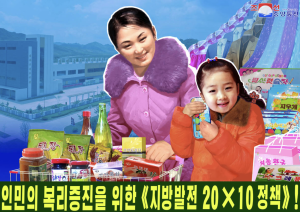
Against this economic backdrop, the North Korean authorities are advancing the 20×10 policy for regional development—Kim Jong Un’s signature economic initiative launched in 2024 that mandates the construction of industrial factories in 20 cities and counties per year over a 10-year period—and housing construction in rural and mining areas as key policy initiatives. These projects are significant not only for their economic significance—given their aim to narrow regional disparities and deliver tangible results for residents—but also for what they reveal about the regime’s capacity to implement policy and maintain regime stability.
However, it is difficult to view the economic recovery and the expansion of regional development policies in an entirely positive way. Recently, instability regarding exchange rates and prices has been growing in North Korean markets, and the policy implementation process faces multiple constraints, such as securing foreign currency, allocating electricity and resources, and ensuring the efficient operation of regional factories once completed. Therefore, it is important to distinguish between the continued pursuit of these policies and their translation into tangible economic outcomes.
The analysis suggests that North Korea’s recent economic recovery and mobilization capacity will likely enable the regime to sustain its regional development initiatives and largely meet its physical construction targets. Whether these projects produce durable economic gains, however, will depend on the regime’s ability to overcome resource constraints and keep the newly built facilities operating productively over time.
Recent Economic Conditions and the Lives of Residents in North Korea: The Coexistence of Recovery and Instability
In 2025, North Korea appears to have achieved economic growth comparable to the previous year, driven by increased trade with China, expanded economic cooperation with Russia, and the state‑led revitalization of local factory construction, all of which contributed to a rise in overall industrial output. The Bank of Korea estimates North Korea’s economic growth rate for 2025 at 3.5 percent.
Growth has been notable in the heavy and chemical industries and the construction sector. Recovering from the downturn experienced during the COVID‑19 pandemic, the heavy and chemical industries recorded three consecutive years of strong growth: 8.1 percent in 2023, 10.7 percent in 2024, and 7.8 percent in 2025. This trend appears to be driven largely by the post‑pandemic recovery of trade with China and the increase in North Korea’s arms exports to Russia following the outbreak of the Russia-Ukraine war. South Korea’s Institute for National Security Strategy (INSS) estimates that North Korea’s revenue from weapons sales to Russia over the past three years exceeded USD 10 billion.
Following significant growth of 8.2 percent in 2023, the construction sector has maintained strong growth for three consecutive years through 2025. This trend appears to be driven primarily by housing construction in Pyongyang and rural areas, as well as the 20×10 policy for regional development. Notably, the construction sector recorded a growth rate of 12.3 percent in 2024, the first year of the policy’s implementation. This demonstrates that the regional development and housing construction initiatives recently promoted by the North Korean authorities are contributing, at least to some extent, to actual economic growth rather than functioning merely as political undertakings.
North Korea’s foreign trade began to recover in 2022 as the North Korea-China border, previously closed to prevent the spread of COVID‑19, partially reopened. Except for a slight decline in 2024, trade continued to grow steadily, reaching USD 3.1 billion in 2025—a 16.0-percent increase from the previous year.
Since 2023, grain production has remained in the range of 4.7 to 4.8 million tons. In 2025, total output reached 4.9 million tons—a 2.5 percent increase from the previous year—due to relatively favorable weather conditions during the sowing season and an expansion of cultivated area, driven mainly by gains in rice, wheat, and barley.
As the economy shifted toward recovery after the COVID‑19 pandemic, both North Korea’s state budget revenues and expenditures began to rise. The growth rates of revenue and expenditure, which had hovered around 1 percent through 2023, increased to the 2-3 percent range from 2024 onward. Improvements in economic performance, the recovery of foreign trade, and strengthened fiscal conditions serve as a firmer economic foundation for North Korean authorities to sustain policies such as regional development and housing construction, while also bolstering the stability of the regime.
However, developments in the markets present a somewhat different picture. Market activity among North Korean residents appears to have contracted significantly, largely due to the authorities’ tightening controls over the inflow of food and state‑produced daily necessities into markets as part of efforts to “rebuild the state‑run commercial network,” as well as sharp increases in prices and exchange rates. Market prices and exchange rates have exhibited high volatility. According to the Bank of Korea, market prices in North Korea rose by 63.1 percent and market exchange rates by 119.9 percent in 2025. The rise in market prices appears to be driven primarily by the authorities’ decision to raise workers’ wages by an average of twentyfold beginning in late 2023.[1]
Nevertheless, it appears that there has been no significant impact on the real incomes of North Korean residents. In general, rising prices lead to a decline in residents’ purchasing power, and the same pattern has historically been observed in the North Korean economy. Following the July 1 economic management improvement measures in 2002, the currency reform in November 2009, the tightening of international sanctions in 2017, and the COVID‑19 outbreak in 2020, periods of economic instability led to higher prices, invariably accompanied by an increase in the corn‑to‑rice price ratio. However, despite the sharp rise in prices since 2024, the corn‑to‑rice price ratio has instead declined. This suggests that, despite recent inflation, the real incomes of residents may not have deteriorated as severely as during past economic crises.[2]
Overall, the North Korean economy is showing a clear recovery trend in areas such as growth rates, foreign trade, grain production, and state finances, and the living conditions of residents appear to have improved compared with the COVID‑19 period. At the same time, the sharp rise in market prices and exchange rates, along with the contraction of market activity, indicates that sources of instability coexist alongside this economic recovery.
The 20×10 Policy for Regional Development and Housing Construction in Rural and Mining Areas: Policy Factors Strengthening Regime Stability
North Korea’s recently pursued 20×10 policy for regional development and housing construction projects in rural and mining areas aim to reduce regional disparities and improve the lives of local residents through regional development. The policy priority and implementation momentum behind these initiatives are expected to be sustained for a considerable period.
The 20×10 policy for regional development has the advantage of imposing relatively limited fiscal burdens, as it utilizes domestically produced materials such as cement and steel, as well as military construction units, while delivering visible results and helping secure public support within a short timeframe. With its designation as a key task in the new five‑year plan (2026-2030) announced at the 9th Party Congress, the policy’s priority has further increased.
Housing construction in rural and mining areas is also a sector with high policy priority for the North Korean authorities. State‑led investment in housing projects in these regions is aimed primarily at strengthening the loyalty of workers in the agriculture and mining sectors, where productivity improvements are urgently needed. North Korea has yet to resolve its food shortage issues. Demand for coal also appears to have surged recently, likely due to excess demand created by the Russia-Ukraine war—particularly within the heavy and chemical industries—that exceeds the country’s current production capacity.
Therefore, the regional development policy and housing construction in rural and mining areas can be understood as serving not only economic objectives—such as improving residents’ living standards and boosting productivity—but also as instruments for fostering greater public acceptance of and support for state policies. If the recent economic recovery provides the material foundation needed to sustain these projects, the regional development policy is likely to function as a key policy instrument underpinning the stability of the North Korean regime for a considerable period.
Sources of Instability and Constraints in the Policy Implementation Process
However, it is difficult to view the regional development policy as contributing solely to regime stability. The economic costs and distortions in resource allocation that arise in the course of policy implementation may instead function as new sources of instability.
The first incident to note is the recent sharp surge in the market exchange rate. Following sharp wage increases in late 2023, both prices and exchange rates began to climb, with the exchange rate rising far more steeply than prices. In 2024, market prices fell by 0.5 percent year‑on‑year, whereas market exchange rates rose by an average of 68 percent. In 2025, market exchange rates surged by nearly 120 percent, showing an increase roughly twice as large as the 63.1 percent rise in prices.
The sharp rise in market exchange rates may have been substantially influenced by the increased demand for foreign currency associated with the implementation of the 20×10 policy for regional development. Although the North Korean authorities may have provided supplies of cement, steel, and military construction units, it is possible that local authorities had to procure equipment and certain materials on their own. Alternatively, even without explicit pressure from the central authorities, the voluntary “loyalty competition” among local officials could also have played a role.
For local regions lacking their own sources of foreign currency, purchasing foreign currency in the market becomes necessary to obtain imported equipment or materials. If such demand for foreign currency emerges simultaneously across the country, expectations of further exchange‑rate increases can trigger speculative activity. The recent sharp rise in market exchange rates may have been driven not only by increased demand for foreign currency following the recovery of North Korea-China trade, but also by excess demand generated during the implementation of the regional development policy and the resulting speculative activities of market currency traders.[3] A shortage of foreign currency constrains the sustainability of investment while driving up market exchange rates, thereby functioning as a source of regime instability.
In addition, the expansion of construction projects during the policy implementation process appears to have been influenced by improved fiscal conditions resulting from the recovery of trade with China and the expansion of economic cooperation with Russia. Consequently, should foreign‑currency inflows decline—for instance, due to the end of the Russia-Ukraine war—market instability may intensify and the capacity for continued investment may become constrained.
Next is the issue of North Korea’s chronic power shortages and the resulting deepening of a dual structure in resource allocation. Under conditions where power supply falls short of demand, electricity is distributed according to policy priorities. As initiatives such as the 20×10 policy for regional development and housing construction in rural and mining areas emerge as key tasks and are assigned higher priority in power supply, electricity provision to lower‑priority sectors correspondingly declines. This can be viewed as a form of opportunity cost, in which limited resources are allocated preferentially to the regional development policy, thereby constraining production activities in other regions or industries. In other words, a policy introduced to reduce regional disparities ends up generating new disparities between sectors.
In this regard, recent research utilizing North Korea’s nighttime light intensity data shows that nighttime brightness in areas implementing the 20×10 policy for regional development increased in a statistically significant manner compared with levels prior to implementation, whereas nighttime luminosity in surrounding areas declined.[4]
Finally, greater uncertainty lies in whether factories and facilities can be operated stably over the long term once construction is completed. Kim Jong Un pointed out at the Ninth Party Congress that recently built production and service facilities are failing to be properly operated within less than a year, indicating that problems are emerging in the operation of completed factories and facilities. Construction targets can be achieved within a set timeframe by concentrating cement, steel, and labor, but stable operations require the continuous input of electricity, raw materials, equipment, and parts. Power shortages in particular serve as a major factor hindering stable operation.
The structural inefficiencies inherent in the 20×10 policy for regional development itself also act as a constraint on the sustainability of operations. North Korea’s local‑industry development policy is based on the principle of equal distribution, designed with national defense considerations.[5] The policy centers on constructing small‑scale factories in every city and county to produce nearly identical types of food and daily necessities—a strategy intended to minimize vulnerability to air strikes in the event of war. Because these factories rely primarily on locally sourced raw materials, they are not suited for mass production, and they are required to produce goods even when they lack a comparative advantage over other regions. As a result, they incur additional costs arising from the inability to fully leverage economies of scale or regional comparative advantages. While it is difficult to argue that these inefficiencies directly undermine the policy’s sustainability, the costs incurred by prioritizing resource allocation to specific sectors aligned with policy objectives can be passed on to other sectors, thereby hindering economic growth.
The preceding discussion demonstrates the need to evaluate the outcomes of the regional development policy by distinguishing between the construction phase and the operational phase.
Outlook and Implications
Given the recent strong recovery of the North Korean economy and the regime’s policy priorities, the 20×10 policy for regional development and housing construction in rural and mining areas are likely to continue being pursued consistently in the future. In particular, the regional development policy is expected to serve as a key policy instrument for North Korean authorities, as it can yield visible results with relatively limited fiscal input. The ongoing economic recovery and improved external economic conditions will also provide a foundation for sustaining these initiatives.
However, it is necessary to distinguish between the sustainability of the policy and the likelihood of its success. Given North Korea’s mobilization system and current economic conditions, it is likely that physical construction targets, such as factories and housing, can be largely achieved. Yet, considering the adverse effects and constraints that arise during implementation, it remains uncertain whether these achievements will translate into sustained increases in production and improvements in residents’ living standards. Therefore, when evaluating the regional development policy going forward, greater attention should be paid to the actual operation and productivity of completed facilities and their impact on residents’ livelihoods, rather than construction outcomes.
The same perspective is also required for regime stability. In the short term, economic recovery and the expansion of regional development projects are likely to bolster regime stability by delivering visible improvements to residents. However, whether these effects will translate into medium‑ to long‑term stability depends on the success of the regional development policy in generating sustainable increases in production and improvements in residents’ living standards. Ultimately, in assessing the economic stability of the North Korean regime going forward, what matters is not “how much has been built,” but “the extent to which completed facilities continue to operate and actually improve residents’ lives.”
- [1]
Song Lim, “Recent Trends of Market Indicators in North Korea,” presentation at a private GW Institute for Korean Studies (GWIKS) North Korea Economic Forum (NKEF) roundtable, May 20, 2026.
- [2]
Ibid.
- [3]
Song Lim, “Background of the Sharp Rise in North Korea’s Market Exchange Rates and Rice Prices: Complex Factors Including Foreign Currency Shortages and Side Effects of Grain Policies [북한 시장환율, 쌀가격 급상승 배경: 외화 부족, 양곡정책 부작용 등 복합 요인],” Peaceful Unification, Peaceful Unification Advisory Council (PUAC), Vol. 212 (November/December 2024).
- [4]
Bumhwan Kim, “Chapter 1. Resource Allocation in an Authoritarian Economy: The Impact of North Korea’s 20×10 Regional Development Policy” in Three Essays in Applied Microeconomics using Spatial Data, PhD dissertation, Department of Economics, Seoul National University, February 2026.
- [5]
Ryu Haksu. “북한 공업배치구조의 특징과 남북경제협력 방안 [Characteristics of North Korea’s Industrial Distribution Structure and Measures for Inter-Korean Economic Cooperation],” KDI Review of the North Korean Economy, January 2019.