

Current Status of North Korea’s Drone Program
North Korea is expanding its military drone program. During a visit to North Korea’s Unmanned Aeronautical Technology Complex in mid-September, Kim cited the reality of modern warfare and said developing the core technology and artificial intelligence for drones was a “top-priority and important task” in modernizing North Korea’s (Democratic People’s Republic of Korea or DPRK) armed forces. He also said the country needed to expand the production capacity of drones.
The expansion comes just over two years after North Korea first showed modern military drones at a weapons expo in Pyongyang. The Saetbyol-4 and Saetbyol-9 were among the key exhibits Kim Jong Un guided Russian Defense Minister Sergei Shoigu through during a visit to the weaponry exhibition house on July 26, 2023.
The use of drones has been critical in the wars currently being fought in Europe and the Middle East. This trend is likely to ring true for future conflicts—a lesson that all countries are learning, including North Korea. While North Korea’s drone program dates back to at least 2011, further drone development and deployment should be expected as the country works to enhance preparedness for modern warfare.
Early Development of Drones
The nation’s drone program can be traced at least as far back as 2011 when it purchased “several U.S. MQM-107D Streakers from a Middle Eastern nation that appears to be Syria,” Yonhap News reported in February 2012. The MQM-107D was developed by Beechcraft and went into service with the US military in 1987.
The purchase was apparently confirmed in 2013 when a state television broadcast showed footage of Kim Jong Un attending army drills from March 20.[1]
After the drills, state media reported that Kim “called for further raising the performance of drone and rocket.” In 2014, several North Korean drones were found crashed in South Korea near the border between the two countries. The drones were basic fixed-wing types, some apparently from China, and carried digital still cameras to snap photos on a pre-programmed flight path.
Since then, there have been occasional reports of drone incursions across the border, but the unveiling of the Saetbyol-4 and Saetbyol-9 in 2023 marked the beginning of a new era in domestic development of military drones.
North Korea’s Saetbyol Drones
Saetbyol-4
The Saetbyol-4 (샛별-4 or Morning Star 4) has been referenced by state media as a “strategic reconnaissance drone.” It is the largest model shown to date and is clearly meant to resemble the US RQ-4 Global Hawk.
It has a wingspan of approximately 35 meters and is powered by a turbojet or turbofan engine. Analysts have noted that its landing gear and the rear end of the engine resemble those of the MiG-21, which the North Korean Air Force has operated.
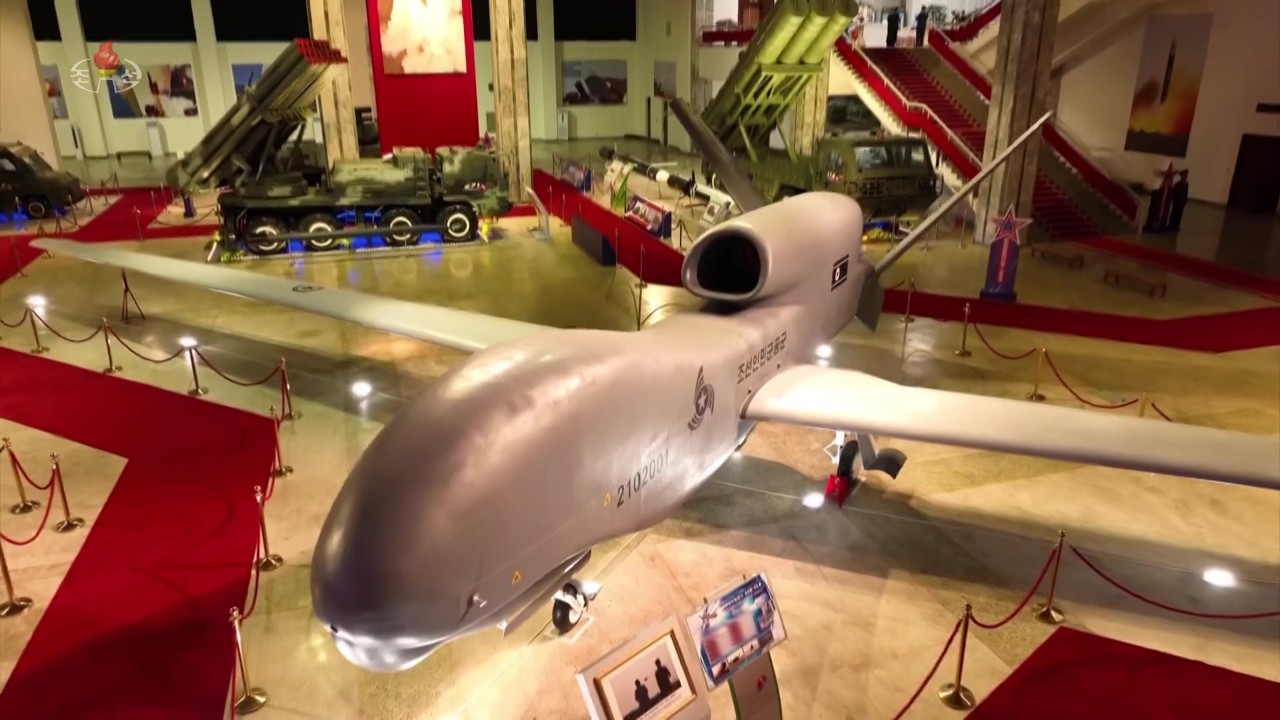
The Saetbyol-4 first officially appeared in state media in July 2023 during coverage of the weapons exhibition, although it was likely captured on a commercial satellite image a few weeks prior on June 14, sitting on the runway at Panghyon Airbase. Panghyon was later revealed to be the home of North Korea’s drone program, dubbed the “Unmanned Aeronautical Technology Complex” by state media.
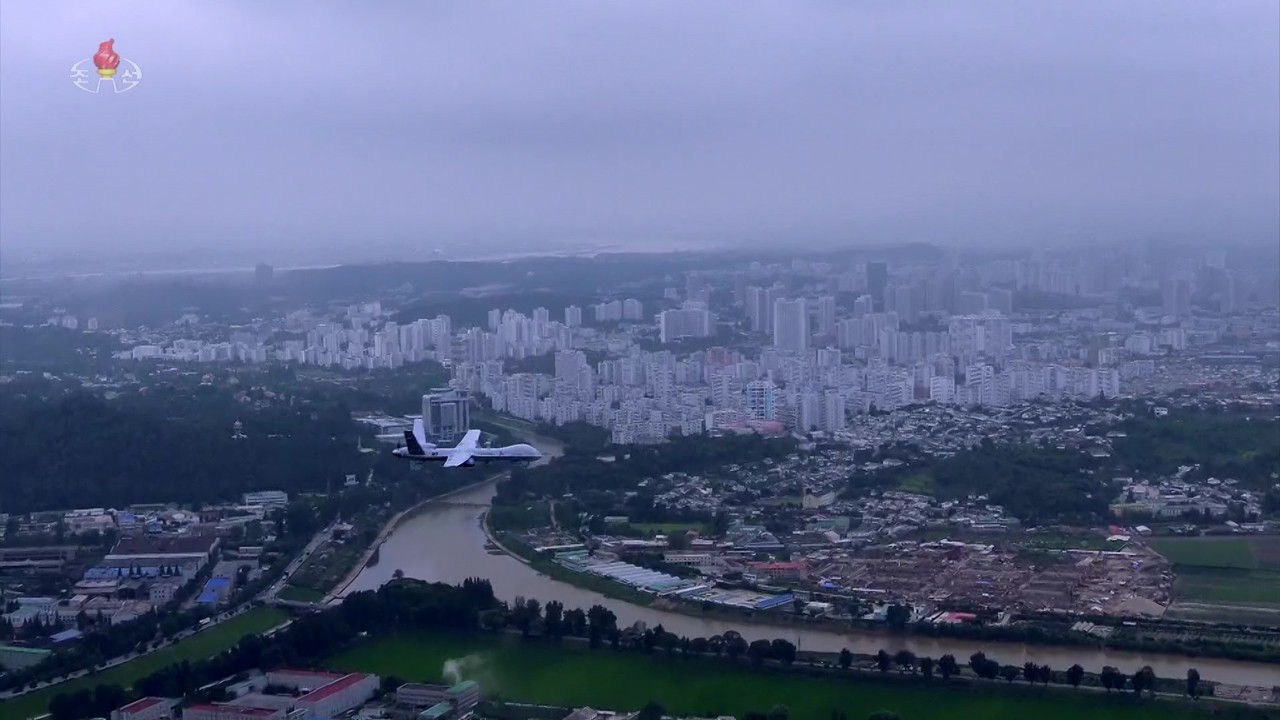
The day after the weapons expo, state television showed video of the Saetbyol-4 flying over Pyongyang, demonstrating its operational status. It did not appear in the military parade later that day, likely because its wingspan is too wide to navigate the streets of Pyongyang.
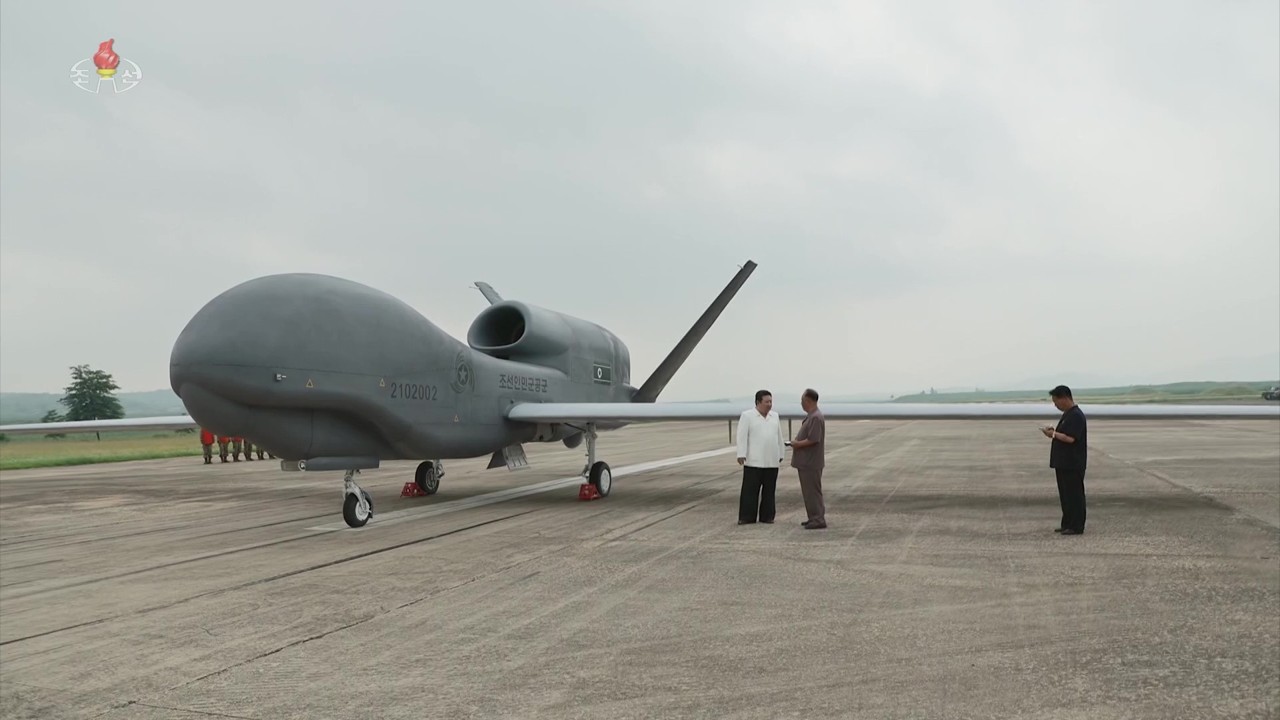
Based on the serial numbers observed in state media coverage, North Korea has at least two Saetbyol-4s. The serial number of the one exhibited at the expo was 2102001, whereas the number of the one flight-tested was 2102002.
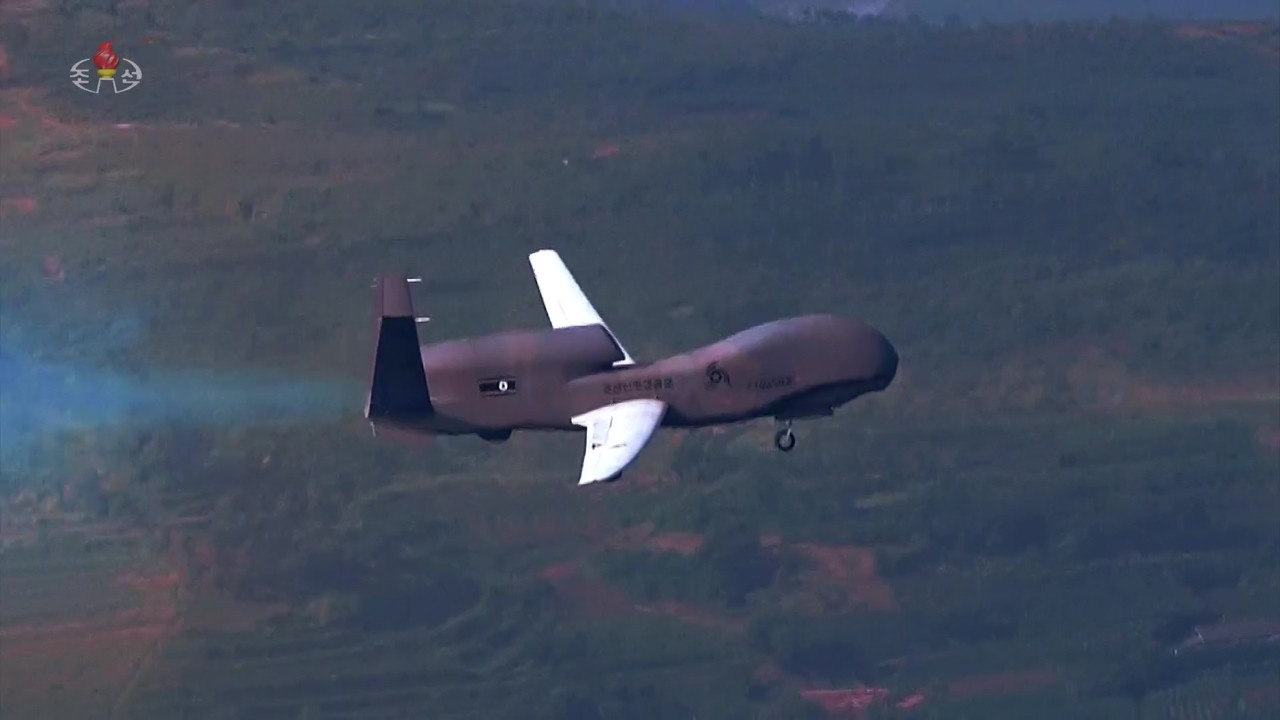
The 2102002 tagged drone appeared again in a documentary aired in January 2024, which showed Kim Jong Un inspecting the drone on the runway of Panghyon Airport.
It was not seen again until March 2025, when an upgraded version of the drone was shown during a field guidance trip by Kim Jong Un to Panghyon Airport.
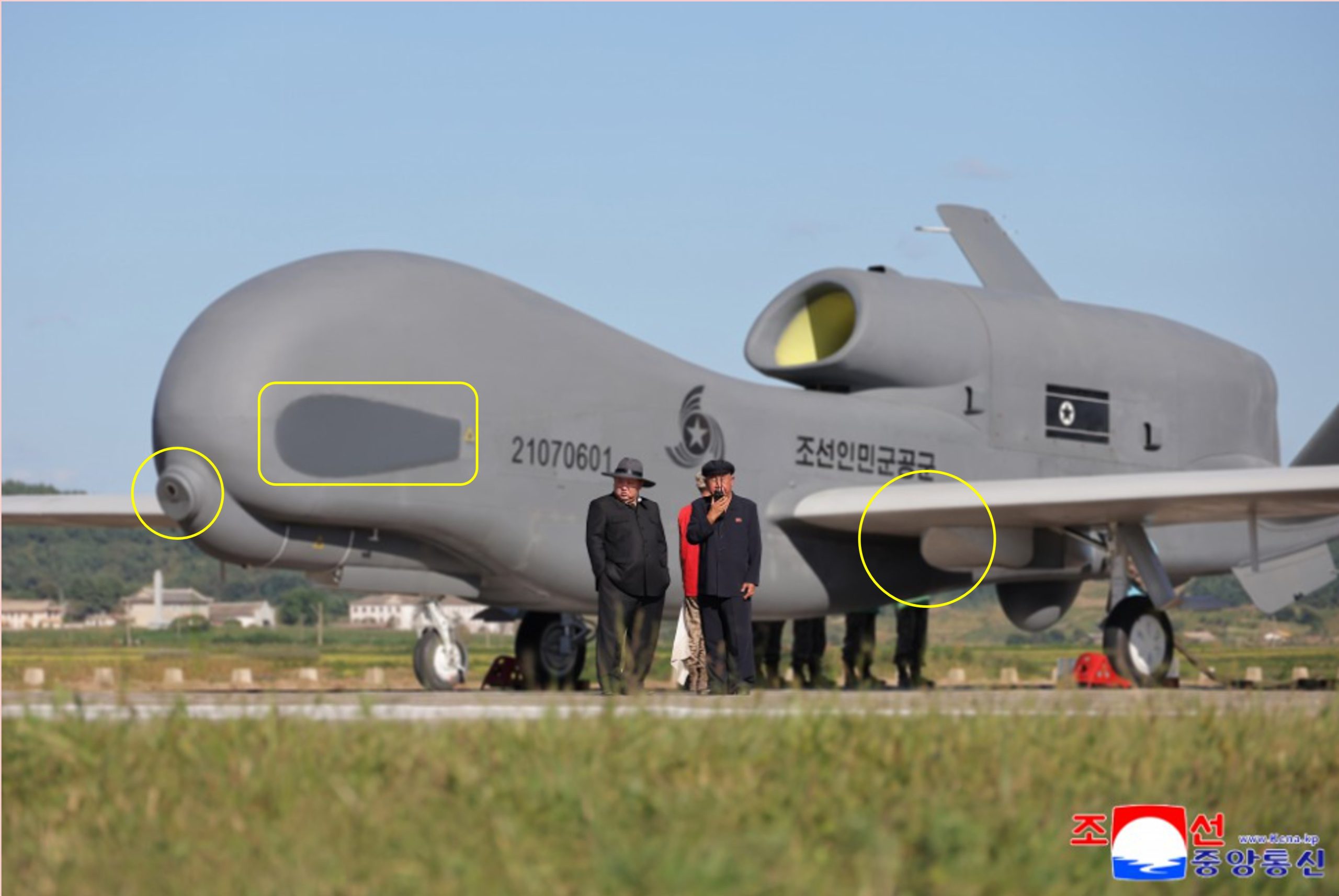
The upgraded version carried an eight-digit serial number, 21070601, and had several visible differences over the earlier models. At the front of the drone, there was a new optical window below the nose, and new panels, possibly for electronic intelligence gathering, were placed on both sides of the drone. Some wing redesigns and the addition of what are possibly flap track fairings, were also observed.
The same aircraft appeared again in May 2025, when Kim Jong Un was at Sunchon Airfield to inspect the Guards 1st Air Wing of the Korean People’s Army, and in September 2025, when he visited Panghyon Airfield to view further flight testing.
Saetbyol-9
The Saetbyol-9 (샛별-9 or Morning Star 9), has been referred to in state media as a “multi-purpose combat drone” or “multi-mission drone,” giving it a mission to match the US MQ-9 Reaper, to which it bears a resemblance. It is the smaller of the two large drone models North Korea has officially revealed with a wingspan of approximately 20 meters and is powered by a propeller engine. Like the Saeybyol-4, it first appeared in July 2023 at the Weapons Exhibition.
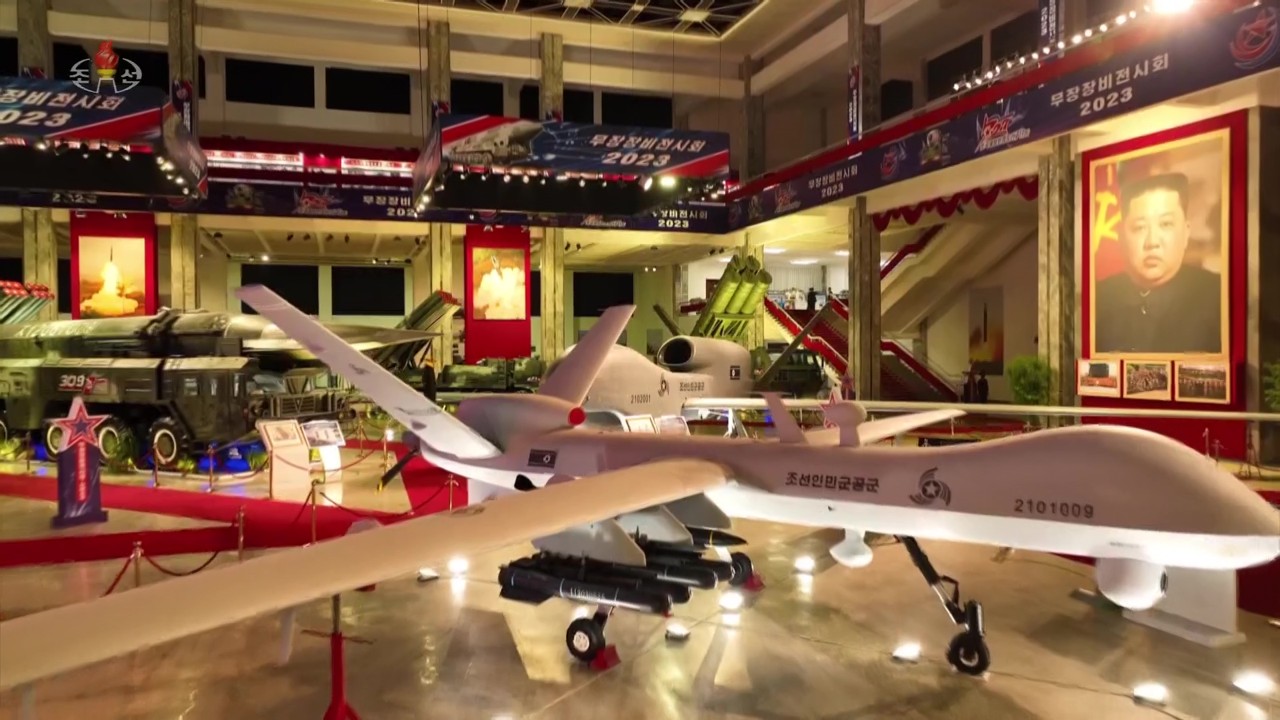
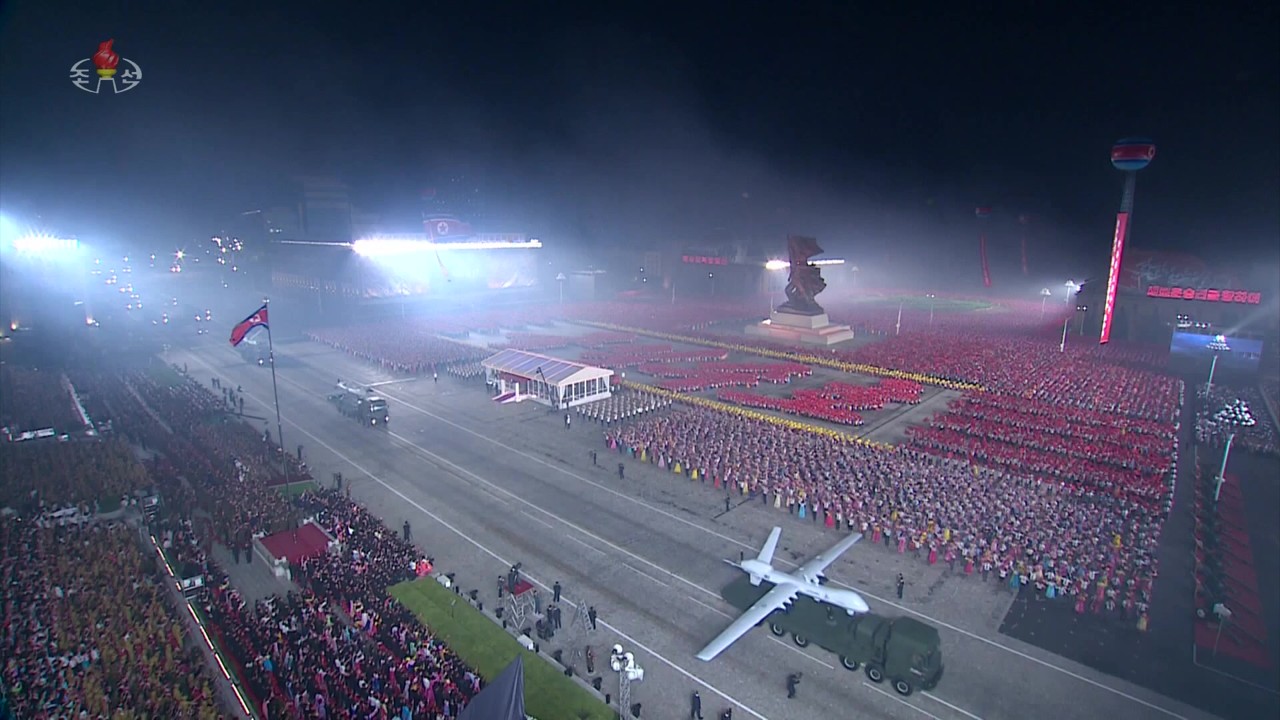
North Korea appears to have manufactured at least six Saetbyol-9s. The one on display at the weapons expo had serial number 2102009. Four of Saetbyol-9 drones appeared at the parade, though television images revealed the serial numbers of only two of them: 2101005 and 2101007. The “009” serial number suggests as many as nine might exist or have existed at some point.
State television showed a Saetbyol-9 flying over Pyongyang prior to the start of the parade. While the serial number of that drone and the two others at the parade could not be seen, it is likely they were all different airframes, amounting to six total drones.
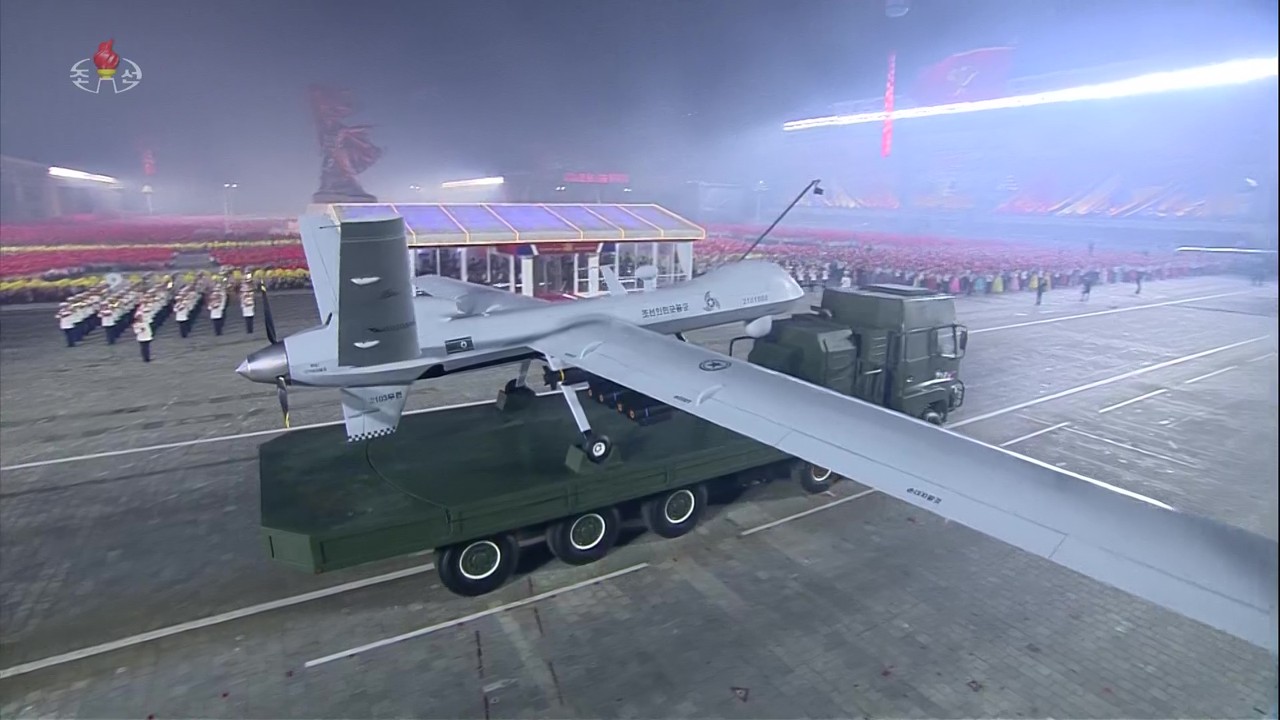
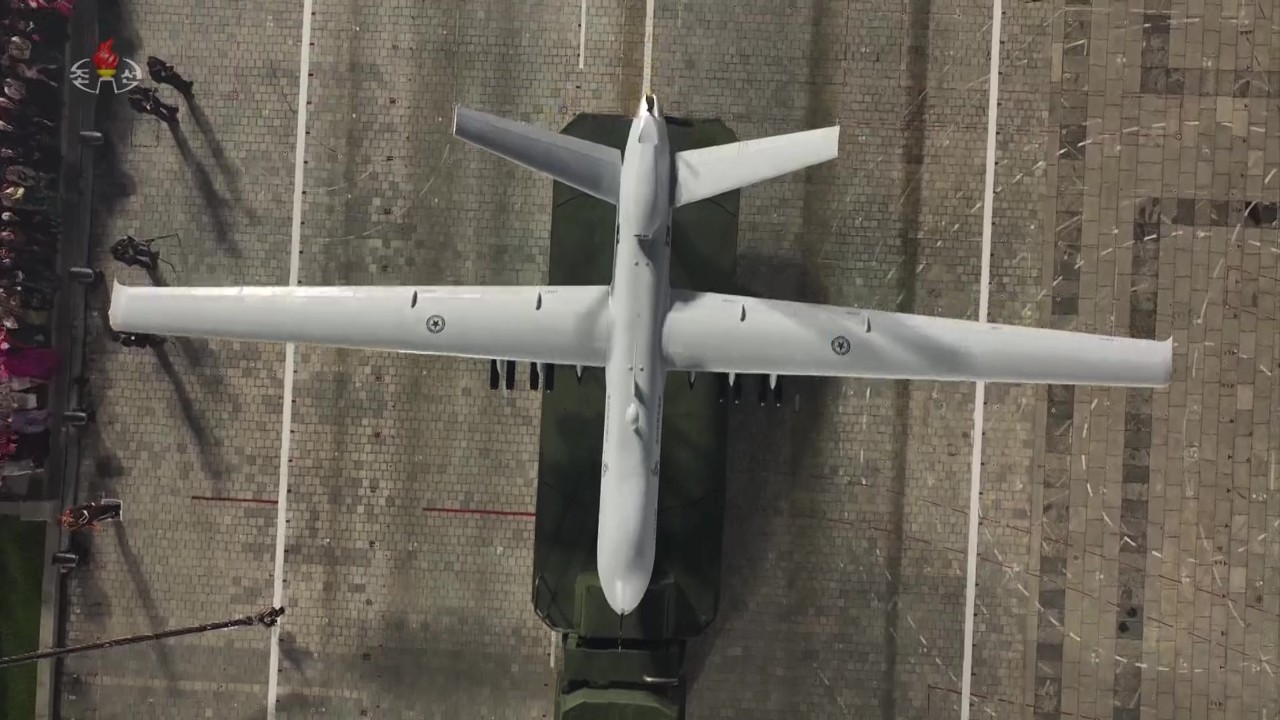
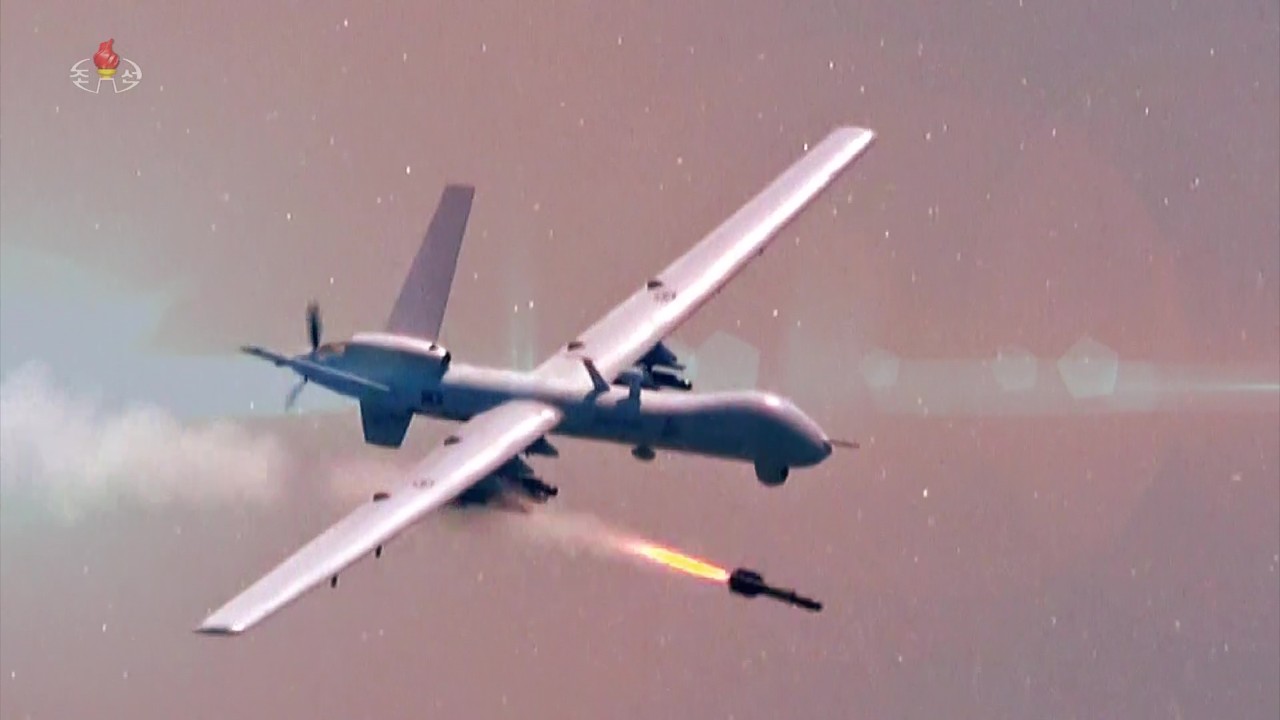
Another Saetbyol-9, tagged with the serial number 2101003, was shown at the Weapons Exhibition in November 2024. To date, an updated version of the aircraft has not been seen. As a “combat drone,” the Saetbyol-9 is armed and has three pylons under each wing to carry weapons. Brief video clips of the drone firing missiles at targets have been shown on Korean Central Television.
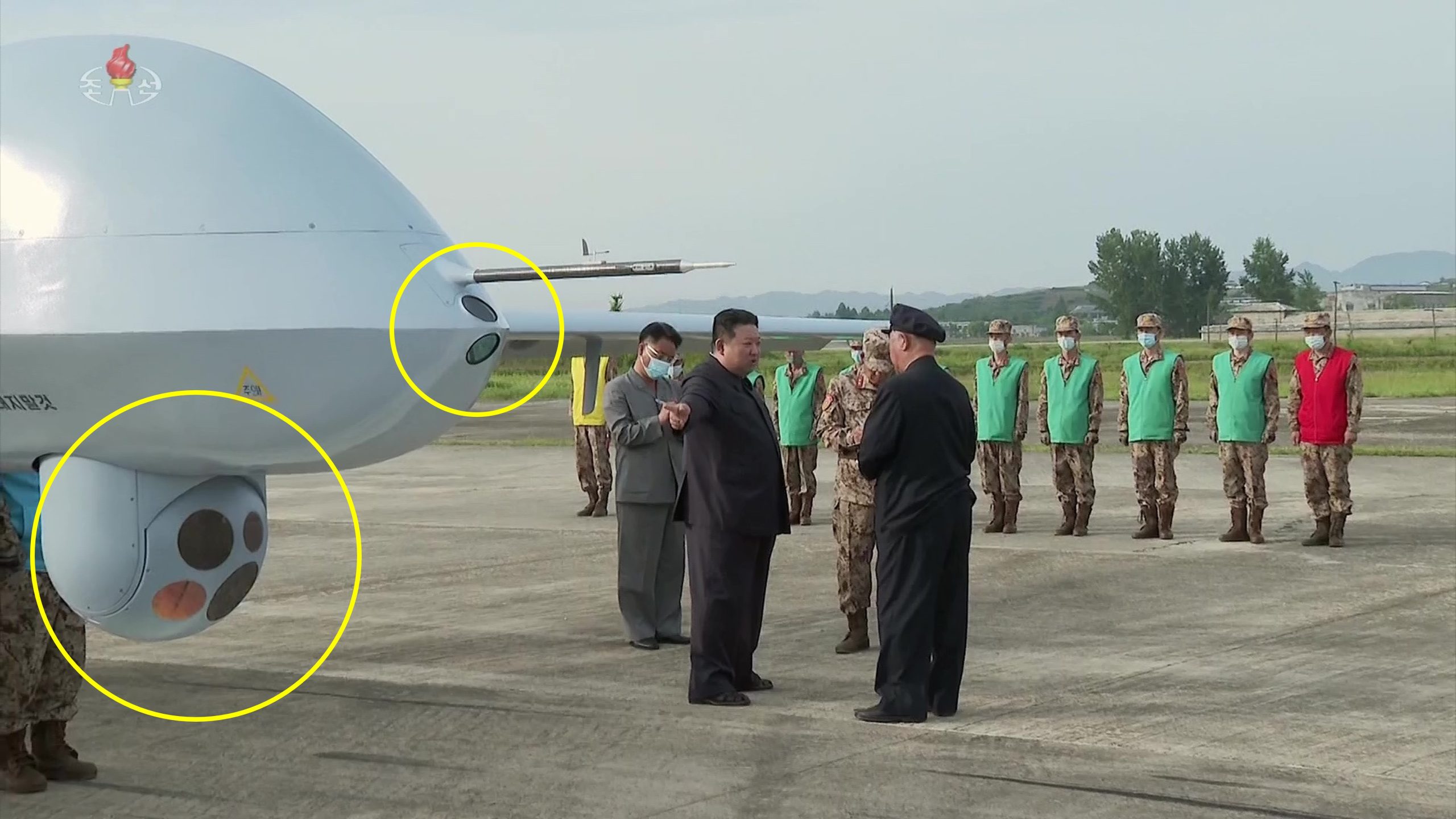
There is also what appears to be a large electro-optical sensor array mounted just under the nose, and sensors in the nose itself, although it is unclear what they are used for.
The Saetbyol-9 appeared most recently during the air force drills in May when the drone tagged 2101003 was shown doing a fly-by of Sunchon Airfield.
North Korea’s Kumsong Drones
A series of at least six smaller drones debuted at the 2024 Weaponry Exhibition. They went unnamed until Kim’s most recent drone inspection visit when state media revealed they are called the Kumsong-series tactical attack drones.
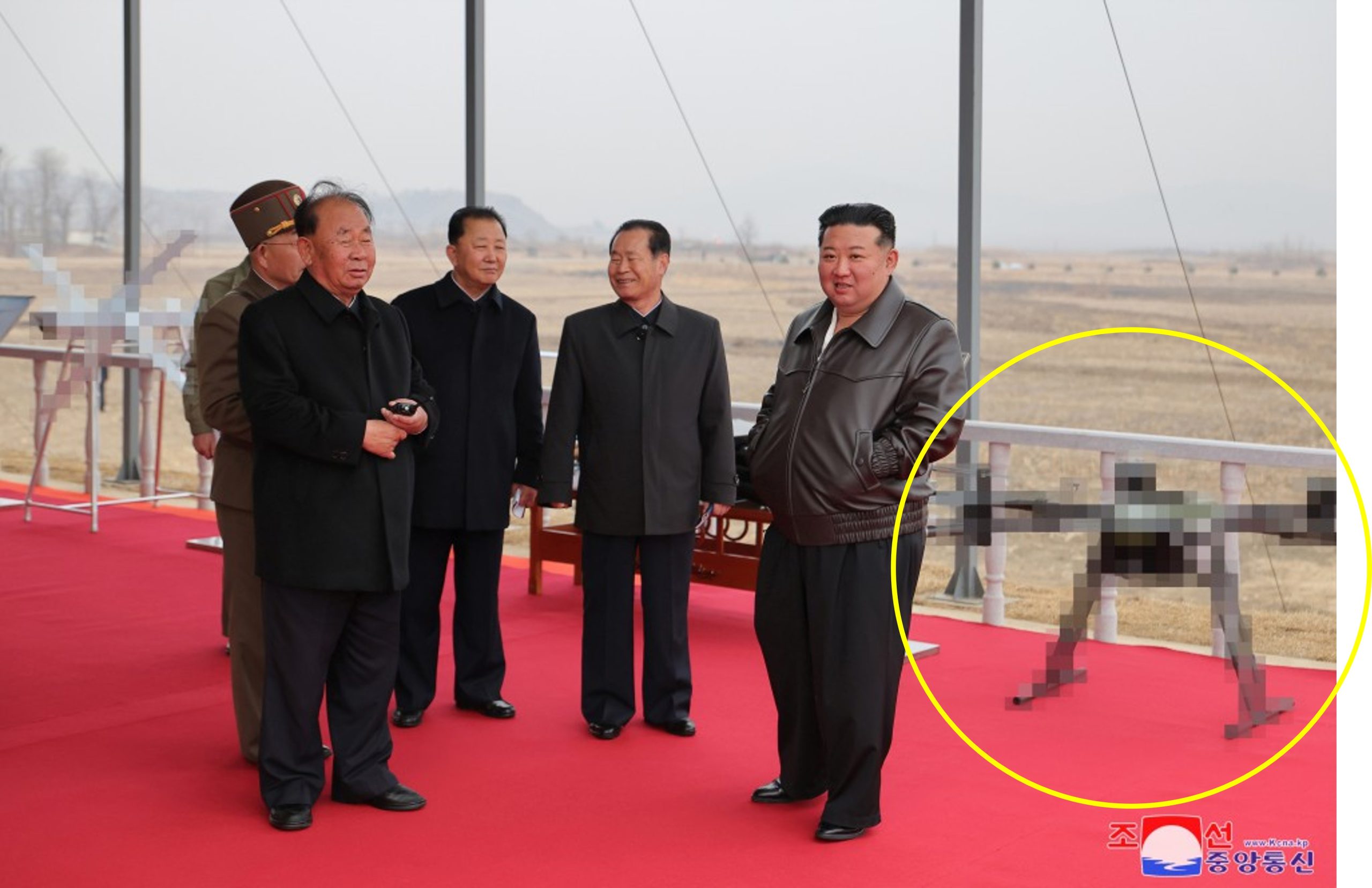
Unlike with the larger drones, state media has not shown video of any Kumsong-series drone tests. Photos of the drones published in state media have typically been heavily mosaiced, except those shown at the most recent weapons expo.
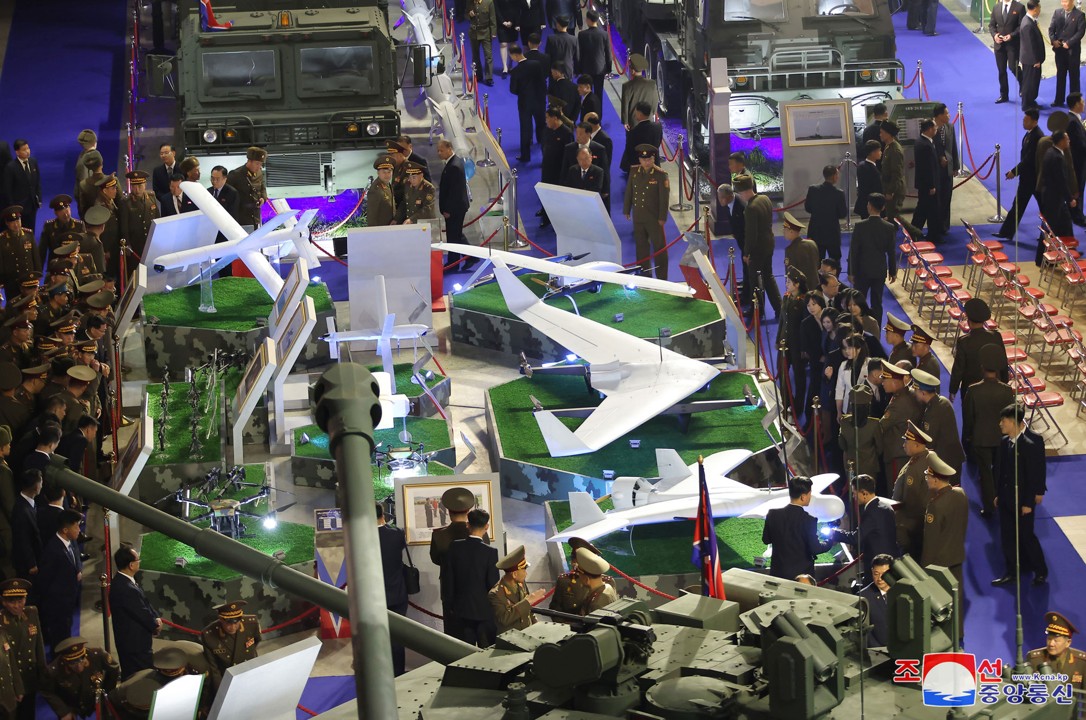
The smallest of the drones looks like a chunky model aircraft and is propeller-driven. In tests, the drone appears to have been used against cars and trucks.
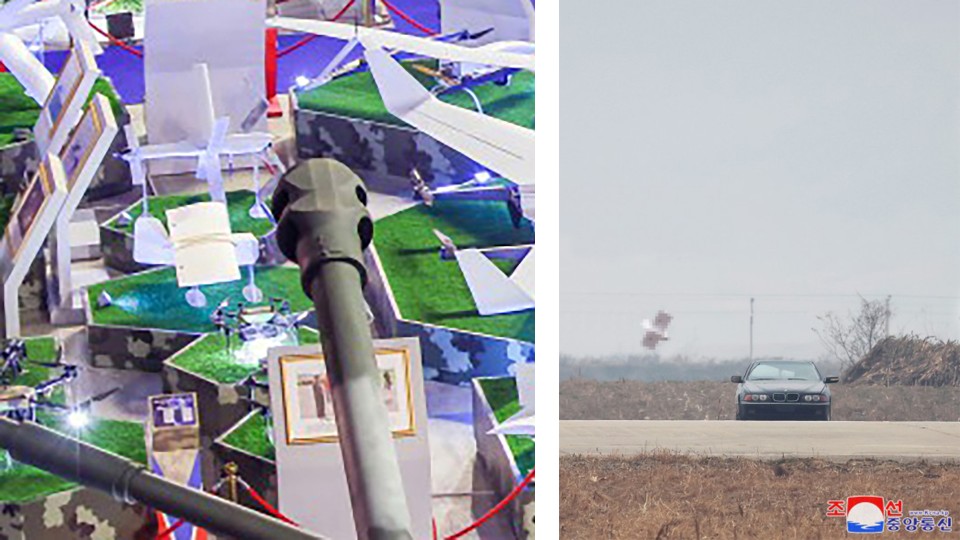
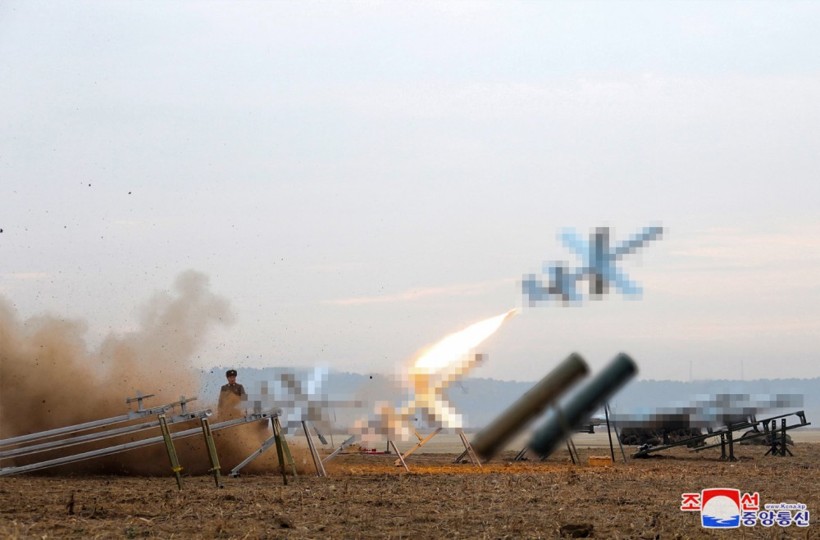
Two of the drones have an X-wing design, the smaller of which appears to be tube-launched and the larger is rail-launched. Except for the size difference, the drones appear similar, so could be variations of the same design, possibly to experiment with different launch mechanisms. The tube-launched version uses a gas ejection mechanism while the larger uses a small boost rocket.
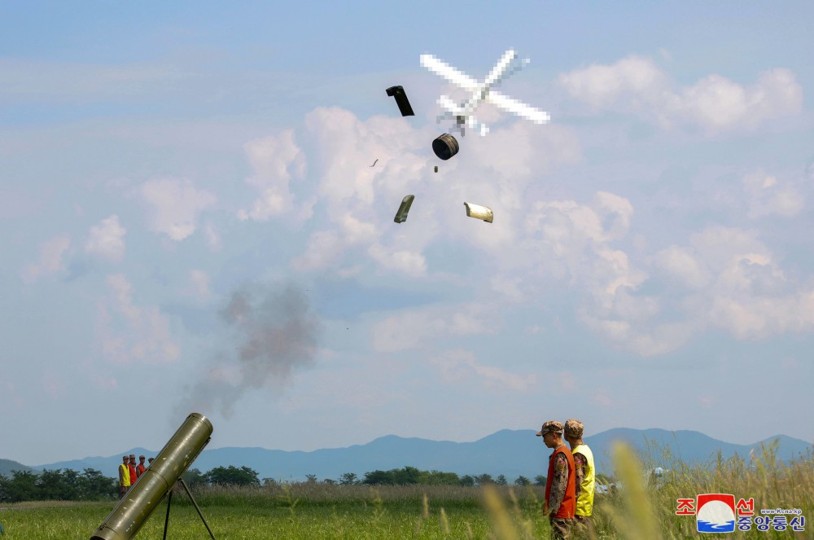
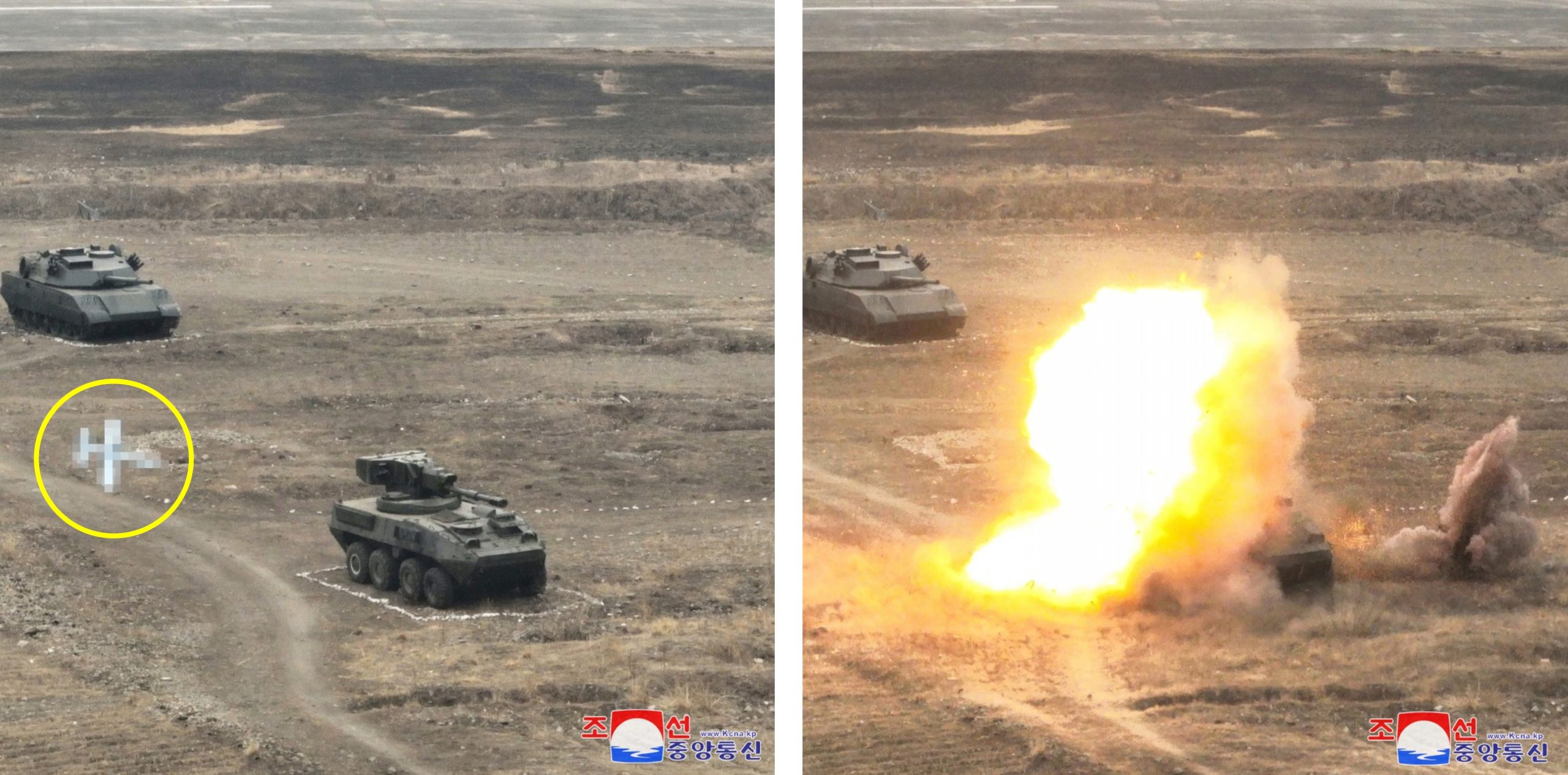
One of the X-wing drone models has been demonstrated against armored targets.
Of the three other drones, one is a canard design with a small set of forewings ahead of the main wings. It is propeller-driven and has been shown in photos being rail-launched with an initial boost from a small rocket.
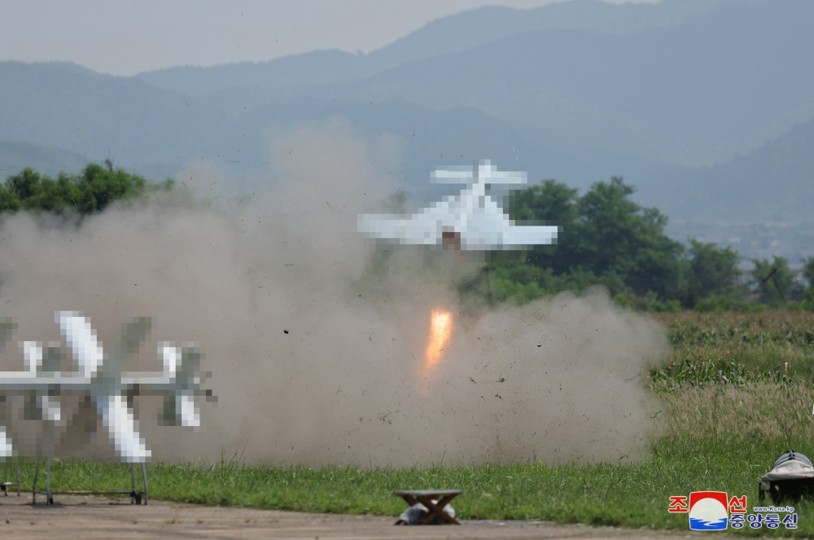
The two remaining drones have the largest wingspan of those that were displayed at the 2023 weapons expo but have not featured prominently in state media coverage of demonstrations forKim Jong Un. This could indicate some sensitivity towards their design or mission, such as they may be targeted at reconnaissance and not the strike role that has been the focus of the drills attended by Kim Jong Un, or they could be designs that have been discontinued.
North Korea also showed three quadcopters, each a different size. The producer of the drones is unclear, but it is possible they were sourced from overseas. In one image, the largest of the three can be seen next to Kim Jong Un and it appears to be over a meter in diameter.
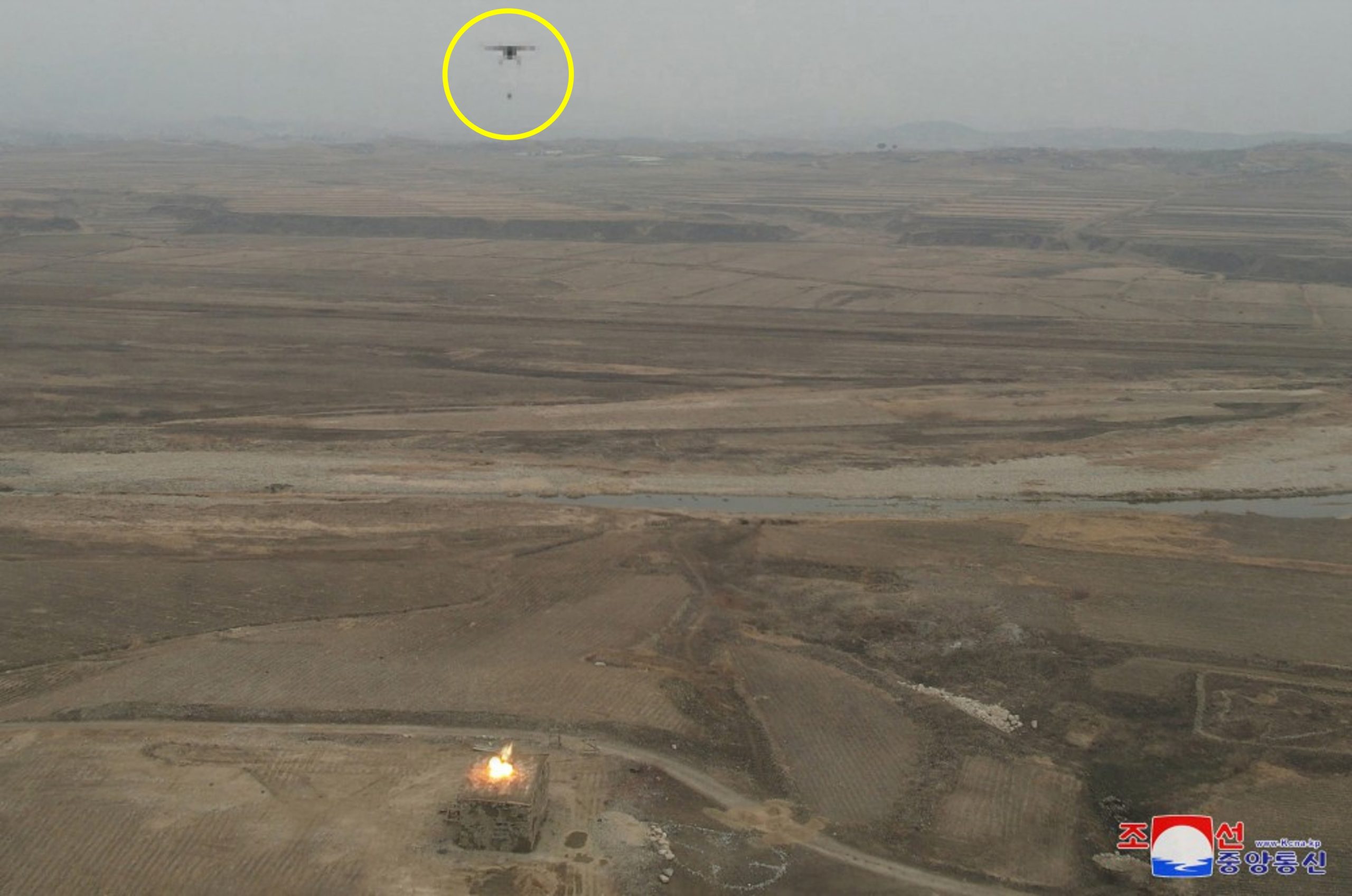
State media has shown images of one of the drones dropping a munition on a tank.
Capabilities
At first glance, the drones shown at weapons expos and demonstrated to Kim Jong Un look impressive, but to date, there has not been a significant demonstration of their capabilities.
As noted earlier, state television has shown the two larger drones flying and one shooting a missile, but nothing is known about the flight and guidance systems or the accuracy of the missile testing. It is also impossible to know whether the optical windows on the front of the drone have any sensors behind them or are just there for show.
The smaller drones have never been shown on video, only on still images. Even during television reports about the demonstrations witnessed by Kim Jong Un, coverage has only included still images. This is common when state media does not want to reveal too much about a technology or a site being visited by Kim Jong Un.
The drones do appear to fly—there are plenty of photos of them being launched—but it is impossible to deduce anything about their range or the payload they carry. Still images appear to show a drone approaching a target, then a large explosion in the subsequent image, but nothing of the actual damage caused. At least one of the vehicle targets is clearly partially wooden in the images.
But, while we know little about the current capabilities of the drones, it would be a mistake to assume the program is all for show. North Korea has demonstrated an ability to develop and refine weapons systems so what might not be possible now could easily be possible in the future.
Panghyon Airfield Area
North Korea chose Panghyon Airfield as its development base for drones. The airfield is about 110 kilometers northwest of Pyongyang, and 60 kilometers from the Chinese border. Kim Jong Un has visited the area at least three times in recent years.
The area is well-positioned for such work, having served as an aviation maintenance and fabrication base for several decades. Immediately adjacent to the airfield is the 7th Machine Industry Bureau Aircraft Parts Factory, which has manufactured parts for MiG-15 and MiG-17 aircraft and assembled MiG-29s from kits.
About 4 kilometers southeast of the airfield is the Panghyon Fabrication/Assembly Plant, part of which is underground, and 2 kilometers beyond that is the Panghyon Aircraft Factory. State media refers to the aircraft factory as “the machine plant managed by Jon Tong Ryol,” a style it uses for several military-related factories.
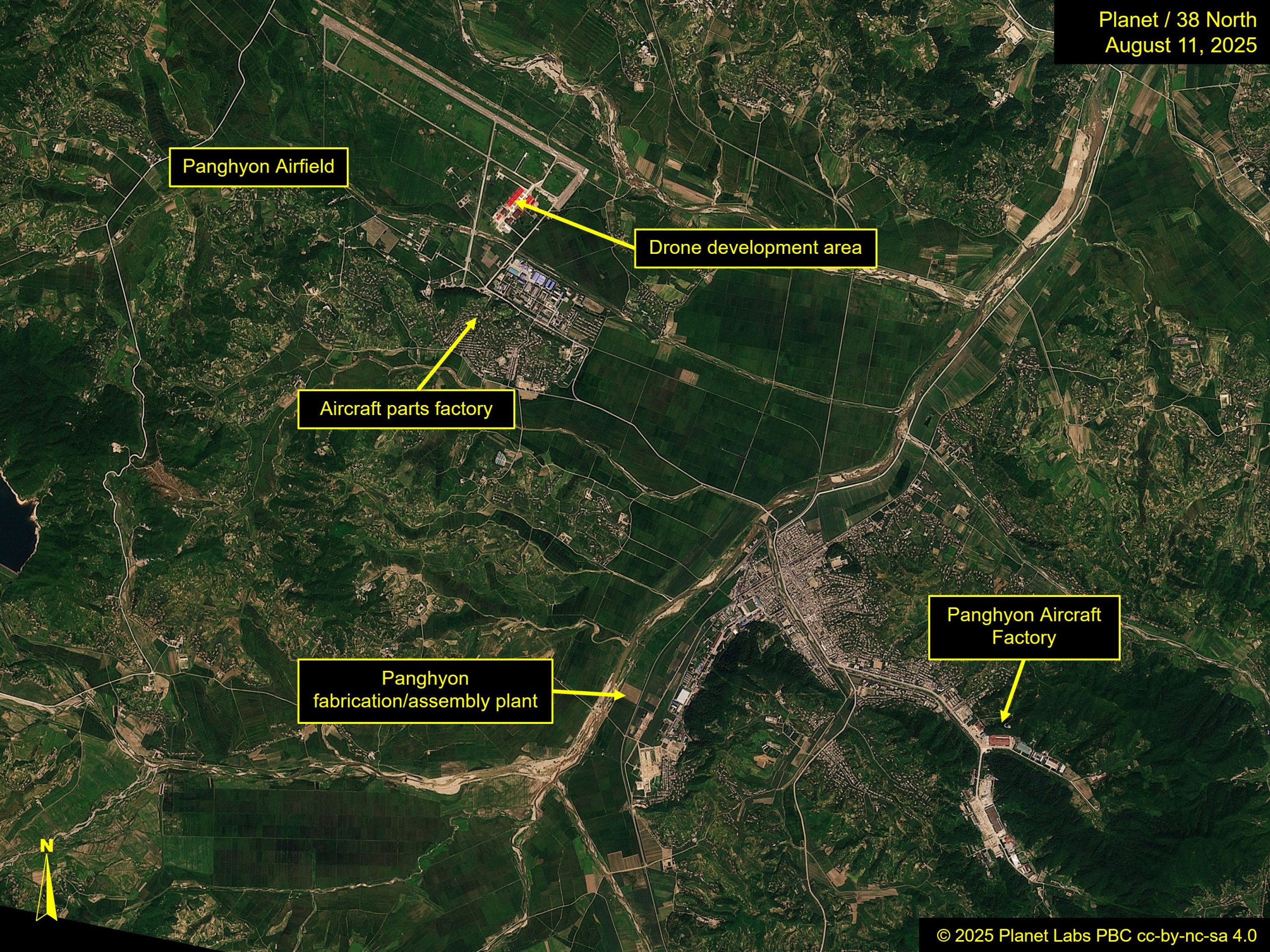
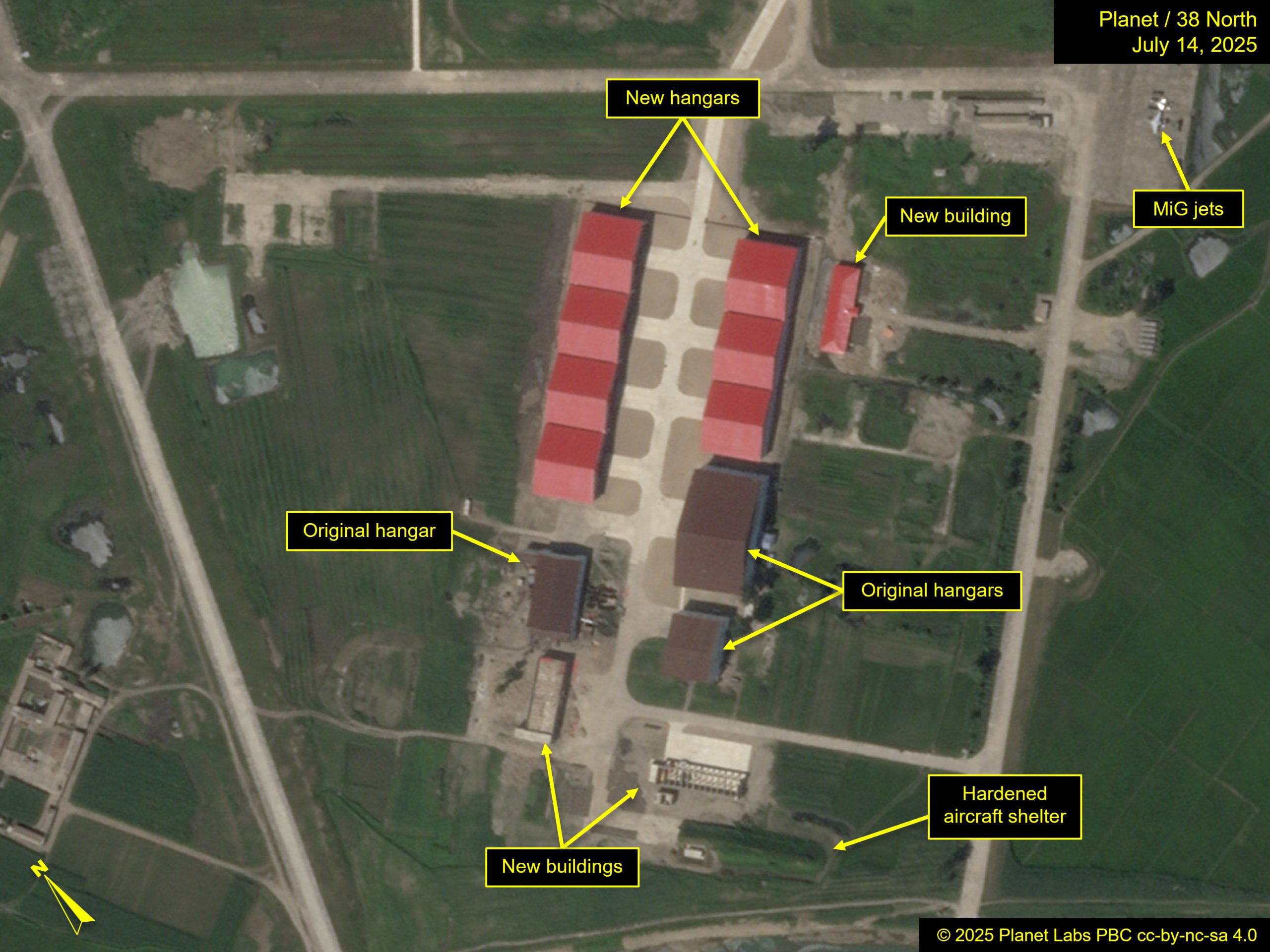
In 2024, the Panghyon facility was expanded to include seven new hangars. Each of the new hangars is 45 meters wide with 40-meter openings at the front. The administrative building that sat alongside the original three hangars was demolished at the beginning of 2025 and three new buildings, all apparently administrative in nature, have been erected at the site over the summer.
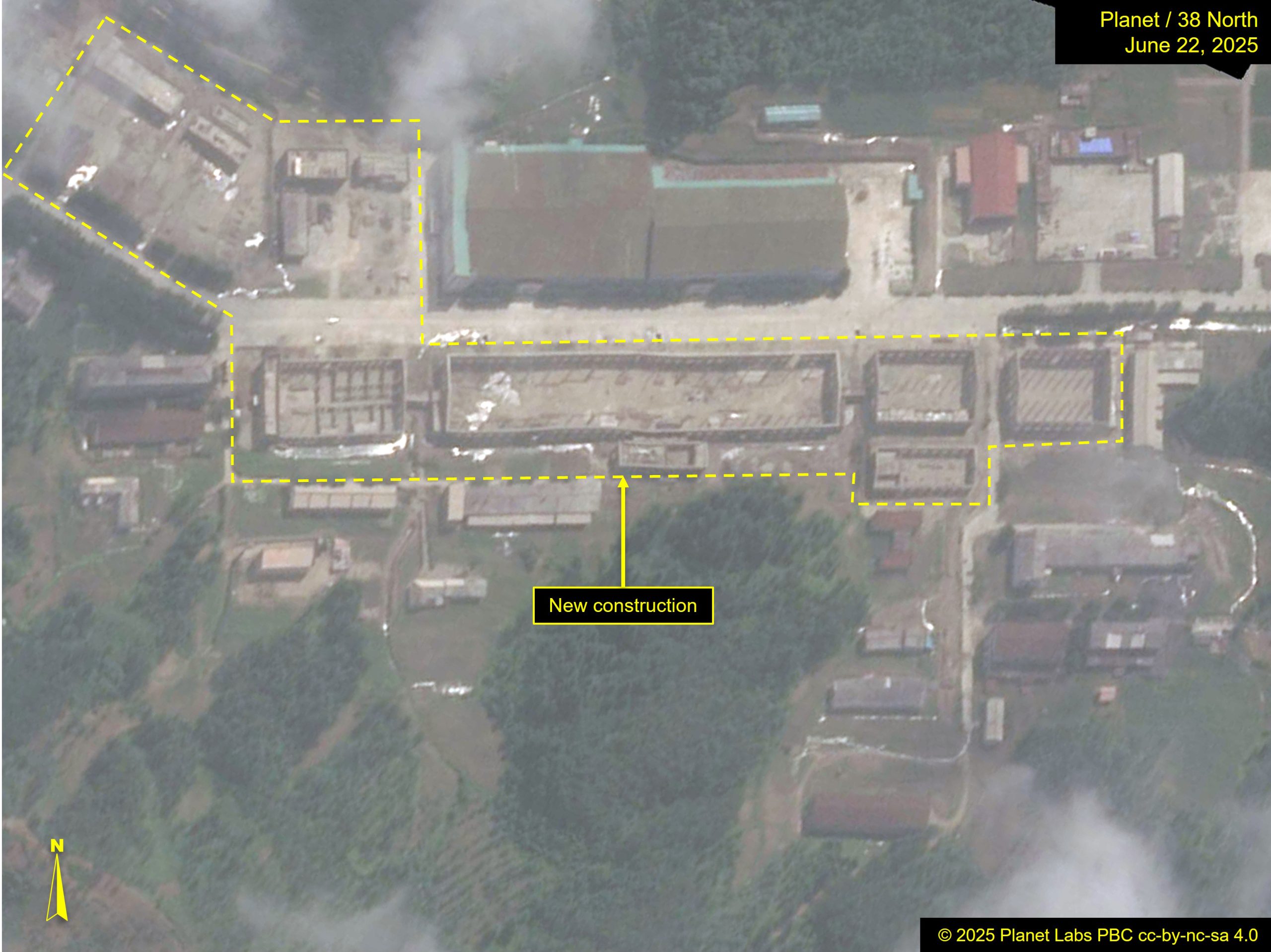
In July 2024, work began to redevelop a large portion of the Panghyon Aircraft Factory. Several smaller buildings were demolished, and new buildings are being constructed in their place. The largest of the new buildings appears to be a fabrication hall that is 225 meters in length and approximately 9,300 square meters in total.
Current satellite imagery shows the project is ongoing, with roofing still needed for the new buildings.
Conclusion
The conflicts in Ukraine and Gaza have highlighted the role that drones will play in future conflict. Even without its direct experience fighting alongside Russia in Ukraine, North Korea’s military was likely taking notes on how drones were being used and how it could take advantage of the technology.
Kim’s most recent visit underlines that, and his instruction to increase production suggests that at least some drones are through initial development. The future expansion of a drone program and development of additional drones or capabilities should be expected.
- [1]
“김정은동지께서 인민군대사업을 현지에서 지도 2013.3(전편)”, Korean Central Television, April 5, 2013