

Recognizing Separation, Creating Peace: Rethinking ROK Constitutional Assumptions
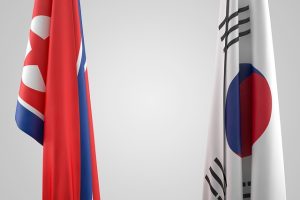 Lee Jae Myung’s government has vowed to pursue dialogue with Pyongyang. It has stated that it respects North Korea’s (Democratic People’s Republic of Korea or DPRK) system, it will not pursue unification by absorption, and that it has no intention of engaging in hostile acts. However, this appears to have fallen on deaf ears. Pyongyang has denounced Seoul’s continued participation in joint military drills, discussion of denuclearization, and investment in military spending, particularly its pursuit of a nuclear-powered submarine. North Korea presents these as reaffirming their conviction that South Korea does not change and that progressive and conservatives ultimately read from the same hostile script, whatever Lee says to the contrary.
With the two Koreas seemingly speaking a different language, now is the time for peace advocating politicians in the South to attempt bold policy changes regarding inter-Korean relations. Seoul has adhered to successive iterations of its ‘Three-Stage National Community Unification Formula’ since 1989. As President Lee suggests more of the same, Kim Jong Un’s 2023 declaration redefining inter-Korean relations as that between two-hostile states requires South Korea, if serious about peace, to consider recalibrating how they define inter-Korean relations. As such, debate has begun about whether the Southern constitution, which claims all Northern territory in article 3 and enshrines the goal of unification based on the Southern system in article 4, needs to be changed. Naturally, this calls into question what exactly ‘Korea’ represents and how that has changed after more than 70 years of division. However, officially disentangling the identities of the two Koreas may create the foundations for a sustainable peace in the long-term.
Rumblings of Debate Invoking Legitimacy and Identity
South Korea’s Minister of Unification, Chung Dong-young’s, hinting at the embrace of a ‘peaceful’ two-state system has attracted criticism for supposedly undermining South Korea’s long held definition of the inter-Korean relationship as being a ‘special relationship’. Chung clarified by claiming that any peaceful ‘two-state system’ would be one step, or a transitional stage, within a broader process ultimately moving towards unification. This is a tense issue in South Korea with conservatives quick to decry overtures to Pyongyang as undermining the South’s national security and legitimizing the government in North Korea. The conflict is a remnant of past dichotomous identity discourses that still influence the political divide in South Korea and shape what people regard as an acceptable future vision for the Peninsula.
Boundaries of inclusion and exclusion in sovereignty along with conceptualizations of what is ‘Korean’ lie at the heart of the inter-Korean relationship. During the Cold War, Southern and Northern governments built their authority by positing themselves as providers of safety and order for ‘us,’ juxtaposed against the prospect of danger and disorder, as represented by ‘them.’ In other words, one state’s identity was at least partially built on its opposition to the other. From the Korean War onwards through decades of authoritarianism on both sides of the Peninsula, the other was dehumanized as an existential threat that needed to be defeated.
Over time, both North and South began to conceptualize Korean identity around their respective political values to define what is authentically ‘Korean’ in more absolute rather than relative terms. In the Republic of Korea (ROK), professing loyalty to liberalism and freedom became a key criterion for belonging as a ‘Korean’. In the DPRK, ideological fidelity to socialism functioned as a central basis for recognizing someone as a true ‘Korean.’ As a result, the very idea of shared ‘Korean ethnicity,’ which could presumably serve as common ground, was instead appropriated by both states to reinforce their political boundaries and delegitimize the other.
Precedent of Recognition
Even so, voices challenging this absolutism have long existed within South Korean society. The democracy movement unsettled the discourse that branded dissenters to authoritarianism as ‘communists’ and called into question language that demanded the North be defined as an enemy. Later, South Korean civic groups partnered directly with the North to pursue cooperation projects that demonstrated the possibility of mutual respect and recognition. Those engaging in these initiatives would eventually move beyond abstract rhetoric about peace, revealing that it was possible to transcend prior delineations of ‘us’ and ‘them.’
Hong Sang-young, of the Korean Sharing Movement, reflected on this during his 2019 inauguration as Secretary General of the NGO:
Even though we are one people, our life trajectories have been very different, so we think differently and act differently. At first, I tried to change them unilaterally, but I realized that only when I was willing to change, would they change. Transformation is never one-sided, it has to be mutual. Now I believe in the possibility of change, that together we can move in a better direction for everyone.
This is more than a personal anecdote. It is an insight into why peace cannot emerge through the absorption of one side by the other, and why future forms of inter-Korean relationship must transcend boundaries imposed by the insistence that there is a single, authentic way to be Korean.
Beyond Unification, Beyond the Status-quo
The situation today is different from when the two Koreas signed the Basic Agreement and defined their relationship as a special interim relationship stemming from the process toward reunification in 1991. As the Cold War structure was collapsing, the changing strategic environment in East Asia seemed to provide a rare window in which the two Korean governments could move toward a transitional framework for inter-Korean engagement. Both Koreas have undergone significant changes since then, and the fundamental nature of inter-Korean relations has changed. Post 2000s ruptures—a nuclear capability instead of a nuclear program, halted inter-Korean economic cooperation, enduring UN sanctions, and UN human rights enquiries, alongside North Korea’s recent strategic realignment with key allies—cast a structural shadow over inter-Korean relations today. As Heraclitus proclaimed, you can’t step in the same river twice.
The path forward for inter-Korean relations today need not be restricted to the goal of unification. Indeed, for many younger South Koreans in 2025, unification is not a pressing concern. In a fiercely competitive society, where energies are focused on striving to succeed, ‘unification’ often degenerates into an empty political slogan rather than a lived, immediate concern. Moreover, political discussions regarding the DPRK often deteriorate into bitter partisan strife, discouraging youngsters from expressing their views and being labelled as being on one side or the other. If the answer—unification—is already predetermined, it becomes difficult to explore genuine alternatives. In the meantime apathy increases with 68% of South Koreans polled by the Korea Institute for National Unification in 2025 stating that they were ‘not interested’ in North Korea.
Furthermore, endlessly speculating about regime collapse and Southern led unification is unrealistic. Since 1991, the DPRK has outlasted the collapse of the socialist world, its neighbors developing deep economic ties with South Korea, famine, leadership change, and more recently UN sanctions and self-imposed isolation during the COVID-19 pandemic. For all its institutional failings, its ability to survive the most trying of conditions has proven over and over its ability and determination to persevere.
The status quo based on the assumption of deterrence has become more dangerous. The DPRK is a nuclear armed state that has adjusted its nuclear doctrine to include ‘taking the initiative in war.’ Impeached former ROK President Yoon sought to provoke a military response from North Korea to justify declaring martial law. Even without unexpected provocations, experts state that in extremely asymmetric deterrence relationships such as the one between US/ROK and the DPRK, stability is inherently low. Reducing tensions and looking to create space for coexistence is a pressing task at hand.
As divided states possess ‘incomplete’ and ‘overlapping’ sovereignty, peace must begin with recognition of the other. A context previously existed where recognition could take an indeterminate form, the very ambiguity of the ‘special relationship’ being its strength in the 2000s, heralding a yet unknown future. However, the petering out of the Sunshine Policy, ten years of ineffective pressure and isolation, and more recently the failure of Moon Jae-in’s peace and engagement policy to get off the ground in any meaningful way, has fueled disinterest and disengagement in the South, and official disdain in the North.
Beyond Constitutional Possession
With the lessons of these failures in mind, South Korea unambiguously recognizing the North as an equal political subject presents the possibility of an exit ramp from deadlock. However, the ROK’s constitutional claim over the entire Peninsula remains, obstinately insisting that there is one legitimate Korean state, and therefore that the ‘other’ Korea is either illegal, or deficient in its Koreanness.
Reviewing the constitution and the imperative of unification, opening them up to real debate, would further efforts within the ROK to move on from the past and define national identity in terms that embrace changes within South Korea and the corresponding diminished significance of regime competition. While South Korean identity was long defined in connection to the North, whether through rivalry or as a sort of benevolent older sibling during the Sunshine Policy, in recent years it has started evolving independently of it. This is a change that could, if guided constructively, facilitate acceptance of separate, coexisting forms of Koreanness. Of course, this process will be up to South Koreans. Calling the Democratic People’s Republic of Korea by the name it has chosen for itself reflects a significant development within a debate already underway in South Korea.
Reframing Peace on the Korean Peninsula
To suggest that a two-state solution is a case of progressives abruptly abandoning ideals in reaction to Kim Jong Un’s policy shift, misses the point. It overlooks the agency of South Korean civil society and academia and the pivotal role they have repeatedly played in both defining how the inter-Korean relationship is understood, and in influencing how South Korean politicians approach the North. Indeed, the foremost pan-civil society movement regarding inter-Korean relations in the South, including 370 civil society organizations, has been espousing the need for peace rather than unification, as its clarion call since 2020, several years before Kim Jong Un’s declaration.
Peaceful coexistence is impossible under South Korea’s current definition of the inter-Korean relationship because peace-undermining threats of absorption, which pose an existential threat to the North Korean state, remain embedded within it. Furthermore, Article 4 of the ROK Constitution, which mandates the pursuit of unification under the Southern system, impedes the establishment of equal status, an essential starting point for sustainable peace, because it carries an implicit hierarchy that presumes Southern superiority. Recognizing the DPRK as a separate state does not forever foreclose all possibility of some future unification, even if the ‘special relationship’ between the two Koreas ceases. Rather, it opens space for reconciliation unbound by the teleology of unification—a future not dictated by inherited binaries but shaped through an ongoing negotiation of identity. Peace, in this sense, is not merely the cessation of systemic rivalry, but a creative platform upon which new relationships can be built. While constitutional reform and recalibrating the relationship will not be welcomed by everyone in South Korea, they provide the opportunity for a new trajectory in which both states on the Peninsula can redefine how they relate to each other.