

North Korea’s Nuclear Doctrine: Implications and Strategic Countermeasures for the US-ROK Alliance
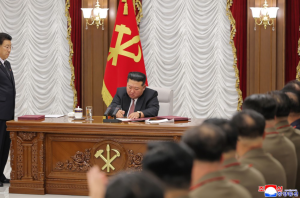
Revisions made to North Korea’s constitution formally codify its self-proclaimed “responsible nuclear weapons state” status within the country’s supreme law. By embedding the development of nuclear forces within its constitutional framework and codifying command-and-control protocols, Pyongyang appears to be signaling an absolute, long-term commitment to maintaining and modernizing its nuclear capabilities, effectively closing the door on traditional denuclearization frameworks. Rather than treating these changes as purely symbolic, policymakers in Seoul and Washington must critically evaluate how it influences North Korea’s strategic behavior, military planning, and diplomatic posture. To preserve stability and safeguard national sovereignty in this dangerous new era, South Korea and the ROK-US alliance must fundamentally overhaul their defensive architecture through integrated nuclear sharing, technical innovation, and multi-layered diplomacy.
North Korea’s Evolving Nuclear Strategy and Doctrine
Pyongyang’s nuclear pursuit has fundamentally transitioned beyond its original role as a defense-oriented mechanism for regime-survival into an offensive capability designed for theater coercion and warfighting. Following decades of covert development, North Korea has formalized its nuclear status and program development into its constitution, establishing the internal political justification and mandate for constantly enhancing its nuclear deterrent.
As of July 2026, North Korea is estimated to possess approximately 60–100 nuclear weapons and continues to expand its production of weapon-grade fissile materials, consistent with Kim Jong Un’s declared policy of exponentially increasing the country’s nuclear arsenal.[1] Current open-source assessments indicate that North Korea has the capacity to produce sufficient highly enriched uranium (HEU) and plutonium for approximately 7–18 additional nuclear weapons annually, depending on weapon design and fissile-material allocation. If current production trends continue, North Korea’s nuclear arsenal could grow substantially through 2035.[2] North Korea has also spent the early 2020s aggressively diversifying its delivery systems through the rapid development of close-range ballistic missiles (CRBMs), short-range ballistic missiles (SRBMs), and advanced cruise missiles optimized for tactical battlefield deployment.
Furthermore, the regime has normalized highly realistic, simulated tactical nuclear strike exercises directed against major military targets, airbases, ports, and command nodes across South Korea.[3] These activities indicate a sophisticated operational emphasis on integrating nuclear forces into broader, real-time military operations, demonstrating advanced proficiency in nuclear command and control (C2), order authentication, and wartime material handling.
Essentially, North Korea appears to be pursuing a sophisticated “Four-Pillar Nuclear Strategy.”[4] Under this framework, long-range strategic nuclear forces and intercontinental ballistic missiles (ICBMs) are targeted at the United States to enforce a potent “decoupling effect”—thereby complicating and delaying Washington’s intervention decisions during a Peninsula contingency—while tactical systems are simultaneously leveraged to strengthen North Korea’s theater-level coercion and coercive leverage during a regional crisis.
This offensive posturing heralds a dangerous “Third Nuclear Age,” characterized by an unprecedented blurring of the nuclear threshold.[5] This behavior is further emboldened by the DPRK-Russia Treaty on Comprehensive Strategic Partnership, which functions as a de facto military alliance, alongside Beijing’s strategic calculus, which views Pyongyang’s arsenal as a useful geopolitical counterweight to US regional influence, thereby formalizing a rigid New Cold War paradigm in Northeast Asia.
Strategic Implications of North Korea’s Evolving Nuclear Doctrine
North Korea’s laws and constitutional revisions about its nuclear program since 2022 carry profound strategic implications that alter regional security dynamics across several key dimensions.
First, the totality of laws reinforces North Korea’s rejection of denuclearization. By linking nuclear development directly to the country’s identity and legitimacy and making the advancement of nuclear forces a constitutional mandate, Pyongyang has effectively reduced the probability of voluntary nuclear concessions (low-hanging fruit) or traditional near-term denuclearization to zero.
Second, these measures significantly lower the perceived nuclear threshold. North Korea’s 2022 nuclear forces law outlines a doctrine that allows for potential preemptive and automatic nuclear use. Combined with Pyongyang’s increasingly hostile rhetoric and its designation of South Korea as a belligerent state under the “two-state” narrative, these changes have effectively removed ideological and nationalist constraints on nuclear use against fellow Koreans. They also reinforce the perception that tactical nuclear capabilities are being integrated into immediate operational doctrine, lowering the barrier for nuclear signaling and possible first-use scenarios.
Third, this low threshold for potential nuclear use creates a “nuclear backing effect” or “escalatory shield.” Reminiscent of Russia’s coercive nuclear signaling in Ukraine, Pyongyang may use its advanced nuclear capability as an umbrella to shield limited conventional or hybrid actions. In this case, the threshold for conventional or gray-zone provocations may drop significantly; the regime may calculate that it can execute localized incursions, maritime border violations, or cyber operations while using the threat of catastrophic nuclear escalation to paralyze or limit the scope of an allied ROK-US conventional response.
Finally, Pyongyang’s redefinition of inter-Korean relations and its assertion of separate sovereign borders introduce ambiguities into the existing security architecture. North Korea has long challenged the legitimacy of the Northern Limit Line and its newly defined borders could serve as a basis for more frequent or more assertive provocations within its claimed sovereign jurisdiction. This increases the risk of miscalculations and gray-zone incursions, particularly in the volatile waters surrounding the Northwest Islands.
South Korea’s Strategic Countermeasures
Unlike the symmetric deterrence established historically between other nuclear rivals, South Korea maintains a strict non-nuclear policy, relying on Washington’s extended deterrence commitments. However, the severe and growing nuclear asymmetry between the two Koreas is a source of deep security anxiety in the South. To mitigate the threat and reinforce strategic stability, Seoul and the alliance should pursue five multi-layered strategic countermeasures.
1. Correcting the Nuclear Asymmetry and Redesigning ROK-US Integrated Deterrence
A subtle yet critical perception gap exists within the alliance: while Washington naturally prioritizes defending the US homeland against strategic ICBMs, Seoul increasingly fears that countering immediate tactical nuclear threats on the Peninsula may be inadvertently deprioritized.
Declaratory warnings issued through the Nuclear Consultative Group (NCG)—most notably that any North Korean nuclear attack would result in the end of the Kim regime—remain politically significant. However, the inherent time-lag required to deploy US-based strategic assets leaves a critical vulnerability against North Korea’s potential use of fast, maneuverable hypersonic delivery systems. The highest priority must therefore be correcting this structural asymmetry.
This requires evaluating robust operational options, such as the rotational, near-permanent presence of US ballistic missile submarines (SSBNs) in or around Korean waters, or establishing clear protocols for the redeployment of US tactical nuclear weapons to the Peninsula. Traditional objections—such as provoking Beijing or undermining denuclearization narratives—are no longer analytically valid given North Korea’s constitutional revisions and rejection of denuclearization. To offset operational costs, Seoul should proactively offer to raise its defense budget to 3.5% of GDP. Furthermore, South Korea should leverage its growing domestic sentiment favoring an independent nuclear capability as a sophisticated diplomatic lever, demonstrating to Washington that a physical, highly visible US nuclear presence is required to anchor nonproliferation commitments and temper domestic pressure for alternative strategic options.[6]
2. Establishing a NATO-Style Nuclear-Sharing System Linked to OPCON Transition
To institutionalize extended deterrence beyond political declarations, the alliance should establish a formalized ROK-US Nuclear Sharing Committee. Adapting the core consultative and operational principles of the NATO model, US-controlled tactical nuclear weapons would be conceptually integrated with South Korean dual-dapable Aircraft (DCA) under a strict “dual-key” coordination and authentication system. This standing conventional-nuclear integration (CNI) framework must be permanently operationalized to ensure seamless coordination. Furthermore, the transition of wartime operational control (OPCON) should be deliberately sequenced to proceed only after US tactical nuclear assets are positioned, joint nuclear rules of engagement (ROE) are finalized, and the nuclear sharing committee is fully functional, ensuring no operational gaps occur during the transition.
3. Innovating a “4-Axis System” Based on AI and Unmanned Technology
South Korea must rapidly upgrade its conventional defense doctrine by fully embracing technological innovation, specifically Artificial Intelligence (AI) and Unmanned Aircraft Systems (UAS). This would upgrade the existing “Korean 3-Axis System,” into an AI-driven, organic “kill web.” By seamlessly linking low-earth orbit satellites, advanced intelligence assets, and autonomous swarm drones, the military can transform traditional linear tracking into a dynamic, resilient network. AI-enabled sensor fusion algorithms must be utilized to enable real-time, automatic target recognition of high-value mobile targets, such as North Korean transporter-erector-launchers (TELs), thereby reducing sensor-to-shooter latency to near-zero. Additionally, the historical segregation between ROK conventional capabilities and US strategic networks must be bridged to achieve complete integration based on real-time data sharing and missile defense interoperability.
4. Rejecting Premature Arms Control Talks and Enforcing NPT Norms
Advocating for a rapid, uncoordinated US-DPRK arms control settlement via a sudden summit represents a severe strategic risk that threatens to undermine the global nonproliferation architecture. Washington and Seoul have no strategic interest in engaging in bilateral arms control negotiations that inadvertently legitimize an illegal nuclear state that defected from the Nuclear Non-Proliferation Treaty (NPT). Any premature bargain trading a limited North Korean nuclear freeze for a drawdown of US Forces Korea (USFK) would be a severe diplomatic blunder. Instead, Seoul and Washington must strictly maintain unilateral and multilateral sanctions, rigorously execute secondary boycotts against entities trading with Pyongyang, and deploy sophisticated decoupling diplomacy to ensure that China maintains its longstanding commitment to North Korea’s denuclearization despite the growing strategic burden posed by the deepening Moscow-Pyongyang axis.
Moreover, preserving the existing sanctions architecture is strategically prudent, as it retains valuable leverage that can be employed in future negotiations with Pyongyang.
5. Deploying Indirect Normative Diplomacy for Responsible Nuclear Stewardship
Pyongyang likely views India’s historical trajectory—moving from its 1998 nuclear tests to de facto nuclear cooperation with the United States by 2005—as a viable blueprint for achieving gradual international recognition. However, the international community cannot tolerate or legitimize nuclear-state status for an aggressive, revisionist regime that routinely threatens offensive, first-use strikes. If North Korea wishes to claim the privileges of a mature nuclear power, it must be forced to face the normative costs and behavioral metrics of ‘Responsible Nuclear Stewardship.’
Seoul should orchestrate a targeted diplomatic offensive by enlisting Global South nations that maintain active diplomatic ties with Pyongyang (such as India, Indonesia, and Vietnam) alongside European nonproliferation expert groups.[7] This coalition should mount collective pressure on North Korea to accept minimum global standards, including: an official declaration of a no first se (NFU) policy; an announcement of intent to join the Fissile Material Cut-off Treaty (FMCT), implement a permanent halt to explosive testing, and ratify the Comprehensive Nuclear-Test-Ban Treaty (CTBT); a strict, verifiable prohibition on transferring nuclear material, enrichment facilities, and weapon technology to third countries or non-state actors in strict adherence with Nuclear Suppliers Group (NSG) guidelines; and a practical commitment to the Proliferation Security Initiative (PSI).
Demanding adherence to these rigorous metrics effectively exposes the fiction of North Korea’s self-proclaimed status as a responsible nuclear power, turning international norms into a powerful instrument of strategic pressure.
Conclusion
North Korea’s revised constitution stands as a grim milestone, declaring that the security environment on the Korean Peninsula cannot simply revert to past, uncoordinated dialogue paradigms. Sustainable peace can no longer be bought with premature engagement; instead, it requires strengthening a comprehensive deterrence-by-denial posture to preemptively thwart Pyongyang’s nuclear warfighting intentions.
For South Korea and the United States, the strategic challenge is to balance robust military readiness, seamless alliance cohesion, technological adaptation, and sophisticated diplomatic flexibility. Safeguarding ROK sovereignty and ensuring long-term regional stability depends on an integrated, multi-pronged approach: transforming domestic strategic debates into sophisticated diplomatic leverage to ensure US nuclear assets are visibly integrated; designing an enhanced, operational ROK-US Nuclear Sharing Committee in tandem with a carefully sequenced OPCON transition; and maintaining an ironclad sanctions coalition while mobilizing global networks to compel North Korea to submit to international norms. The constitutional revisions should therefore be viewed not as the end of policy options, but as a critical catalyst for adapting the alliance to an evolving and volatile strategic landscape.
This article was originally drafted in Korean. The initial translation was produced using AI tools and subsequently reviewed word-for-word and refined to ensure accuracy and readability.
- [1]
Stockholm International Peace Research Institute (SIPRI), SIPRI Yearbook 2026: Armaments, Disarmament and International Security (Oxford: Oxford University Press, 2026). pp. 259-260. Korean Central News Agency (KCNA). Report on the Sixth Enlarged Plenary Meeting of the Eighth Central Committee of the Workers’ Party of Korea. January 1, 2023.
- [2]
Bruce W. Bennett, Kang Choi, Cortez A Cooper III, Bruce E. Bechtol Jr., Myong-Hyun Go, Gregory S. Jones, Du-Hyeon Cha, Uk Yang, Options for Strengthening ROK Nuclear Assurance (Santa Monica, CA: RAND Corporation and The ASAN Institute for Policy Studies, 2023). https://www.rand.org/pubs/research_reports/RRA2612-1.html.
- [3]
Van Diepen, Vann H., “Assessing North Korea’s Five-Year Effort to Develop 13 New Nuclear and Missile Systems,” 38 North, January 2026. https://www.38north.org/2026/01/assessing-north-koreas-five-year-effort-to-develop-13-new-nuclear-and-missile-systems/. See also the October 10, 2022, the March 20, 2023, issue of Rodong Sinmun of North Korea.
- [4]
US Intelligence Council, National Intelligence Estimate: North Korea: Scenarios for Leveraging Nuclear Weapons Through 2030, January. 2023. https://www.dni.gov/files/ODNI/documents/assessments/NIC-Declassified-NIE-North-Korea-Scenarios-For-Leveraging-Nuclear-Weapons-June2023.pdf. In my earlier work, I argued that North Korea’s nuclear strategy includes an offensive dimension, at a time when most analyses focused primarily on defense, deterrence, and coercion. The US National Intelligence Estimate (NIE) is significant because it is the first official US intelligence assessment to explicitly recognize offense as a distinct strategic pillar. I therefore cite the NIE not because it originated this concept, but because it represents the first authoritative acknowledgment of North Korea’s offensive nuclear strategy within the US analytical community.
- [5]
Traditionally, the history of the nuclear era has been divided into two nuclear ages. The First Nuclear Age was characterized by strategic competition among the five recognized nuclear-weapon states under the Treaty on the Non-Proliferation of Nuclear Weapons (NPT). The Second Nuclear Age emerged with the appearance of de facto nuclear-armed states, notably Israel, India, Pakistan, and North Korea. However, North Korea’s emergence as a credible nuclear power has led some scholars to suggest that it represents the beginning of a Third Nuclear Age. They argue that North Korea has fundamentally altered the global nuclear landscape by demonstrating that a relatively weak state can acquire a survivable nuclear deterrent, directly threaten the United States, and proclaim nuclear weapons as the guarantor of peace and regime survival. Andrew Futter, The Third Nuclear Age: Complexity, Contestation, and the Evolution of Global Order. Oxford University Press, 2026.
- [6]
Polls tracking ROK policy anxiety and strategic alternatives are analyzed in: “South Korean Public Opinion on Autonomous Nuclear Armament and the ROK-US Alliance,” Asan Institute for Policy Studies, Annual Review. Lee, Peter K. and Kang, Chungku, “Worth the Squeeze: A Conditions-based Analysis of South Korean Public Support for Nuclear Deterrence,” Asan Issue Brief, Asan Institute for Policy Studies, May 2025, https://asaninst.org/bbs/board.php?bo_table=s1_1_eng&wr_id=236.
- [7]
Sverre Lodgaard, Nuclear Disarmament and Non-Proliferation: Towards a Nuclear-Weapon-Free World, (New York: Routledge Global Security Studies, 2013). pp. 95-114.