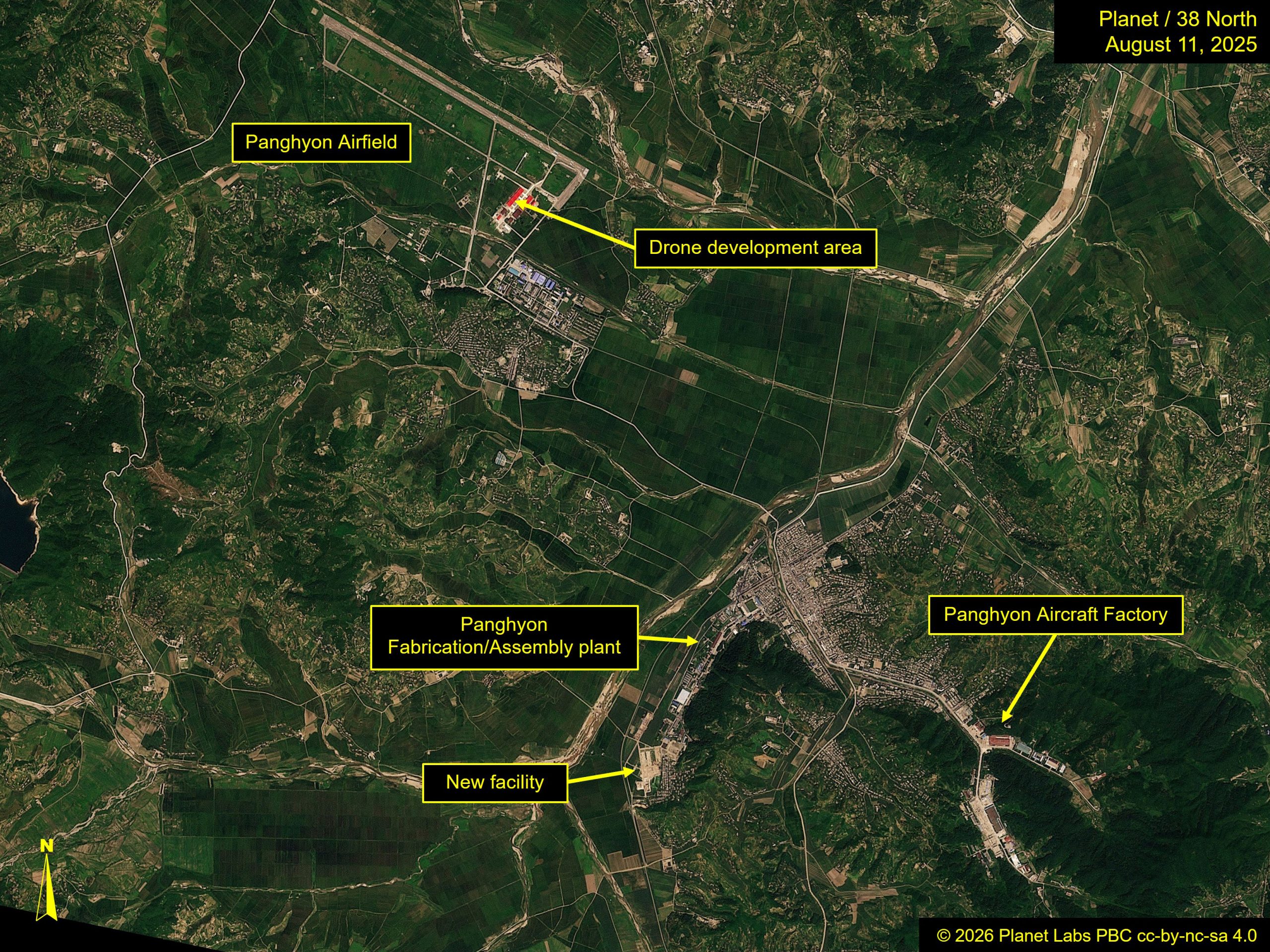
New Fabrication Buildings at Kusong Facility
Commercial satellite imagery indicates construction of several large fabrication buildings at a facility suspected of being linked to North Korea’s drone program has been completed. Work on the new buildings began last year as construction of a large new facility adjacent to another aviation-related facility was underway in Kusong in North Phyongan province.
The Kusong area has long been linked with North Korea’s military aviation development and maintenance and recently became the center of testing for its new military drone program. North Korea’s emphasis on drone development and program expansion has grown as the country has gained both exposure to and experience with drone warfare. Further construction in this area suggests that Kusong will be an important base for the country’s drone program expansion.
New Fabrication Buildings
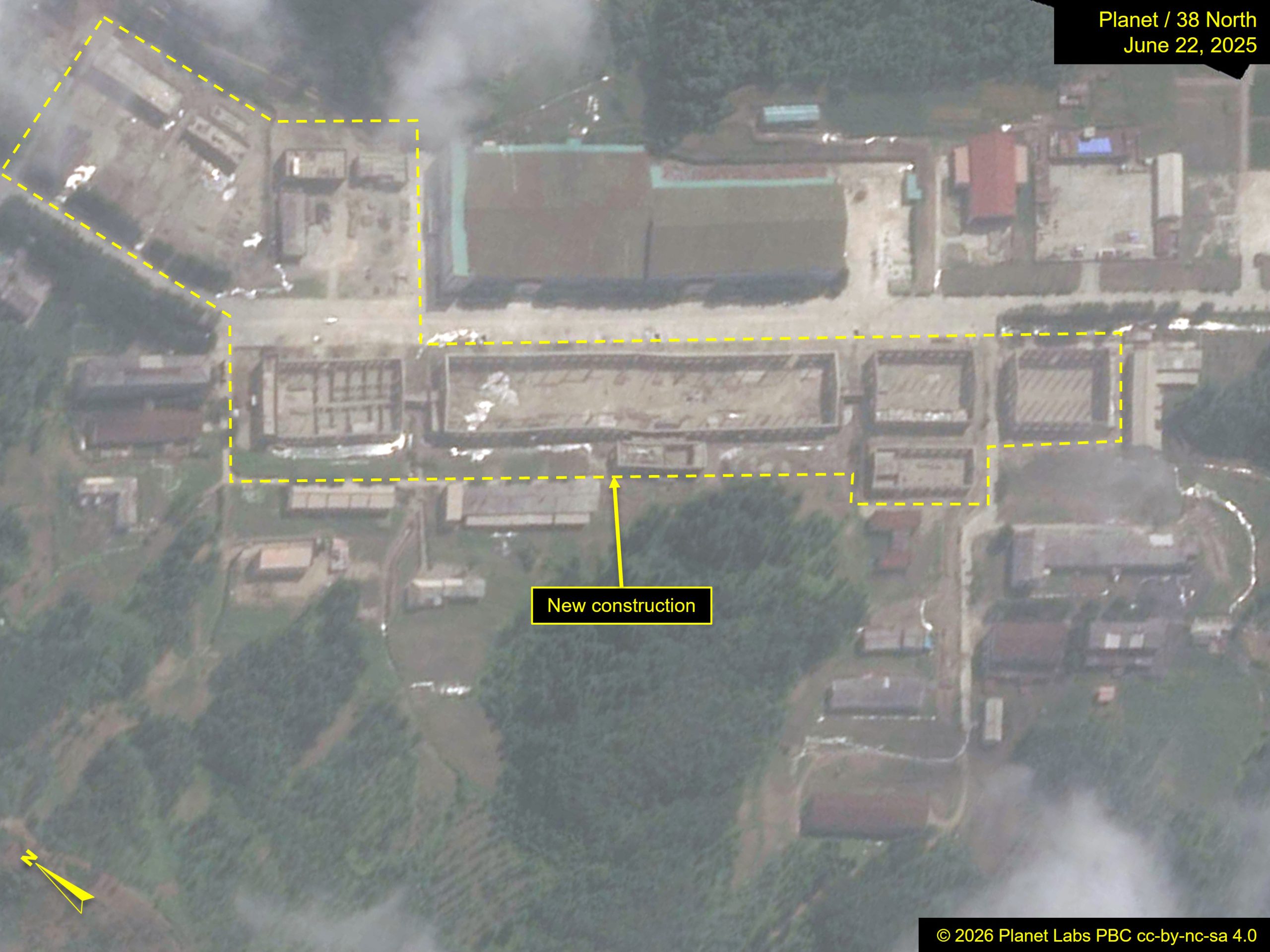
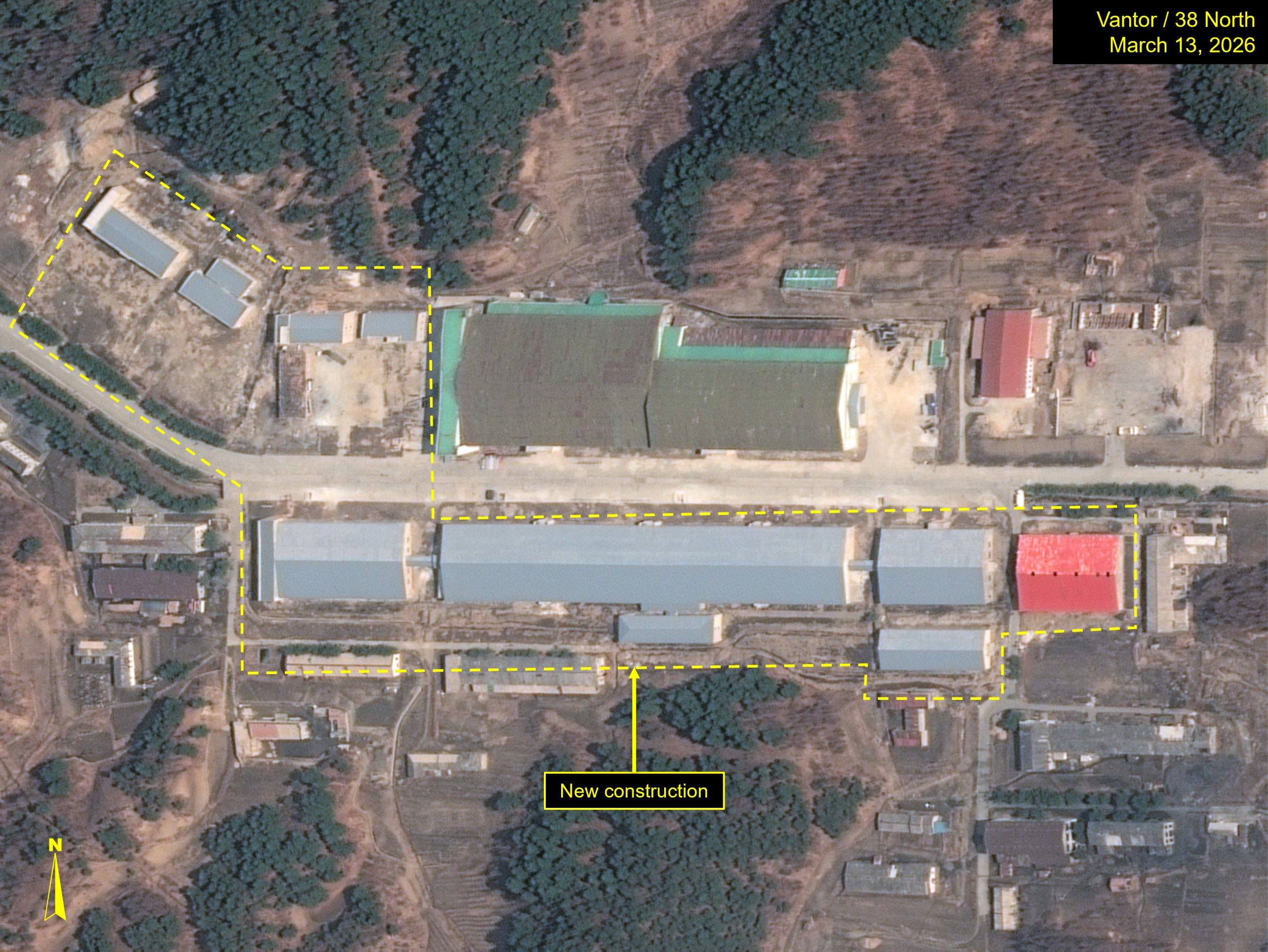
Three new fabrication buildings and support buildings were completed over the winter at a large manufacturing complex that sits in two valleys east of Kusong Airfield.
North Korea refers to the complex as the “Machine Plant managed by Jon Tong Ryol” (전동렬동무가 사업하는 기계공장)—a designation style used for a handful of military-industrial facilities whose true nature is unclear but is occasionally mentioned in public.
The factory has been linked with development and maintenance of North Korea’s air force and its aviation ambitions for decades. Kim Jong Un’s last reported visit to the site was in late March 2015 when he went to check on progress following a prior visit in August 2014. During that 2014 visit, Kim instructed plant officials to develop “various cutting-edge machine products” and to “make light aircraft.” In 2015, he watched a test flight of those aircraft.
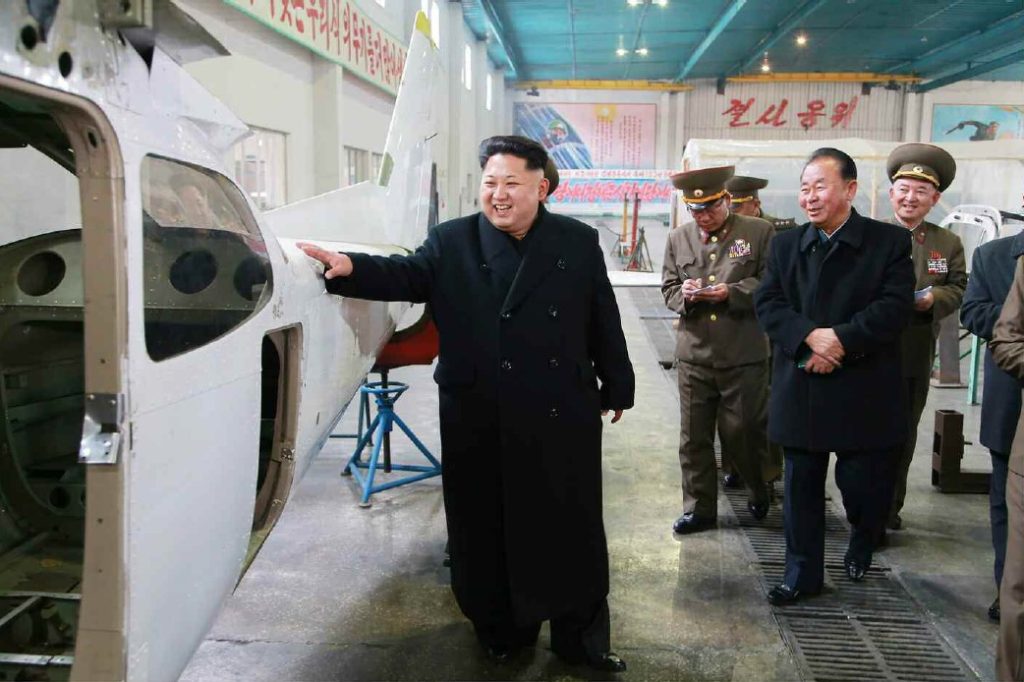
But light aircraft manufacturing does not appear to be its prime focus. Instead, the name, location, and previous declassified analysis tie the facility to military development and maintenance. This was reinforced more recently with a 2022 report that identified a helicopter rotor blade test rig at the site.
It has also been tied to missile development and is believed to be the site at which Kim Jong Un observed a Hwasong-14 ICBM launch on July 4, 2017.
In July 2024, several existing buildings at the site were demolished and large new fabrication buildings were being built in their place. External work on the new buildings now appears complete.
This includes a fabrication hall that is 225 meters-long, connected via covered walkway to two additional buildings. All three sit in line and together measure 415 meters. In addition to the new fabrication buildings, several additional buildings have been constructed. These are likely administrative or support buildings.
A New Facility
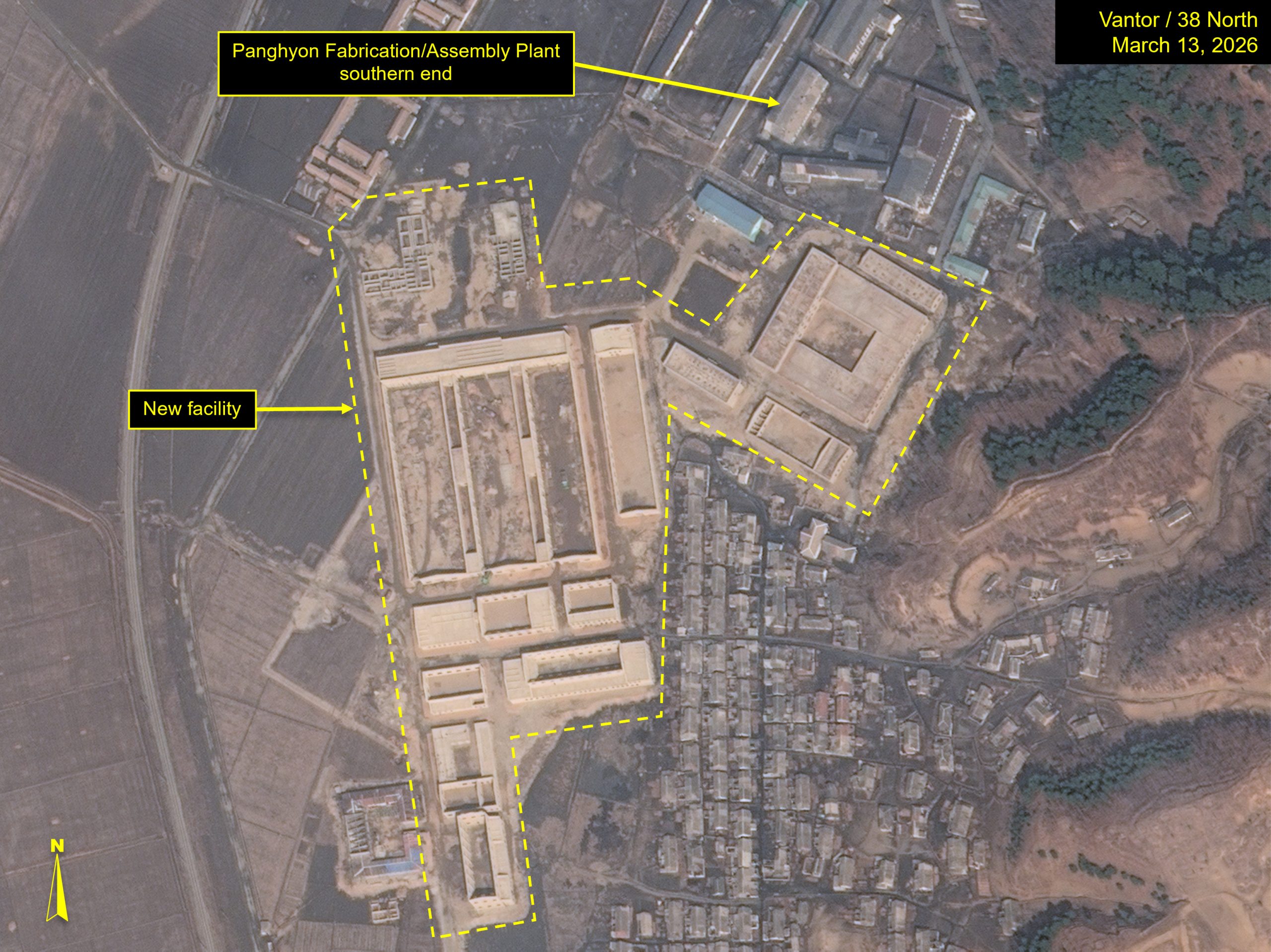
Just over 2 kilometers to the east is another aviation-related facility. The site is usually referred to as the “Panghyon Fabrication/Assembly Plant,” but its true name is unknown. The long, thin facility spans over a kilometer alongside a large hill, and part of the plant appears to be built into the hill.
Commercial satellite imagery often captures military jets within the facility, confirming it is related to aviation.
Immediately to the south of the plant, a large, new complex is under construction. It appears to include at least three fabrication halls, each 125 meters-long. Two are approximately 37 meters-wide and one is 30 meters-wide. A series of support buildings have also been constructed, although the nature of the entire complex is still unclear. Given its size and proximity to other local sites, it is worth monitoring.
Airfield Development
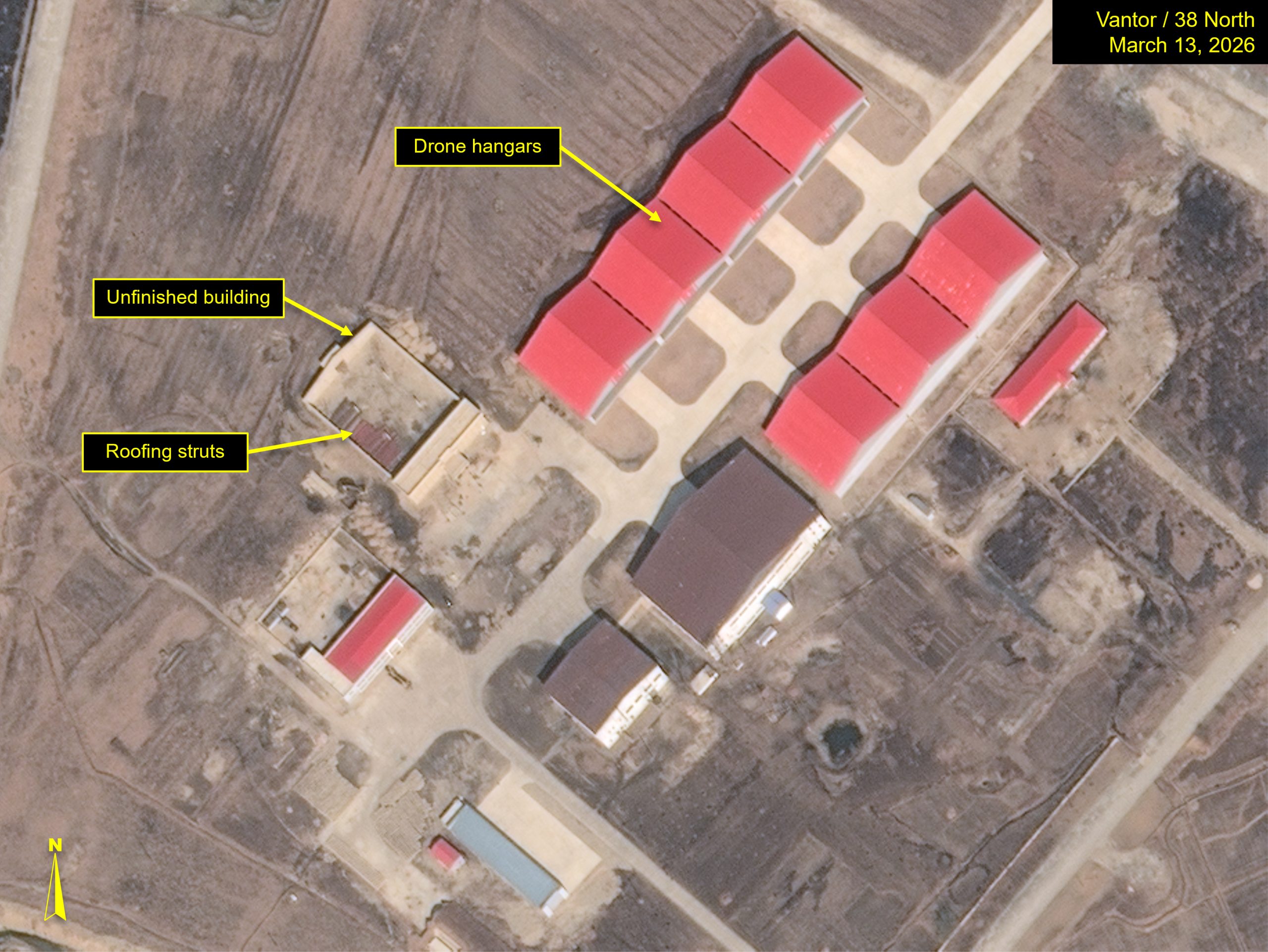
At Kusong Airfield, the roof has yet to be added to a new, large building that sits alongside a series of hangars constructed in 2024. The hangars house North Korea’s large drones, including the Saetbyol-4 and Saetbyol-9. Roofing struts are visible inside the building, indicating that roofing work might soon begin.
Centrifuge Development
The facilities covered in this report came into the spotlight in early March when South Korea’s Unification Minister, Chung Dong-young, named Kusong as one of North Korea’s uranium enrichment plants, alongside Yongbyon and Kangson. Chung attributed the identification to the IAEA, although that appears to have subsequently been corrected. The only open-source reporting on a link between Kusong and enrichment was in a 2016 report by the US-based Institute for Science and International Security that looked at historical claims.
In that report, the author, David Albright, discussed reports of a centrifuge development plant that had been located underground in the Kusong area in the 1990s and early 2000s.
Albright wrote that government officials had suggested to him that the facility in question was likely the Panghyon Fabrication/Assembly Plant which, as noted above, does include an underground area. However, there does not appear to be any other reporting in the unclassified domain that suggests such a facility is currently in operation or has been at any time in the previous two decades.