

North Korea’s Pursuit of Medical Cooperation: Opportunities and Challenges
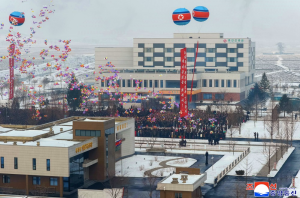
North Korea’s 20×10 Regional Development Policy, announced in January 2024 as state priority, has seen swift and consistent implementation to-date. Although it was originally designed to build local industrial bases across the country, it has evolved to include public services such as healthcare, particularly at the provincial level. Russia has, so far, been Pyongyang’s most prominent partner for formal medical cooperation, particularly in equipment and personnel exchanges, while reported exchanges with additional partners, such as Belarus and Vietnam seem to be underway.
This trend appears to reflect a broader shift in North Korea’s external engagement strategy away from the humanitarian assistance of the past to more educational and technical exchanges. The modifications to the 20×10 policy appear to reflect this change in strategy and potentially pose a narrow opening for engagement by other stakeholders as well, especially given Russia’s limitations in this area. However, developing sanctions-compliant medical engagement and health system strengthening will test the international community’s willingness to build a different relationship with North Korea—one of partnership despite politics.
North Korea’s Regional Development Policy
The North Korean government has been rigorously implementing its 20×10 regional development policy since its declaration in January 2024. This policy was originally designed as a ten-year project to construct light industry factories in 20 cities and counties annually, with the aim of stimulating regional production and consumption while promoting nationwide economic development. Given that North Korea has approximately 200 counties nationwide, it is anticipated that the entire country could be covered if the project were to be carried out successfully over a decade. The central objective of this policy is to reduce disparities between Pyongyang and the provinces, thereby allowing citizens outside the capital to benefit from a more developed socialist system.
As the plan moved from declaration to implementation, additional components beyond light industry factory construction began to be incorporated. On August 31, 2024, in a meeting for regional development, Kim Jong Un set forth the principles to be upheld in the construction of advanced city and county hospitals, science and technology dissemination centers, and grain management facilities. In a speech commemorating the 76th anniversary of the founding of the Democratic People’s Republic of Korea on September 9 of the same year, Kim Jong Un announced plans to expand the previously mentioned science and technology dissemination centers into comprehensive cultural life hubs. The plan was intended to enable residents to enjoy films, participate in sports and cultural activities, and make use of various convenience facilities.
Through this expanded approach, the government seeks not only to enhance regional economic capacity but also to raise the overall standard of living in underdeveloped local areas. In this context, it is evident that healthcare—long emphasized as a core indicator of socialist achievement—has assumed a prominent role within this broadened framework.
At the same time, independent of the regional development policy itself, North Korea had already been making considerable efforts to modernize its outdated medical infrastructure. The Pyongyang General Hospital, regarded as the country’s highest-level medical facility, was unveiled in November 2025. In addition, the construction of a mid-sized hospital in Kangdong County—intended to serve as a model for provincial hospitals—was also successfully completed in the same month.
External Support
The recent expansion of medical facilities requires not only infrastructure but also equipment, pharmaceuticals, and trained personnel. Given such needs, the North Korean government has been pursuing “bidirectional” efforts to connect Pyongyang and the provinces with medical training and knowledge. Medical professionals from Pyongyang are dispatched to local areas to transfer advanced knowledge and techniques, while provincial medical staff are invited to the capital for training and instruction to connect Pyongyang and the provinces with medical training and knowledge. Medical professionals from Pyongyang are dispatched to local areas to transfer advanced knowledge and techniques, while provincial medical staff are invited to the capital for training and instruction.
Russia has emerged as the most prominent external partner in formal health-sector cooperation. Delegations have traveled between capitals, and a bilateral health agreement was signed in 2024, followed by further institutionalization in November 2025, when Russian Health Minister Mikhail Murashko visited Pyongyang and formalized cooperation in areas including pharmaceuticals manufacturing, infectious disease control, maternal and child health, and non-communicable diseases. This also included Russia’s provision of medical equipment and machinery to North Korean hospitals, as well as training programs that invite North Korean medical professionals to Russia. The knowledge and skills acquired by Pyongyang’s top-tier medical personnel through these programs are expected to be disseminated to provincial areas through the existing Pyongyang–local medical network described above.
The Case for Diversifying Partners in Healthcare
Russia appears to account for the overwhelming majority of North Korea’s external cooperation, highlighted by regular high-level exchanges, and frequent coverage in state run media, often with details of projects or joint initiatives underway. Certainly, Pyongyang is cultivating some level of exchange and cooperation with other countries. In July 2024, Belarus and North Korea agreed during negotiations to intensify contacts at various levels. The two countries expressed particular interest in cooperation in the healthcare, education, agriculture, culture, and sports sectors. In October 2025, North Korea and Vietnam signed wide-ranging cooperation agreements, including with their defense, foreign affairs, and health ministries. However, how these agreements are being implemented is opaque, with only limited disclosure available of specific details.
While Russia maintains a longstanding tradition in basic sciences and has highlighted advances in select areas of biotechnology and vaccine development, its current standing within the global medical research community remains difficult to assess with confidence. Compared with leading Western and East Asian countries, Russia’s share of high-impact medical publications and citation influence is relatively limited, and participation in large-scale international clinical research networks appears constrained. In addition, reduced integration into global peer-review and collaborative research platforms in recent years has made external benchmarking of Russia’s medical innovation more challenging. As a result, although Russia may provide valuable bilateral support, relying predominantly on a partner whose contemporary medical standards are not widely validated within the broader international system carries inherent uncertainty.
This situation cannot be explained solely by differences in political systems. China, which also identifies as a socialist state, maintains robust international engagement, and its medical standards have already been widely recognized. Therefore, if North Korea—eager to introduce advanced medical technology and equipment—were able to move beyond its overwhelming reliance on Russia and diversify its partners for cooperation and exchange, it would be better positioned to respond appropriately to the rapidly increasing and diverse demands in the healthcare sector, including those posed by the 20×10 regional development policy.
The Form of Cooperation North Korea Seeks
Although much of North Korea’s prior external cooperation relied on humanitarian aid, this is not how it seeks to build cooperation going forward. Throughout the COVID-19 pandemic, North Korea consistently rejected international vaccine offers, including millions of doses allocated by the UN-backed COVAX program in 2021, often suggesting they be redistributed to harder-hit nations. Even during the 2022 COVID-19 domestic outbreak and the severe floods in the northwestern part of the country along the Chinese border in 2024, the regime ignored or explicitly declined humanitarian aid not only from South Korea and the US but also from its traditional allies, China and Russia.
Although a few rare and limited vaccine campaigns supported by UNICEF have been carried out in recent years, the aid and humanitarian organizations that were forced to leave North Korea during the pandemic have still not been allowed to return to Pyongyang or resume their in-country presence to date. Given these trends, it seems unlikely that these legacy humanitarian aid operations will resume in the near future. At the same time, North Korea is increasingly prioritizing reciprocal academic and technical exchanges in specialized fields, moving beyond traditional aid to focus on collaborative research in medical science, information technology, and engineering.
Within this context, there does appear to be room for cooperation going forward and signals to key actors in the international community of North Korea’s interests and needs. The most feasible openings are for education, training and capacity building programs and exchanges, both inside and potentially outside North Korea, especially in the fields of health and agriculture. While these are apolitical fields of study, facilitating this kind of cooperation falls outside normal humanitarian sanctions exemptions and will require careful navigation by external cooperation partners to accommodate, and a potential recalibration of sanctions policies in the future to account for changed circumstances.
Conclusion
North Korea’s effort to modernize provincial healthcare both in Pyongyang and under the umbrella of its 20×10 regional dvelopment policy should be read as a strategic signal that can inform approaches to future cooperation. North Korea’s predominantly Russia-linked exchanges may help in the near term, but relying on a single partner can constrain its access to evolving medical standards and wider knowledge networks. Indications of selective cooperation with other countries, including Vietnam and Belarus, suggest that North Korea is open to diversifying its external engagement strategy beyond a single bilateral channel.
For outside stakeholders, the most realistic engagement path with North Korea in the near-term is not humanitarian assistance, but a more narrowly defined technical cooperation centered on professional and academic exchange. However, building this cooperation may not be easy, given the extensive and multilayered sanctions regime. Ultimately, Pyongyang’s fundamentally changed outreach strategy will stress-test the international community’s willingness to adapt and accommodate building a different kind of relationship with North Korea.