

How South Korea Might Fight a North Korean Invasion in a Dual-Contingency Scenario
For decades, deterrence on the Korean Peninsula has rested on a single fundamental assumption: that in the event of an all-out war, US reinforcement would be swiftly introduced both from Japan and the continental United States, while Japan would provide crucial rear-area support in accordance with the existing operational plan—OPLAN 5055. This assumption has shaped not only operational planning, but also the broader strategic trust that has buttressed South Korea’s defense posture.
However, such an assumption is increasingly being questioned. A simultaneous contingency—China initiating a military invasion against Taiwan, and Russia enlarging the conflict in Europe—would place unprecedented strain upon US available forces. Under such conditions, USFK could be partially redeployed to Taiwan, US reinforcement could be delayed or curtailed, and the Japanese Self-Defense Forces—except for those that are sent to the Taiwan Strait to support US war efforts—would be fully absorbed in the defense of their territory and surrounding waters. Operational frameworks like OPLAN 5055 would become difficult, or even impossible, to execute as originally outlined.
In such a case, Pyongyang may see these conditions as presenting a rare strategic opportunity. The convergence of reduced US presence in the region, Japan’s resource constraints, and heightened global distraction could lead North Korea to think that military provocation—and even a large-scale attack—might be feasible. But could South Korea defend itself—largely alone—against a full-scale North Korean invasion?
In such a contingency, the early stages of the war would be defined by the absence of immediate US reinforcement, with an estimated 20 to 40 percent of USFK potentially redeployed to the Taiwan Strait. Naturally, South Korea would have to rely on its standing forces and prepositioned assets—including prepositioned equipment and wartime reserve stocks, similar in function to US Army Prepositioned Stocks (APS)—to absorb the initial shock. North Korea would likely exploit this window of opportunity through a combination of massive artillery and rocket attacks targeting the Seoul metropolitan area, cyber and electronic warfare, and special operations infiltration through airborne and subterranean methods. Rapid armored thrusts toward major operational targets south of the demilitarized zone (DMZ) would follow, aiming to achieve an early breakthrough before South Korea fully mobilizes its defense capabilities.
Recent observations from the Russia-Ukraine War suggest the possibility of North Korea’s adaptation of its operational approach. The increased use of low-cost drones and loitering munitions for reconnaissance and strike missions, paired with enhanced artillery coordination enabled by UAV-based targeting, indicates a more adaptive and networked battlefield methodology. At the same time, the emphasis on distributed operations—in order to reduce vulnerability to precision strikes—showcases North Korea’s awareness of the technological advantages held by more advanced militaries.
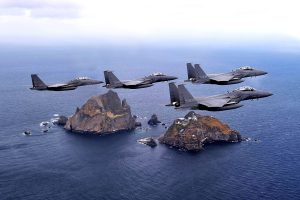
In this early phase of the war, South Korea’s priority would be survival and stabilization, rather than immediate counteroffensive action. The South Korean military maintains a qualitative edge that includes advanced ISR capabilities and superior air platforms like the F-35A, F-15K, and KF-21—it will enter service this year. Meanwhile, a multi-layered missile defense architecture comprised of M-SAM II, Patriot, and THAAD batteries—assuming they are replenished and if the US does not relocate them again to other theaters during the crisis—would ensure some degree of defense against inbounding threats. Nonetheless, without US reinforcement, these capabilities would be under sustained stress. The critical challenge would be to preserve command-and-control integrity and defensive cohesion during the first several days of high-intensity conflict.
If South Korea were able to absorb the initial blow, the war would very likely be transformed into a protracted high-intensity defense phase. In this stage, South Korea’s superiority in firepower would become increasingly important. Precision strike capability, particularly in the field of counter-battery operations, would enable the rapid suppression of North Korean artillery systems. The K9 self-propelled howitzer, coupled with guided munitions, would play a crucial role in degrading North Korea’s sustained offensive momentum.
Airpower would also become a decisive element, yet its overall effectiveness would depend on how quickly South Korea secures air superiority over the skies of the Korean Peninsula. Although the North Korean air force remains limited in its capacity, its integrated air defense network—an amalgam of SA-2, SA-3, and SA-5—could still impose operational constraints. Therefore, achieving and maintaining control of the air domain would be critical not only during defensive operations, but also during subsequent counteroffensive operations.
At the same time, South Korea’s network-centric warfare capability could offer a significant advantage—provided that its command, control, communications, computers, intelligence, surveillance, and reconnaissance systems remain resilient under. Faster decision-making cycles and effective targeting could contribute to compensating for numerical inferiority and stabilizing the battlefield. In addition, the robust foundation of South Korea’s defense industrial base functions as an invaluable source of resilience. In wartime, South Korea’s export-oriented industrial base could be reshuffled through government-led mobilization measures, enabling the incorporation of civilian industry into the defense supply chain. Unlike Ukraine in the early stages of the war in 2022, South Korea possesses the industrial capacity to produce major ammunition and equipment without interruption—ultimately reducing reliance on external resupply.
Nevertheless, significant vulnerabilities would remain. Sustained combat would place a heavy burden on munition stockpiles—munitions stored in the United Nations Command-Rear (UNC-R) bases could be prioritized to resupply US forces for Taiwan operation—including missile defense interceptors. The dense urban environment of the Seoul metropolitan area would be highly exposed to artillery and missile salvo attacks, imposing prohibitive political pressure—particularly given that South Korea’s overall civil defense readiness remains less than fully robust. Meanwhile, the loss of high-end assets, including aircraft and command nodes, would incrementally weaken operational efficiency. If US assistance cannot be expected, sustaining high-intensity operations beyond several weeks would become increasingly uncertain.
One of the most dangerous variables in this scenario is the potential use of low-yield tactical nuclear weapons. Recent simulations conducted by the Atlantic Council illustrate that Pyongyang may view limited nuclear use as a means to collapse defensive cohesion, trigger political shock, and deter outside intervention. In a situation where US extended nuclear deterrence is not immediately visible or credible, South Korea could face a serious strategic dilemma. A purely proportional conventional response would risk failing to restore deterrence, while escalation carries the danger of further nuclear use by North Korea.
South Korea’s existing doctrinal tools—the Three-Axis System comprised by the Kill Chain, Korea Air and Missile Defense (KAMD), and Korea Massive Punishment and Retaliation (KMPR)—offer a conceptual basis for responding to such threats. However, if nuclear weapons were to be actually deployed, their practical effectiveness would remain uncertain. The challenge would be psychological as well as political—not only operational—as the government would need to maintain public trust and manage the risk of escalation.
Under such constraints, the overall outcome of the war without US reinforcement would be conditional. In the short term, South Korea has a high chance of preventing North Korea’s rapid breakthrough, stabilizing major defense perimeters, and inflicting notable attrition on advancing forces. Nonetheless, the situation would likely become murky in the medium term. Protracted combat would strain the logistics system, reduce the availability of ammunition, while civilian disruption would impose additional constraints on military operations. In the long term, the absence of external support would make it extremely difficult to maintain deterrence credibility and operational tempo. To be sure, South Korea would be able to avoid a complete defeat. But achieving a decisive victory alone would be far more challenging.
These realities suggest policy implications that go beyond South Korea. For Seoul, the most urgent task is to prepare for a scenario in which it is required to operate autonomously for an extended period of time. To make this possible, it would necessitate expanding stockpiles of precision-guided munitions and interceptors—especially the M-SAM II and L-SAM II—that could withstand months of high-intensity warfare, and hardening command-and-control systems against cyber and kinetic disruptions. Investments in counter-artillery capabilities, including AI-based targeting and long-range precision strike, would be a sine qua non. At the same time, South Korea should strengthen the credibility of its non-nuclear deterrence capability that could impose severe costs on the North Korean leadership even when immediate US support is unavailable.
For the United States, the central challenge hinges on maintaining the credibility of its deterrence across multiple theaters. This would require selective, surge-based forward deployment of critical assets to the Korean Peninsula, adoption of a layered nuclear deterrence approach across both theaters, and avoiding a unilateral, abrupt redeployment of USFK without reasonable or sufficient consultation with the South Korean counterparts so as not to undermine the existing deterrence posture.
For Japan, it is necessary to ensure that some level of rear-area support and coordination with South Korea can be sustained even in the context of a Taiwan contingency, while strengthening a functional trilateral cooperation mechanism—using the 2023 Camp David trilateral summit as a reference point—that can operate effectively even under degraded conditions.
Ultimately, the long-held assumption that sizeable US reinforcement would arrive in time may not necessarily apply in an era of overlapping strategic crises. South Korea is not defenseless; it possesses one of the most capable militaries in the region, underpinned by advanced technology and a robust industrial base. Yet self-reliance does not necessarily equal a self-sufficient victory. To maintain deterrence, Washington, Tokyo, and Seoul should prepare for the possibility—no matter how low it may be—that the next conflict on the Korean Peninsula may begin with South Korea standing largely on its own.