

Building a State-Controlled Knowledge Infrastructure: The Evolution of Distance Education in North Korea
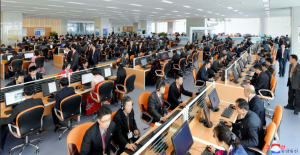
More often than not, the outside world dismisses North Korean digital education as technologically backward or merely propagandistic. Yet a close review of North Korean policy documents, educational publications, and other primary sources reveals something more substantial: a functional, state-directed educational infrastructure tied to workforce development and scientific training under centralized state management.
North Korea’s online education—or “distance education” (원격교육), as it is officially termed—did not emerge overnight. Over more than two decades, it has developed into a key component of the regime’s broader effort to modernize technical training and expand scientific and technological (S&T) capacity under centralized control.
The system’s operational capabilities became particularly visible during the COVID-19 pandemic, when North Korea rapidly deployed real-time distance learning programs to retrain healthcare workers and epidemic prevention personnel.[1] The scale and sophistication of these efforts challenge common portrayals of North Korea as technologically stagnant or incapable of implementing complex digital systems.
More recently, North Korea has expanded the role of distance education as part of its broader national modernization strategy. In support of the “20×10 Regional Development Policy,” introduced in January 2024, distance education programs have been used to build a technically skilled workforce for newly established regional factories,[2] reflecting the state’s longer-term effort to construct a nationwide S&T information and knowledge-dissemination network.
This article traces the evolution of North Korea’s distance education system from the Kim Il Sung era to the present, examining how it developed from a limited correspondence-based model into a nationwide digital education network under Kim Jong Un. In doing so, it argues that North Korea’s distance education system should be understood not simply as an educational initiative, but as part of a broader state-led effort to manage workforce development, expand scientific and technological capacity, and integrate digital technologies into centralized systems of governance and national development.
Distance Education: Historical Trajectory
North Korea’s distance education system has evolved through distinct stages, each shaped by changes in leadership, policy priorities, and national strategy—from its early analog origins under Kim Il Sung to its institutional consolidation under Kim Jong Un. The evolution of the system reveals the complex interplay among education, governance, and national development, as well as the emergence of an evolving—though tightly controlled—system of knowledge production and dissemination.
Phase 1: Emergence (Kim Il Sung’s Study-While-Working System–2011)
The origins of distance education in North Korea date back to the early post-liberation period, beginning with correspondence education programs designed to train teachers and adult workers.[3] Under Kim Il Sung, this system evolved into a full-fledged study-while-working educational model, particularly after the 1960s, when factory colleges and workplace-based training programs became institutionalized. Students attended night or correspondence classes while remaining embedded in production units, allowing the state to expand access to higher education without disrupting labor output.
During the 1970s and 1980s, the state introduced broadcast education via radio and television, complementing correspondence methods with ideological and technical instruction.[4] Although not yet digital, these early initiatives laid the groundwork for scalable forms of remotely delivered education. North Korea experimented with combining audiovisual broadcasts, telephone-based discussions, and written feedback mechanisms to simulate interactive learning.
During the 1990s, amid a nationwide economic crisis, informatization became a growing state priority. Early computerization efforts in the education sector focused primarily on elite institutions and the identification of S&T prodigies.[5] A major shift occurred in the 2000s, when Kim Jong Il’s emphasis on the “Information Industry Era” led to pilot initiatives in digital learning. Another turning point came in 2006, when Kim Chaek University of Technology opened an electronic library and initiated the development of a distance learning platform.[6] This system enabled university lectures to be delivered through a national intranet, expanding access for factory colleges and research institutes.
By 2010–2011, North Korea had established an initial nationwide network of electronic libraries, launched pilot distance education programs at major universities, and elevated Kim Chaek University’s Distance Education Center into a full College of Distance Education.[7] This marked the institutional recognition of digital distance education as part of the formal higher education system. A public-access model, centered around the Grand People’s Study House and provincial libraries, also began delivering technical content through distance lectures, further supporting nationwide S&T education and workforce training.[8] This phase illustrates how distance education evolved from analog correspondence models into a blended system incorporating digital tools into North Korea’s longstanding framework of workplace-based adult learning.
Phase 2: Establishment (2012–2016)
Following Kim Jong Un’s rise to power, digital distance education was formally elevated to a national policy priority. Building on earlier infrastructure and experimentation, the new leadership promoted digital distance education as a key component of North Korea’s “industrial revolution in the new century” and broader S&T-driven development strategy.
This phase was characterized by rapid policy expansion and institutional scaling. In 2013 Kim Jong Un launched the initiative to “make all the people well-versed in S&T,” positioning digital distance education as a central mechanism for expanding technical education across multiple sectors.[9] Distance education was no longer confined to elite institutions; instead, it expanded across universities, industrial sites, and public learning facilities.
A major milestone during this period was the development of a model learning management system (LMS) at Kim Chaek University of Technology.[10] The system reportedly supported real-time and recorded lectures, automated assessment and evaluation functions, and the tracking of student performance and participation. Although state media presented these systems as nationwide achievements, the actual quality and accessibility of digital infrastructure likely varied considerably across regions and institutions. The system subsequently emerged as an important prototype for the broader expansion of digital distance education to universities, workplace-based colleges, and technical training facilities across the country.
Between 2014 and 2016, the state undertook a broad consolidation of educational infrastructure, including:
- The unification and integration of universities under the banner of the “educational revolution in the new century,” a process intended in part to standardize curricula, centralize educational management, and facilitate the wider expansion of digital distance education networks across institutions[11];
- The rapid expansion of S&T Dissemination Rooms (workplace computer rooms)[12] and Miraewon public library facilities connected to the national information network[13]; and
- The construction and operationalization of the Sci-Tech Complex, inaugurated in 2016 as North Korea’s largest digital knowledge and e-learning hub, as the national center for S&T dissemination and lifelong technical learning.[14]
These developments culminated in the Seventh Party Congress of 2016, where digital distance education was officially recognized as a cornerstone of North Korea’s educational modernization strategy.[15] This phase marked a decisive transition from experimentation to institutional system-building, as digital education became increasingly scaled, regulated, and integrated into national administrative structures.
Phase 3: Maturation and Applications (2017–Present)
The third phase marks the maturation and functional diversification of digital distance education in North Korea. Following its institutional consolidation, the state focused on expanding practical applications, strengthening digital infrastructure, and refining monitoring systems.
In 2020, the Distance Education Act was enacted, providing legislative backing for the country’s digital distance education system.[16] The law aimed to standardize operational procedures, expand institutional accountability, and further integrate educational planning with broader state development objectives.
This period also saw the institutional consolidation of S&T Dissemination Rooms and the strengthening of the Sci-Tech Complex as the central hub for technical knowledge dissemination. The Grand People’s Study House continued coordinating digital education activities nationwide, while provincial libraries and electronic learning facilities received additional investment and technical support.
Importantly, digital distance education evolved into a multipurpose educational platform serving a broad range of state-directed objectives beyond university instruction. These included:
- teacher retraining and certification,[17]
- technical upskilling of technocrats[18] and economic cadres,[19] and
- public health education, particularly for epidemic prevention during COVID-19.[20]
Technological upgrades during this phase included expanded LMS capabilities, real-time interactivity, AI-based feedback systems, and personalized content delivery.[21] These developments were intended to improve the efficiency and flexibility of digital education while allowing the state to respond to sector-specific needs without weakening ideological oversight.
This phase demonstrates how digital distance education evolved into a comprehensive instrument of workforce modernization, technical dissemination, and state administration. The system has become a normalized component of North Korea’s educational ecosystem, integrated across institutions and sectors.
A Uniquely North Korean Digital Distance Education Model
Digital distance education in North Korea has evolved into a structured and institutionalized system aligned with the state’s broader modernization strategy. Across its three historical phases—emergence, establishment, and maturation—the system has reflected North Korea’s sustained effort to expand technical capacity and workforce training while maintaining centralized political authority.
The development of digital distance education has been neither ad hoc nor merely symbolic. Rather, it has followed a deliberate trajectory shaped by state policy priorities, ideological imperatives, and technological adaptation. Each phase—from Kim Il Sung’s study-while-working model, through Kim Jong Il’s early digital experimentation, to Kim Jong Un’s nationwide expansion efforts—has involved institutional coordination and long-term planning.
This trajectory illustrates the regime’s ability to incorporate technological change into centralized administrative structures without loosening political oversight. While the adoption of LMS platforms, AI-assisted learning systems, and real-time lecture technologies may resemble educational practices elsewhere, their function within North Korea differs significantly. These technologies are not primarily designed to promote student autonomy or pedagogical liberalization. Rather, they are intended to improve workforce training efficiency, standardize instruction, strengthen monitoring mechanisms, and reinforce ideological conformity.
Digital distance education has also evolved into a multifunctional state instrument extending beyond higher education. Its applications include lifelong education programs, workforce retraining initiatives, and public health instruction during crises such as the COVID-19 pandemic. By embedding educational programs into workplaces, production sites, and regional study hubs, the state has expanded the reach of digital learning while maintaining centralized oversight of labor and knowledge dissemination.
Importantly, digital distance education plays a major role in the dissemination of S&T knowledge. Institutions such as the Sci-Tech Complex, People’s Study Houses, S&T Dissemination Rooms, and Miraewon function not only as educational venues but also as mechanisms supporting Kim Jong Un’s initiative to “make all the people well-versed in S&T.” In this sense, digital distance education has become closely connected to broader workforce modernization and technical capacity-building efforts.
Digital distance education has now become a normalized component of North Korea’s national education system. What began as an experimental initiative has evolved into a legally recognized and administratively institutionalized mode of instruction supported by state regulations and nationwide implementation strategies.
At the same time, the system remains constrained by North Korea’s uneven technological environment. Limited personal computer ownership, unstable electricity supplies in some regions, and disparities in network accessibility continue to shape how digital education is experienced in practice, particularly outside Pyongyang and major institutional centers.
More broadly, the North Korean case challenges conventional assumptions that digital education necessarily promotes openness, decentralization, or liberalization. Instead, it demonstrates how digital technologies can be incorporated into a centralized system of workforce training, technical knowledge dissemination, and state-led modernization. In North Korea, digital transformation has reinforced—rather than weakened—centralized governance and ideological control.
Conclusion
North Korea’s digital distance education system should not be viewed merely as an educational initiative. It increasingly functions as part of a broader state infrastructure for workforce management, technical dissemination, and administrative control. Policymakers and researchers should therefore analyze digital education alongside other components of North Korea’s evolving information and governance architecture.
The expansion of learning management systems, digital monitoring tools, and networked educational platforms also suggests that North Korea’s technological modernization efforts extend beyond military and surveillance sectors. Educational technologies may play an important role in strengthening state resilience, improving technical training, and supporting long-term economic adaptation under sanctions conditions. By expanding technical education and workforce retraining without requiring large-scale overseas engagement, digital distance education may also help the regime mitigate some of the structural constraints imposed by international isolation and resource scarcity.
At the same time, significant infrastructural disparities likely continue to constrain implementation outside major urban centers. Future research should therefore focus not only on official technological capabilities but also on regional inequalities in electricity supply, network access, and device availability.
Finally, the North Korean case challenges assumptions that digital connectivity necessarily leads to political openness or decentralization. Instead, it demonstrates how authoritarian systems can adapt digital technologies to strengthen state capacity while pursuing selective forms of modernization.
This paper is based on Yonho Kim’s dissertation, “The Historical Trajectory of Digital Distance Education in North Korea: A Tool for Knowledge-Based Economy and National Development.” Preliminary research for this project was supported by the Institute for Far Eastern Studies at Kyungnam University.*
- [1]
“방역 일군들을 위한 원격재교육이 심화 된다 [Distance re-education for epidemic prevention officials is deepened],” Rodong Sinmun, May 27, 2022.
- [2]
“<지방중흥의 새시대를 실천성과로 빛내이자> 당의 지방발전정책집행을 강력히 추진 [Let’s Illuminate the New Era of Regional Revitalization with Practical Achievements: Strongly Promote the Implementation of the Party’s Regional Development Policy],” Rodong Sinmun, March 14, 2025.
- [3]
C.-H. Kim, 조선교육사 [Education history of Joseon], vol. 3 (Pyongyang: Social Science Press, 1990), 206.
- [4]
J. S. Kim, “북한의 성인대상 원격교육에 관한 연구: 변천과정을 통해 드러난 특성 분석을 중심으로 [A study on distance education for adults in North Korea],” Journal of Lifelong Learning Society 5, no. 2 (2009): 183–206.
- [5]
J. A. Cho, C. K. Lee, and H. S. Eom, ‘지식경제시대’ 북한의 대학과 고등교육 [North Korea’s universities and higher education in the “knowledge economy era”], KINU Research Series 20, no. 24 (2020), 137.
- [6]
“리상사회의 면모가 반영된 전자도서관 [An electronic library reflecting the aspects of an ideal society],” Rodong Sinmun, January 16, 2006.
- [7]
“여러모로 좋은 원격강의 [Distance lectures beneficial in many ways],” Rodong Sinmun, November 16, 2013.
- [8]
“전민학습의 새 경지를 개척한 최첨단 돌파성과 [Breakthrough achievements in pioneering a new stage of nationwide learning],” Minju Choson, November 19, 2010.
- [9]
“우리 나라 사회주의 교육제도의 우월성을 더욱 높이 발양시키자: 높은 목표, 치밀한 조직사업 [Let’s further demonstrate the excellence of our country’s socialist education system: High goals and meticulous organizational work],” Minju Choson, September 6, 2013.
- [10]
“경애하는 김정은원수님께서 평양기초식품공장을 현지지도하시였다 [Dear Marshal Kim Jong Un provided on-site guidance at the Pyongyang Basic Food Factory],” Rodong Sinmun, June 8, 2013.
- [11]
“새 세기 교육혁명을 일으켜 우리 나라를 교육의 나라, 인재강국으로 빛내이자 [Let Us Bring About the Educational Revolution in the New Century and Glorify Our Country as a Land of Education and a Powerhouse of Human Resources],” Rodong Sinmun, September 6, 2014.
- [12]
“과학기술발전에 인민의 행복과 조국의 미래가 있다: 전민과학기술인재화 실현에 이바지하는 위력한 거점들 [The Happiness of the People and the Future of the Country Lie in Scientific and Technological Development: Powerful Bases Contributing to Making All People Well-Versed in Science and Technology],” Minju Choson, December 11, 2015; “모든 단위에서 과학기술보급실을 잘 꾸려놓고 운영을 정상화하자 [Let’s Establish and Normalize the Operation of Science and Technology Dissemination Rooms in All Units]: 기술도약의 거점 [A Hub for Technological Leaps],” Rodong Sinmun, July 18, 2016.
- [13]
“사회주의 교육제도의 우월성을 남김없이 과시 [Fully Demonstrating the Excellence of the Socialist Education System],” Minju Choson, October 29, 2015; “조선로동당 제7차대회에서 한 당중앙위원회 사업총화보고—김정은 [Report on the Work of the Central Committee at the 7th Congress of the Workers’ Party of Korea—Kim Jong Un],” Rodong Sinmun, May 8, 2016.
- [14]
“전민학습의 대전당, 최신과학기술보급거점—세상에 내놓고 자랑할만 한 과학기술전당을 돌아보고 [The Grand Hall of National Learning and a Hub for Disseminating Advanced Science and Technology—A Look at the Sci-Tech Complex, a Proud Achievement to Showcase to the World],” Rodong Sinmun, January 24, 2016.
- [15]
“조선로동당 제7차대회에서 한 당중앙위원회 사업총화보고—김정은 [Report on the general review of the work of the Central Committee at the 7th Congress of the Workers’ Party of Korea—Kim Jong Un],” Rodong Sinmun, May 8, 2016.
- [16]
“조선민주주의인민공화국 최고인민회의 제14기 제3차회의 진행 [The 3rd meeting of the 14th Supreme People’s Assembly of the Democratic People’s Republic of Korea],” Rodong Sinmun, April 13, 2020.
- [17]
“수만 명의 교원, 교양원들이 원격재교육을 받고 있다 [Tens of Thousands of Teachers and Instructors Are Receiving Distance Retraining],” Rodong Sinmun, May 25, 2020.
- [18]
“과학자, 기술자들을 위한 원격재교육이 진행된다 [Distance Re-Education for Scientists and Technicians Is Being Conducted],” Rodong Sinmun, April 13, 2022; “교육혁명의 불길 높이 전망적발전을 위한 토대를 착실하게 다져나가자: 올해 목표수행에 계속 박차를 [Let Us Firmly Establish the Foundation for Long-Term Development with the Flames of the Education Revolution: Continuing to Accelerate the Implementation of This Year’s Goals],” Rodong Sinmun, October 14, 2022; “과학자, 기술자들의 실력제고에 주력 [Focusing on Enhancing the Competency of Scientists and Technicians],” Rodong Sinmun, August 22, 2023.
- [19]
“부단히 배우며 실무수준을 높여야 맡은 책임을 다할 수 있다 [Constant Learning and Improvement of Practical Skills Are Necessary to Fulfill One’s Responsibilities],” Rodong Sinmun, February 25, 2021; “전국의 수많은 일군들 원격교육체계에 망라, 과학기술학습열의 고조 [Numerous Officials Across the Country Are Included in the Distance Education System, Raising Enthusiasm for Science and Technology Learning],” Rodong Sinmun, December 4, 2022.
- [20]
“방역일군들을 위한 원격재교육이 심화된다 [Distance Re-Education for Epidemic Prevention Officials Is Being Deepened],” Rodong Sinmun, May 27, 2022; “방역대전은 조국보위전, 인민사수전: 선진적이며 과학적인 방역능력 건설 각방으로 추진 [The Great Anti-Epidemic War Is a Battle to Defend the Country and Safeguard the People: Promoting Advanced and Scientific Epidemic Prevention Capacity-Building in Various Ways],” Rodong Sinmun, July 18, 2022.
- [21]
“인민경제전반을 활성화하는데서 과학자, 기술자들의 역할을 더욱 높이자: 발명소식 [Let’s Further Enhance the Role of Scientists and Technicians in Revitalizing the National Economy: Invention News],” Rodong Sinmun, May 29, 2018; “교육사업을 과학적토대우에 올려세워 기한된 바람을 세차게: 나날이 발전하는 원격교육체계 [Vigorously Raising Education onto a Scientific Foundation: The Continuously Advancing Distance Education System],” Rodong Sinmun, August 30, 2018; “경애하는 최고령도자동지의 현지말씀 관철로 들끓는 영광의 교정—김책공업종합대학에서: 일류급대학건설에로 나아가는 힘찬 발걸음 [A Campus Vibrant with Efforts to Implement the Respected Supreme Leader’s Instructions—At Kim Chaek University of Technology: Strong Steps Toward Becoming a World-Class University],” Rodong Sinmun, October 22, 2018; “교육체계가 완비되고 있다 [The Education System Is Being Completed],” Rodong Sinmun, September 3, 2019; “참관기: 수자경제를 지향한 정보기술발전의 밝은 앞날을 내다본다 [Observation Report: Looking Ahead to a Bright Future for Information Technology Development Oriented Toward the Digital Economy],” Minju Choson, November 8, 2019.