

Across the Border: An Area Awaiting Rural Development
Across North Korea, the countryside is being transformed. Over the past few years, Kim Jong Un’s rural housing initiative has seen tens of thousands of houses and apartment buildings constructed, and the 20×10 regional development initiative is quickly building-up local industries across the country.
Rural development progress is visible on commercial satellite imagery and boasted in state media reports, but a visit to the inter-Korean border is a reminder that much of the country is still living in—as Kim Jong Un described it—“centuries-old backwardness.”
To be sure, most rural areas of North Korea visible across the border appear neat and tidy. But they also appear old and tired. The buildings are probably all functional but have seen better days.There appears little in the way of automation or technology in either daily life or farming. Occasionally, an old truck or motorcycle is visible, but it is easy to see why Kim Jong Un concluded that the rural way of life has not advanced much in many decades.
Kim Jong Un’s rural development plans are moving fast, but villages like this are a reminded that so much work lies ahead.
This is the second in a two-part series looking at scenes across the inter-Korean border. The first covered construction work along the southern border.
No Rural Paradise
The Aegibong Observatory on Ganghwa Island, South Korea, is just 1.5 kilometers from the North Korean shoreline and offers great views of a small pocket of Kaesong’s Phanmun District. The largely rural district sits to the east and south of Kaesong city and includes the Kaesong Industrial Zone at its center.
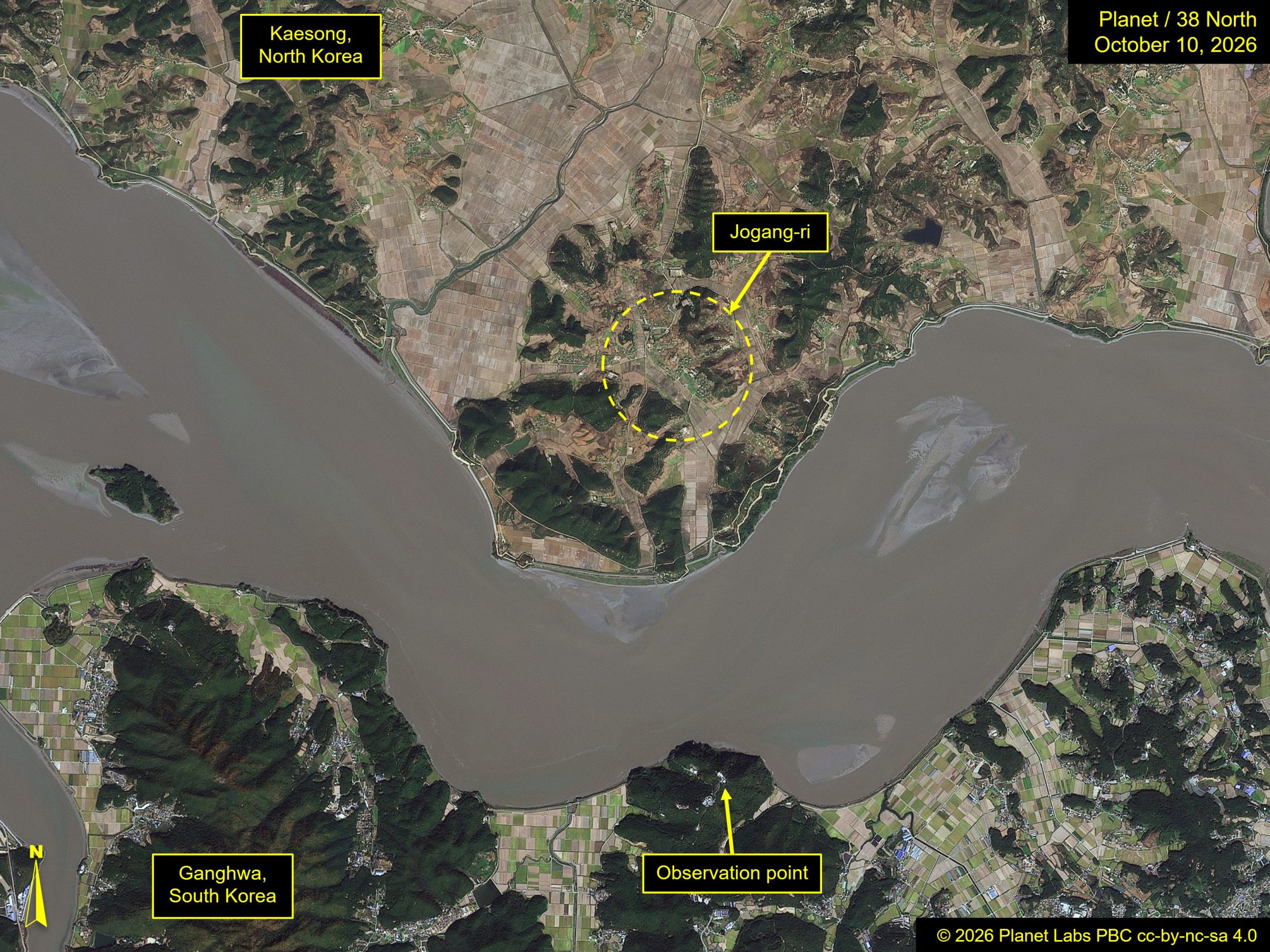
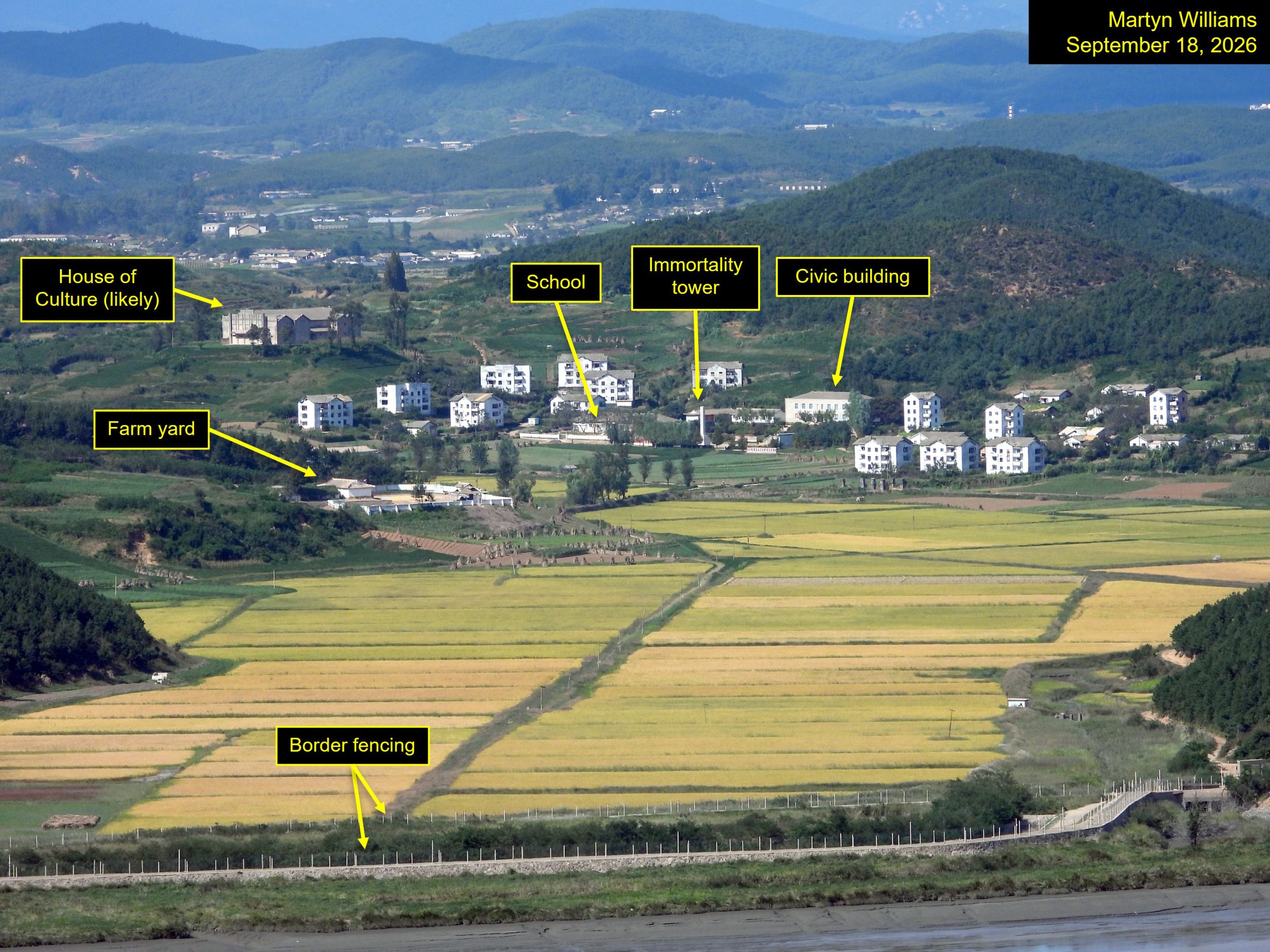
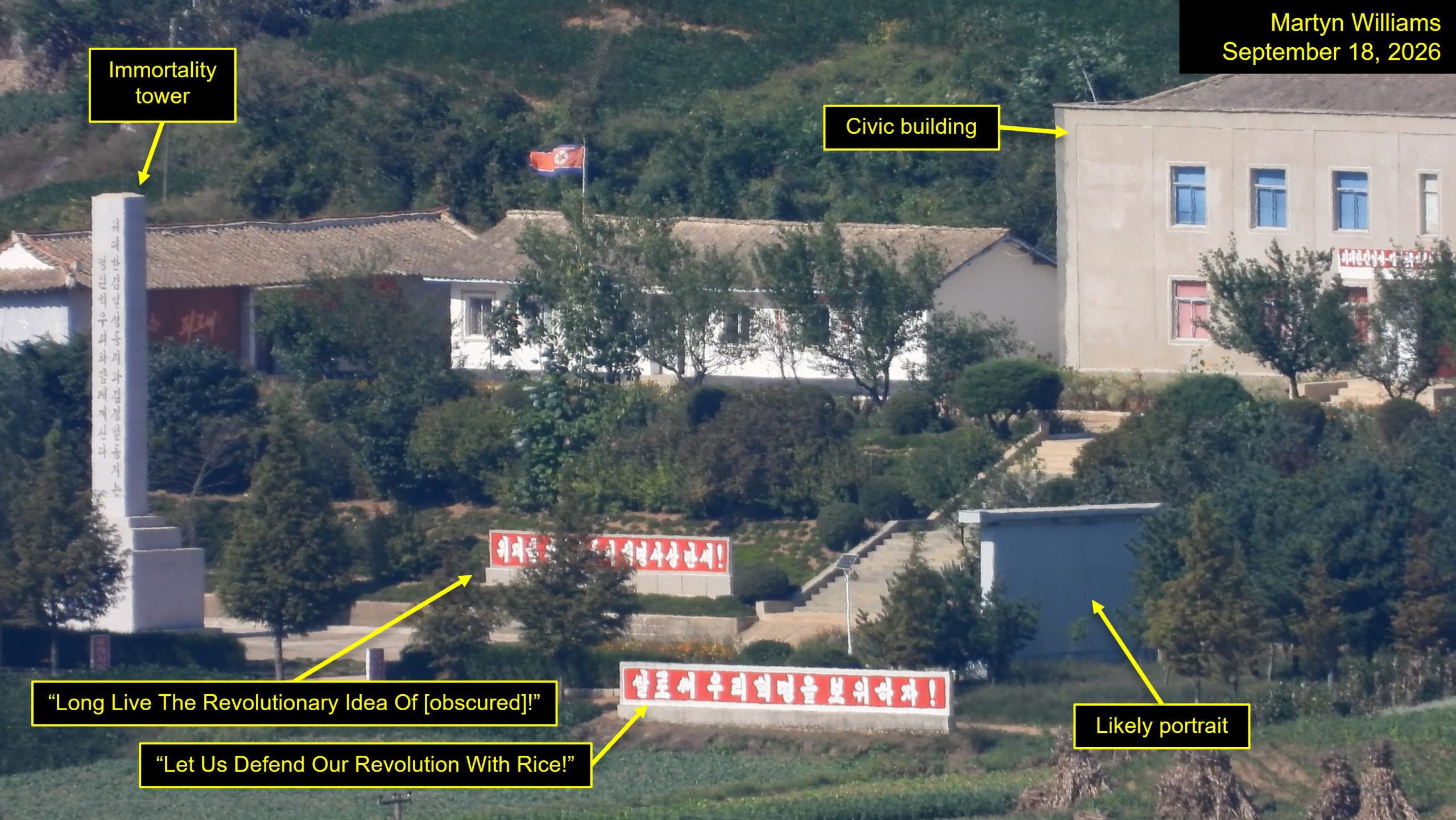
Directly across the river from the observatory is the small agricultural community of Jogang-ri. The village is centered around a civic building with steps leading up to it. Like most North Korean villages, there is an immortality tower near the center. Thousands of such towers dot the country as a monument to the founder and first president, Kim Il Sung.
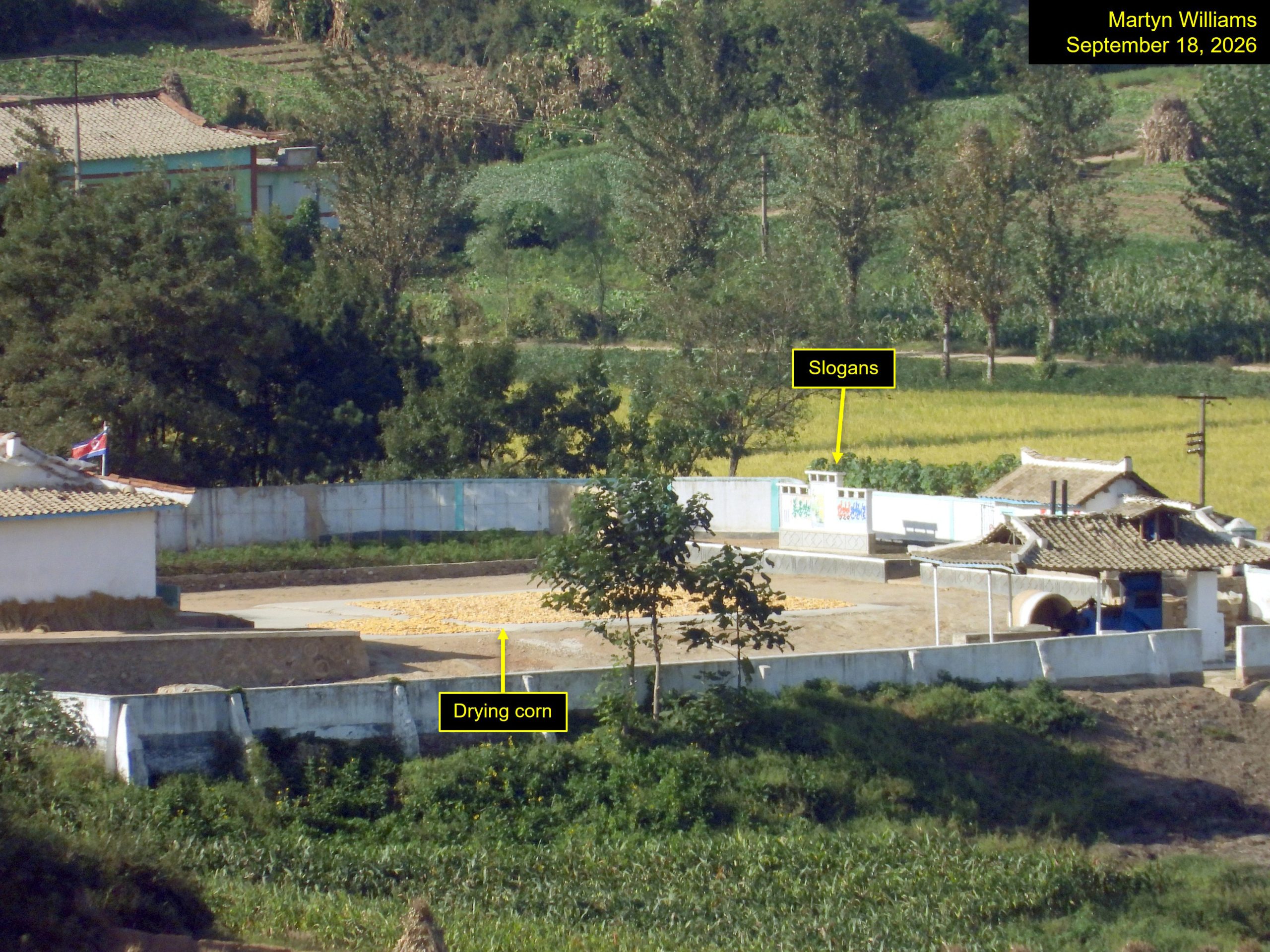
The rear is visible of what is likely a large portrait of one or more North Korean leaders painted on the concrete. Alongside are two large slogans. One signifies this is a farming community: “Let Us Defend Our Revolution With Rice!” The other is partially obscured by a tree but the visible part reads “Long Live the Revolutionary Idea of Great [words obscured]!”
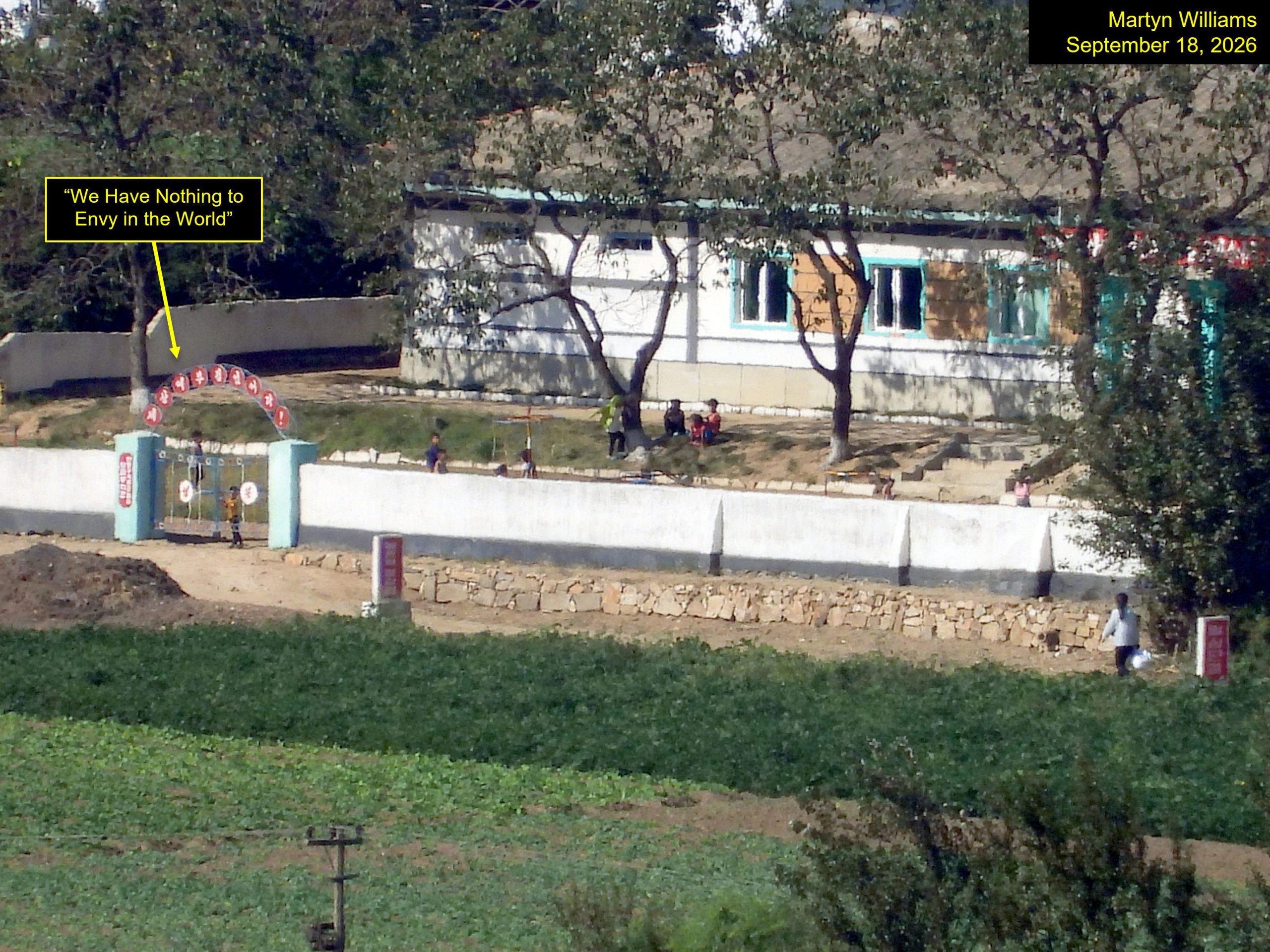
Next door to the civic building is a small school. In the photos, taken around 3pm, children are visible running around the school yard, seemingly playing. Adults occasionally wandered to the school gates to meet or speak to them.
Above the entrance to the school yard is an arch with the phrase “We Have Nothing to Envy in the World.”
A week before I observed Jogang-ri, state media praised the village farm’s “workteam No. 5” for “raising the level of ideological consciousness of agricultural workers so as to train them into masters of the rural revolution in the new era while pushing ahead with the work to better the rural living environment.”
The slogans reflect the constant ideological reinforcement prevalent in North Korean life.
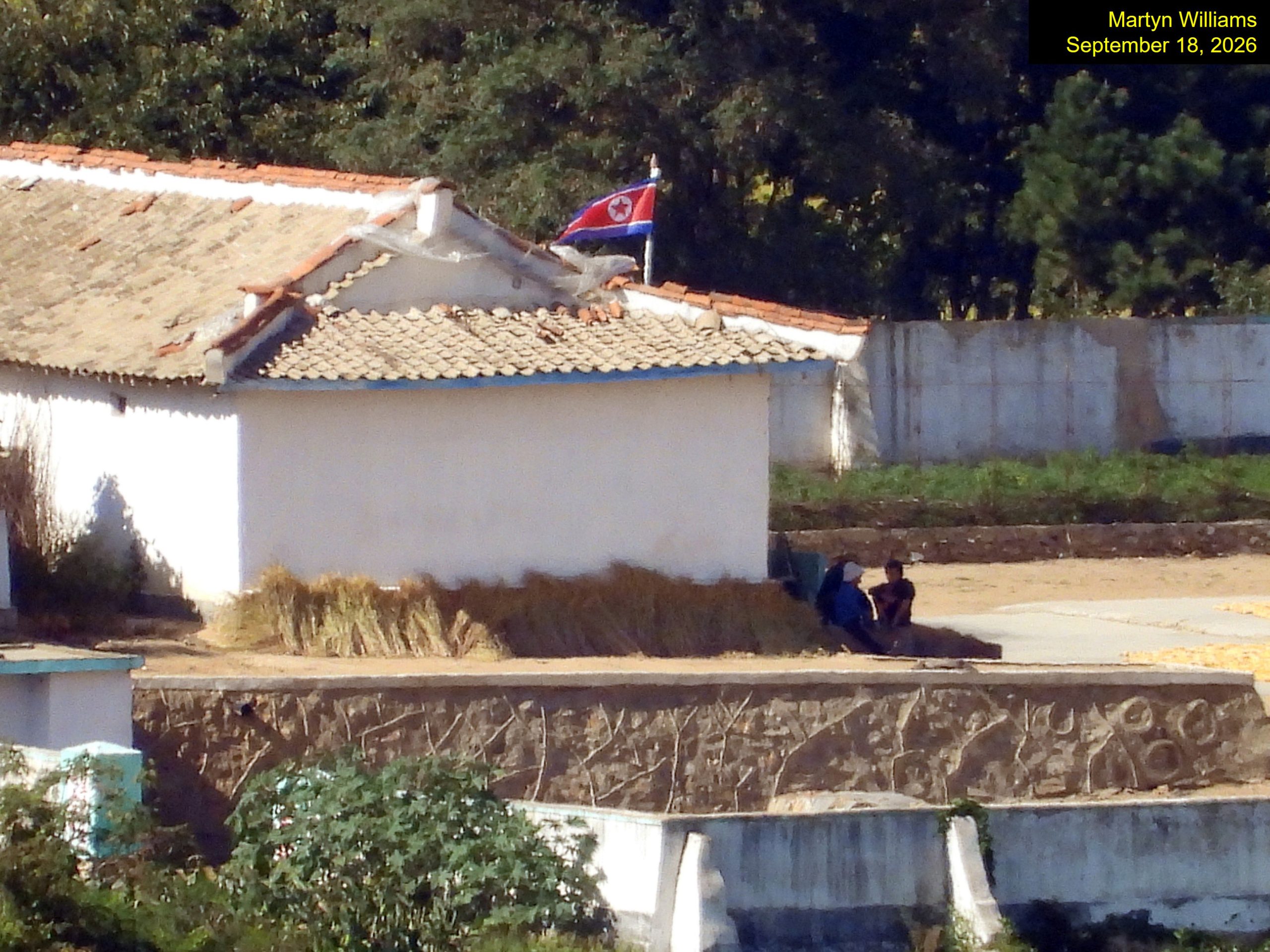
On the day I visited, what appeared to be corn was laid out and drying in the farmyard as two people sat in the shade chatting with each other.
Late September is an important moment in the annual harvest. Each fall, corn is visible in photos and satellite imagery from around the country, drying in the late summer sun in farms, town squares, rooftops, court yards, and even sometimes on city streets.
At the end of the farmyard are two boards. One has a bar graph, likely of production quotas, and there are two large slogans: “All-Out Offensive” and “Toward the Implementation of the Party’s Decisions.”
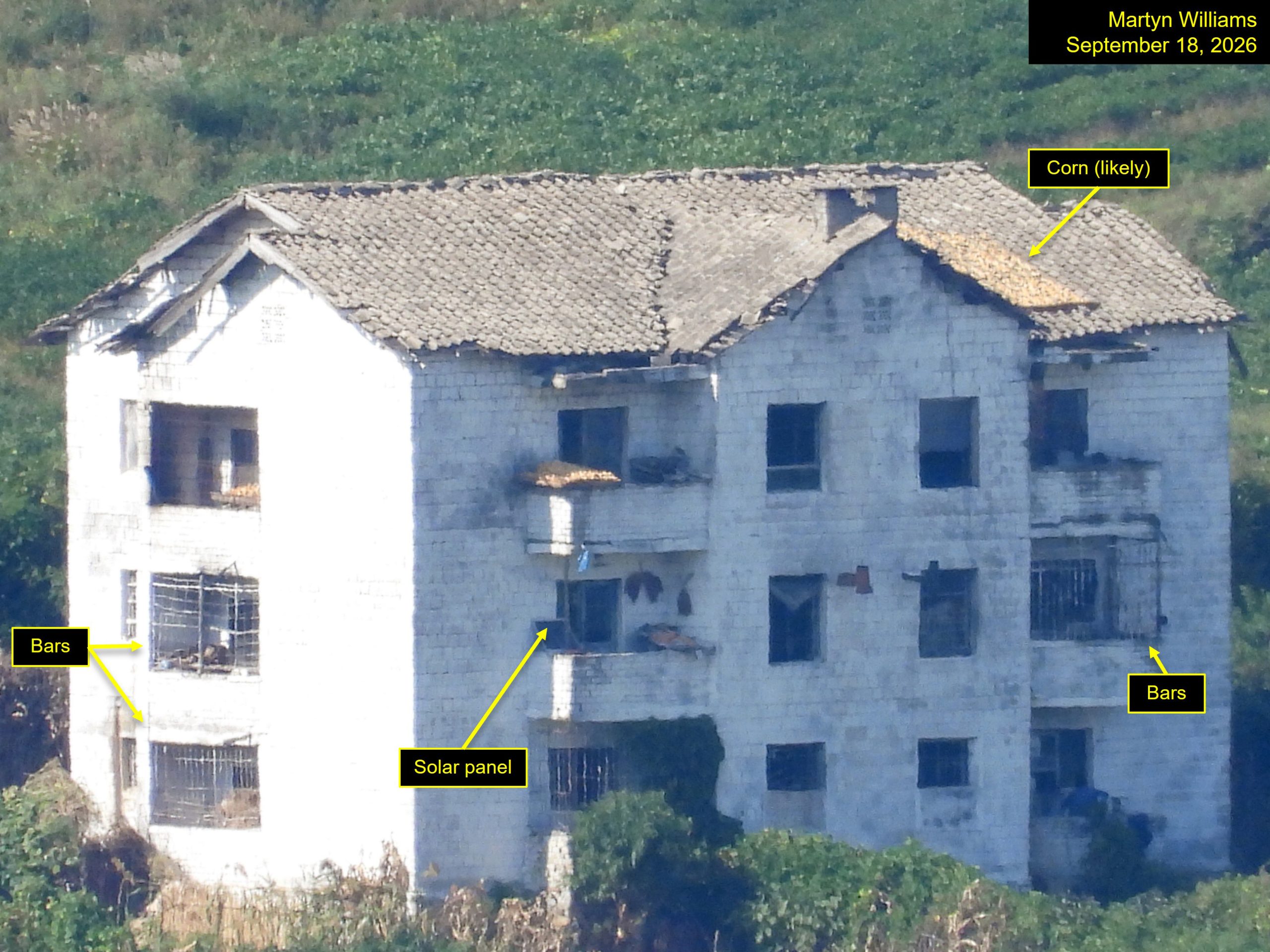
This all took place in the shadow of several three-story apartment buildings. The buildings all looked inhabited but in a state of disrepair. It is clear that the rural housing initiative has not reached this village yet.
Most of the apartments had small square solar panels sitting on balconies or roofs. These are seen all over North Korea and help residents cope with the poor electricity supply. Electricity lines are visible in the town, but it is impossible to tell how many hours a day, or week they supply power to residents.
The solar panels charge batteries inside the house that can be used in the evening once the sun sets and families are gathered at home.
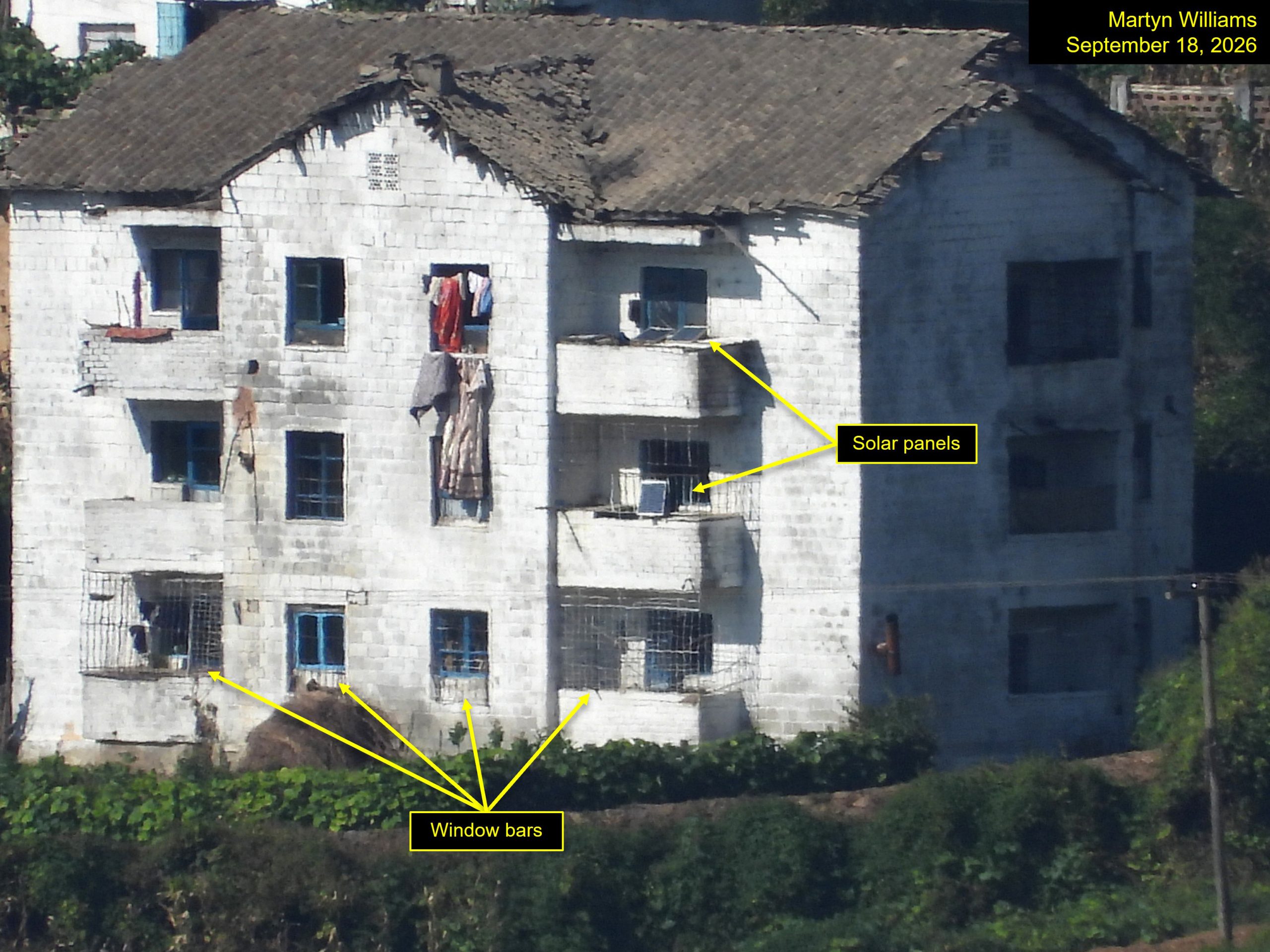
Most of the buildings had bars across the windows on the lower two floors, likely because they lacked windows although crime cannot be ruled out. Many of the rooftops were in dire need of attention. It appeared that more corn was drying on these roofs as well.
Conclusion
If the residents of Jogang-ri are waiting for the rural revolution to hit their village, they might be encouraged by Phanmun District’s inclusion among this year’s locations for the 20×10 regional development plan.
In the heart of the district, near the gates to the Kaesong Industrial Complex, several factories, a hospital and a leisure center are all under construction, Completion is due around the end of this year. But the facilities are about 17 kilometers from Jogang-ri, so they are not easily accessible.
The closest rural housing development in the district appears to be Tongnae-ri, about 15 kilometers away. Local residents moved into the new houses at Tongnae Farm in late 2024.
However, while these two examples show that progress has come to their district, the work has not changed the daily lives of residents in Jogang-ri or the scores of villages like it throughout the area. For them as it is for most of the countryside, life remains hard and it could take years for that to change.