

Meet the 2026-2027 Cohort for the 38 North Emerging Scholars Fellowship Program
The 38 North Program at the Henry L. Stimson Center is excited to welcome our 2026-2027 cohort for the 38 North Emerging Scholars Fellowship Program.
Over the next several months, this group of scholars will be mentored by senior North Korea watchers to enhance their research methodology and understanding of North Korea. They will also publish on 38 North and participate in a number of public and private events.
Meet the Cohort:
 Maria del Carmen Corte is a contractor supporting the National Nuclear Security Administration’s (NNSA) Office of Nuclear Smuggling Detection and Deterrence, managing international nuclear security programs across Latin America and Central Asia. She entered the NNSA ecosystem as a Graduate Fellow with Pacific Northwest National Laboratory. Before NNSA, Maricarmen worked on the production and editorial refinement of investigative and satellite imagery reports on North Korean human rights and nuclear proliferation for the Committee for Human Rights in North Korea. She previously completed internships with the Korea Innovation Center and the East-West Center, and at the Embassy of Mexico in Seoul. Maricarmen holds a Master of Arts in Law and Diplomacy from the Fletcher School at Tufts University, where she was distinguished as a Gregory Henderson Scholar in Korean Studies, and graduated from the Texas Tech University with dual bachelor’s in Philosophy and Electronic Media and Communications.
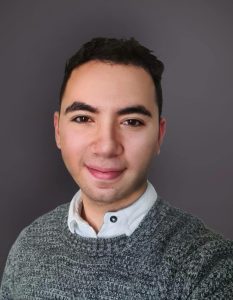 Christopher Khatouki is a Postdoctoral Fellow at the University of New South Wales (UNSW). He also serves as the Vice President of the Australian Institute of International Affairs NSW. His research examines the intersection of economic governance and geopolitics in the Indo-Pacific, with a particular focus on the Korean Peninsula. He was a Korea Foundation Graduate Fellow from 2021 to 2024 and is currently a Visiting Scholar at Seoul National University Institute for Korean Political Studies (IKPS). Christopher holds a PhD in International Political Economy from UNSW. Previously, he worked as a Programme and Research Associate at Asia Society Australia. His writing frequently appear in publications including East Asia Forum, South China Morning Post, The Diplomat, Asia Society Policy Institute, The Interpreter, Australian Outlook, among others.
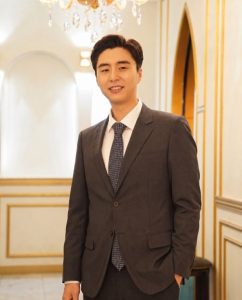 Taerae Kim is the Director of the Unification Research and Planning Team at the UniKorea Foundation, where he leads research projects on North Korea, Korean unification, and the future of the Korean Peninsula, a postdoctoral fellowship program, and unification education programs for teachers and elementary school students, including a joint initiative with World Vision. He also serves as an editor for Unification and the Future, the Foundation’s news and analysis platform. He has previously served in advisory and review capacities for institutions including the Ministry of Unification, the National Center for Unification Education, the National Unification Advisory Council, and the Federation of Korean Industries. He holds an MA in North Korean Studies (unification policy) from Korea University and a B.A. in South Slavic Studies and European Union Studies from Hankuk University of Foreign Studies and is a former first lieutenant in the Republic of Korea Army.
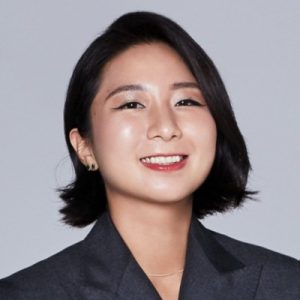 Yeji Kim is a Korea researcher and human rights advocate who advises NGOs, governments, and monitoring bodies on DPRK policy and accountability. She is an incoming DPhil student at the University of Oxford, where she also completed an MSc in Refugee and Forced Migration Studies. She has supported the resettlement of more than 1,300 North Korean refugees, and her research examines the transnational movement of money and information between the North Korean diaspora and North Korea, and the use of overseas labour as a source of state revenue.
 JooEun ‘June’ Lee is an MA student in North Korean Studies at Ewha Womans University. Her research examines the implications of artificial intelligence and advanced technologies for North Korea and security on the Korean Peninsula. She focuses specifically on how the AI-nuclear nexus reshapes North Korea’s nuclear threat landscape, alongside how the regime introduces and frames these emerging technologies for its citizens. Her broader interests span North Korean politics, regime stability, and regional security. Additionally, June serves as a specialist lecturer for South Korea’s Ministry of National Defense, delivering lectures to service members across the armed forces on the North Korean regime, the Korean People’s Army, and contemporary security challenges.
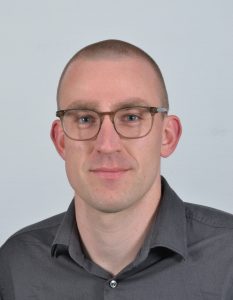 Willem Licht is a policy advisor focusing on the intersection between technology and security in East Asia with a specific interest in the DPRK. Based in The Netherlands, he is passionate about advancing European understanding of the Korean peninsula. Willem holds a master’s degree in Chemistry from the University of Oxford and subsequently undertook further studies in physics prior to leveraging his scientific background as a policy advisor.”
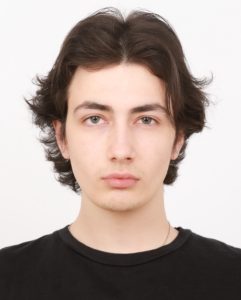 Anton Ponomarenko is a China–Russia–DPRK security researcher focused on the military and technological dimensions of the CRINK axis and their implications for Indo-Pacific and Korean Peninsula security. He is a Summer 2026 Research Fellow at U.S. Army T2COM G2, where he contributes to the DPRK-Russia dimension of the CRINK project, a Non-Resident Fellow at the European Centre for North Korean Studies (ECNK), a 2026 Kim Koo Fellow at The Korea Society, and a 2024 Sylff Fellow at the Tokyo Foundation for Policy Research. He has previously held research and policy roles at the United Nations DPPA-DPO and The Korea Society. Anton’s analysis and research on North Korea have been published in War on the Rocks, 38 North, The Diplomat, and the Lowy Institute. He holds a Master’s in Regional Studies: East Asia from Columbia University and a BA in Economics from Fudan University, with over 16 years of lived experience in China and South Korea, and advanced-level and native language proficiency in Mandarin Chinese, Russian, and Ukrainian.
This program is made possible through the generous support of the Henry Luce Foundation.