

Vietnam’s Potential Economic Lessons for North Korea
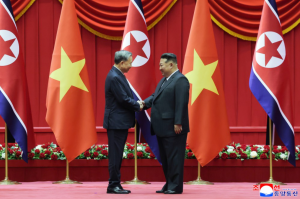
In the last twelve months, Vietnam has met with North Korea (Democratic People’s Republic of Korea or DPRK) twice. The first instance was last October when the General Secretary of the Communist Party of Vietnam, To Lam, travelled to North Korea for the 80th anniversary of the Workers’ Party of Korea celebrations. This was the first time in 18 years the head of state from Vietnam has visited North Korea. During that visit they discussed strengthening ties and collaborating in healthcare, education, tourism and economy. The second meeting was in May of this year, where Vietnamese diplomats met again in Pyongyang to discuss strengthening ‘friendly and cooperative relations’ relations between their nations.
Despite having close historical ties and similar ideological influences, the two nations have taken very different economic trajectories over the years. Unlike North Korea, Vietnam has successfully straddled political control as a single party state while also allowing a market economy to flourish. With the renewed cooperation between the two nations, Vietnam’s economic development model could provide some useful insights for North Korea’s economic policy planning.
Historical Bonds between the Two Socialist Nations
In meeting with a fellow Socialist nation like Vietnam, North Korea may feel an underlying level of trust in Hanoi, due to their historical connections going back to the USSR.
Vietnam and North Korea established relations in 1950 when they were both fledgling Socialist nations, quick to bond over their struggles against imperial occupation and the desires to establish independent Socialist states with both Ho Chi Minh and Kim Il Sung visiting each other several times. North Korea also supported Vietnam during their war against the United States and South Vietnam by providing personnel, equipment, and financial aid, having only recently experienced their own conflict against the United States.
After the war in Vietnam, however, and with the death of Ho Chi Minh, relations between the two nations began to falter. For example, North Korea supported both Pol Pot’s regime in Cambodia, and the Chinese government when Vietnam experienced border conflicts with both neighbours in the late 1970s.
Relations soured further after the collapse of the USSR when Vietnam decided to establish formal and friendly relations with both South Korea in 1992 and the United States in 1995, which North Korea saw as traitorous behavior.
However, despite their similar ideological beginnings, Vietnam achieved two things North Korea had been striving for decades to accomplish: a unified state and a productive, growing economy. Vietnam has been able to sustain the single party system that was originally established by Ho Chi Minh while allowing its citizens to participate in free market activity, which has reduced their overall dependence on the state. This quasi-Socialist-Capitalist system in Vietnam allowed the nation to balance its traditional values while forging a stronger position in Southeast Asia.
Divergent Economic Paths
Vietnam and North Korea are two of the five remaining Socialist governments since the collapse of the Soviet Union. How they each survived the dissolution of the Soviet bloc though, is very different.
During the 1980s, Vietnam was fully reliant on the Soviet Union for economic support by exporting the majority of what they produced to the USSR, who in turn, provided them with raw materials such as fuel. North Korea was in a similar situation, supported by the USSR ‘friendship prices’ of cheaper goods and materials. During this time, both Vietnam and North Korea had black market economies to provide for the citizens what the state could not, while still operating under a centrally planned economy.
However, in 1986, a few years before the USSR collapsed, the Vietnamese government made a series of economic changes influenced by the USSR’s Perestroika (market reforms to bring the nation out of economic stagnation), perhaps also noting how the economy between the Socialist nations was beginning to tank and the USSR was edging closer to bankruptcy. These economic reforms, known as Doi Moi, introduced a “socialist orientated market economy” which allowed private enterprise to take place while still maintaining government planning over the wider economy and infrastructure. This change allowed Vietnam to survive the collapse of the Socialist Bloc by drastically reducing its economic dependence on the USSR.
By establishing a market economy and attracting foreign investment from previously hostile Western nations, such as the United States, Vietnam was able to push forward into the 21st century as the nation we see today—a Socialist government and Capitalist economy. As such, it saw substantial GDP growth from 2.8% in 1985 to 9.5% by 1995. Only during COVID did its GDP drop to the pre-market economy levels of the mid-80s. Rapidly leveraging relations with new nations not only helped Vietnam’s economy experience new growth post-USSR but it also boosted other industries, such as tourism, which was a big turnaround for a previously closed country.
North Korea, on the other hand, took a more cautionary approach and did not pursue similar economic reforms in the late 1980s. Instead, it stuck to a centrally planned economy, still largely dependent on Soviet support, hampering its ability to navigate the collapse of the USSR. For instance, when Soviet fuel imports ceased in 1991, North Korea’s industrial sector was unable to sufficiently fuel machinery and fertilizer production. This was one of several factors that led to widespread famine in the mid-1990s, a period known as the “arduous march.”
Since then, there have been hints of North Korea attempting to integrate a free market into their economy. For example, there has been experimentation with the designation of multiple Special Economic Zones (SEZ), where in the more successful ventures, they were able to test foreign investment with neighbours such as China, South Korea and Russia. One of the earliest SEZs was established in Rajin-Sonbong (Rason) in 1991, an area close to the border with Russia and China and known for its year-round ice-free port. While Russia has a 50-year lease on Rason Port’s Pier 3, the rest of the SEZ has had limited success over the years due to a general lack of economic infrastructure. For example, the region was originally served by one powerplant with intermittent function and a rail system that used a different track gauge than Russian trains, requiring a dual-gauge system to be installed on the border). While Rason has seen more activity since Russia-North Korea relations have deepened, its inadequate economic infrastructure still prevents its potential for success. This has been the case for most of the SEZs that North Korea has experimented with in the past—limited success with little economic impact.
North Korea has also allowed markets to grow to varying degrees since the famine years. What started as famine-era spontaneous black markets have evolved over time to become both grey markets and formal marketplaces, demonstrating the government’s willingness to allow some level of free markets to form. In the years between early 2000s to early 2010s, the physical size of markets grew from 16% up to 114%, depending on location. These markets continued to grow under Kim Jong Un’s early years, with over 480 official markets existing by 2018 and several dozen more being established at that time.
During those years, the state attempted to both regulate and tolerate these markets, allowing for entrepreneurship and some wealth generation to grow. However, after the Hanoi summit with the US in 2019, which failed to amount in a breakthrough agreement, greater restrictions and crackdowns have been imposed on market activity as the state attempts to reassert control over the economy. These policy changes amid persistent sanctions and an unstable business environment, severely limit business and trade from flourishing. Despite this, markets are still how many locals (especially in rural areas) obtain much of their food.
North Korea’s gradual, cautionary approach to economic reform is more in line with China’s economic development path. But China had far more scale, more resources and a larger population than either Vietnam or North Korea. This relative self-sufficiency meant Beijing could adapt to changing conditions gradually as it was not fully dependent on external markets for assistance.
In contrast, Vietnam made agile and rapid reforms to transition from sole dependence on the USSR to establish the kind of new markets and relationships needed to become an independent economic actor, including leveraging Capitalist and NATO aligned nations. These same strategies may have been suitable for North Korea as well, who, compared to Vietnam, had an even smaller population and far fewer resources. Therefore, a similar adoption of a global trade strategy may have allowed North Korea, like Vietnam, to weather the economic changes that these nations experienced into the 1990s, after the collapse of their main economic supporters.
This path would have been a more feasible blueprint for North Korea to follow, given its economic and resource limitations, than the path forged by a much larger and complex nation such as China. Although the kind of opening this would have required was not something North Korea seemed prepared to do at the time.
A Rocky Road Still Ahead
Post-pandemic, and especially since North Korea got involved in Russia’s war in Ukraine, Kim Jong Un has begun to strengthen ties with not only Russia and China, but several countries in the Pacific region as well, even reviving relations that were originally forged by Kim Il Sung in the mid-20th century, such as with Indonesia. His showing at China’s Victory Day Parade and ceremonies in Beijing last year, where he was prominently featured alongside Xi Jinping and Vladimir Putin in an important position compared to representatives and leaders of other nations, was a striking representation of how seemingly welcome Kim is these days beyond his country’s borders.
Kim Jong Un is showing a growing willingness to be more politically and economically integrated with parts of the international community. In this context, renewed ties with Vietnam, especially should Kim be seeking to cultivate economic cooperation, provide a potential opportunity for Vietnam to also pass on to Kim lessons from its economic successes that could help inform North Korea’s economic policy choices going forward.
However, Vietnam has taken steps to enhance its economy that North Korea has shown far less willingness to do, especially engaging with the West. The last attempt at reshaping US-DPRK relations failed to achieve any major breakthrough. Although the geopolitical environment has evolved since then, creating new opportunities for North Korea to engage in new levels of political and economic activity, its full market potential is still contingent on easing sanctions—a reality that will ultimately need US support to achieve.