

Mobilizing Domestic Resources Under Sanctions: Solar Energy and Model Enterprises
This article is from the fifth edition (April–June 2026) of 38 North’s quarterly product, North Korea Briefing, that monitors key internal developments in North Korea. For the full series, click here.
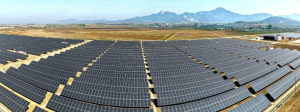
While UN Security Council sanctions continue to constrain North Korea’s external economic options, Pyongyang is seeking growth by mobilizing domestic resources. Two developments in the second quarter of 2026 illustrate this approach: a growing emphasis on solar power as a practical energy source and the promotion of exemplary enterprises that showcase effective management and technical innovation. Together, they suggest that North Korea is seeking to strengthen its economy by prioritizing science and technology, efficient use of domestic resources, and improved enterprise management.
North Korea Eyes Solar Power
In the second quarter of 2026, North Korea continued to promote “solar power [태양빛발전]” as a viable energy source, highlighting the country’s efforts to generate more power.
An article in the government daily Minju Joson discussed the economic advantages of combining solar power with hydropower.[1] It introduced foreign researchers’ idea of installing floating solar panels on hydropower reservoirs as such systems could increase electricity production, reduce water evaporation, improve the efficiency of water use, and lower infrastructure costs by using existing transmission facilities. This article presented solar power as a technology that could complement other forms of renewable energy.
On May 1, state media reported on the completion ceremony of a new solar power station in Haeju, South Hwanghae Province.[2] They described the facility as a new “material and technical foundation” for regional economic development and the improvement of the people’s living conditions. It also linked the project directly to the Party’s policy of increasing electricity production through renewable energy. Later that same month, while reporting on solar power stations being built in different provinces, KCNA reported that the Haeju solar power station’s capacity stood at 10,000kW (10MW).
Several weeks after its inaugural ceremony, the Party daily Rodong Sinmun’s article emphasized the economic benefits of the new Haeju solar power station.[3] It highlighted the use of high-efficiency bifacial solar panels, connection to the national power grid, reduced transmission losses, lower management costs, and automated real-time control. The article also stated that the station’s electricity was being supplied to local industrial factories and households, thereby contributing to regional development and the people’s livelihoods.
Context and Implications
The 2026 articles illustrate a broader shift: solar power is increasingly framed as a concrete means of supporting regional development, improving electricity supply, reducing costs, and implementing the Party’s renewable energy policy.
The Secret Behind the “Top 10 Outstanding Enterprises”
In April, Rodong Sinmun announced the 2025 “Top 10 Outstanding Enterprises.”[4] The annual selection began in 2023, when enterprises were first recognized for their 2022 performance.
Context and Implications
Three of this year’s 10 winners merit particular attention. North Korean media portray the Sangwon Cement Complex, previously selected in 2022, not merely as a cement producer but as a strategic industrial base supporting major state construction initiatives—including Pyongyang housing construction and the 20×10 policy for regional development—and as a Party-trusted model enterprise for management, production, and nationwide productivity campaigns. The Pyongyang Hosiery Factory, selected for a second consecutive year, is likewise presented not merely as a sock manufacturer but as a model light industry enterprise exemplifying improved consumer goods, quality control, technical innovation, and effective enterprise management.
The third is the Rason Hyesong Comprehensive Development Station, one of only two enterprises to have appeared on the “top 10 outstanding enterprises” list for three consecutive years. Originally engaged in commissioned processing trade in Rason, North Korea’s oldest special economic zone, it has since expanded into real estate and other sectors and is recognized for its expertise in automation and facility management. Its repeated selection, despite sanctions-induced constraints on China-North Korea border commerce, suggests that Rason continues to retain economic significance.
The other three-time honoree is the Tanchon Smeltery, which appeared on the list from 2022 to 2024. This facility specializes in processing zinc and rare earth elements, which are key to North Korea’s economy. A Rodong Sinmun article in 2025 praised the smeltery for its effective implementation of the “socialist enterprise responsibility management system (SERMS),” which grants state enterprises greater operational autonomy.[5]
Taken together, these enterprises embody the Party’s economic priorities: strengthening domestic production by raising productivity and product quality through science and technology, promoting enterprises that exemplify effective management practices, and improving living standards through construction, light industry, and regional economic development. As such, closely monitoring media coverage of these enterprises provides a useful window into the Party’s policy direction.
- [1]
“실리가 큰 태양빛발전과 수력발전의 결합 [Combining Solar Power and Hydroelectric Power for Great Actual Benefits],” Minju Joson, April 27, 2026.
- [2]
Korean Central News Agency (KCNA), “해주시에 태양빛발전소 새로 건설, 준공식 진행 [New Solar Power Plant Built in Haeju; Inauguration Ceremony Held],” Rodong Sinmun, May 1, 2026.
- [3]
Ji Hyok Chol, “경제적실리가 대단히 큰 태양빛발전소 [A Solar Power Plant With Tremendous Economic Benefits],” Rodong Sinmun, June 18, 2026.
- [4]
KCNA, “2025년 10대최우수기업이 선정되였다 [2025 Top 10 Outstanding Enterprises Selected],” Rodong Simun, April 27, 2026.
- [5]
Ri Chol Ok, “3년 련속 최우수기업의 영예를 지닌 비결 [The Secret to Earning the Honor of Outstanding Enterprise for Three Consecutive Years],” Rodong Sinmun, October 17, 2025.