

All the Way With Moscow? Pyongyang’s Strategic Calculations in Support of Russia’s War
Since the start of the Russia-Ukraine War in 2022, North Korea has contributed substantial arms and troops to support Russia’s efforts. Recently, Ukraine warned that North Korea would further expand its troop deployment to the war front. While mass movement of North Korean troops has not yet been corroborated, it may still be coming as Pyongyang seems willing to expand its wartime support in ways that set it up for long-term strategic partnership with Russia. None of this is altruistic, by any means. In exchange, North Korea appears to be building cooperation that facilitates tangible and sustained benefits, such as the transfer of sophisticated technology and the integration of bilateral defense supply chains. Consequently, the Pyongyang-Moscow partnership should be considered beyond just immediate wartime transactions, but as integral to Pyongyang’s strategy to secure a favorable long-term security architecture in Northeast Asia.
Speculations on North Korea’s Expansion of Support
On July 25, 2026, Ukraine’s President Volodymyr Zelensky posted on social media that North Korea plans to send more troops to support Russia’s war against Ukraine. On August 8, Zelensky reposted that up to 50,000 North Korean troops will be deployed to Russia. Zelensky warned that North Korea’s war participation would also threaten the security of “Asian countries” such as South Korea, as North Korea learns “how to wage war, improve its weapons, and gain real combat experience.”
As noted by Russian government and media sources, among countries friendly to Moscow, only North Korea has directly contributed troops to fight alongside Russia. This started as discreetly supplying arms and munitions and eventually expanded to the deployment of combat troops to Russia’s Kursk region to counter Ukraine’s military operations. Despite Ukraine’s military withdrawal from Kursk, an estimated 16,000 North Korean troops have remained in the region, assisting border security and demining operations.
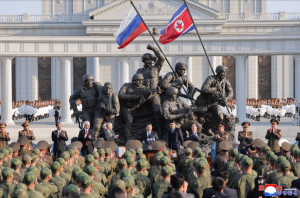
In April 2026, the Russian state delegation attended the opening of North Korea’s Memorial Museum for its troops’ “heroic feat” during the Kursk operation. In July, during North Korea’s Foreign Minister Choe Son Hui’s visit to Russia, Russia’s President Vladimir Putin and Foreign Minister Sergei Lavrov conveyed gratitude for Pyongyang’s support for Russia’s “special military operation.” Choe, in turn, is reported to have conveyed Pyongyang’s “unwavering support” for Russia’s defense of its “sovereignty, security interests, and territorial integrity.”
The Kremlin has declined to comment on Kyiv’s claims that it has requested additional troop deployment from Pyongyang. However, even within Russia, speculation has increased about whether expansion of wartime collaboration was part of the discussion during Choe Son Hui’s visit. As Russia’s war burden increases, Russian sources have generally expressed positive reactions to prospects of Pyongyang’s increased war participation.
Russian nationalist social media, for example, has suggested “Kim’s Lions” frighten Kyiv more than the announcement of Russia’s general troop mobilization. These channels have claimed that North Korean personnel may also provide “valuable assistance” in the use of North Korean-made ballistic missiles against Ukraine. Aside from combat troops, Russian media have suggested North Korea’s workers and engineers could assist the reconstruction of Russia’s “four new provinces” annexed from Ukraine; female workers could provide higher-quality alternatives to Central Asian migrants in manufacturing, sewing workshops, and agricultural work. Finally, Moscow can quicken the replenishment of its military arsenal through co-production with North Korea, relying on the latter’s production facilities and human labor to facilitate the large-scale production of military equipment.
Russian sources have acknowledged the risk that North Korea’s increased combat participation, especially targeting Ukraine’s territory, could provoke NATO’s deeper conflict involvement. However, they have also echoed their government’s stance that the bilateral Comprehensive Strategic Partnership Treaty, signed in 2024, justifies Pyongyang sending of combat troops to support Russia’s military operation: “…whether direct combat participation, as occurred in Kursk Oblast; participation as engineering and demining units… or even the deployment of missile systems—all of this falls within the framework of this treaty.”
North Korea’s Strategic Calculations
North Korea’s behavior regarding its direct support of the Russia-Ukraine War has been to initially conceal or deny its support for Russia, before eventually confirming its actions publicly. Unsurprisingly, therefore, Pyongyang has also been circumspect regarding its intention to expand the scale of its troop deployment. Kim Jong Un’s regime, however, is likely calculating the costs of expanding its participation against both immediate transactions and long-term strategic achievements.
As observed by multiple analyses, the Russia-Ukraine War has generated substantial transactional benefits for Pyongyang. Pyongyang has leveraged its support to attain reciprocal economic and military cooperation from Moscow. Russia has expanded its bilateral trade with North Korea, alleviating international sanctions on the latter. Russia has also been reported to have provided technological assistance that appears to have upgraded Pyongyang’s conventional and asymmetric military capabilities. North Korea’s troop deployment in Kursk has also resulted in immediate benefits: Russia’s financial payment to North Korean soldiers and North Korea’s experience with modern warfare, helping it improve its own battlefield readiness of its troops and military equipment.
But Pyongyang’s motivations are not all tactical. It appears equally motivated to enhance its long-term geopolitical security. Particularly since Kim’s disappointing Hanoi summit with US President Donald Trump in 2019, Pyongyang has pursued alternative means to construct a favorable security environment in Northeast Asia. The reemergence of the so-called new cold war, which emphasizes geopolitical competition between the Western bloc and the non-Western bloc, has provided such strategic opportunities. North Korea aspires to be a secure member of the “non-Western bloc” that includes Beijing and Moscow, benefiting from growing alignment on broader strategic interests. With Beijing and Moscow’s support at the UN Security Council, Pyongyang can prevent new international sanctions from being amassed and consolidate its global status as a nuclear-weapon state. Through partnership with Russia, in particular, North Korea also achieves a “double balancing” effect, reducing its economic and security dependence on China while reinforcing deterrence against the US, South Korea, and Japan. In that respect signing the Russia-North Korea comprehensive strategic partnership treaty represented a substantial advancement of Pyongyang’s geopolitical strategy.
North Korea’s Strategic Risks
This strategy is not without risk. Despite transactional and strategic benefits, participation in the Russia-Ukraine War also imposes military and political burdens on North Korea’s regime security. The overseas deployment of troops and workers creates a risk of military casualties and exposure to outside information. The news of soldiers’ deaths, capture, or even desertion could spread anxieties among North Korean citizens and strain the state’s societal control. The firsthand accounts of battlefields and socioeconomic conditions in Russia conveyed through returning soldiers and laborers could also challenge the state’s ideological propaganda and encourage questions and dissent among the citizens.
North Korea’s military capability may also be negatively affected. In 2024, North Korea deployed its special operations units, as well as missile units assigned to the Strategic Force, to the Kursk operation. Continued overseas deployment of these elite forces, who constitute critical military assets responsible for asymmetric operations against South Korea and the United States, risks diminishing Pyongyang’s military readiness in the event of a security contingency on the Korean Peninsula. Furthermore, returning soldiers may suffer from combat trauma and difficulties in psychological readjustment. Given North Korea’s limited medical and psychological support systems, psychological difficulties among returning personnel could disrupt hierarchical command relationships and, over time, undermine military discipline and organizational stability.
Finally, Pyongyang likely considers the risk that Russia’s war performance has on Kim Jong-un’s political leadership. The foreign policy decision to support Russia’s war has been made based on Kim’s absolute authority as the state’s supreme leader. Subsequently, despite Pyongyang’s substantial commitment of human and military resources, if Russia’s war is mired in attrition or worsens, Kim’s regime could face criticism at home for intervening in a “wrong war” for a “wrong ally.”
The greater the scale of North Korea’s war participation, the greater its military and political burdens. Moscow’s request for the expansion of war contributions, as a result, compels Pyongyang to carefully weigh these factors carefully.
North Korea’s Strategic Decision
Given the high risks, Pyongyang’s strategic preference is likely to maintain its current level of war support: exporting arms and deploying limited, carefully screened numbers of laborers and military personnel to Russia. In contrast to Kursk operations, North Korea would likely prefer not sending troops to direct combat operations to minimize casualties and direct encounters with Ukrainian troops. While mitigating the risks associated with large-scale overseas military deployments, Pyongyang would focus on maintaining stable access to Russian energy supplies, particularly crude oil and food, as well as basic technological support related to reconnaissance satellites and missiles, gradually cementing the bilateral partnership.
Moscow’s urgent request for a substantial increase in the contribution of arms and manpower, motivated by the worsening of its war situation, would pressure Pyongyang to make a difficult decision. North Korea’s aspiration for long-term Pyongyang-Moscow partnership, however, will likely motivate Pyongyang to engage in “higher risk, higher return” bargaining with Moscow. To assist beleaguered Russia, North Korea may deploy large-scale combat units and deliver expanded quantities of its ballistic missiles to the battlefront. In exchange, however, Pyongyang would likely want to reaffirm Moscow’s pledge to accept its nuclear status and to reciprocate military assistance and intervention (as stipulated in the bilateral strategic partnership treaty) in the event of a security crisis on the Korean Peninsula. Furthermore, Pyongyang may bargain for faster transfer of Russia’s next-generation core military technologies and expanded integration of defense co-production, boosting Pyongyang’s drive to become a military “arsenal of revisionist bloc,” comparable to South Korea’s endeavors to perform a similar role for fellow democracies. The “higher-risk, higher-return” bargaining would be consistent with Pyongyang’s strategic calculations that even if it encounters increased immediate costs and risks, continued strategic partnership with Moscow is vital for its long-term geopolitical security. Tamping down domestic political unrest and military burden, the North Korean regime may justify its war commitment as strengthening the strategic cohesion of the Pyongyang-Moscow-Beijing bloc in Northeast Asia, perhaps even the potential for an integrated defense supply chain that would facilitate mutual upgrading of defense production and capabilities for the bloc member states.
Given Pyongyang’s likely growing demands for reciprocation, Russia must also assess its tactical and strategic interests. Russian media channels acknowledge that Kim’s regime is motivated by self-interest and would request substantial benefits in exchange for further military contributions. Some Russian sources are supportive of a long-term partnership with North Korea even after the end of the “special military operation,” as part of a collective alliance to counter the West. So far, Moscow seems willing to reciprocate Pyongyang’s support with tighter integration of their bilateral partnership, and at least consideration of whether it is in its long-term interest to further their cooperation beyond the war.
Implication
Some Western and South Korean analysts hope that the Moscow-Pyongyang relationship may diminish significantly after the eventual end of the Russia-Ukraine war. However, the prospect of a long-term bilateral strategic partnership should not be dismissed. Through proactive participation in Russia’s war, North Korea may successfully “lock in” its strategic alignment with Russia and achieve an enduring shift in Northeast Asia’s security framework.
By helping facilitate the entrenchment of geopolitical blocs in the region, North Korea’s heightened self-confidence and capabilities could pose increased security challenges for its regional neighbors. For South Korea and the United States, monitoring the evolution of Russia-North Korea cooperation is important, as is preventing further consolidation of their partnership. At the same time, preparing for longer-term Moscow-Pyongyang cooperation, as well as potential expansion of their cooperation with China, is crucial, and greater planning is needed to manage the challenges these developments will pose.