

Modernizing North Korea’s 240 mm MLRS: Precision, Automation, and Extended Range
North Korea conducted a test firing of an upgraded 240 mm multiple-launch rocket system (MLRS) on September 22, according to a September 24 report by the Korean Central News Agency (KCNA). The test is believed to have taken place at the headquarters of the 425th Mechanized Infantry Division in Sukchon County, South Pyongan Province, with the rockets reportedly traveling approximately 50–60 kilometers toward a target island. KCNA described the system as incorporating an autonomous precision-guidance system and claimed that the rockets could reach 100 kilometers in ballistic-flight mode and 115 kilometers using a combined glide-flight mode.
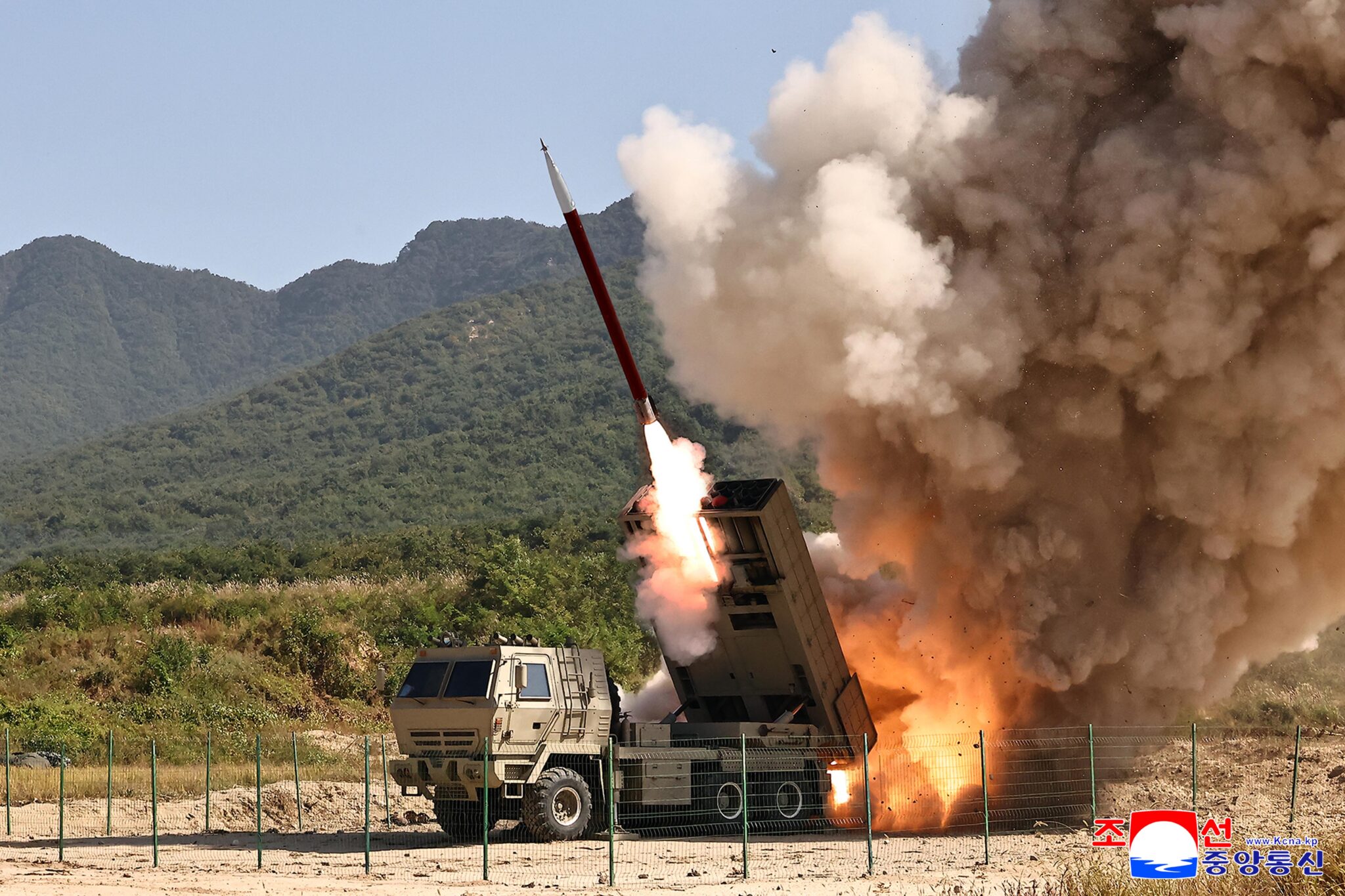
The test was overseen by Ko Pyong-hyon, chairman of the Second Economic Commission, and attended by Pak Jong-chon, vice chairman of the Workers’ Party of Korea Central Military Commission; Kim Jong-sik, first deputy department director of the WPK Central Committee; Jang Chang-ha, director of the Missile General Bureau; and Yu Chang-son, chief of the Artillery Bureau of the KPA General Staff.
KCNA reported that the test demonstrated the accuracy and performance of the upgraded rocket. Pak Jong-chon stated that North Korea should “concentrate the deadliest and most destructive attack capabilities on the southern border” and called for the country’s long-range strike systems to be fully modernized in the shortest possible period.
What the 240mm Has Been: Capabilities and Limitations
The origins of North Korea’s 240 mm MLRS can be traced to Soviet rocket artillery systems acquired in the 1950s, including the 200 mm BMD-20 and 240 mm BM-24. The two principal 240 mm MLRS variants currently identified in open sources were designated M1985 and M1991 by US intelligence based on the years in which they were first identified. The M1985 is configured with two rows of six launch tubes, while the M1991 has two rows of eight tubes and one row of six, for a total of 22 tubes.[1]
An estimated 200 launchers were deployed along the Demilitarized Zone (DMZ), making the system one of the key threats to Seoul.[2] North Korea’s ability to strike Seoul directly with these systems featured prominently in the “Sea of Fire” threat narrative in 1994. Based on a simple calculation of the number of launchers and their firing capacity, the force could theoretically deliver approximately 10,000 rounds per hour.
However, given the rockets’ lack of guidance and limited accuracy, their primary purpose was assessed to be the rapid delivery of massed fires over broad areas rather than precision strikes. A North Korean defector who served in the Second Economic Committee, which oversees the country’s defense industry, reportedly described the system in 2015 as a “disposable weapon,” citing the limitations of its reloading system.
Moreover, numerous observations of poor performance among North Korean artillery and missile systems raise questions about their reliability and effectiveness under operational conditions. During the 2010 shelling of Yeonpyeong Island, for example, South Korean military authorities assessed that fewer than half of the multiple rocket launchers’ rounds struck the island, while approximately 25 percent of the rounds that were launched failed to detonate
Similarly, several Ukrainian officials who investigated North Korean missiles reportedly assessed that approximately half of the missiles lost their trajectories and exploded in the air, with only two of 24 missiles reaching their intended military. Reports concerning North Korean ammunition supplied to Russia have also highlighted potential quality-control problems, including poor casting, inadequate or degraded propellant, and defective sealing, based on observations circulated on Russian Telegram channels.
These reports, however, provide indirect evidence and should not be treated as representative of the performance of North Korea’s 240 mm MLRS specifically. Nevertheless, the military utility of the legacy 240 mm system could be assumed to be constrained by limited precision, potential reliability problems, vulnerability to counter-battery operations, and the time-consuming process of reloading.
Modernization Plan: What Has Changed and Where Is It Going
The emphasis on the precision, automation, and intelligence of weapon systems has been evident since the early years of Kim Jong Un’s rule. In August 2013, Kim Jong Un called for the development of weapons with greater precision, automation, and intelligence. These objectives were subsequently elevated to major military policy goals at the Seventh Party Congress in 2016.
Since then, North Korea’s efforts to modernize its 240mm multiple launch rocket system (MLRS) have focused on several interrelated areas, including accuracy, fire control, automated firing and command systems, mobility, mass production, and long range. The major developments are summarized in the table below.
What Does this Mean for North Korea’s Artillery Strategy?
North Korea appears to be moving beyond a traditional massed-area fires toward a more precise and longer-range fire-support capability, consistent with its stated principles of automation, extended range, and ultra-precision. Based on North Korean official statement, the technically updated 240mm MLRS and 67km guided rockets appear to be in the process of being deployed and replacing older systems in frontline units. In contrast, new 24-tube 240mm MLRS and the range-extended rockets revealed in 2026 appear to remain at the developments and testing stage.
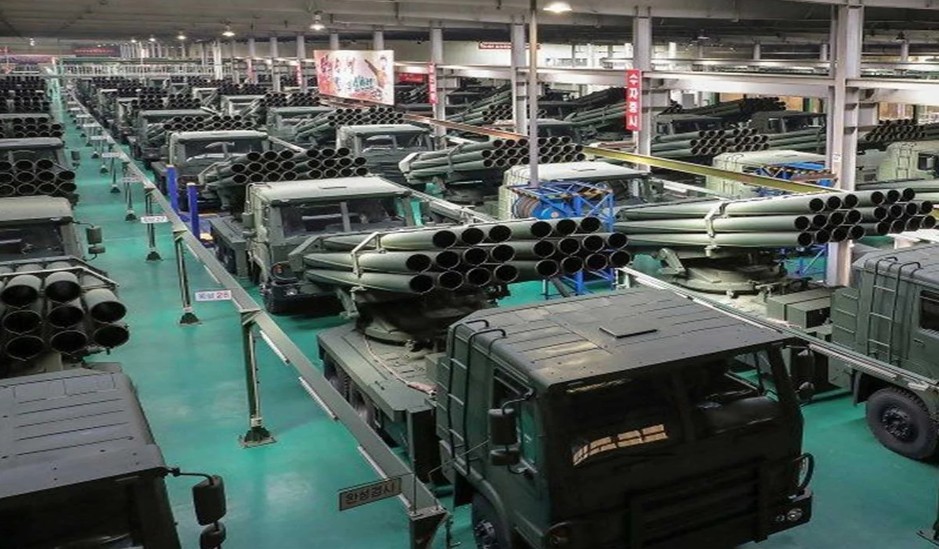
This modernization should therefore be understood not simply as a technical upgrade to an existing artillery system, but as part of a broader effort to reshape North Korea’s conventional firepower posture along the southern border. The development of more accurate and longer-range munitions, combined with increasingly automated fire-control processes, could challenge some of the assumptions underlying South Korea’s qualitative advantages—particularly in accuracy, response time, and engagement range.
At the same time, previous experience raises questions about the scale and consistency of production, logistical support, maintenance, and the pace at which newly developed systems can actually be fielded across frontline units. Continued monitoring of the production, deployment, and operational integration of these upgraded systems will therefore be necessary to assess whether the capabilities demonstrated in testing can be translated into a meaningful and sustained change in North Korea’s conventional firepower posture.
- [1]
240 mm (12-round) M1985 Multiple Rocket Launcher,” in IHS Jane’s Land Warfare Platforms: Artillery and Air Defense 2012–2013, ed. Christopher F. Foss and Christopher C. O’Halloran (United Kingdom: IHS, 2012), 304
- [2]
Roger Cavazos, “Mind the Gap Between Rhetoric and Reality,” Nautilus Institute, June 26, 2012, http://nautilus.org/napsnet/napsnet-special-reports/mind-the-gap-between-rhetoric-and-reality/.