

The Choe Hyon, North Korean Navy Surface Ship, and Its Strategic Implications
Overview of Series Analysis
Most existing analysis of North Korea’s Choe Hyon destroyer has been conducted at the strategic level, such as whether the ship affords North Korea a sea-based second-strike capability once it carries cruise missiles armed with tactical nuclear warheads. However, further study is needed of the vessel’s capabilities and their implications to better understand how it advances North Korea’s military ambitions.
This series examines the Choe Hyon primarily at the tactical and operational levels, examining its specifications and weapons fit as well as the capability-verification process that carried it from launch to commissioning.
Part 1: The Choe Hyon: Assessing Specifications and Their Strategic Implications
Introduction
This article examines the technical and operational capabilities of the Choe Hyon.[1] Specifically, it looks at the ship’s hull characteristics and weapon systems to work backward to the purpose for which it was conceived. Every ship is built to fulfill a particular purpose, and this is all the moretrue of warships, whose intended purpose is embodied in their installed weapon systems, tonnage, external configuration, and propulsion arrangement.
The Choe Hyon is the most capable surface combatant North Korea has built so far. In theory, it enables North Korea to launch nuclear-capable cruise missiles from almost anywhere at sea. But in practice, the warship’s features reveal critical vulnerabilities, such as potential limits to speed, thin anti-submarine capability, a lack of helicopter or visible towed array, limited stealth, and a combat system of uncertain integration. Moreover, without escorts or oilers, it will likely operate only near its home port.
Despite these shortcomings, the Choe Hyon class poses four key challenges for the US-ROK alliance. First, its combination of nuclear and conventional armament creates crisis ambiguity that complicates any allied response. Second, with one ship in the West Sea, a second on the east coast, and more planned, the class stretches allied surveillance across two seas. Third, a nuclear-armed warship in the West Sea, whose inner waters open toward Beijing, would also make a crisis uncomfortable for China. Finally, the class signals Kim Jong Un’s ambition to build a modern fleet, an ambition constrained by inadequate shipbuilding infrastructure and competing military and WMD priorities.
Assessment of the Choe Hyon’s Specifications
In assessing the Choe Hyon’s specifications, this article compares it with two broadly similar warships: the ROK Navy’s Chungmugong Yi Sun-sin class destroyer and the Russian Navy’s Admiral Gorshkov class frigate. The Chungmugong Yi Sun-sin was commissioned in 2003 and displaces 5,500 tons with an overall length of 150 meters. She possesses anti-surface, anti-air, and anti-submarine warfare capabilities, and ships of her class have conducted counter-piracy operations in the Gulf of Aden off the African coast. The Russian Admiral Gorshkov, commissioned in 2018, is Russia’s most modern frigate, displacing 4,550 tons with an overall length of 135 meters. The Choe Hyon’s precise specifications have not been disclosed, but she is reported to be a vessel of some 5,400 tons with an overall length of 144 meters.
Tonnage
The Choe Hyon is reported to be a vessel of approximately 5,000 tons, placing it very close in size to both the Chungmugong Yi Sun-sin and the Admiral Gorshkov. A ship of these dimensions should be capable not only of coastal operations but also of blue-water operations at a considerable distance from its home port. Its external configuration likewise appears to have been designed with stealth in mind: the outer surfaces of its sides are inclined in order to minimize radar reflection. Its stealth characteristics are assessed in greater detail in a separate section below.
Propulsion System
Based on video footage released by North Korean state media, the Choe Hyon appears to be fitted with diesel engines only, although this cannot be confirmed. North Korea has not issued an official statement concerning the ship’s speed. Warships ordinarily employ diesel engines and gas turbines. Diesel engines are efficient at low speed, whereas gas turbines, originally developed as aircraft engines, are efficient at high speed. A warship configured to use diesels and gas turbines alternately (CODOG: Combined Diesel or Gas) therefore attains a maximum speed in excess of 25-30 knots, while one relying upon diesel engines alone attains roughly 20-25 knots, maximum. In the video footage, the wake generated at the ship’s stern consists of two streams, from which it may be inferred that it has two propeller shafts (Figure 1). In all available footage, the ship appears to be steaming at no more than about 20 knots, judging from its bow wave and wake (Figure 2). Experience in operating warships permits a rough estimate of a vessel’s speed from the size of the bow wave as it cuts through the water and the scale of the wake generated astern.
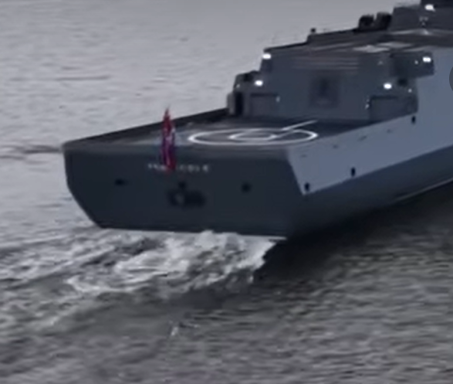
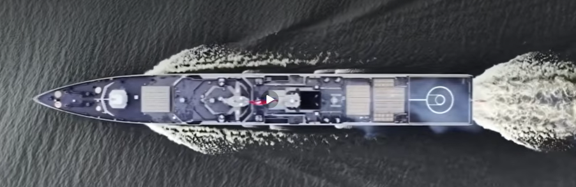
Speeds of this order are within the range of diesel propulsion alone, which is consistent with, though not proof of, a diesel-only plant. If the Choe Hyon is indeed fitted with diesel engines only, there are a few possible reasons for this. The first is the difficulty of procuring gas turbines. North Korea lacks the capacity to produce such engines indigenously and must therefore import them, which UN sanctions against the country may well have rendered impracticable. Procuring a single engine is one matter; sustaining a continuous supply of spare parts for maintenance and repair across the thirty years or so of a warship’s service life is a considerably harder one. A second possible reason is an intention to minimize the machinery space. The Choe Hyon mounts a vertical launching system (VLS) at the stern, and the space immediately beneath it is allocated to the propulsion plant. Installing additional engines would require a larger machinery space and would in turn constrain the number of VLS cells that could be accommodated.
If the Choe Hyon does rely on diesel engines alone, this would impose operational limitations. In naval combat a maximum speed above 30 knots are advantageous, and it is of particular importance in anti-air and anti-submarine engagements. In air defense against comparatively fast aircraft and missiles, a ship must maneuver at maximum speed to reduce the probability of being hit. In anti-submarine engagements, a ship uses its maximum speed to evade torpedoes launched by a hostile submarine; since torpedoes ordinarily run at speeds above 40 knots, evasion depends upon the ship’s ability to make full speed. If the Choe Hyon’s maximum speed is on the order of 25 knots, it therefore is more vulnerable to attack by missiles, aircraft, and submarines.
Installed Weapon Systems
In analyzing the Choe Hyon’s armament, this section follows the standard categories of naval weapon systems and the data presently available on the ship, concentrating on its anti-ship weapons, anti-air weapons, anti-submarine weapons, and combat system.
A. Anti-Ship Weapon Systems
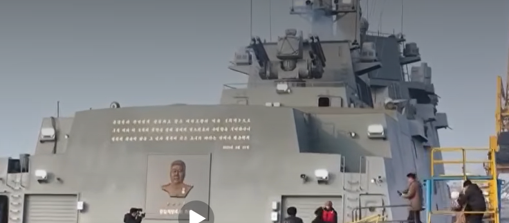
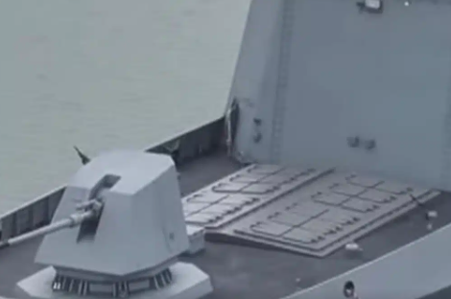
Anti-ship weapon systems are employed in engagements against hostile surface combatants. The Choe Hyon’s comprise ship-to-ship missiles, a single 127 mm main gun, and 30 mm cannon. Its ship-to-ship missiles have been test-fired. They are carried in inclined launchers, normally four to each side for a total of eight rounds (Figure 4). The 127 mm gun mounted forward is likewise employed in engagements with hostile vessels (Figure 3), and the 30 mm cannon mounted on either beam, although intended primarily for use against aircraft, may be presumed to be available against surface targets as well.
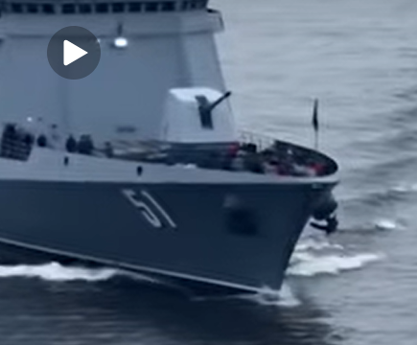
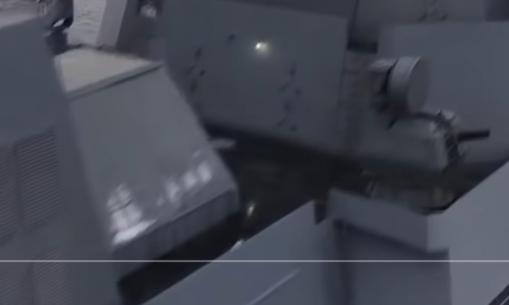
The Choe Hyon’s anti-ship armament is assessed as broadly comparable in standard to that of the Chungmugong Yi Sun-sin and the Admiral Gorshkov. Actual operational capability, however, is expected to differ, owing to differences in the quality of the sensor suite and of the integrated combat system. For a warship’s weapons to generate combat power, three elements must function together efficiently: the sensor suite (radar and other detection systems), the combat system (which links and automates them), and the strike weapons themselves. The Choe Hyon’s strike weapons can be evaluated to some degree from its external appearance, but almost no information is available concerning its sensors and combat system, which renders those elements difficult to assess. The combat system is accordingly treated in a separate section below.
B. Anti-Air Weapon Systems
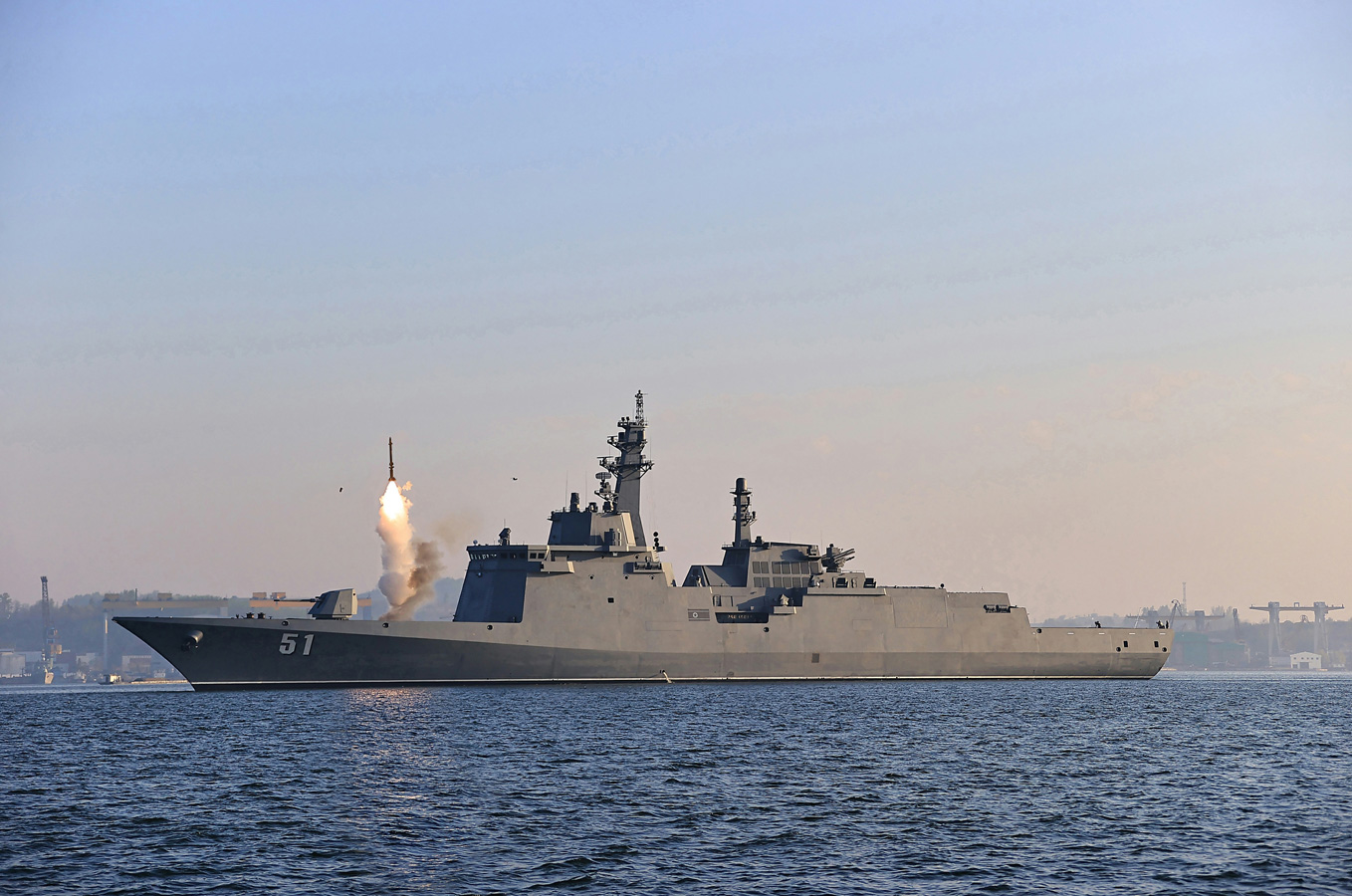
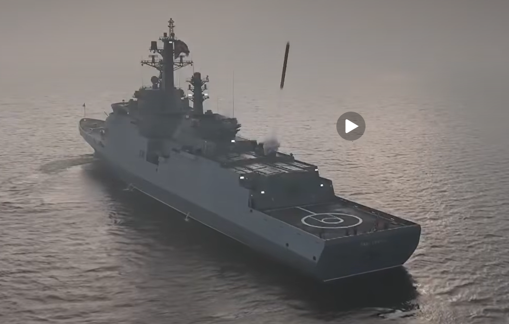
The Choe Hyon’s anti-air armament consists of surface-to-air missiles of the Pyoljji( “Meteor”) series, a North Korean variant of the Pantsir short-range air defense system, and 30 mm guns(Figure 6). North Korea has released footage of an anti-air missile test launch from the ship, in which the missile was fired from the VLS installed forward of the bridge (Figure 5).
This air defense fit appears to reflect the three-layer defensive concept adopted by modern warships. In simple terms, the concept divides the defensive engagement into medium- or long-range, short-range, and close-range layers. The medium- and long-range layer employs missiles against threats at distances ranging from ten kilometers to several hundred. The ROK Navy’s Chungmugong Yi Sun-sin, for example, carries the SM-2 medium-range surface-to-air missile, which is capable of interception at ranges beyond 70 kilometers. Short-range missiles are intended for interception at ranges of approximately ten kilometers and beyond. The final layer of defense relies upon high-rate-of-fire 20 mm or 30 mm cannons rather than upon missiles. Such systems are ordinarily designated close-in weapon systems (CIWS).
The Choe Hyon’s air defense capability is difficult to gauge with precision. As in anti-surface warfare, capability is realized only where sensors, combat system, and anti-air weapons are effectively integrated, and in air defense the efficient linkage between radar and combat system carries still greater weight. This is because an anti-air missile cannot, by its nature, carry a full complement of onboard sensors and must therefore be guided from the launching ship, which requires dedicated equipment for that purpose. Since such a missile must intercept enemy aircraft and missiles at supersonic speed, the greater part of its body must be given over to propellant.
In other words, once the Choe Hyon has launched an anti-air missile, it must continue to guide it until the weapon closes with the target if a hit is to be achieved. This requires high-performance radar capable of detecting and tracking targets, such as the Aegis system and the SPY radar developed by the US Navy, together with a combat system able to link these elements automatically and to compute engagement solutions at speed. Available footage does not make clear whether the Choe Hyon possesses this level of radar performance and integration. North Korean media released footage of an anti-air missile launch from the Choe Hyon but did not disclose whether the missile struck its target.
C. Anti-Submarine Weapon (ASW) Systems
The Choe Hyon’s anti-submarine weapons have not been identified, and the assessment offered here is therefore inferential. It may be expected to carry a bow-mounted hull sonar for submarine search. Confirmation is impossible, however, now that the ship has been launched and the sonar lies beneath the waterline; earlier photographs of the vessel under construction show a bow form of the type associated with such an installation. No towed array sonar has been shown or identified.
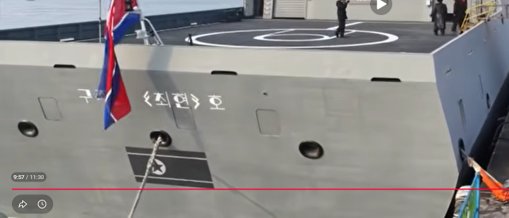
A towed array sonar improves the probability that a medium or large surface combatant can detect a submarine: small individual hydrophones are attached along a lengthy cable that is streamed astern of the ship. Vessels so equipped ordinarily have an opening in the stern through which the array is deployed, but the only openings identifiable at the Choe Hyon’s stern are those for mooring lines (Figure 7). The ship’s structural arrangement, moreover, places the base of the forward VLS close to the bow sonar, so that noise generated by missile launches would be transmitted to the sonar and degrade its detection performance. Therefore, Choe Hyon’s capacity to detect submarines appears limited. The customary anti-submarine weapons are torpedoes and depth charges, and the ship has been reported to carry torpedoes.
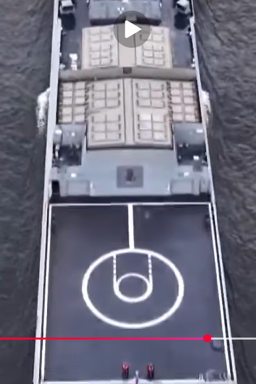
The Choe Hyon’s most serious deficiency in anti-submarine warfare is the absence of a dedicated ASW helicopter. Nearly every modern surface combatant embarks one or two. A shipborne helicopter can rapidly search the waters surrounding the ship, localize a submarine, and attack it with torpedoes. The Choe Hyon, however, has no helicopter hangar; the space appears to have been sacrificed in order to expand the number of VLS cells aft (Figure 8). She is consequently assessed to be vulnerable in anti-submarine operations.
D. Stealth Characteristics
Stealth is a highly important attribute of the modern warship. The Choe Hyon’s design has taken it into account, but its performance in this respect is assessed to be low. The inclined angle applied to its sides appears intended to enhance its stealth characteristics; the arrangement of externally mounted armament, however, produces a structure readily detected by opposing radar (Figure 9).
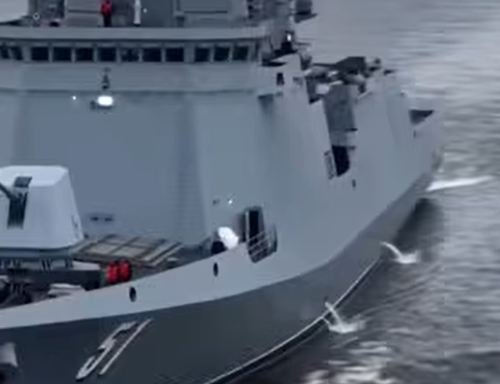
Stealth in a warship represents an effort to minimize detection by an opponent’s radar. Designers accordingly reduce the height of the ship’s silhouette and minimize protruding external structures, and weapon systems are stowed within the hull rather than exposed, brought out only when required.
The principle is the same as that by which a stealth fighter carries its missiles within an internal weapons bay. Judged against this standard, the Choe Hyon presents an excessive number of external protrusions. The VLS housing at the stern in particular rises to a considerable height. The 30 mm cannon on the middle deck and the chaff launchers fitted in groups of four constitute further externally mounted structures (Figure 10), so that the ship may be expected to be readily captured by an opponent’s detection emissions.
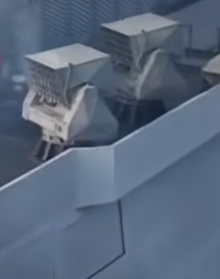
Stealth technology is costly to develop relative to other technologies and is accordingly not transferred readily between states. It is therefore possible that North Korea has neither developed such technology, nor received such technology transfers obtained from Russia. Weak stealth performance would create a liability across every phase of combat, leaving the ship readily detected by the missiles and aircraft directed against it and thus vulnerable to missile attack.
E. Integrated Combat System
The integrated combat system is an indispensable element of the computerized and automated modern warship. That system consists, however, of computers and software; unlike a weapon system, it is neither externally visible nor physically distinctive, and must therefore be assessed inferentially.
The integrated combat system links the detection sensors to the strike systems and assists the personnel who operate them. It analyzes the data observed by the sensors, assists in distinguishing hostile from friendly contacts, and supports the selection of the appropriate weapon. It is of particular value in a missile attack, where events unfold so rapidly that the crew must assess the situation, reach a judgment, and launch a defensive missile within a very short time interval. It is of comparable value when two or more engagements, such as a submarine attack and a missile attack, develop simultaneously. For these reasons every modern warship is equipped with such a system.
North Korea has released footage identified as the Choe Hyon’s combat information center (CIC). A CIC characteristically contains a large display and console at which all information is consolidated, surrounded by individual displays and operating consoles for each weapon system. The Choe Hyon’s CIC exhibits this configuration (Figure 11).
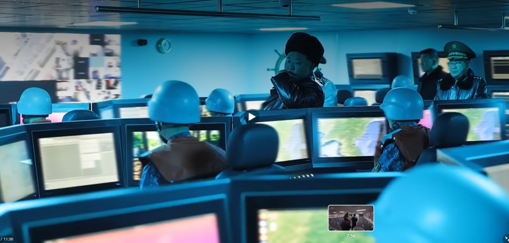
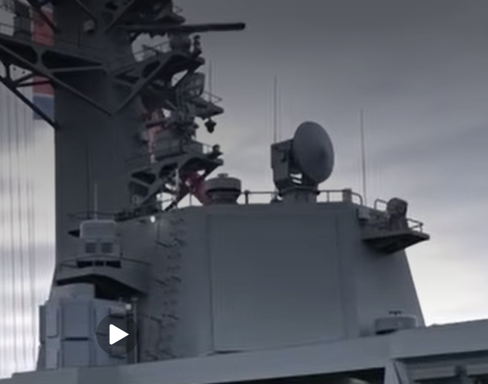
One case permits an inference regarding the capability of the Choe Hyon’s combat system: the change in the two fire control installations mounted above the bridge. Fire control equipment performs a critical function in gunnery and in missile engagements, serving as the radar that aims the ship’s weapons at the target. Aboard the Choe Hyon this equipment differed between launch and commissioning. At launch it had a squared form resembling Russian equipment; at commissioning it resembled a Chinese fire control system (Figures 12a and 12b). A change of this kind necessarily creates difficulties for the integrated combat system. Because that system links all sensors and all strike and defensive weapons systemically, a change of equipment requires a corresponding change in software, and integrating the revised software with the combat system demands a certain investment of time and effort. When a weapon system is purchased abroad, the purchase is ordinarily made on condition that it be integrated with the buyer’s combat system, in which case even the source code of the operating software is provided, and the acquisition cost rises accordingly. For this reason, critical equipment such as a fire control system, which must be integrated with the combat system, is normally selected before construction begins. That an item of this importance was changed within the space of a single year, as it was aboard the Choe Hyon, must have created difficulties of integration; and if the equipment has not been integrated with the combat system, the ship’s fighting power is reduced accordingly.
F. Vertical Launching System (VLS)
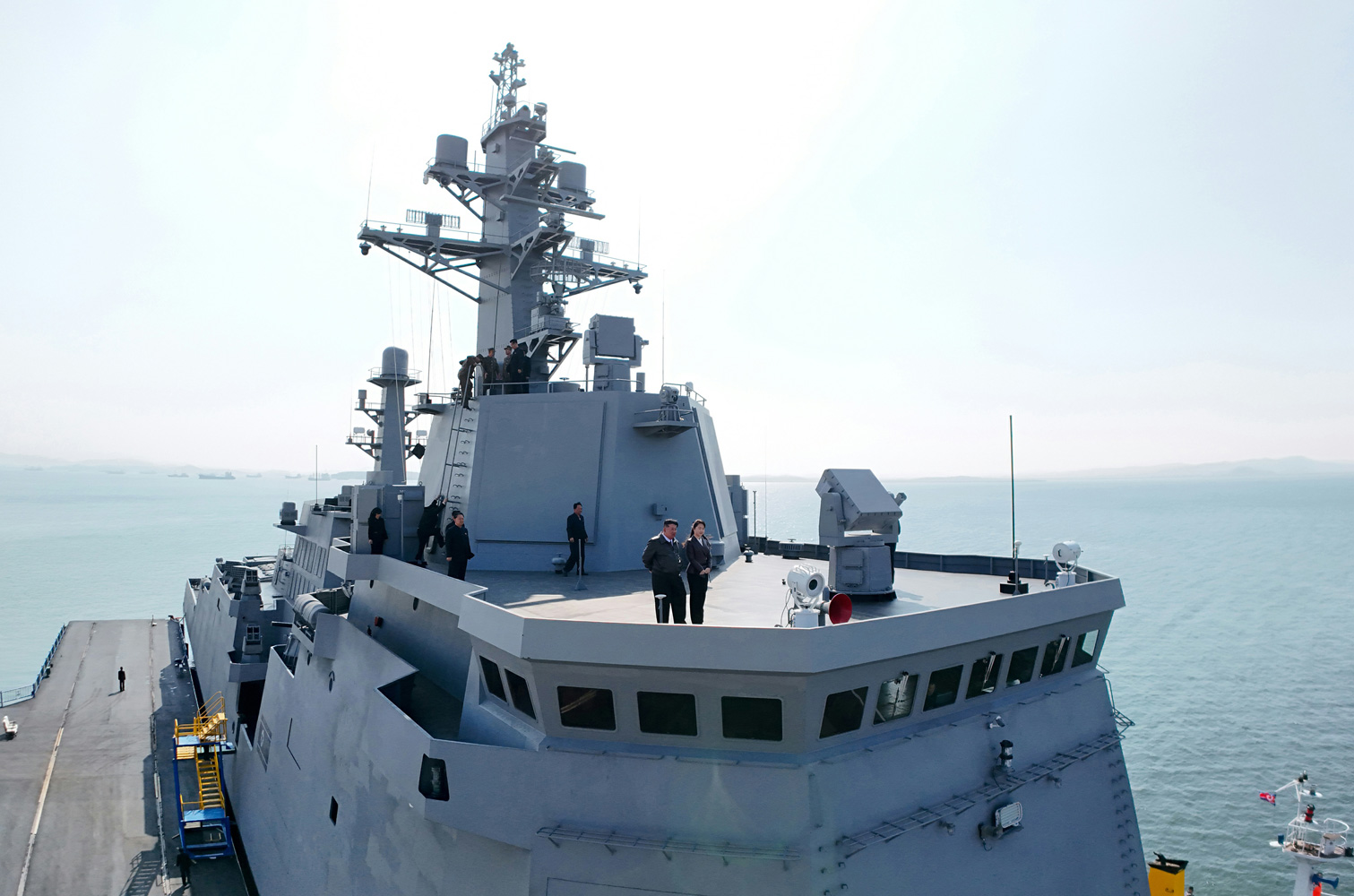
A VLS is easier to reload than an inclined launcher and is recessed within the hull, which is why modern warships are fitted with such systems. Because the cells extend deep into the ship, structural considerations permit installation only in the bow and stern sections.
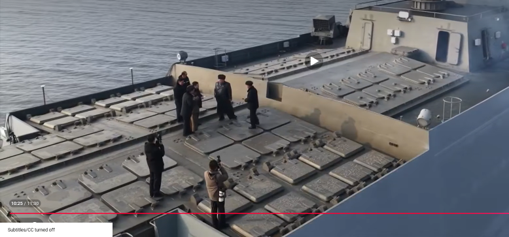
The Choe Hyon’s VLS also differed between launch and commissioning. As finally commissioned, the ship carries 34 cells forward and 40 aft. Reinstallation of a VLS is not a simple undertaking: the cells extend downward for the full length of the missiles they hold and require ancillary equipment and fittings such as cooling systems and gas exhaust ducts, so that a change of this kind may require the ship’s plans to be redrawn.
The capacity of the forward position cannot be substantially increased, because the space is shared with the main gun (Figure 13). The distinguishing feature of the Choe Hyon is therefore that it sacrificed the aft helicopter hangar in order to expand the aft VLS capacity (Figure 14). Footage of its test launches indicates that the forward VLS was loaded with Pyoljji-series anti-air missiles and the aft VLS with strategic cruise missiles (Figure 15).
Capability Assessment and Anticipated Employment
Comprehensive Capability Assessment
The Choe Hyon’s most significant capability is its ability to launch cruise missiles capable of carrying tactical nuclear warheads. Although it is markedly superior to North Korea’s existing vessels, its conventional fighting capability is assessed to be comparatively low when measured against the ROK Navy’s Chungmugong Yi Sun-sin and Russia’s Admiral Gorshkov, the two comparable ships taken here for reference. The Choe Hyon’s air defense capability against aircraft and missiles is likely to be weak, and its capacity for anti-submarine operations low. Its integrated combat system is also likely to be limited, so that its actual combat capability is not expected to be high. Its lack of stealth features also limits its practical fighting power.
A. Anticipated Operational Employment
The likely employment of the Choe Hyon can be viewed in two ways: theoretical and practical. The theoretical view looks at the ship—what a destroyer of this type can do, and how such a ship would be used in principle. The practical view looks at what North Korea does not have: the escorts, support ships, and logistics that a warship needs to operate actively.
In theory, the Choe Hyon could be used in both nuclear and conventional contingencies. In a nuclear contingency, North Korea could use the ship to raise the level of threat—for example, by sending it out of port to operate in a designated sea area. If the ship is believed to be carrying nuclear-armed cruise missiles, sending it to sea changes the nature of the threat. In port it is a fixed, targetable asset. Once at sea it becomes a mobile launcher the allies must continually track, with targets ranging from ROK bases to US forces that cannot be predicted in advance. This uncertainty complicates both allied defense and any decision to strike preemptively.
The second category is conventional contingencies. The ship has a range of conventional capabilities, and given the current strength of the North Korean navy in the West Sea, it could be used in three key ways.
First, it could extend the area in which North Korean forces are able to operate. Its anti-air capability would widen the operating radius of North Korean aircraft and missiles, because aircraft need protection from enemy air attack. Until now, North Korean aircraft over the West Sea have been protected only by their own weapons and by ground-based air defense. A Choe Hyon carrying anti-air missiles could extend that air defense umbrella out to sea. Second, it could support ground operations. With land-attack cruise missiles and the main gun, it could provide fire support from the sea. Third, it could serve as a command and control ship. The West Sea Fleet is made up mainly of small craft, and the naval command has directed operations from shore-based command posts. The Choe Hyon, by contrast, can stay at sea for long periods and, above all, carries enough communications equipment to command and control other units.
In practice, however, North Korea is unlikely to deploy the ship actively as it lacks the support that sustained operations require. Submarines are built to operate alone, since they depend on secrecy, but surface ships are planned to operate in groups. A group protects its ships against enemy aircraft, missiles, and submarines, and this works only when the ships are of similar size and capability. At present North Korea has just two ships of the Choe Hyon class. It also has no support ships—above all, no oiler to refuel at sea. If more ships of this class enter service in the future, the Choe Hyon could take part in active operations. Until then, it cannot. Given these limits, if North Korea were to deploy the destroyer at all, it would most likely operate for short periods near its home port at Nampho, or in nearby waters of the West Sea.
Strategic Implications
Despite these shortcomings as a modern conventional destroyer, the Choe Hyon class poses new challenges for the US-ROK alliance in four ways.
First, the ship will complicate the circumstances of a nuclear crisis and render a US-ROK response more difficult. Because the Choe Hyon carries nuclear and conventional armament simultaneously, its sortie compels the allies to exercise far greater care in devising an appropriate response. North Korea may be expected to exploit the ambiguity created by this dual character to seize the initiative.
Second, the class increases the alliance’s military burden in peacetime. With the Choe Hyon in the West Sea, the Kang Kon on the east coast, and more ships planned, US and ROK forces must now track several mobile warships across two seas rather than fixed installations. The most immediate consequence will be to stretch allied surveillance assets.
Third, the ship renders the situation in the West Sea more complex. The geography of the West Sea makes it a highly sensitive body of water for China as well, since its inner reaches open toward Beijing. Should the Choe Hyon operate in those waters carrying nuclear weapons during a North Korean nuclear crisis, the resulting situation could prove deeply uncomfortable for both the US-ROK alliance and for China.
Finally, Choe Hyon’s development and deployment signals a much larger naval ambition to build a modern fleet. But naval development takes two things: time and money. A command economy can allocate resources to priority projects, but it cannot shorten the time the industry needs to mature, and it cannot spend without taking from somewhere else. For instance, North Korea’s lack of adequate shipbuilding infrastructure has already caused problems. A ship of more than 5,000 tons is normally floated out of a dry dock, as the Choe Hyon was at Nampho. However, the Kang Kon (the second Choe Hyon-class destroyer) was instead launched sideways from a yard at Chongjin—a method used for merchant ships or smaller size warships—and damaged in the process. The damaged ship had to be towed to Rajin and relaunched from a drydock there. Building a modern fleet will demand investment in shipbuilding and naval base infrastructure, as well as the parts, and skilled labor pipelines needed to expand operations. It will also demand training of new naval crews and exercising. Spending on this scale will likely require tradeoffs with both competing military and WMD priorities, and further strain an economy already under pressure.
Consequently, although the Choe Hyon is admittedly a significant step forward in North Korea’s naval development, it has clear limits as a modern conventional destroyer. Monitoring whether the ship’s features evolve over time, how the naval shipbuilding infrastructure expands, and whether North Korea can truly keep pace with the construction schedule it has outlined will be important for the US-ROK alliance to respond effectively.