

Across the Border: North Koreans Work on the Southern Border Fence
North Korea is currently carrying out an intensive upgrade of its southern border in the Kaesong area, directly across the Han River from South Korea.
During a visit to the area in mid-September, hundreds of workers were visible engaged in manual construction work along the border fence while blasting could be seen in the distance. A reporting team from Japanese broadcaster NHK observed similar scenes when they visited in early October.
The inter-Korean border has always been heavily guarded but in the years since the Covid pandemic, North Korea has sought the strengthen its border regions with stronger and additional fencing. It has also deployed electronic surveillance devices along the border making escape and infiltration increasingly difficult.
The images in this article were captured from South Korea’s Aegibong Peace Ecological Park in Gimpo, Gyeonggi Province. From there, the closest point of the North Korean shoreline is just over 1.7 kilometers away. The workers were photographed approximately 3 kilometers away, and the blastingcaptured was just over 7 kilometers away.
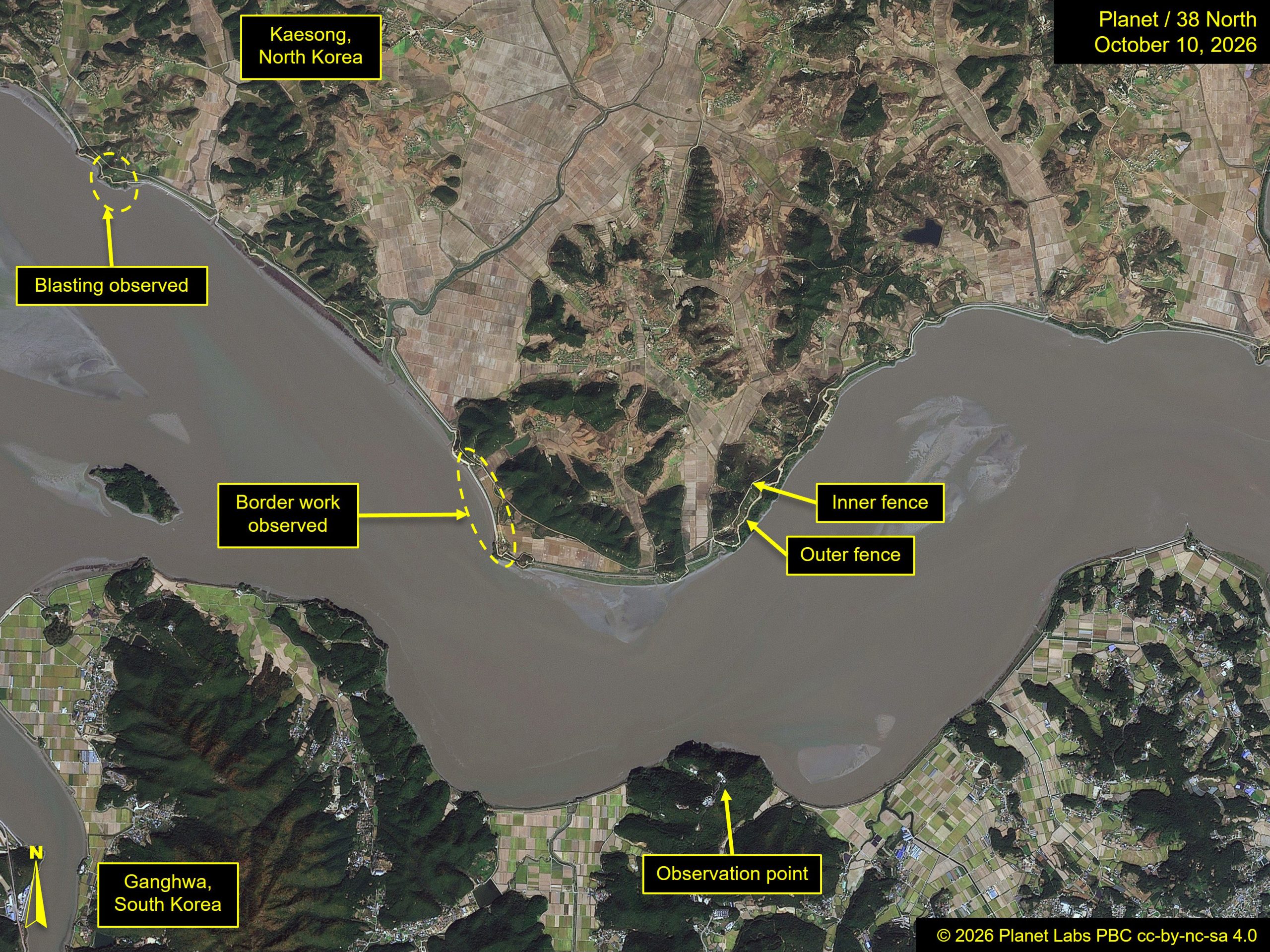
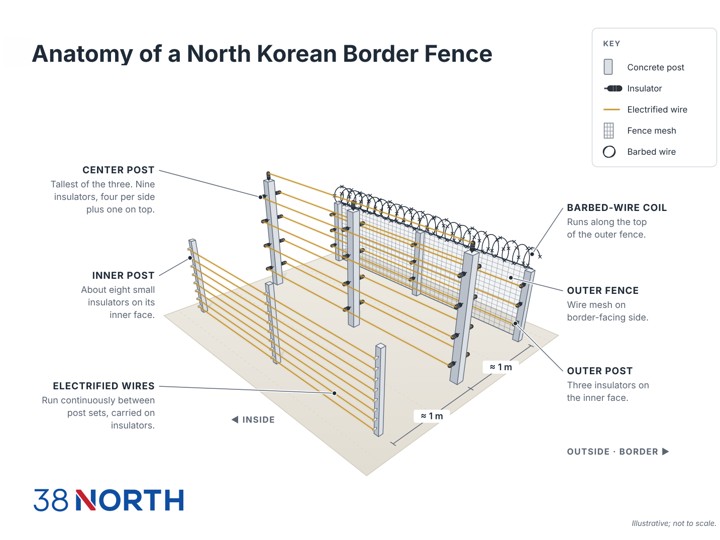
What appears to be two fences on the satellite image are more elaborate arrangements when viewed up close. They would make it difficult for anyone to illicitly cross from either direction.
Someone approaching the border from inside the country would first have to make it through or over the inner fence. This is the simpler of the two and appears designed to keep most people away from the actual border. The distance between it and the outer fence varies along the border and, in some places, agricultural land lies between the two, suggesting some citizens are allowed access through this fence.
The outer fence, closest to the border, is not a single fence but a succession of what appear to be three electrified layers. On the inside, the first layer has about eight electrified wires. There is then a gap around one meter-wide to a central layer that is also electrified and extends higher up. Finally, the third layer has electric wires on the inside of the posts and a wire lattice main fence, topped with barbed wire.
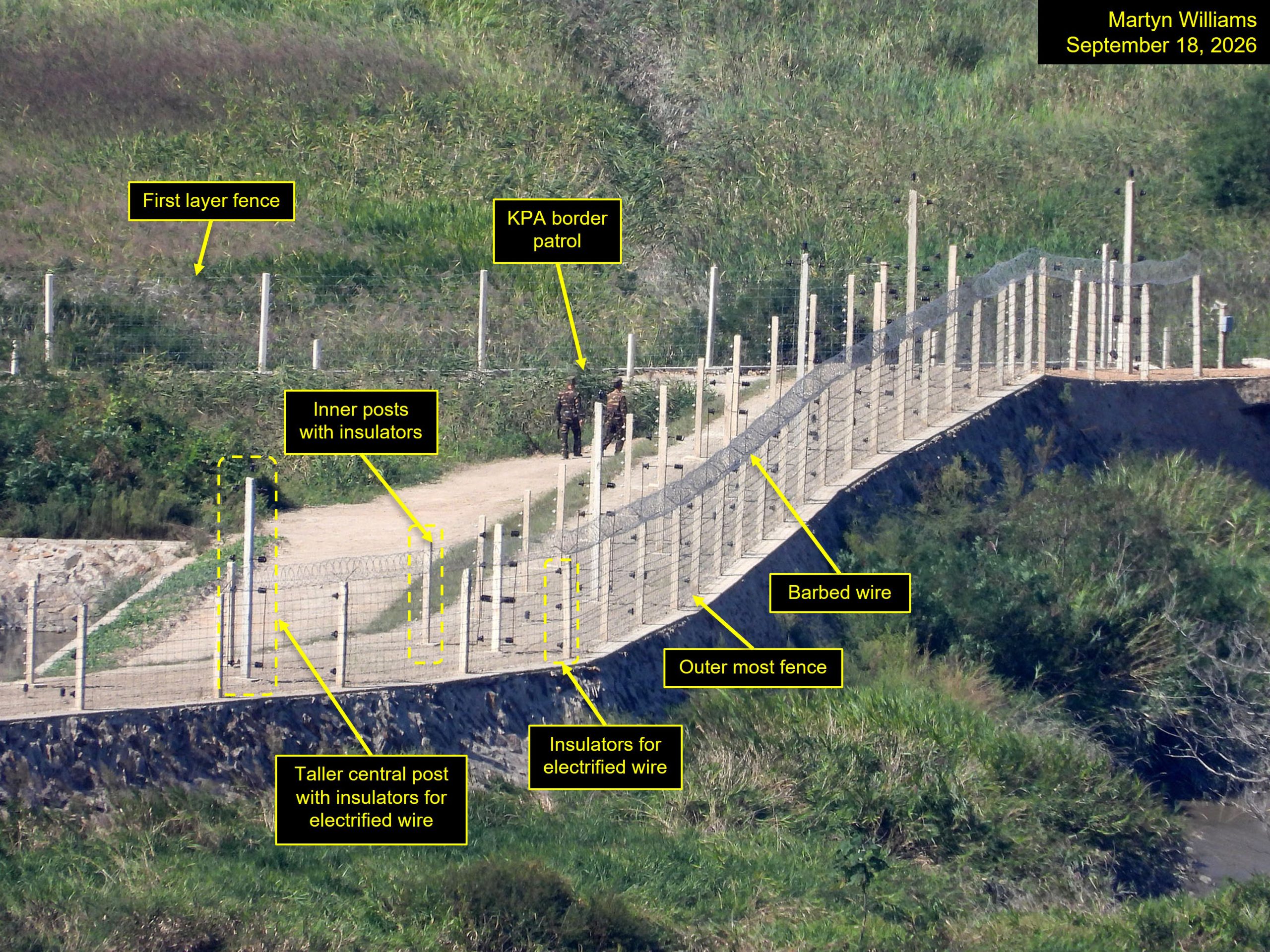
Not all of the border area is so well defended. Some sections still contain older electrified fencing and in other areas, the posts and fences have been installed, but the electrification has not been completed. The work observed appears to be part of the ongoing upgrade to improve these weaker areas.
Over 100 people appeared to be working on the border road, just a little further along from a section where the new fencing was already in place. A few new concrete fencing poles had already been erected in the work zone and workers seemed to be leveling and widening the road.
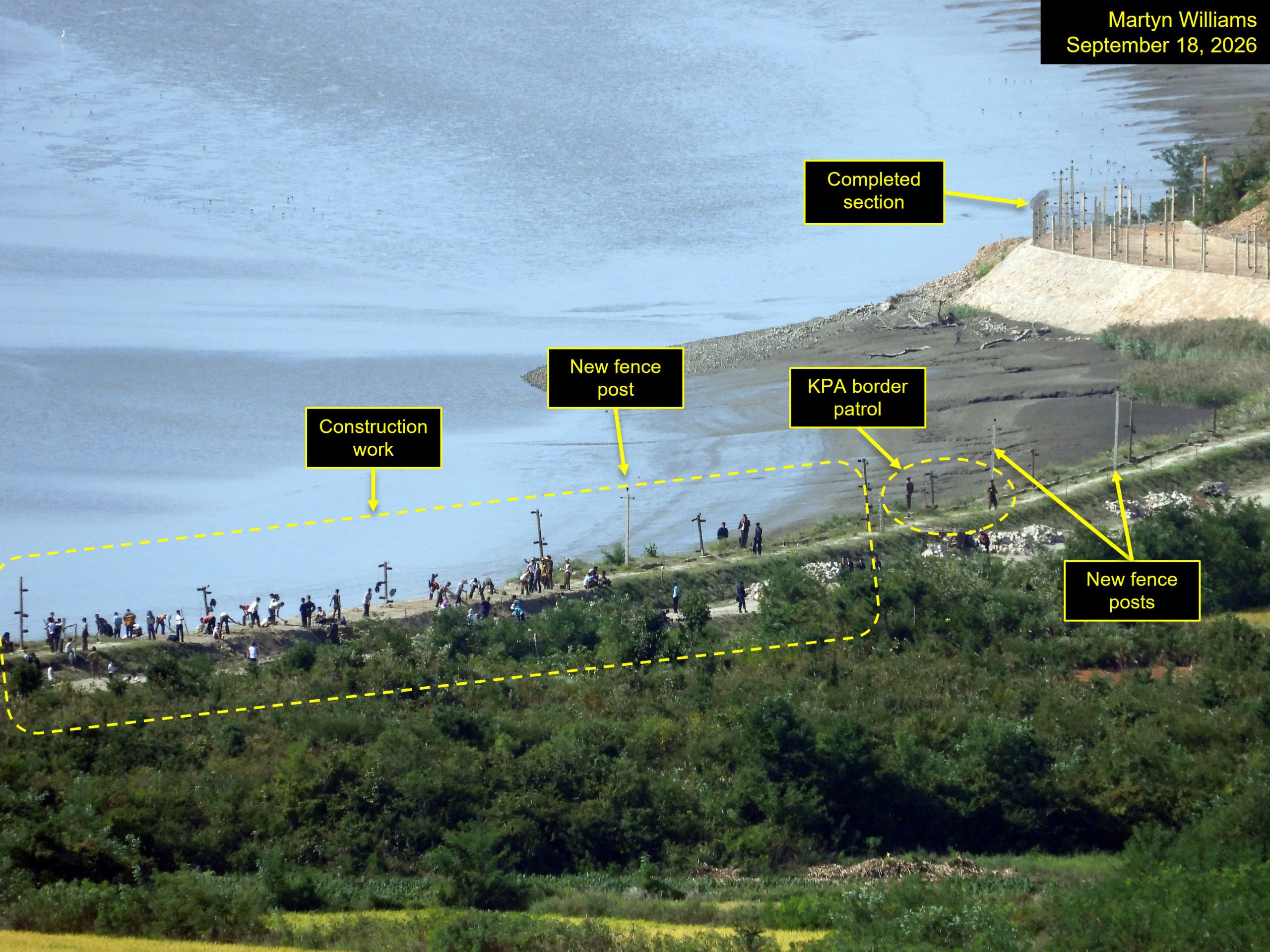
The workers were a cross section of society: young and old, men and women; they were wearing casual clothes and either shoveling dirt or resting from the physical work. Except for a single truck that was hauling dirt and rocks, no machinery appeared to be in use.
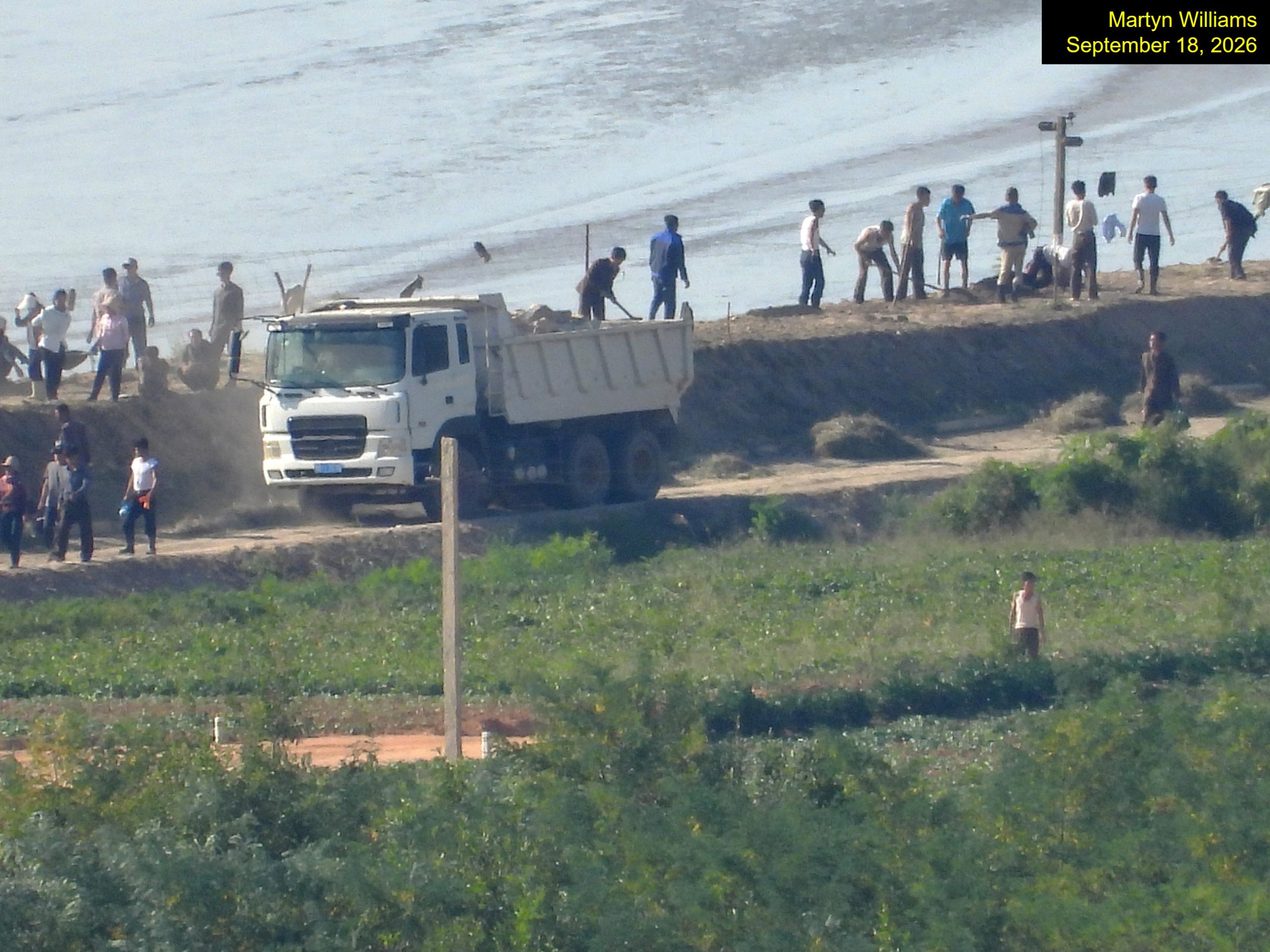
In North Korea, citizens can be pressed into compulsory manual labor as both a punishment or simply to support the state. It is likely this group was comprised of the latter as the state would be sensitive about prisoners being seen from South Korea. They were likely residents of the area forcibly mobilized by the state.
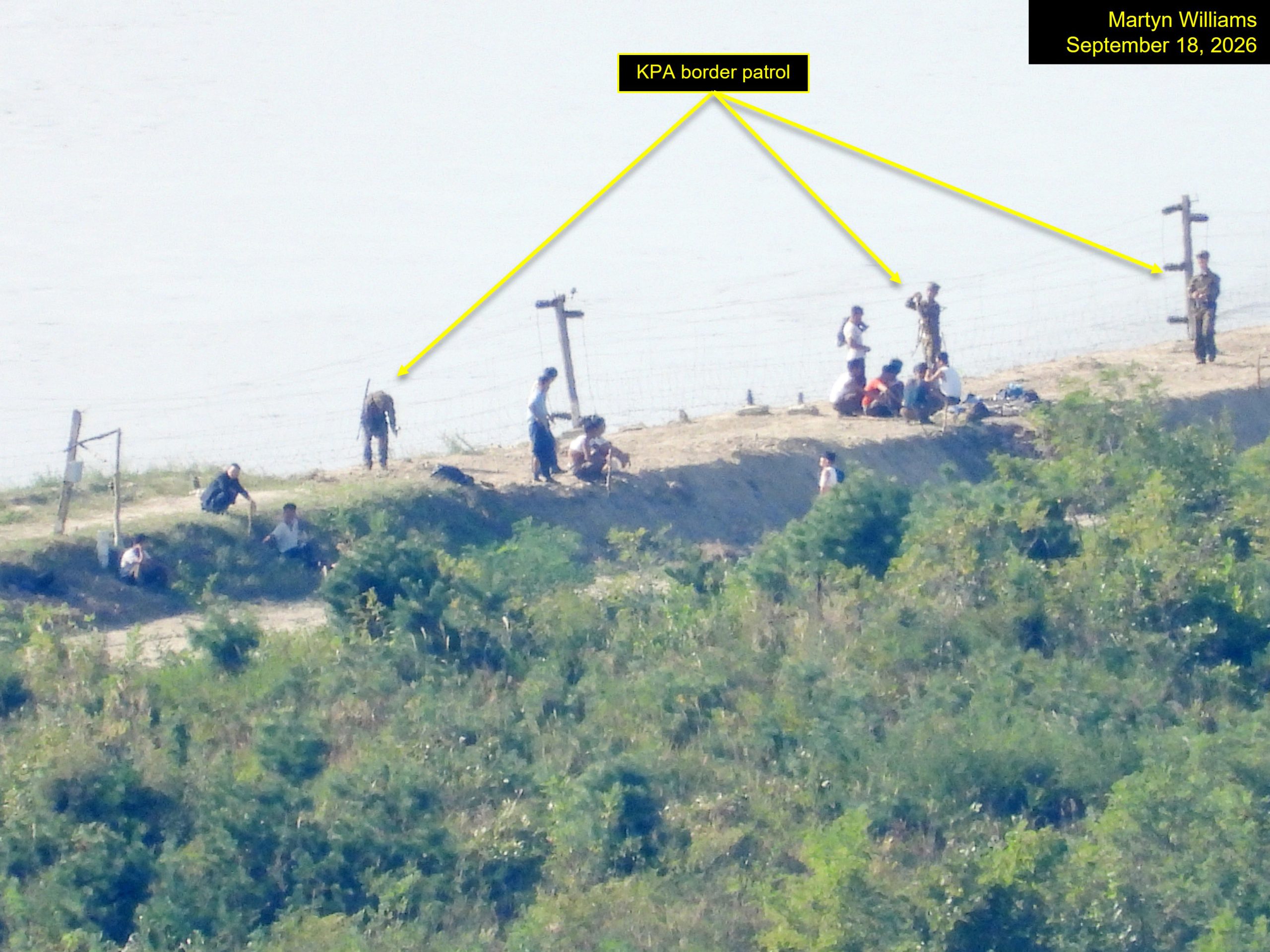
Border guards with rifles over their shoulders were stationed around the worksite. Their presence was likely to deter anyone from hopping over the old fence, because the work was happening right up against it. Had anyone tried, they would still have faced a swim of about a kilometer to reach the South Korean side, so it would not have been easy anyway.
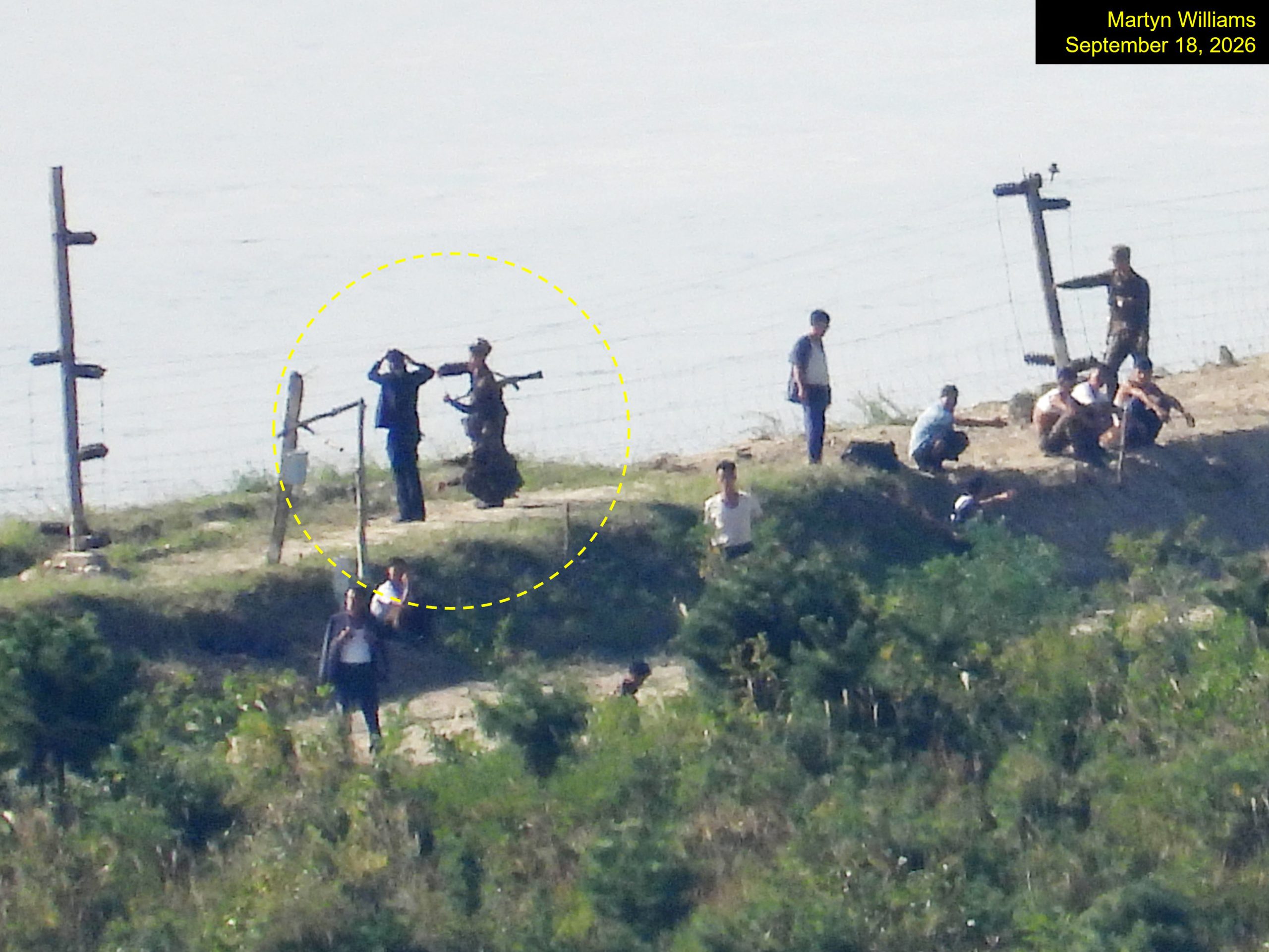
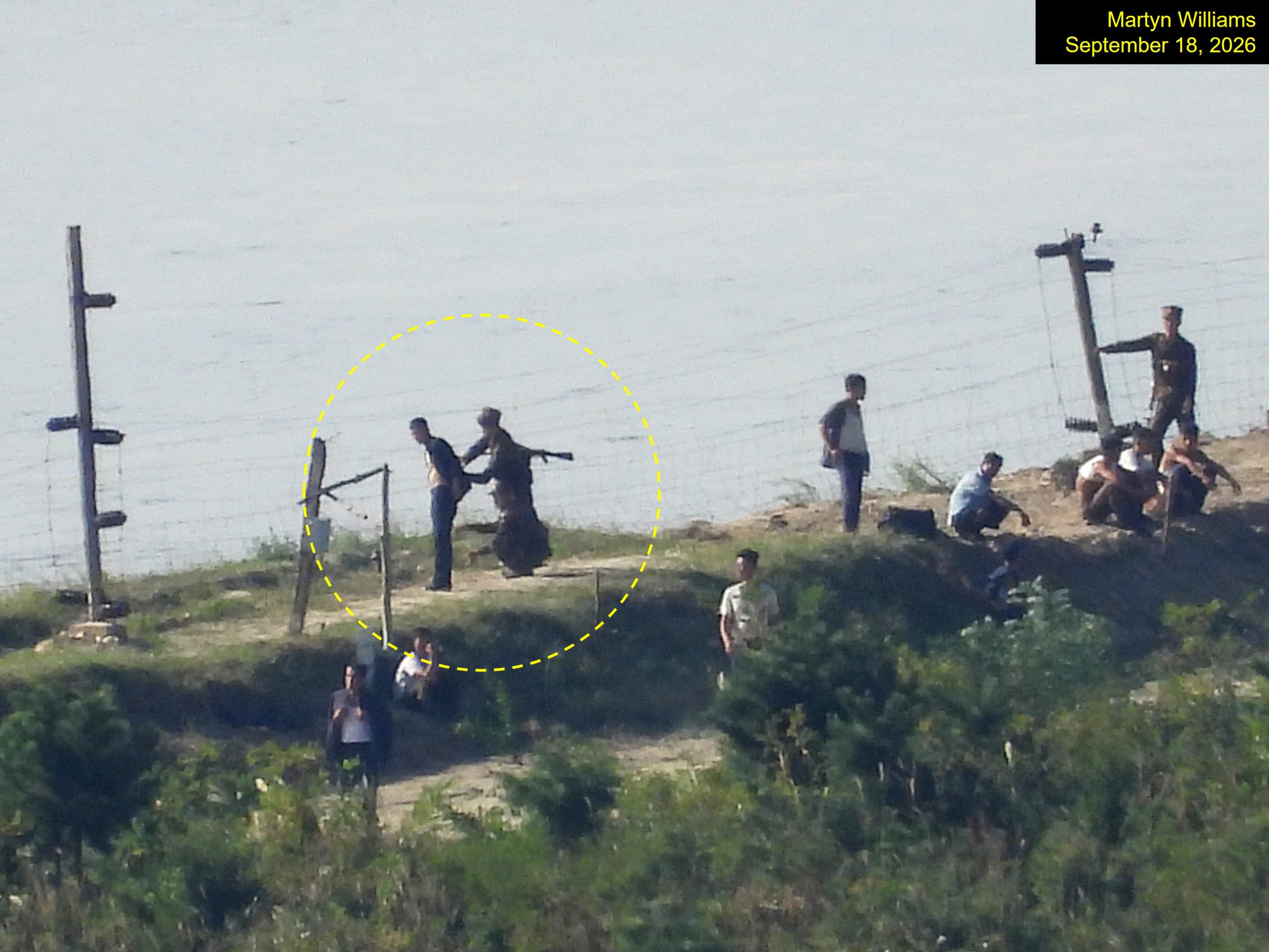
For one of the workers, the day took a bad turn. In two images taken four seconds apart, the worker can be seen with his back towards two soldiers, first with his hands on his head and then behind his back. The sequence was only noticed during a later review of the images, so no other video or photo evidence of what he might have done or how he was handled afterwards exists. The workers around him do not seem to be drawn to the spectacle and are looking down a road, possibly at something approaching.
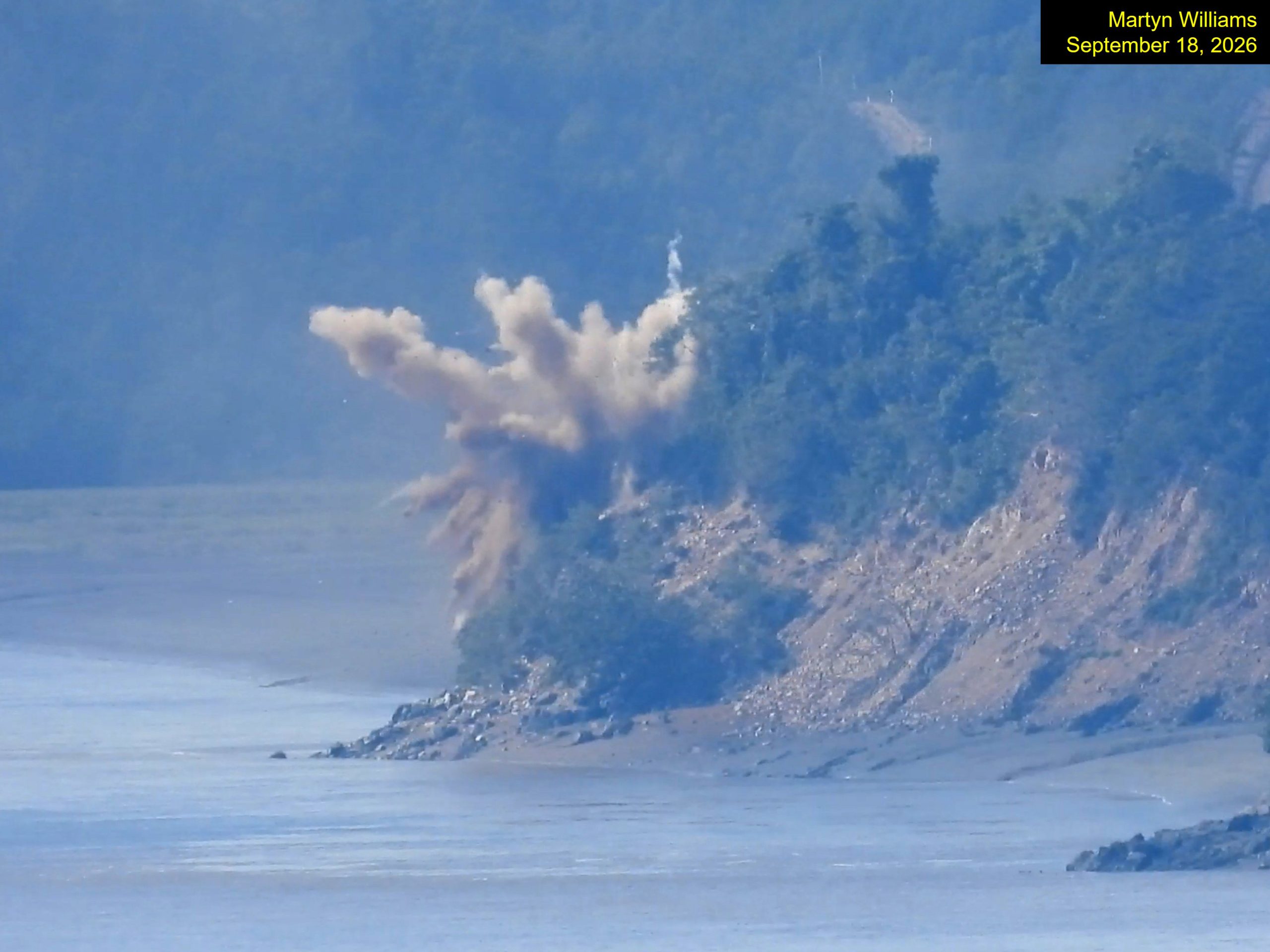
Further along the border, a little over 7 kilometers from the observation position, blasting was taking place. Three blasts were heard over an hour-long period although their exact purpose was unclear.
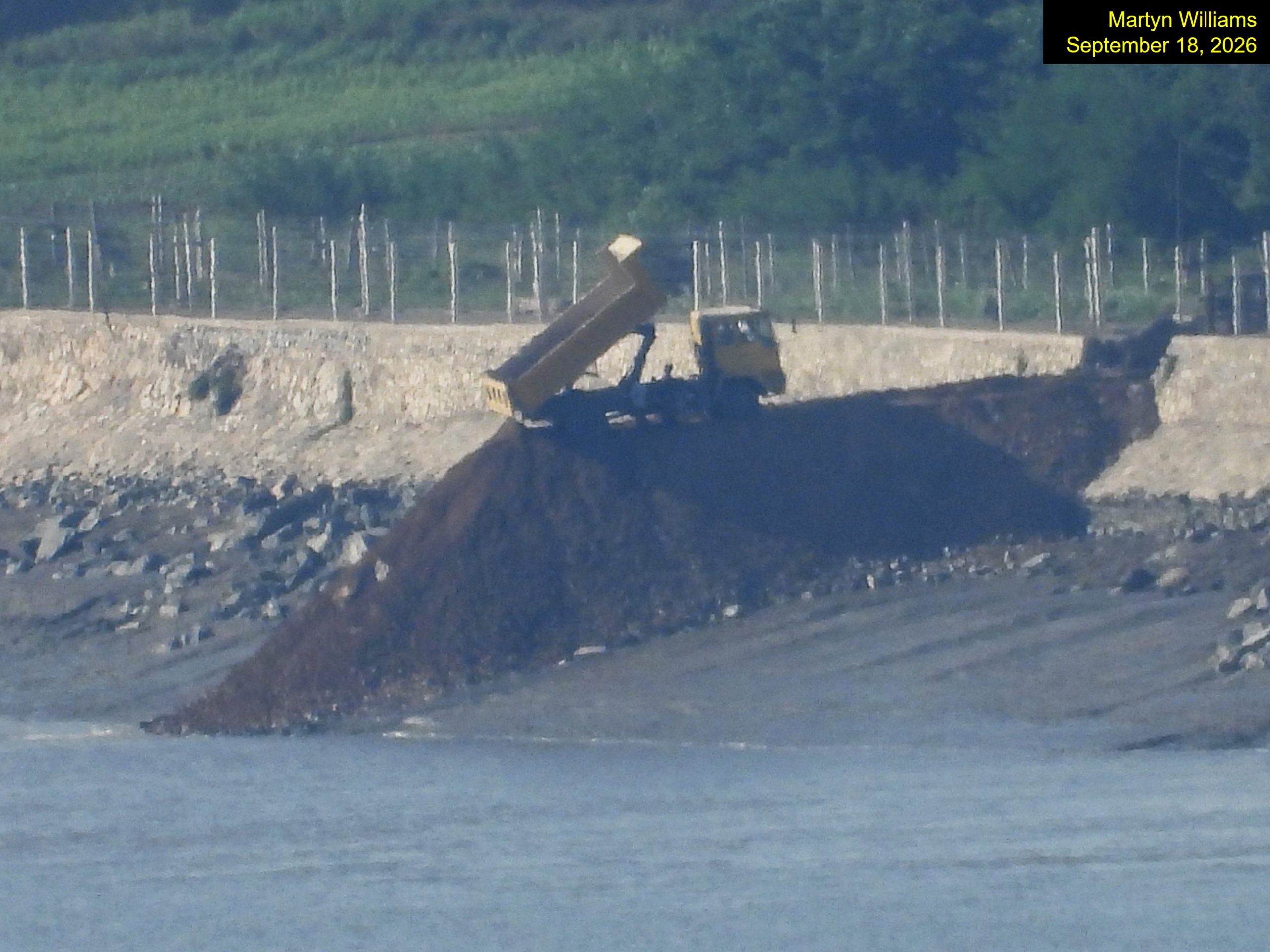
Also along the shoreline, a truck was visible dumping dirt and rocks on a rocky beach area.
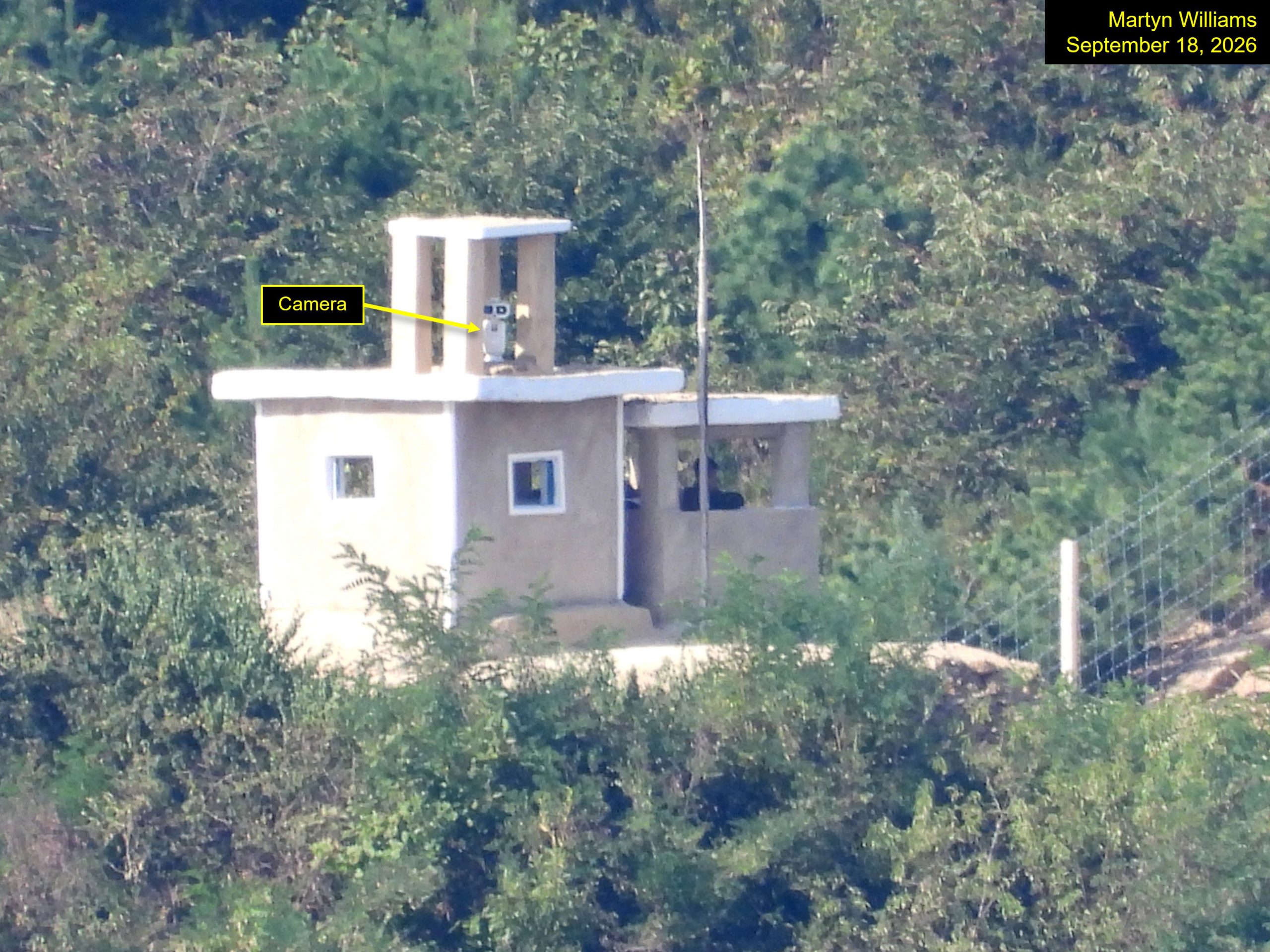
Upgrades along this stretch of the border have been underway for some time. Many of the guard posts were upgraded with new cameras in 2023. The cameras are equipped with additional sensors, likely infrared or radar, for monitoring movement at nighttime.
Electronic surveillance along the border has also made escape or infiltration more difficult. Along the northern border, North Koreans have historically crossed into China for informal trading often after bribing border guards. There, electronic surveillance has also been deployed.
The cameras in the north serve to both deter illegal crossings but also bribery because they can be used to ensure guards are doing their job and not letting people cross.
The success of the greater border defenses can be seen in data on the number of North Koreans escaping the country. In the first six months of this year, 63 North Koreans arrived in South Korea, down from the 96 who arrived in the same period of 2025.
Numbers have dropped significantly since North Korea began strengthening its borders and many of the arrivals into South Korea are not recent defections but people who left the country years ago and have been living in China or Southeast Asia.
The second installment of this two-part serieswill look beyond the construction work and border defenses at Jogang-ri, the small village that sites across the border.