

Quick Take: Kim Jong Un’s Unusual Dandong Trip to Mark CPV Anniversary
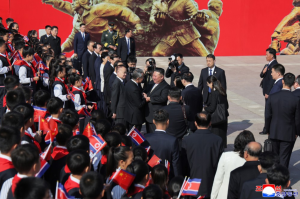
North Korean leader Kim Jong Un’s same-day visit to Dandong, China, on October 24 to mark the 76th anniversary of the Chinese People’s Volunteers’ (CPV) entry into the Korean War was unusual for the combination of its commemorative purpose, brevity, and absence of a meeting with China’s top leader. Though Kim and Chinese President Xi Jinping in June agreed to jointly preserve memorials honoring fallen CPV soldiers and promote shared wartime history, the agreement did not commit Kim to attending a particular anniversary event.
Kim Jong Un’s unusual visit to China highlighted the two countries’ historical solidarity rather than contemporary cooperation, while offering no indication of an opening to Washington.
Highlighting “Friendship Forged at the Cost of Blood”
In 2025, Kim visited the Cemetery of the Fallen Soldiers of the CPV in South Phyongan Province to mark the 75th anniversary, a milestone traditionally accorded special significance in North Korea. This year, however, he traveled to China for the commemoration.
North Korean media coverage of Kim’s visit was largely ceremonial, but his unusually high-profile CPV anniversary commemoration itself highlighted the two countries’ historical bond. The report cited Kim’s repeated emphasis on bilateral ties sealed in “blood” as he paid tribute at the “Monument to Resisting America and Aiding Korea” and toured the “Memorial Hall of the War to Resist U.S. Aggression and Aid Korea.”
The commemorative occasion naturally called for an emphasis on wartime solidarity. Nevertheless, Kim’s repeated references to “blood” contrasted with Pyongyang’s avoidance of the “blood-forged” term during the 65th anniversary of the bilateral friendship treaty in July and its similarly restrained messaging the following month.
Reticent on Contemporary Relations
While focusing on historical friendship, North Korea was relatively quiet on the contemporary dimensions of the relationship. According to Xinhua, Kim expressed willingness to “expand practical cooperation and bring tangible benefits” to both countries during his talks with China’s fourth-ranking leader, Wang Huning. Wang also reportedly called for “strengthening strategic communication and collaboration to foster a peaceful and stable external environment for safeguarding their respective sovereignty, security and development.” North Korean media omitted both sets of remarks. Instead, they went only as far as quoting Kim reaffirming Pyongyang’s resolve to “firmly carry forward the invincible DPRK-China friendship forged at the cost of blood all the time.”
Furthermore, both Chinese and North Korean media readouts of Kim’s visit gave relatively little attention to the New Yalu River Bridge. Xinhua highlighted the bridge’s potential to expand personnel exchanges and trade cooperation, but North Korea only cited Kim’s largely symbolic remarks about the bridge connecting the two countries.
Whether these omissions were simply meant to focus on the visit’s commemorative purpose or also reflected Pyongyang’s restrained messaging in July and August remains unclear. Regardless, the contrasting accounts show Pyongyang’s willingness to highlight historical ties while saying relatively little about the relationship’s contemporary practical and strategic dimensions.
Signaling Openness to a Summit with the US?
The visit has renewed speculation about a potential future US-North Korea summit, possibly on the sidelines of the upcoming APEC meetings. While full details of Kim’s talks in China remain unknown, there is no evidence that the visit signaled Pyongyang’s openness to talks with Washington. Rather, its timing, purpose, and public messaging seemed aimed at underscoring the two countries’ longstanding anti-US, anti-imperialist solidarity.