

The Dangers of North Korea’s Nuclear Status Quo
Since President Donald Trump expressed his desire to meet with North Korean leader Kim Jong Un before the end of the year, concerns and criticism in both South Korea and the United States have outweighed optimism. Critics warn that a “Seoul bypass” could weaken the US-ROK alliance; that Trump may seek nuclear arms control rather than denuclearization; that a small deal would amount to accepting North Korea’s nuclear status; and that no deal is better than a small or bad one. In short, if complete, verifiable, and irreversible dismantlement (CVID) and a big deal are unattainable, these critics consider the status quo—effectively doing nothing—preferable to accepting something smaller.
CVID has long been the preferred approach to the North Korean nuclear problem. For more than three decades, however, South Korean and US governments have pursued CVID through both substantial incentives and strong sanctions and pressure without ever achieving that goal. By 2017, when North Korea conducted its sixth nuclear test and test-fired its first intercontinental ballistic missile (ICBM), it had become clear that this approach had failed.
The “uncomfortable truth” today is that North Korea is already nuclear-armed and that complete denuclearization is unlikely for the foreseeable future. Increasingly, in both South Korea and the United States, denuclearization is being viewed less as an immediate policy objective and more as a long-term goal, much like Korean reunification. The era of “living with a nuclear North Korea” has already begun.
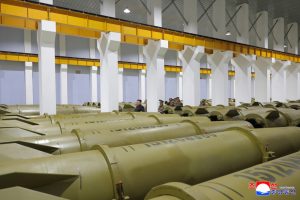
The question is whether something more can be done beyond the status quo but short of denuclearization that would improve the security situation on the Korean Peninsula, such as a nuclear “freeze.” Trump recently said North Korea possesses “57 very powerful nuclear weapons,” while numerous open sources cite North Korean likely possessing enough nuclear material for more than 100 weapons. More troubling is North Korea’s continued expansion of its nuclear material production capabilities, increasing its ability to grow its nuclear weapon arsenal over time. At a January 2026 press conference, President Lee Jae Myung warned that Pyongyang was producing enough fissile material for 10-to-20 nuclear weapons every year. If that pace continues, North Korea could possess 150-to-300 nuclear weapons within a decade.
North Korea has strongly resisted the CVID approach, and today rejects negotiations premised on its denuclearization. However, the US and its allies should be equally unwilling to accept the nuclear status quo. Caught between these two realities, the immediate objective should be to reopen political dialogue with North Korea to seek constraints on North Korea’s nuclear development and expansion to create the space for peace-building efforts to take hold.
A Possible Opening for Another Trump-Kim Summit
Many experts believe that despite Trump’s interest in another summit, Kim Jong Un will remain unresponsive, and no summit will take place. There are good reasons for this pessimism. Above all, Kim has not forgotten the humiliation of the fruitless Hanoi summit of February 2019, something he clearly does not want to repeat. Since then, North Korea has consolidated its nuclear arsenal and greatly expanded its security and economic cooperation with Russia and China. This makes the need for sanctions relief less urgent, and the resumption of dialogue with Washington, who will want some kind of nuclear and/or security concessions, less attractive.
Recent developments, however, suggest that another summit remains possible. Trump has repeatedly emphasized his good relationship with Kim. Of late, he has notably refrained from mentioning “denuclearization.” In mid-August, Trump announced a major reduction in ongoing US-ROK joint military exercises, calling them “totally inappropriate and hostile.” The move appeared intended, at least in part, to address North Korea’s longstanding complaints about Washington’s “hostile policy” and create a more favorable environment for dialogue. In September’s Trump-Xi summit, mention of denuclearization was omitted from readouts from both Washington and Beijing.
Kim Jong Un has also left the door open. North Korean statements have consistently refrained from criticizing Trump personally, even when complaining about US policy. In September 2025, Kim Jong Un even said he still had fond memories of Trump and there was no reason not to meet the United States if Washington dropped demands for denuclearization—a position that has been reinforced by subsequent statements by his sister. There are still likely strategic reasons for Kim to meet Trump again. Building better relations with the United States, South Korea’s principal ally, could strengthen Pyongyang’s strategic position against Seoul and enhance Kim’s international standing further than what his relations with either China or Russia can bring about.
While it is unclear whether the US and North Korea can find common ground in time, the November APEC summit in Shenzhen offers a potential opportunity to facilitate such a meeting. Should Trump seek China’s help, Xi could arrange for a Trump-Kim or Trump-Xi-Kim meeting and demonstrate China’s diplomatic influence. Trump is unlikely to formally recognize North Korea as a nuclear-weapon state, but he may also refrain from making denuclearization the purpose of the summit, as rhetoric from the recent Xi-Trump summit seem to suggest. Whether that will be enough to entice the North Koreans back to the table is unclear.
An Uncomfortable Interim Formula: Peaceful Coexistence with Nuclear Constraints
Broadly speaking, there are two approaches to the North Korean nuclear problem: a clear and direct one and an uncomfortable, gradual one. The former, largely conservative approach emphasizes maximum pressure and sanctions, opposes incentives without prior significant denuclearization steps, favors a big deal for CVID over small deals, and keeps military options on the table. If successful, such an approach could resolve the nuclear problem decisively and cleanly. In practice, however, it has proved unrealistic and potentially dangerous, with North Korea racing ahead with its nuclear development as the West holds out for a perfect solution. CVID and the formula of “denuclearization first, peace regime later” have lacked both effective means and a viable path to implementation.
The “uncomfortable” approach begins by acknowledging that previous denuclearization strategies have failed and that coexistence with a nuclear-armed North Korea may be unavoidable for an extended period. It retains complete denuclearization as a long-term goal but focuses first on urgent security priorities: suspending nuclear activities such as fissile material production, weaponization, and nuclear and ICBM testing; preventing military clashes; and reducing nuclear risks. Rather than insisting rigidly on “denuclearization first,” it allows peace-building and risk reduction to proceed in parallel with, or where possible in advance of, denuclearization.
It also recognizes the limits of South Korea’s role and the leading role of the United States in breaking the diplomatic deadlock. This, however, is not appeasement. Deterrence and sanctions must remain part of the strategy as long as North Korea has nuclear weapons.
The Lee Jae Myung government is already moving in this direction through its pragmatic diplomacy. It has made “peaceful coexistence” its top priority in its North Korea policy and does not insist on “denuclearization first.” Its END initiative—exchange, normalization, and denuclearization—announced in September 2025, rejects rigid sequencing among the three pillars and seeks progress wherever possible. The Lee government has also proposed a three-stage approach to denuclearization: suspension-reduction-dismantlement. Rather than repeating the increasingly ineffective call for “complete denuclearization,” this approach focuses first on suspending what it can as a substantive interim stage that could be accompanied by partial sanctions relief and other incentives.
Above all, the Lee government has viewed another Trump-Kim summit as a potential breakthrough for denuclearization and peaceful coexistence. At the August 2025 US-ROK summit, Lee asked Trump to serve as a “peacemaker” on the Korean Peninsula while casting himself as a “pacemaker” in support of Trump’s efforts. This marked a departure from the Moon Jae In government’s concept of South Korea’s role as the “driver” of Korean Peninsula diplomacy.
These shifting South Korean and US positions would give North Korea more room to reenter dialogue at a lower political cost. For North Korea, another summit could open the door to sanctions relief, improved relations with Washington, enhanced international standing, and reduced pressure for immediate and complete denuclearization. Kim Jong Un may therefore find it increasingly unwise to ignore Trump’s overtures altogether.
For the United States, renewed diplomacy would help check North Korea’s runaway nuclear and missile programs. In particular, a suspension of ICBM testing and development would reduce one of the most direct security threats to the U.S. homeland. Reduced tensions and greater stability on the Korean Peninsula would also allow Washington to devote more diplomatic, military, and strategic resources to other pressing regional and global challenges. For Trump personally, a successful deal with Pyongyang could deliver a significant foreign-policy achievement and help restore his image as a peacemaker.
If Seoul and Washington prepare a political, diplomatic, and economic package attractive enough to bring North Korea to the negotiating table and secure some level of nuclear constraints, Kim’s calculus could change. The immediate task is to convince Pyongyang that dialogue is more advantageous than confrontation. The ultimate task is to convince it that denuclearization is more advantageous than nuclear armament.
To get there, we need to build a peace regime on the Korean Peninsula that makes peaceful coexistence between the two Koreas possible and enables them to move beyond zero-sum security competition.
The road will be long and arduous. The critical challenge is to travel that road without war or nuclear use.