

Soft Reveal of New North Korean Stealth Strategic UAV
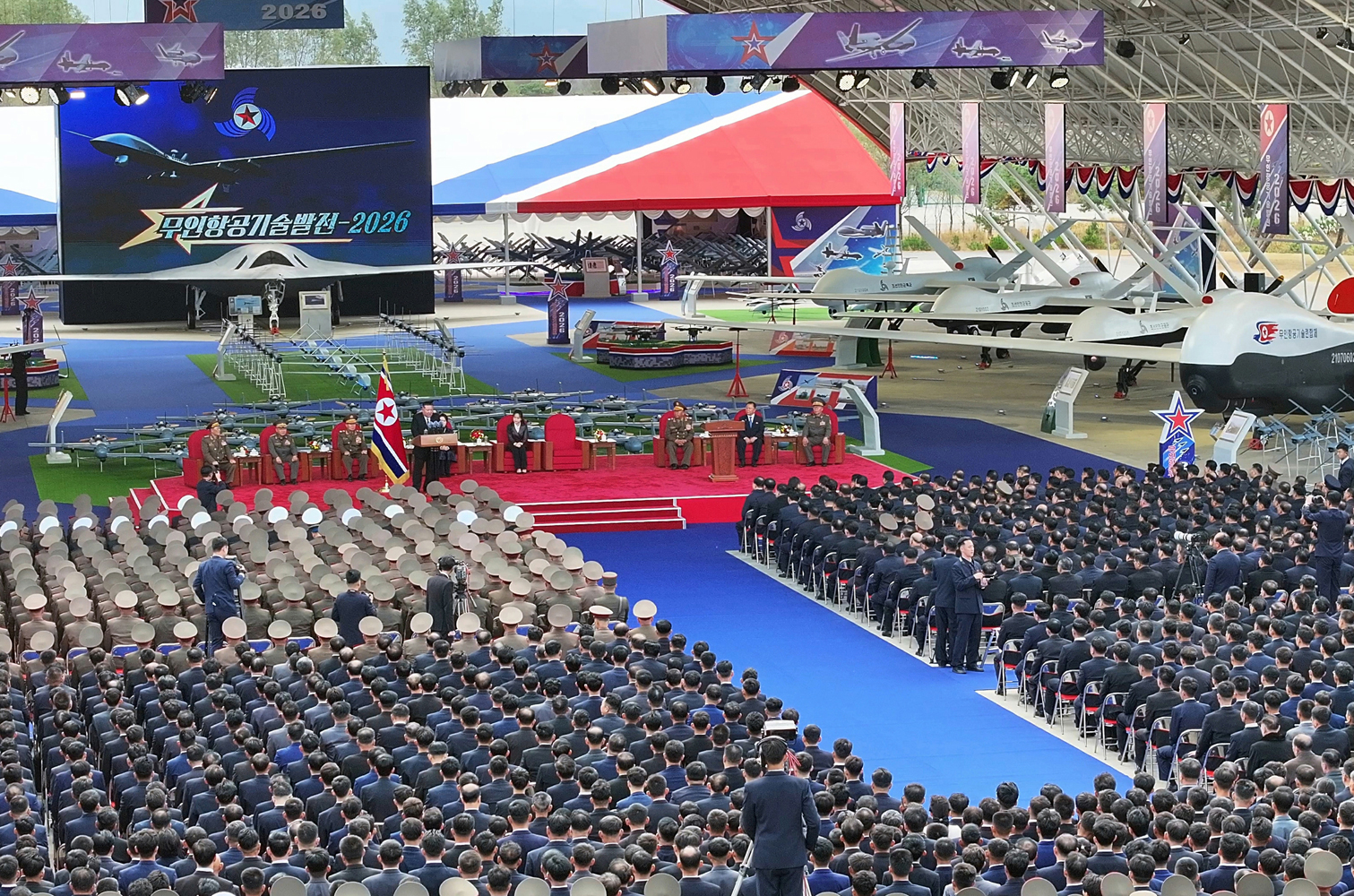
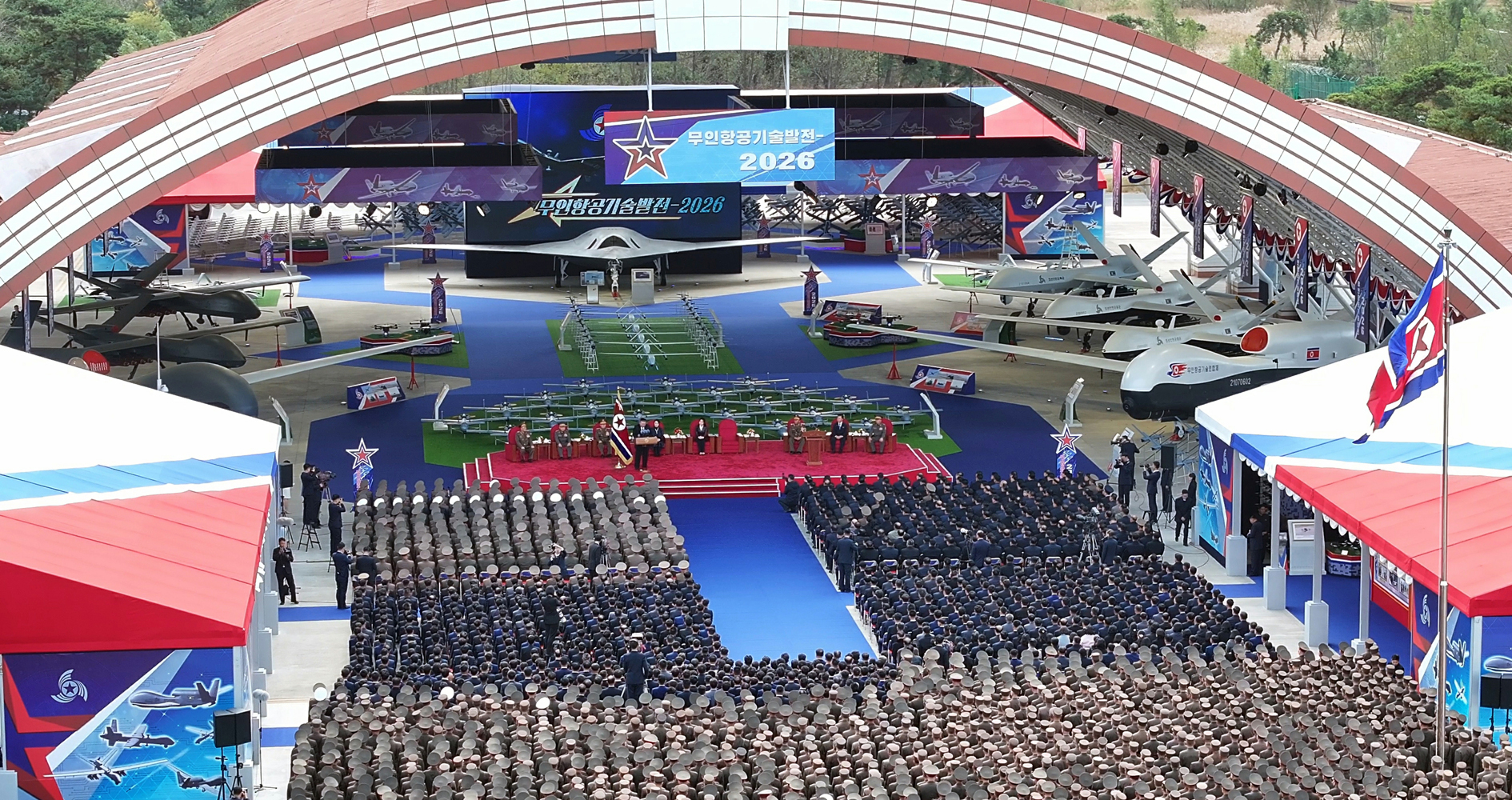
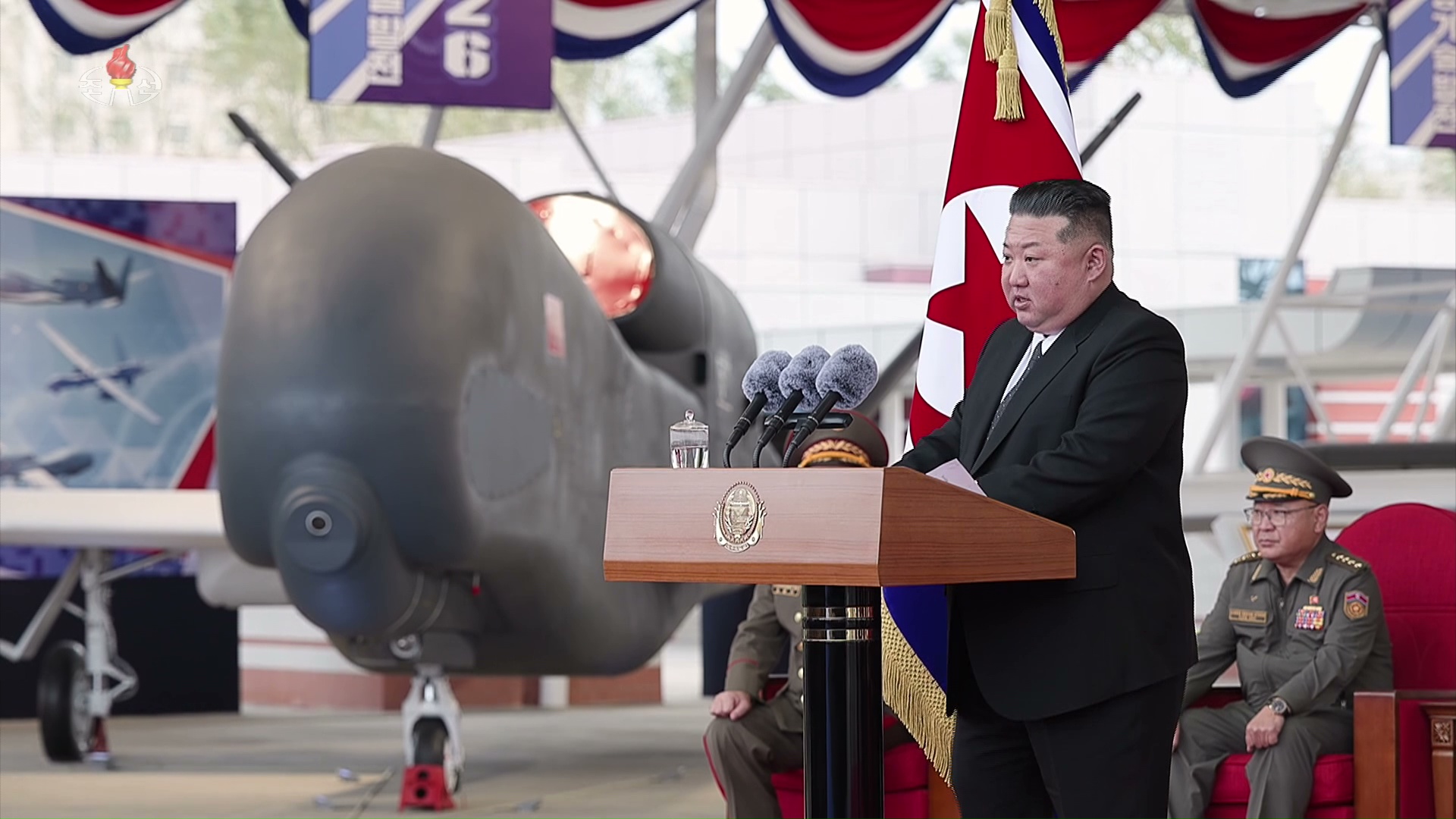
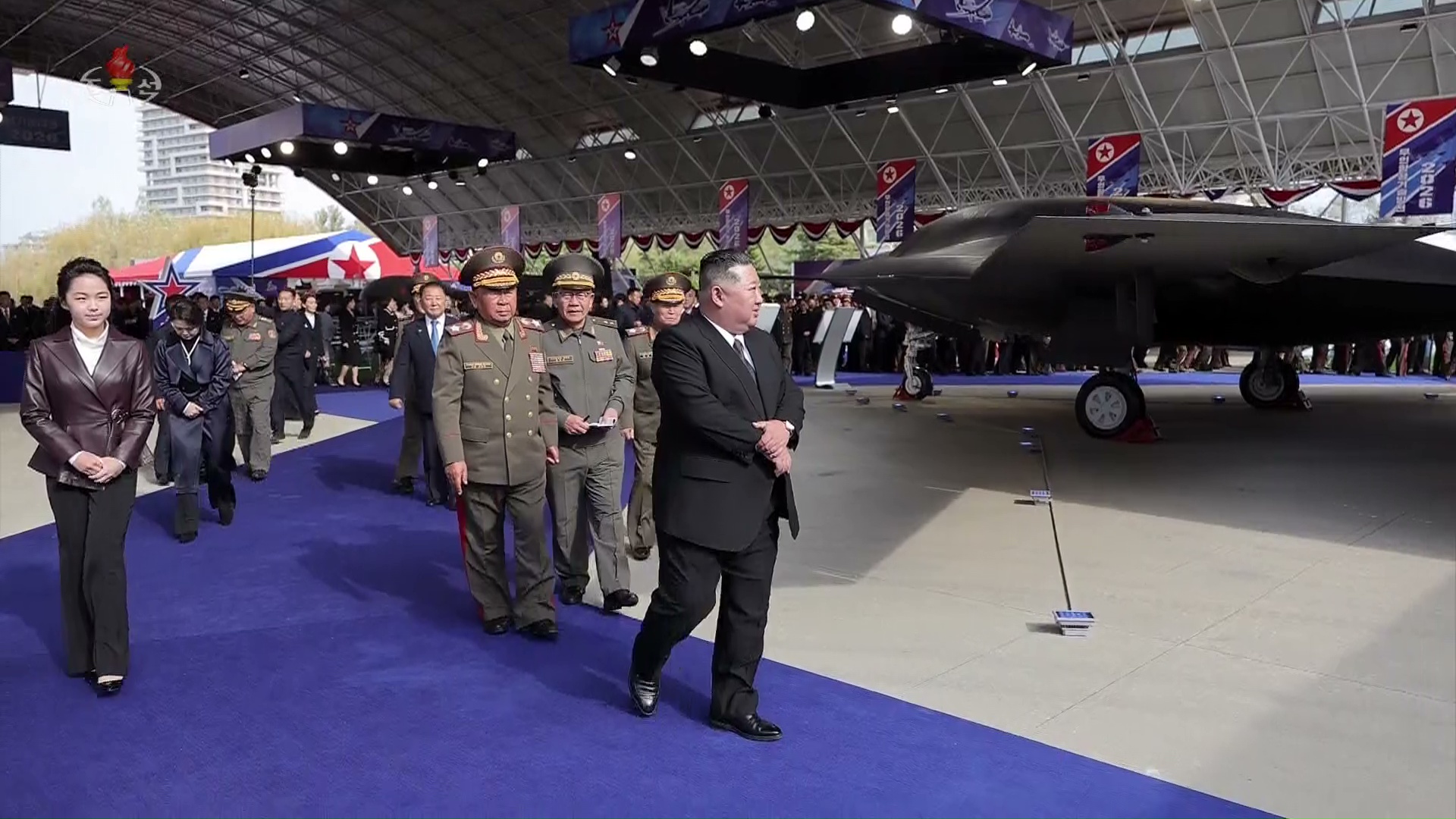
North Korea held the “unmanned aeronautical technology development-2026” exhibition on October 29, according to state media, with Kim Jong Un in attendance. Although no details were provided, images of the event included a new large unmanned aerial vehicle (UAV) with a design akin to strategic “stealth” UAVs in the US, China, Russia, and a few other countries. Because the press images provide the only information, there are many key unknowns about the system’s status and capabilities, including when it might be deployed, how effective its stealth capability may be, the capabilities of its engine(s) that affect its range and endurance, or the capabilities of its electronic systems that would be central to its mission effectiveness.
Another key unknown is the extent to which the new UAV is being developed with the benefit of foreign assistance. Russian and Iran are prime candidates. But it is at least as possible that Pyongyang developed the new UAV largely on its own, given its aerospace capability, the fact that such UAVs have been around for at least 15 years, and the North’s own success in developing copycats of other US UAVs.
For now, the primary impact of the new drone is as a statement of North Korea’s commitment to UAVs and its claims to world-class military technological capabilities. Although it is natural to focus on the potential strike capabilities of a future force of such UAVs, the North’s existing very large force of accurate ballistic and cruise missiles—already being augmented by one-way attack drones—means the new UAV is unlikely to provide significant additional combat power. A force of the new stealth UAVs could potentially made a greater contribution as a source of wartime intelligence on South Korea and Japan, which could be especially important as the North Korean reconnaissance satellite program continues to lag.
Information to Date
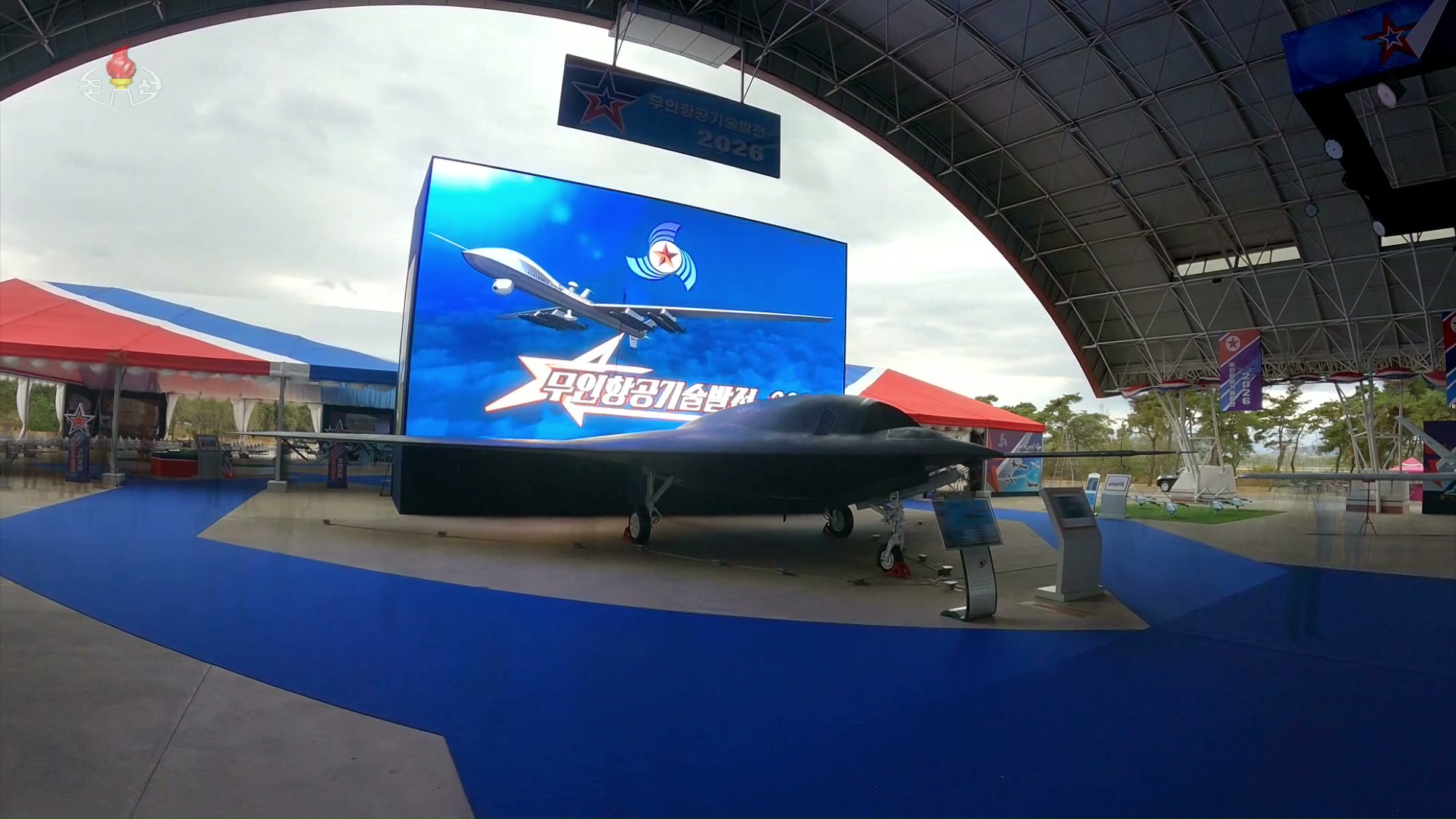
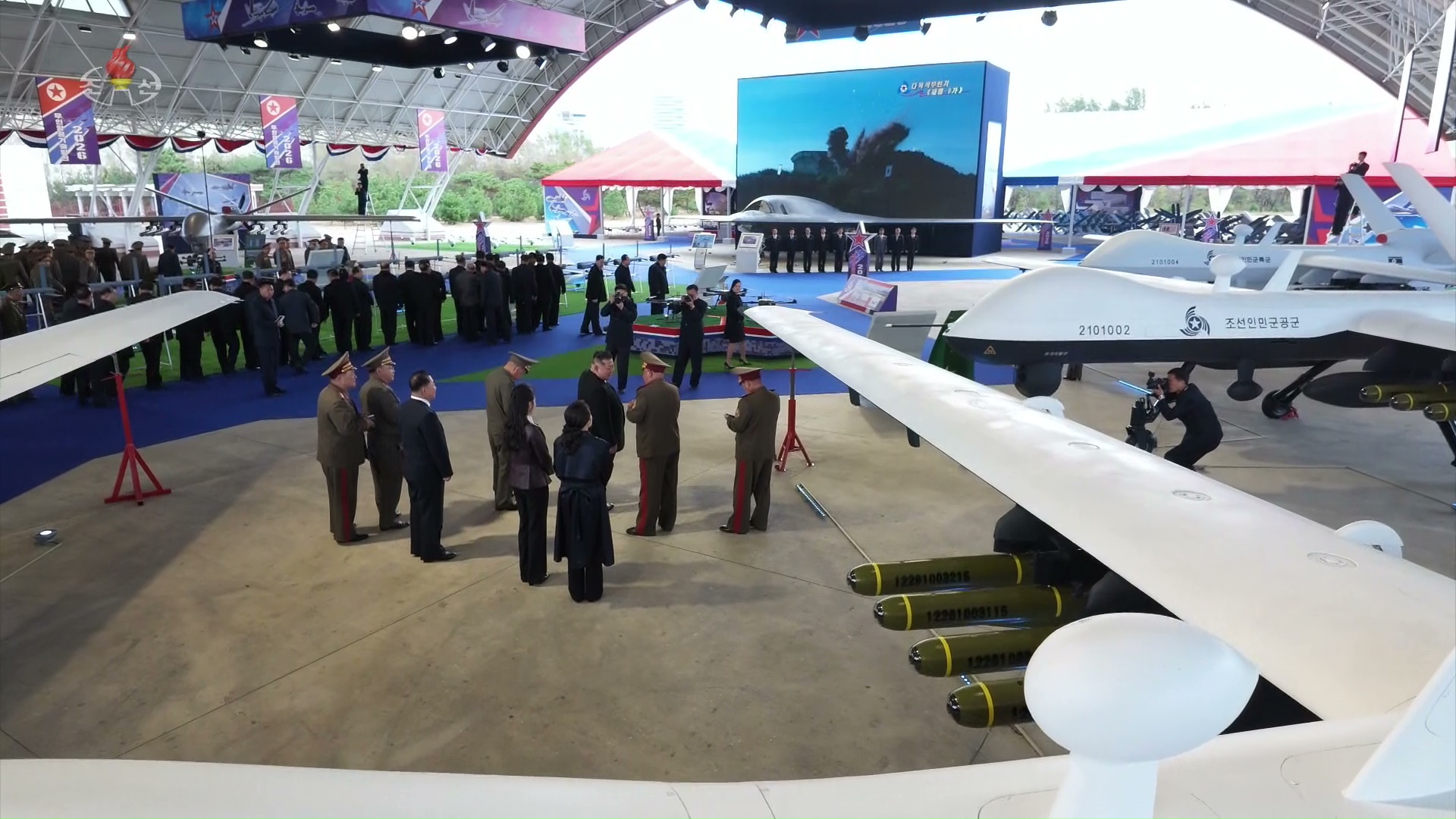
The exhibition reportedly showed the “latest achievements made in the field of unmanned aeronautical technology and the prospect of its development,” including “strategic…multi-purpose drones” of which no further details were provided. Accompanying photographs, however, as well as TV news coverage of the exhibition, showed for the first time a large, tailless, flying-wing unmanned aerial vehicle (UAV) with a large engine inlet above the nose.
Analysis
The large UAV in the photos presumably is one of the “strategic drones” referred to in state media. Assuming the UAV is an actual system in development rather than a propaganda piece, it could be intended for long-range reconnaissance like the similar-appearing US RQ-170 Sentinel first deployed in 2007. Alternatively, as suggested by the North Koreans’ use of “multi-purpose,” the new UAV could be intended for weapons-delivery (assuming it is equipped with an internal weapons bay) as well as reconnaissance and other missions. Similarly-appearing multi-mission UAVs have been in flight-test development for these purposes by the US since at least 2011 (the X-47B), China since at least 2012 (the GJ-11 Sharp Sword), France since at least 2012 (the nEUROn), and Russia since at least 2019 (the Sukhoi S-70). South Korea flew a subscale prototype of such a system in 2015 (the KUS-FC), but the program stalled for a number of years.
Because the press images are the only information on the system, there are many key unknowns about its status and capabilities. We do not know how far along in development it is, when it might begin flight-testing or deployment, or its performance. Although the new UAV’s flying-wing layout inherently reduces its radar signature, it is unknown whether it incorporates other stealth features (such as radar-absorbing coatings and shielded engine inlets), or how effective its stealth capability may be. The capabilities of its engine(s) are also unknown, which would affect its range and endurance. Most important, there is no information on the capabilities of its sensors and other electronic systems, which would be central to its combat and reconnaissance effectiveness.
Another key unknown is the extent to which the new UAV is being developed with the benefit of foreign assistance. Russia is an obvious candidate given its increasingly close relationship with North Korea and the evidence of cooperation on much smaller tactical drones. Iran would be another candidate given its past missile cooperation with the North and the fact that Tehran developed a similar-looking multi-purpose UAV, the Shahed-171, based heavily on a US RQ-170 drone it obtained near the Iran-Afghanistan border in 2011. That said, it is at least as possible that Pyongyang developed the new UAV without substantial foreign assistance, given its level of aerospace capability, the fact that such UAVs have been around for at least 15 years and substantial information about them is in the public domain, and the North’s own success in developing UAVs that closely resemble the medium-size US Predator (the Saetbyol-9) and the large US Global Hawk (the Saetbyol-4) —both of which also were seen at the UAV exhibit.
Implications
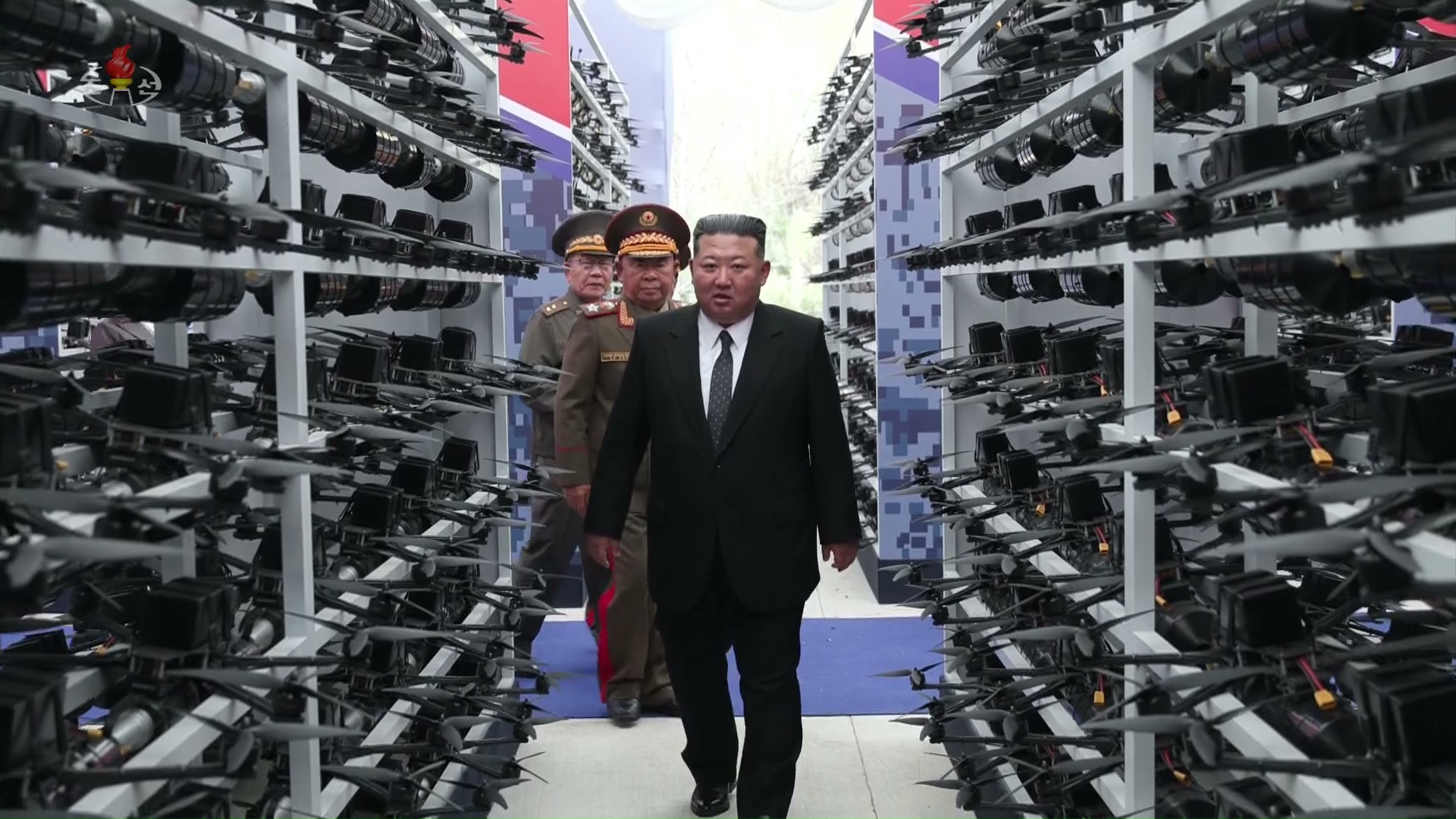
For now, the primary impact of the new drone is as a statement of North Korea’s commitment to UAVs and its claims to world-class military technological capabilities (for example, North Korean media claimed the exhibit represented “the epochal development of national defense science”). It remains to be seen if and when Pyongyang deploys a workable large stealth UAV, how capable such a vehicle turns out to be, and if it is produced in sufficient numbers to be militarily significant. Although it is natural to focus on the potential strike capabilities of a future force of such UAVs, the North’s existing very large force of accurate ballistic and cruise missiles—already being augmented by one-way attack drones, also displayed at the exhibit—means the new UAV is unlikely to provide a significant additional increment in combat power. A force of the new UAVs could potentially make a greater contribution as a source of wartime intelligence, to the extent it was able to fly deep into South Korea and Japan during a conflict while using stealth capability to minimize its exposure to alliance air defenses. This could be especially important as the North Korean reconnaissance satellite program continues to lag.