

Quick Take: North Korean TV Propaganda
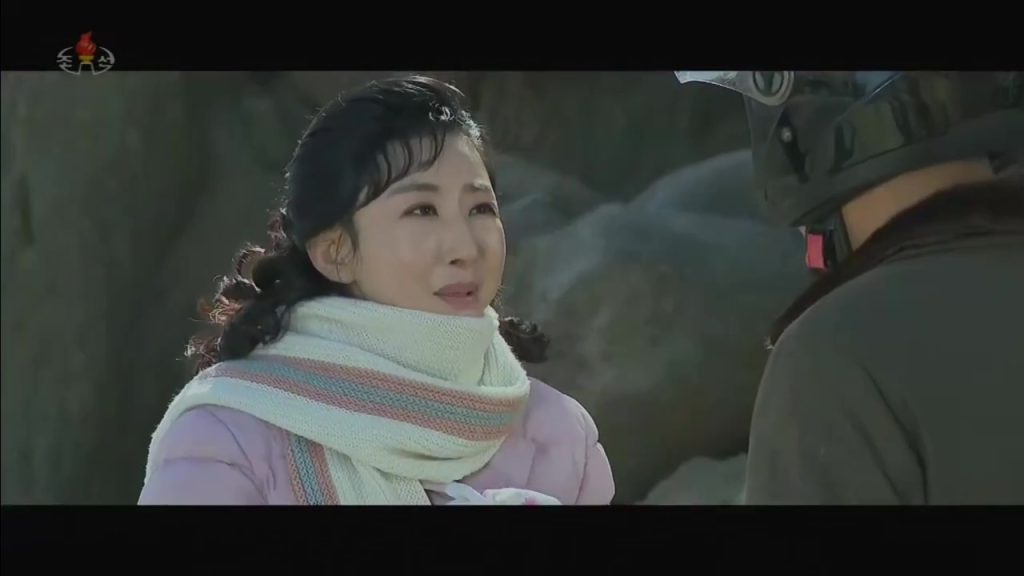
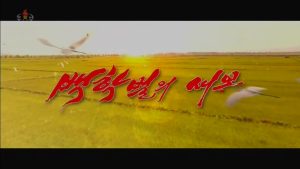 Korean Central Television’s (KCTV) recently aired 22-part drama series, entitled “A New Spring in the Paekhak Plain [백학벌의 새봄],” has drawn widespread attention from South Korean and Western media for its apparent similarities to South Korean dramas and stark depictions of a regime weakness: corruption. While this has caused quite the buzz as something new or novel, it actually is in line with broader changes to North Korean propaganda since Kim Jong Un first took power.[1]
Kim’s strategy from the beginning has been to modernize propaganda to make it more engaging, real, and entertaining while toeing the Party line. This began with efforts to modernize KCTV presentation methods or revamp programming, such as introducing a new generation of male news announcers and redesigning news studios starting in 2012, and using visual effects to augment news content or top officials’ speeches in 2015 and 2016. Visual effects have continued to evolve, to include the use of 3D graphics and drone-filmed footage.
In addition to enhancing presentation techniques, North Korea has made its entertainment more like content from abroad. A 2016 KCTV program featuring couples playing games and introducing restaurants was one example bearing resemblance to South Korean television shows.[2] An unprecedented festival-like nighttime military parade in October 2020 commemorating the Party’s 75th founding anniversary appeared to have been inspired by Western or South Korean television content.
Another notable feature of North Korean propaganda under Kim Jong Un is the admission of problems. Instead of concealing or hinting at problems, as had been typically done in the past, Kim Jong Un’s propaganda team has turned shortcomings and weaknesses into effective propaganda tools by publicly acknowledging problems and showing efforts to correct them. North Korea’s public admission in May 2014 of a building collapse in Pyongyang, extremely rare at the time, would be one of the earliest signs of this trend. Near-real-time KCTV broadcasts from flooded sites in the summer of 2020 and Kim Jong Un’s teary-eyed speech and apology to the people for their “unprecedented difficulties” at the October 2020 military parade both exemplified this policy.[3] Criticism of weaknesses in the system, including corruption, and censure of public officials have all become commonplace in North Korean propaganda.
These trends show that Kim Jong Un understood from early on the urgency of adapting North Korea’s propaganda to the changing times to contend with the inflow of outside information and cultural content. In that context, the themes and feel of this new television series should not be so surprising. Despite all this, however, the ultimate goal of propaganda has not changed: shaping and controlling public perceptions of issues that are key to ensuring regime security. This will never change as long as the Kim regime persists.
- [1]
A key part of Kim Jong Un’s evolving propaganda strategy also includes the use of the Internet and social media platforms like YouTube targeting international audiences, but this essay focus only on propaganda targeting the domestic population in North Korea.
- [2]
“<련속기행> 동해의 명승을 찾아서 [Serial travelogue: In Search of Scenic Spots in the East Sea],” Parts 1-5, KCTV, January 19-21 and March 7-8, 2016.
- [3]
Kim Jong Un’s 2020 speech, apparently aimed at portraying the leader as a relatable human being also, tracked with his instructions to propaganda officials in March 2019 to portray the leader as “not someone who is removed from the people but who shares his life and death and joy and sorrow with the people.” See “경애하는 최고령도자 김정은동지께서 제2차 전국당초급선전일군대회 참가자들에게 서한 《참신한 선전선동으로 혁명의 전진동력을 배가해나가자》를 보내시였다 [Respected and Beloved Supreme Leader Comrade Kim Jong Sent a Letter, “Let Us Redouble the Motivating Force of the Revolution’s Advance Through Original Propaganda and Agitation,” to the Participants in the Second National Conference of Primary Propaganda Workers of the Party],” Rodong Sinmun, March 9, 2019.