

Price-Tagging the Alliance: Seoul’s APEC Stress Test
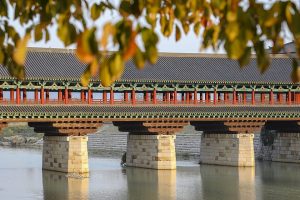
As South Korea prepares to host the Asia-Pacific Economic Cooperation (APEC) summit from October 31 to November 1 in the historic city of Gyeongju, it finds itself caught in the middle of escalating US–China trade tensions and intensifying pressure from its US ally—managing not only the choreography of a forum representing 60 percent of global GDP, but the crosscurrents of great power rivalry shaping its agenda. The 25 percent reciprocal tariff on South Korean exports under President Trump’s “Liberation Day” executive order has evolved into a far more complex negotiation linking tariff relief to a $350 billion up-front industrial investment. Washington’s insistence thus far on up-front capital flows as the price of tariff reduction has been strained by the eye-wincing aftermath of a US ICE raid on the Georgia-based Hyundai Metaplant, opening an additional can of policy complications now entering the picture and shaping the alliance dynamic.
At the same time, Beijing’s rare earth export curbs and port-fee retaliation have added new pressure, forcing Seoul to adjust its diplomatic posture amid intensifying great-power trade tensions. The on-again, off-again prospect of a Trump–Xi meeting over disputed trade issues has created a moving target for APEC preparation, forcing Seoul to maintain planning equilibrium while managing summit optics and diplomacy. At the same time, recent engagement among Pyongyang, Beijing, and Moscow—culminating in events surrounding the 80th Workers’ Party anniversary—has projected an image of bloc confidence just as Seoul’s diplomatic circuitry shows signs of overload. Together, these pressures have turned APEC from a multilateral platform for regional economic coordination into a stress test of South Korea’s middle-power agency. To avoid being trapped by US–China great-power compression as its maneuvering space narrows, Seoul will need to move beyond adaptive responses and reinforce its autonomy by establishing clearer economic red lines.
Economic Transactionalism—Tariffs, Visas, and Price
What began for Seoul as a 25 percent tariff under President Trump’s “Liberation Day” executive order last April has evolved into a process of attaching a price tag to the US-ROK alliance. Weeks of negotiation ensued, culminating in Washington framing the deal as a $350 billion up-front investment in exchange for resetting the tariff to 15 percent, a proposal Seoul interpreted as politically unworkable and fiscally destabilizing. When Seoul countered with phased payments, dollar swap safeguards, and foreign exchange reforms, Washington acknowledged the proposals but showed little sign of easing its preference for a full up-front commitment.
To salvage tariff negotiations and avert a diplomatic breakdown before the APEC summit, the Lee administration sent a “Hail Mary” mission comprised of senior trade and policy officials to meet with US counterparts during the October 13-18 International Monetary Fund-World Bank week in Washington. According to Treasury Secretary Scott Bessent, a resolution is expected within “the next 10 days.” Yet, this flicker of light at the end of the tariff tunnel dims against the backdrop of recent US policy interventions. The ICE raid on Hyundai’s Georgia Metaplant underscored how competing domestic US considerations can collide with broader trade negotiations. In the same week that more than 300 South Korean engineers and technicians were detained, Washington signaled that the 25 percent tariff could remain in place indefinitely absent sufficient concessions from Seoul.
The shift is unmistakable—the alliance’s economic dimension, long sustained by mutual interdependence and strategic alignment despite periodic friction, is now being reshaped by transactional leverage and dollar-based diplomacy. Seoul is quickly adapting to the reality that cooperation is no longer framed by stable continuity and balanced interest but by bargaining position and leverage—creating an imbalance where Washington’s asks get bigger and Seoul’s ability to maneuver shrinks. As APEC approaches, that imbalance is tested by a transactional approach that puts pressure on a US–ROK alliance that is increasingly viewed through a lens of immediate utility.
Middle-Power Compression
The US-ROK alliance notwithstanding, US–China bilateral dynamics are placing Seoul in the middle of a great-power squeeze, rather than at the center of multilateral coordination as APEC nears. Any plans for a tightly scripted summit calendar have turned fluid as President Trump’s wavering plans to meet—or not meet—China’s Xi Jinping inject uncertainty into the agenda. Although he is not expected to attend the leaders’ summit, Trump is expected to meet with President Lee and possibly Xi Jinping. Each adjustment to Trump’s schedule—and each new rumor of a Xi–Trump encounter—reshapes expectations for outcomes, forcing Seoul to manage optics and messaging on shifting terrain. The result is choreographic triage rather than orchestrated control, as South Korea works to sustain diplomatic balance while the two largest economies treat the summit as another venue for leverage and signaling. In this environment, transactional behavior, not multilateral consensus, sets the tempo, and Seoul’s role has shifted from empowered host to pressured intermediary.
Tension deepened as Beijing announced rare earth export curbs on October 9, a move widely seen as a negotiating tactic in its trade dispute with Washington. Within twenty-four hours, the US responded with a threat to impose 100 percent tariffs on all Chinese imports beginning in November. China then countered on October 10 by imposing reciprocal port fees on US shipping, which, along with Washington’s earlier fee hikes effective October 14, left Seoul facing cascading economic risks on both fronts. What has traditionally been a venue for multilateral coordination was instead becoming a live demonstration of how a regional middle power must absorb the stray voltage of tariff brinkmanship.
As APEC nears, the convergence of these dynamics has turned the summit into a live stress test of Seoul’s diplomatic circuitry with each surge in US–China tension triggering reactive adjustments calibrated to keep planning on track while avoiding the appearance of taking sides. To keep APEC from shorting out entirely, Seoul mounted its own form of great power surge protection—dispatching the “Hail Mary” tariff mission composed of Finance Minister Koo Yun-cheol, Trade Minister Yeo Han-koo, presidential chief of staff for policy Kim Yong-beom, and Minister of Industry and Trade Kim Jung-kwan to Washington for what officials describe as an “all-out” drive to finalize terms of the $350 billion investment and tariff-relief framework, while simultaneously opening discussions with Beijing to manage fallout from China’s sanctions on Hanwha Ocean’s US-linked subsidiaries.
Bloc Choreography—Pyongyang Exploits the Optics
The 80th anniversary of the Workers’ Party of Korea—attended by senior envoys from China, Russia, Vietnam, and Laos—was a carefully staged display of bloc solidarity that signaled the failure of years of targeted sanctions and the end of North Korea’s diplomatic isolation—a dismaying spectacle for the democracies committed to the rules-based order. The pageantry was deliberate, blending imagery of unity and defiance to reinforce the perception of a regime securely anchored within the China–Russia alignment and shielded by its patrons from Western pressure.
By staging an event that visually affirmed its integration into alignment with Beijing and Moscow, Pyongyang was able to spotlight contrast with the asphyxiating squeeze Seoul is currently experiencing—caught between an unpredictable Washington and an increasingly assertive Beijing. The dialogue and choreographed imagery coming out of the 80th anniversary events serve as a counter-narrative to the transactional uncertainty surrounding South Korea’s diplomacy—an ironic reversal, given that before Russia’s invasion of Ukraine, Beijing and Moscow were enforcing UN nuclear sanctions on Pyongyang in alignment with Washington—leaving order and alignment on one side of the Peninsula; strain and discombobulation on the other.
This misalignment was mirrored in recent remarks on mutual security from Washington and Seoul. During a US Senate confirmation hearing, a nominee for a senior defense post alluded to South Korea’s potential role in a China-related contingency—comments that contrasted with Seoul’s defense minister, who emphasized that South Korea’s military focus remains on North Korea. The exchange underscored how Seoul’s caution toward Beijing sits uneasily beside Washington’s widening Indo-Pacific expectations, revealing the narrow margin within which the alliance now operates.
As Seoul navigates these external pressures, its ability to project steadiness has been tested at home as well. After the NIRS data-center fire, which severely disrupted government operations and erased 858 terabytes of critical data, recovery operations have been launched but system recovery is slow. At the current pace, it is unlikely that all networks will be fully restored by the time APEC convenes, leaving the government still managing the digital fallout as it prepares to showcase its tech innovation and competence on a global stage.
Strategic Outlook—Seoul’s Tightrope Ahead
As APEC approaches, Seoul’s test is structural—an examination of how much agency and autonomy a middle power can retain amid great-power compression. The convergence of US transactionalism, Chinese economic coercion, North Korea’s bloc choreography, and now swirling rumors of a possible Trump–Kim meeting exposes the limits of middle-power flexibility in a period defined more by leverage than traditional partnership-style relations—raising the risk that Seoul loses control of the summit narrative before it even begins.
Seoul’s traditional great-power playbook of quiet coordination and behind-the-scenes policy sequencing now competes with a self-interested marketplace of demands, where economic diplomacy must adjust at the speed of breaking headlines. Managing the tariff impasse will require more than technical compromise; it will demand a strategic recalibration that links economic resilience to alliance sustainability. The same transactional world that constrains Seoul also rewards clarity—defining not only what South Korea can contribute, but what it must preserve.
As the Gyeongju summit opens, Seoul’s ultimate success will not be measured by the number of photo ops or joint statements, but by its capacity to transform reactive balancing into purposeful strategy. South Korea must demonstrate that it can move beyond adaptive responses toward a more deliberate form of strategic agency—signaling that even amid great-power compression, it retains the initiative to define its own course.