

Expert Takes on North Korea’s Ninth Party Congress
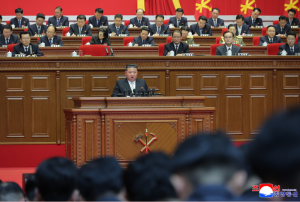
Authors of 38 North’s North Korea Briefing, a quarterly publication on North Korea’s internal dynamics and foreign policy, offer their initial assessments of the February 19-25 Ninth Party Congress. At the event, Kim Jong Un reviewed the country’s achievements over the past five years and outlined Pyongyang’s domestic and foreign policy goals for the next five. The Congress also revised the Workers’ Party of Korea (WPK) Charter and elected new full and alternate Party members. A plenary meeting held on the sidelines of the Congress elected new WPK leadership.
It should be noted that these initial assessments were written with two important caveats. First, North Korean media provided a summary, not the full text, of Kim Jong Un’s report to the Party Congress. Second, a post-Congress parliamentary session will likely implement follow-on measures, thereby providing a fuller picture of the decisions made. (North Korea has not announced the dates of the next Supreme People’s Assembly session.)
Additional analysis and commentary on the Ninth Party Congress and its potential implications will follow.
Let’s See the Context, Not Words

In recent weeks, many North Korea watchers have fixated on whether Kim Jong Un’s young daughter is his successor and whether another Trump-Kim summit might materialize in April when Trump visits China. But Pyongyang has clearly had bigger concerns. One seems to be how to carefully craft its summary report of Kim Jong Un’s speech at the highly anticipated Ninth Party Congress to offer just enough teasers to keep the world guessing, or to nudge it toward reading North Korea’s intentions in a particular way. Note: The Congress report itself is explicit: “Now our enemies don’t know what we’re planning and calculating. They can’t and shouldn’t know.”
This strategy appears to be working. Most international media headlines have focused on Kim’s remarks on the United States and South Korea, highlighting the contrast between a conditional openness to reengage Washington and a reaffirmation of his two-Koreas policy paired with a blunt threat to obliterate South Korea should it undermine North Korean security.
These remarks largely tracked with Kim’s September 2025 speech to the Supreme People’s Assembly (SPA). Yet, there appears to be a subtle but potentially important shift worth noting. In September, Kim said “there is no reason for us not to come face to face with it [the United States]” if it drops the denuclearization demand and recognizes “the reality.” The Party Congress readout replaces this with “there is no reason why we cannot get on well with the U.S.” if “the U.S. respects the present position of our state specified in the Constitution of the DPRK”—a reference to its nuclear-armed status—and “withdraws its hostile policy.” “Get on well with” seems less specific than “come face to face with,” which carries a stronger nuance of dialogue. The conditions have also hardened: Pyongyang now demands US recognition of its nuclear status and adds the withdrawal of “hostile policy” as a prerequisite—a higher bar than simply accepting reality and abandoning denuclearization. Taken together, this suggests North Korea has raised the price for engagement since September, almost certainly reflecting Kim Jong Un’s growing self-confidence, his perception of North Korea as a major global player, and what he views as an increasingly ominous geopolitical situation.
North Korea’s conditional openness to engagement also should be read against how the Congress report frames the United States more broadly: as an untrustworthy international actor that remains “utterly unchanged in its original hostile view on the DPRK.” Similarly, North Korea’s threat against South Korea carries implicit messaging toward Washington, given that South Korea is a treaty ally to the United States. In that context, the report’s claim that North Korea has “finished all the preparations for launching immediate retaliation”—“finished” marking a progression beyond previous formulations of combat or war preparations—seems to take on added weight.
Finally, the report’s unusual emphasis on Party leadership over external affairs seems to explain Party International Affairs Department (IAD) Director Kim Song Nam’s promotion within the Party leadership hierarchy. This raises questions about the evolving relationship between the IAD and the Foreign Ministry, and what it may mean for the initiatives Foreign Minister Choe Son Hui is leading, most notably her role in Pyongyang-Moscow relations.
Using “Toughest Stand” Toward US and “Most Hostile” Inter-Korean Relations to Justify Hard Military Line

North Korea’s Party Congress report justified doubling down on its defense policy by declaring that it would “firmly maintain the toughest stand” toward the United States and threatening South Korea—warning that the “possibility of the ROK’s complete collapse … cannot be ruled out” if Seoul undermines North Korea’s security. The report made no mention of Pyongyang’s relations with Russia or China.
In his report to the Congress, Kim Jong Un said North Korea “will fully prepare ourselves for the confrontation with the U.S. in the future, too, as now and firmly maintain the toughest stand,” while adding that “there is no reason why we cannot get on well with the U.S.” if it “respects the present position of our state”—a reference to its nuclear-armed status—and “withdraws its hostile policy.” This echoed his September 2025 parliamentary speech, in which he signaled openness to dialogue if the United States dropped its denuclearization demand. Yet, the report’s overall thrust leans toward multipolarity rather than US engagement. It portrays the United States as a destabilizing force, cites US “hostile policy” to justify modernizing North Korea’s nuclear and conventional forces, and pledges Pyongyang’s role in building a multipolar world.
While Kim maintains strategic ambiguity toward the United States, he has chosen clarity toward South Korea. Kim Jong Un dismissed South Korea’s conciliatory overtures as a “a clumsy deceptive farce,” declared that Pyongyang “will exclude the ROK from the category of compatriots forever”—calling this the “final crucial decision” of the North Korean Party and government. He further warned that “the standard of our military counteraction … has changed in essence” and that Pyongyang “can launch any action” if South Korea undermines its security—even raising the “possibility of the ROK’s complete collapse.” By branding Seoul as “the most hostile entity,” Kim both justified a hard military line and sought to press South Korea toward more fundamental shift in its North Korea policy.
There was no direct mention of Russia and China, with Kim referring only to “steadily develop[ing] the traditional relations of friendship and cooperation with neighboring countries onto a higher stage and “proactively conduct[ing] political and diplomatic activities, exchange and cooperation to expand and strengthen[ing] the relations with the anti-imperialist independent countries.” Though not reported in state media, it is presumed that Kim Jong Un discussed North Korea’s relations with both Russia and China in the context of “important changes to the position and influence of the DPRK.”
The above segment was originally drafted in Korean. The initial translation was produced using AI tools and subsequently reviewed word-for-word and refined by a bilingual subject-matter expert to ensure accuracy and readability.
Continued Build-up of Nukes While Upgrading Conventional Weapons
The military section of the Ninth Party Congress report was much shorter on specifics than the previous one. The line of march established in 2021 for nuclear forces apparently will continue, producing more nuclear weapons and more of the delivery systems already in development. Conventional forces will be upgraded as well, but apparently not at the expense of the ongoing nuclear buildup. Electronic warfare, unmanned systems, and newly-highlighted but unspecified anti-satellite capabilities also were highlighted.
Nuclear Forces: North Korea apparently will continue its ongoing “very satisfactory” effort to increase the number of nuclear weapons, and “accelerate the deployment of already-developed” delivery systems. The report did single out “ICBM [intercontinental ballistic missile] complexes of ground and underwater launching” without specifying solid propellants as in 2021, possibly suggesting the parallel build-up of the liquid ICBM force. This year’s report did not mention nuclear-powered submarines as in 2021, but its mention of “underwater launching” ICBMs and the “nuclear weaponization of… underwater forces” presumably means the ongoing nuclear-powered ballistic missile submarine (SSBN) effort will continue.
Conventional Forces: In light of Kim Jong Un’s September 2025 statement that the Ninth Congress “would put forward the policy of simultaneously pushing forward the building of nuclear forces and conventional armed forces,” the lack of an explicit statement along these lines and more specifics on conventional military programs in the new report was surprising. That said, the report endorsed “upgrading the conventional weapons possessed by our army” and “reinforcing” the “firepower systems” adjacent to South Korea. The North also will reinforce deployments of the KN-25 (noted specifically) and other short-range ballistic missiles (also capable of delivering nuclear and chemical warheads), along with “new-type 240 mm-caliber multiple rocket launchers,” to “greatly increase the density and durability of concentrated attack” against the South. The report also mentions unspecified “important tasks for introducing new secret arsenals and special strategic assets into our army.”
Supporting Capabilities: The new report also flagged plans for:
- “Various AI unmanned attack complexes,” probably including unmanned air vehicles (mentioned in 2021) and the tactical drones.
- “Very powerful electronic warfare [EW] weapons systems to paralyze the enemy’s command center.” EW has been a longstanding priority for Pyongyang that has probably taken on new salience in light of the war in Ukraine.
- “Special assets for attacking the enemy’s satellite in emergency”—a new focus area in this report. This probably involves EW in at least the near term. Although Pyongyang can develop direct-ascent anti-satellite (ASAT) interceptors based on its solid-propellant missiles, effective conventional ASAT payloads would be technically challenging. In an “emergency,” however, the North would be able to use its existing nuclear-armed ballistic missiles to attack satellites.
- “More evolved reconnaissance satellites”: Recon satellites were first mentioned in the 2021 report, and the reference to “more evolved” ones confirms the North remains committed to their deployment. This “evolution” may help explain why Pyongyang has not yet tried to launch a second recon satellite since a May 2024 failure.
Formalizing Kim Jong Un’s Sole Absolute Power, Outlining a Five-Year National Development Strategy
The Ninth Party Congress presented a plan for strengthening the Party and advancing socialist construction over the next five years (2026-2030). Kim Jong Un formalized the abandonment of the Kim Il Sung-Kim Jong Il line, consolidated his own absolute power, outlined a socialist construction plan; and assembled the Party leadership to guide the Party and state over that period.
Abandoning the Kim Il Sung-Kim Jong Il Line and Establishing Kim Jong Un’s Absolute Power: The Party Congress focused on Kim Jong Un’s governing capacity and qualities as the top leader. Kim was defined as the faithful successor to the cause of Kimilsungism-Kimjongilism, reaffirming that his legitimacy derives from the Paektu bloodline. The Kim Il Sung-Kim Jong Il line was criticized as outdated, while Kim Jong Un was credited with surpassing his predecessors by charting a new line of socialist development.
The Congress cited his major achievements as: building nuclear and conventional military capabilities; achieving parallel development of defense and the economy; successfully implementing the five-year economic plan; constructing 50,000 housing units in Pyongyang; building rural housing; developing tourist and resort facilities; and carrying out rural, regional, and public health development initiatives. On the military side, it highlighted the creation of dedicated regional construction regiments within combined units at various levels of the army and their deplopment to regional construction projects, as well as the dispatch of troops to Russia’s war against Ukraine and the fact that captured soldiers chose to take their own lives.
Next Five-Year Socialist Construction Plan: North Korea diagnoses its internal and external environment as a crisis driven by UN Security Council sanctions, successive natural disasters, economic hardship, and the spread of South Korean culture. In particular, the economic sanctions stemming from the nuclear buildup have prolonged economic isolation and crisis, while the spread of South Korean culture has accelerated pro-South Korean sentiment among the population, thereby amplifying regime instability.
North Korea’s socialist development strategy in response to this internal and external crisis has rested on strengthening nuclear forces; developing the economy through self-reliance and mass mobilization; seeking recognition as a nuclear-armed state and the lifting of sanctions through negotiations with the United States; and severing inter-Korean relations by framing them as two hostile states. As with the Eighth Party Congress, the Kim regime has again not put forward any concrete economic development measures, such as lifting sanctions, pursuing economic reform initiatives, revitalizing markets, or allowing greater freedom for economic activity. The limits of pursuing economic development through a closed, self-reliant economy devoid of sanctions relief and market reform, relying instead on ideological incentives and mass mobilization, are clear. Problems in properly managing and operating modern production and service facilities—Kim Jong Un’s signature projects—have already emerged in less than a year. Comprehensive development of socialism without sanctions relief and economic reform will not succeed.
The above segment was originally drafted in Korean. The initial translation was produced using AI tools and subsequently reviewed word-for-word and refined by a bilingual subject-matter expert to ensure accuracy and readability.
Is Personnel Policy? Or Personnel Just Personnel?[1]

Personnel changes enacted during the Ninth Congress of the WPK underscore an emphasis on domestic economic policy. Other personnel changes were made to the Korean People’s Army (KPA) corps commanders which were publicized during a post-congress military parade.
An Kum Chol, a former provincial party secretary and heavy industry official, and Kim Jong Gwan, a former defense minister and top KPA construction official, joined the Secretariat and were appointed Central Committee department directors. Of these two officials, Kim Jong Gwan has a unique career trajectory. In 2025 he migrated from a senior logistics command in the Defense Ministry into the North Korean Cabinet as a vice premier. Kim’s brief stint in the Cabinet was probably a matter of seasoning to prepare him for this Party position. Like Kim Jae Ryong and No Kwang Chol, Kim is the epitome of a Kim Jong Un-era senior official—an elite who can migrate into different posts across the regime and help fulfill policy goals.
Cycling out of the Party into the Cabinet are two former WPK Economic Affairs Department Directors, Kim Tok Hun and Jon Hyon Chol. Kim Jong Un, despite two explicit denunciations of the Cabinet under Kim Tok Hun and economic officials like Jon, cannot be entirely dissatisfied with the state of North Korea’s economy or the job performance of officials who manage it. Jon, Kim, and Pak Jong Gun (last known to be head of the State Planning Commission and a vice premier) have retained Political Bureau status, putting them close to advice and decision-making channels.
Three commanders of the four forward-deployed corps units have changed with Lt. Gen. Ju Song Nam leading the II Corps, Lt. Gen. Jon Myong Nam leading the IV Corps and Lt. Gen Ri Jong Guk leading the V Corps. Of the prior corps commanders in this cohort, only Choe Tu Yong has Central Committee status. While other corps command changes were made during the congress, those deployed to the front traditionally qualify for future selection for KPA High Command appointments.
The Party Congress most likely represents a two-step process. North Korea is two years overdue for parliamentary elections and the last head of parliament was dismissed. It is highly probable that elections will be held in 2026. As such, Pyongyang watchers are only beginning to reconcile the strategic and policy implications of the Ninth Party Congress.
North Korea Enters a “Comprehensive Socialist Development” Period

In his opening address to the Party Congress, Kim Jong Un declared that the 2021-2025 five-year economic plan had been fulfilled “in the main.” However, as usual, he did not forget to list shortcomings, citing “deep-rooted defeatism, irresponsibility, conservatism, formalism and immaturity in leadership ability”—a ritual criticism of officials failing to act on the top leader’s intentions that dates to the Kim Il Sung era. In his concluding speech, Kim warned that newly-built production and service facilities built as part of the 20×10 policy for regional development were “not managed and operated as properly as they should be, and the guidance and control over these facilities are neglected,” terming it “serious dereliction of duty, irresponsibility and other ingrained maladies of seeking only immediate gains.” This shows that factories established under the 20×10 policy have already run into problems: local leadership negligence has prevented them from reaching intended production levels, and the pursuit of short-term gains has caused them to lose sight of the factories’ original purpose.
Despite these acknowledged problems, the Congress declared the start of “a new trend of comprehensive socialist development.” Sectoral consultative meetings followed Kim’s report, with participants breaking into industry, agriculture, light industry, culture, construction, military affairs, arms industry, judicial affairs, foreign affairs, and Party affairs groups. These sectors, alongside the defense industry, will likely constitute the priorities of the next five-year plan. The Congress report identified the fundamental task of socialist economic construction as consolidating achievements from the Eighth Party Congress period, establishing a foundation for stable and sustained economic growth, and tangibly improving living standards. It also noted persistent challenges in the metallurgical, chemical, power, coal, and machinery industries.
The 2021-2025 plan was carried out under extraordinary pressure—intensifying sanctions since the late 2010s and the COVID-19 pandemic—and the North Korean people likely feared economic collapse. Yet, the honest assessment is that this did not occur, and the plan achieved certain results. The Congress report makes clear that the leadership views insufficient hardware-based productive capacity as a serious problem, but views software failures—low productivity and administrative mismanagement that fails to fully realize the potential for production capacity—as an equal or greater concern. Reforming economic mechanisms is essential. The next five-year plan (2026-30) will likely demand a careful balancing act between maintaining political stability and unlocking productive capacity.
- [1]
For more on the recent WPK leadership changes, see Michael Madden, “Quick Take: Initial Assessment of Key Personnel Changes in North Korea’s 9th Party Congress,” 38 North, February 25, 2026, https://www.38north.org/2026/02/quick-take-initial-assessment-of-key-personnel-changes-in-north-koreas-9th-party-congress/.