

The Two Koreas Need a ‘Good Divorce’
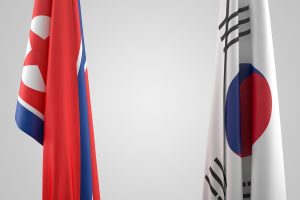 Every time the debate over the future of inter-Korean relations surfaces, it tends to fall into familiar but false dichotomies: reconciliation versus hostility, unification versus division, dialogue versus confrontation, as if no middle ground exists. In real-world politics, however, genuine goodwill does not necessarily lead to peace. Peace is often sustained by other means.
Hostile states with deep-seated strategic rivalries can avert war and maintain a limited coexistence so long as they abide by established rules of conduct. This may take the form of a sort of “quiet confrontation,” or inexorable historical process akin to a managed “cold peace.” Take a good divorce, for instance. A good divorce does not mean that two people have to like each other after they sever ties. They may still resent each other, perhaps deeply. But the couple can learn to keep their distance, respect certain rules, and avoid making life miserable for one another.
In the case of the two Koreas, where amicable cooperation appears unlikely in the near future, there is still room for lowering the risks of conflict. Learning to navigate these new relationship dynamics will take time and some experimentation, but a good divorce can create the space to shed legacy relationship baggage and manage contested assets. It does not have to be an all or nothing scenario, but one where the two Koreas can learn to engage in more normal state relations – to compete where interests diverge, potentially cooperate where they overlap, and maintain the communication channels that matter most, such as military hotlines, separated families, and disaster response.
A One-Sided Breakup
In the aftermath of the failed 2019 Hanoi summit, it was clear that North Korean leader Kim Jong Un was disillusioned with then-South Korean President Moon Jae-in’s “meddlesome mediation” between the United States and North Korea. In subsequent years, he fundamentally redefined inter-Korean relations as those between “two hostile states” and accelerated a confrontational policy against South Korea rejecting the traditional view of the two Koreas as a single national community in (long-term) transition toward a shared vision of unification. Instead, North Korea declared itself a permanent sovereign state that no longer shares kinship with the South, redefined its territory in its constitution, and is now working to fortify the areas along the Military Demarcation Line (MDL) as if it were an international border. This change in framing has been most evident through the increasingly harsh and mocking rhetoric against Seoul from Kim Yo Jong, Kim Jong Un’s sister.
Notably, alongside these policy shifts and implementation measures, North Korea has also acknowledged South Korea’s sovereignty, consistently referring to it now as Republic of Korea. This emphasizes the gravity of its policy change: this is not merely some negotiating tactic or an attention-seeking threat but a clean break. North Korea seems determined to live separate from South Korea, conveying a desire to no longer interfere in each other’s affairs.
Many in South Korean policy circles, myself included, believe that our policy must begin from the premise that North Korea’s “two hostile states” doctrine may endure over the long term. Yet few would argue that South Korea must respond to North Korea’s hostility in kind. Acknowledging the Kim regime’s hostile intentions does not require aligning Seoul’s policy objectives with hostility.
Coping With Change
President Lee Jae Myung, as he navigates this new relationship dynamic, has laid out a fairly progressive agenda: demonstrating respect for North Korea’s system, renouncing absorption-based unification, and working to unilaterally reduce what could be perceived as hostile acts as the cardinal principles of peaceful coexistence. Rather than waiting for a positive North Korean response, Lee has also taken unilateral measures to try to lower tensions, such as his early removal of the loudspeakers in the DMZ, recent pledges to restore the spirit of the September 19 Comprehensive Military Agreement, and calls for establishing crisis-management mechanisms in the border regions.
This approach appears designed to create new foundations for inter-Korean talks, although questions loom as to whether it can be sustained without North Korean reciprocation. While a coexistence framework that is contingent on North Korea’s active participation is unlikely to be either effective or sustainable, how much more should South Korea do unilaterally to reduce tensions between the two Koreas? Without talks or North Korean reciprocation, are more concessions really within South Korean interests?
On this point, many scholars, especially conservatives, question whether Lee’s actions are overly accommodating to an unwilling partner and seek a more independent assessment of what South Korea needs. This requires the Lee government to closely monitor how North Korea’s military behavior evolves, especially regarding activities within the DMZ. The recent landmine incident demonstrates the dangers of conflicting frameworks for handling relations. Protocol and expectation gaps are becoming evident between North Korea’s “border management” efforts versus normal DMZ management. In this environment, the development of new rules for construction and mining activities along the MDL may be necessary, as well as a response protocols for accidental crossings, communication procedures before warning shots are fired, and emergency hotlines for evacuating the wounded. Such rules are critical as relations deteriorate, to prevent potential clashes from escalating into broader conflict.
Moreover, if the Lee government accepts North Korea’s changed position on the nature of inter-Korean relations, it must reflect these shifts in its policy formulation, particularly on issues such as loudspeaker broadcasts, cross-border propaganda leaflets, accidental maritime clashes, and tensions surrounding drones and surveillance assets. This does not mean always responding to agitations in a mechanically symmetrical way, but Seoul should not remain simply remain passive either regardless of Pyongyang’s actions either. Yet Lee’s policy, at the moment, does not allow for these nuances.
In the meantime, a “quiet confrontation” can be sustained, as the two sides relearn how to coexist under a new framework. Learning to trust each other again will take time and consistency. Too often inter-Korean relations have been judged by the dramatic moments, mistaking such actions as the two leaders shaking hands, stepping across the Military Demarcation Line, and signing joint communiqués as conclusive proof of peace. But these were the anomalies, not the norm. The real measure of peace is what happens when the cameras are gone. Can everyday interactions adhere to agreed-upon rules? However, one of the most basic needs in managing a terse relationship is communication. Even under a framework of “two separate Koreas,” a mechanism for communication is necessary. While there may be growing grievances between the two capitals, the restoration of at least crisis communication channels should be prioritized to manage unexpected incidents and avoid further escalation.
Coming to Terms
Looking back, South Korea has spent too much time asking when North Korea will finally extend a hand of reconciliation. Unfortunately, the opportune moment for denuclearization has long vanished and the dream of unification has become an unrequited one. The Lee government is far less likely than its progressive predecessor, Moon Jae-in, to find a diplomatic opening with North Korea, much less secure a summit with Kim Jong Un. Meanwhile, North Korea’s continued nuclear build up, military modernization, missile drills, and now border disputes, challenge an already strained relationship.
While Seoul need not pursue hostility toward the Kim regime, it should abandon the illusion of a happy remarriage and consider shaping a good divorce: a framework that does not depend on mutual affection or North Korea’s goodwill but develops strong guardrails that keep hostility from boiling over into crisis or war.