

Beyond Pyongyang: Transportation Networks
As part of our series examining the socioeconomic disparity between Pyongyang and other cities in North Korea, we are looking at the differences North Koreans might experience, depending on where they live, across a variety of indicators including: access to electricity, telecommunications, industry, transportation infrastructure, and education. To do so, we utilized two examples as proxies: Haeju, a representative mid-sized provincial capital, and Kim Hyong Jik, a remote, rural county seat.
The first article looked at North Korea’s new five-year economic plan unveiled by Kim Jong Un at the Ninth Party Congress in February 2026. And in a second, we explored the country’s rural housing and rural industrial development initiatives of the last few years.
When Kim Jong Un kicked off the 20×10 regional development policy in 2024, he framed the initiative as bringing up the standard of living in “backward” rural areas. Using commercial satellite edimagery, state media analysis, accounts of escapees and other data, these articles attempt to characterize how rural areas might be “backward” in comparison with other less remote areas.
Restricted Movement
Movement inside North Korea is highly restricted and is a primary consideration when evaluating access to transportation options. Citizens are not free to move around the country at will and are generally required to obtain travel permits to make trips outside of their home province. These restrictions are designed to reinforce social stratification and to allow authorities to better surveil and track citizens’ movement.
For non-Pyongyang residents, obtaining travel permits, especially to the capital city, can be a cumbersome process. Potential travelers are required to submit a reason for their trip before possibly gaining permission from local state security officials. If that is too much, or impossible, some escapee reports note it is possible to make journeys over longer distances withwith sufficient bribesin place of a permit.
For Pyongyang residents, the most loyal social class, the travel permit system is a little easier to navigate. The capital’s official residency card affords a greater degree of freedom of movement, and travel permits to areas outside the city are easier to obtain.
Transportation Overview
Transportation infrastructure varies widely across North Korea. This might be expected as urban areas all over the world typically have better transportation options due to higher population density.
Public Transportation
The largest and most developed public transportation network exists in Pyongyang. In the city, there are two subway lines, four tram lines, and eleven trolleybus lines in addition to a local bus network. No other cities in North Korea have a subway system; only Chongjin, a mid-size city in the country’s northeast, has a tram line. Trolleybus lines exist in at least Chongjin, Hungnam, Manpho, Nampho, Pyongsong, Sariwon, Sinuiju and Wonsan, but not in more rural areas.
The Pyongyang Metro comprises two lines; service runs from 6 am to 9:30 pm. It has been reported for years that the metro will expand, but that does not seem to have happened yet. Even with the recent construction boom around the capital, no new metro stations or lines have been announced or observed.
The bus, trolley and tram lines crisscross the city to make getting around easy. The trolleybus lines have been extended to provide transit to the new neighborhoods, according to state television coverage.
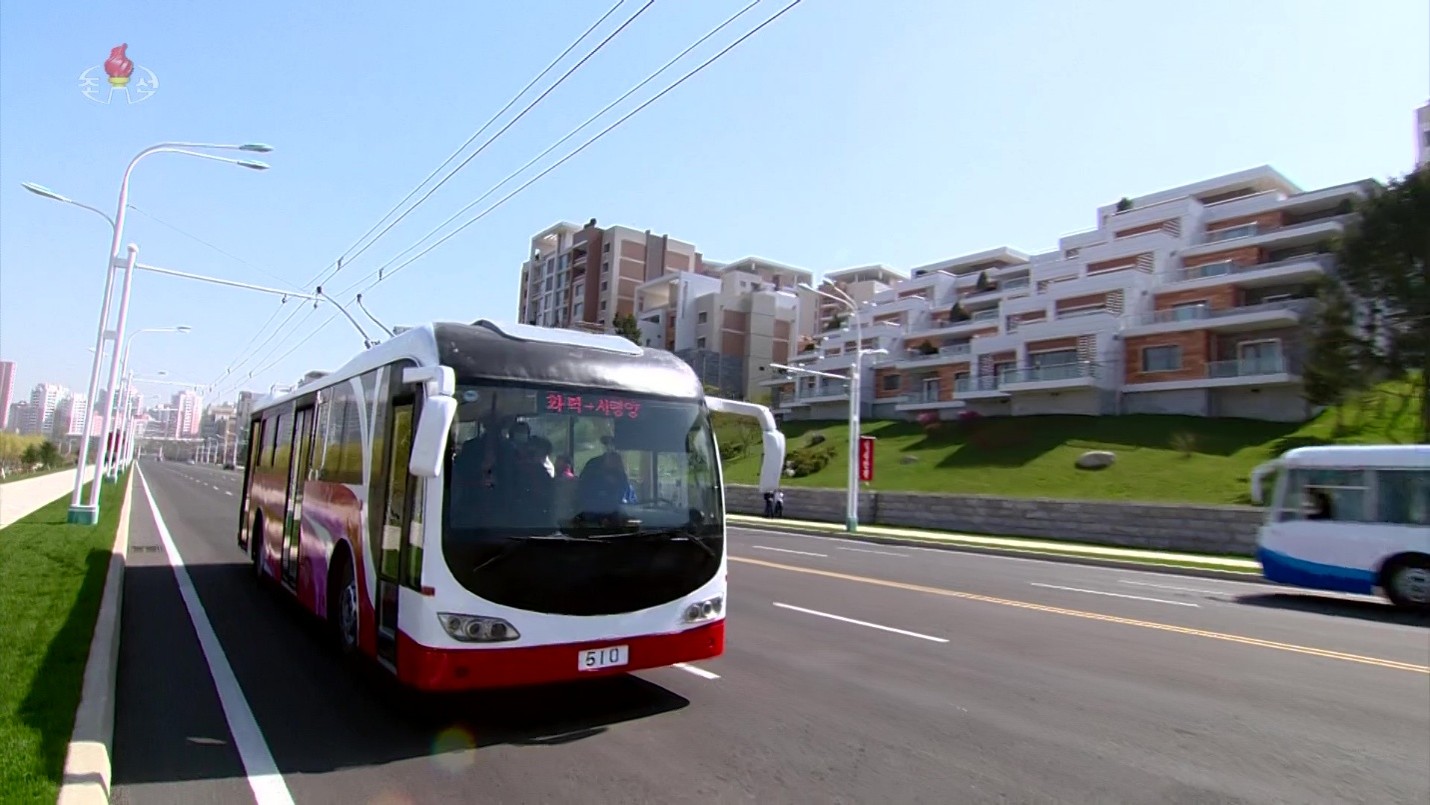
Outside of Pyongyang, many cities and towns in North Korea are served by some type of public transport. This can include local and long-distance bus service and unofficial operators, which often transport people in small minibuses or trucks.
In Haeju, there is a developed bus infrastructure that includes covered bus stops and a bus line that runs at least 7 kilometers through the center of the town. Commercial satellite imagery shows several long distance buses traveling towards or away from the city.
In smaller cities and towns, like Kim Hyong Jik, most local journeys are probably made by foot or bicycle. Longer journeys are less common because of controls on the physical movement of people around the country.
Inter-City Transportation Infrastructure
North Korea also has an extensive road and railway network.
In the last year, reports suggest private car ownership has been more widely tolerated, even including rental cars. However, due to the significant cost of cars, the effects have not yet been seen far beyond Pyongyang or major cities.
Roads
Kim Il Sung Square in Pyongyang is the 0 km point for all the country’s roads. From Pyongyang, motorways and Class 1 roads, which are the most important general roads, spread out to connect the capital to all major cities and provincial capitals.
As the capital city, Pyongyang is well-connected to the rest of the country, but access to the capital is not necessarily easy. Pyongyang is heavily controlled, and vehicles require permits to enter the city. Vehicles also must be clean when entering, so car wash stations are situated along all entrance points to the capital.
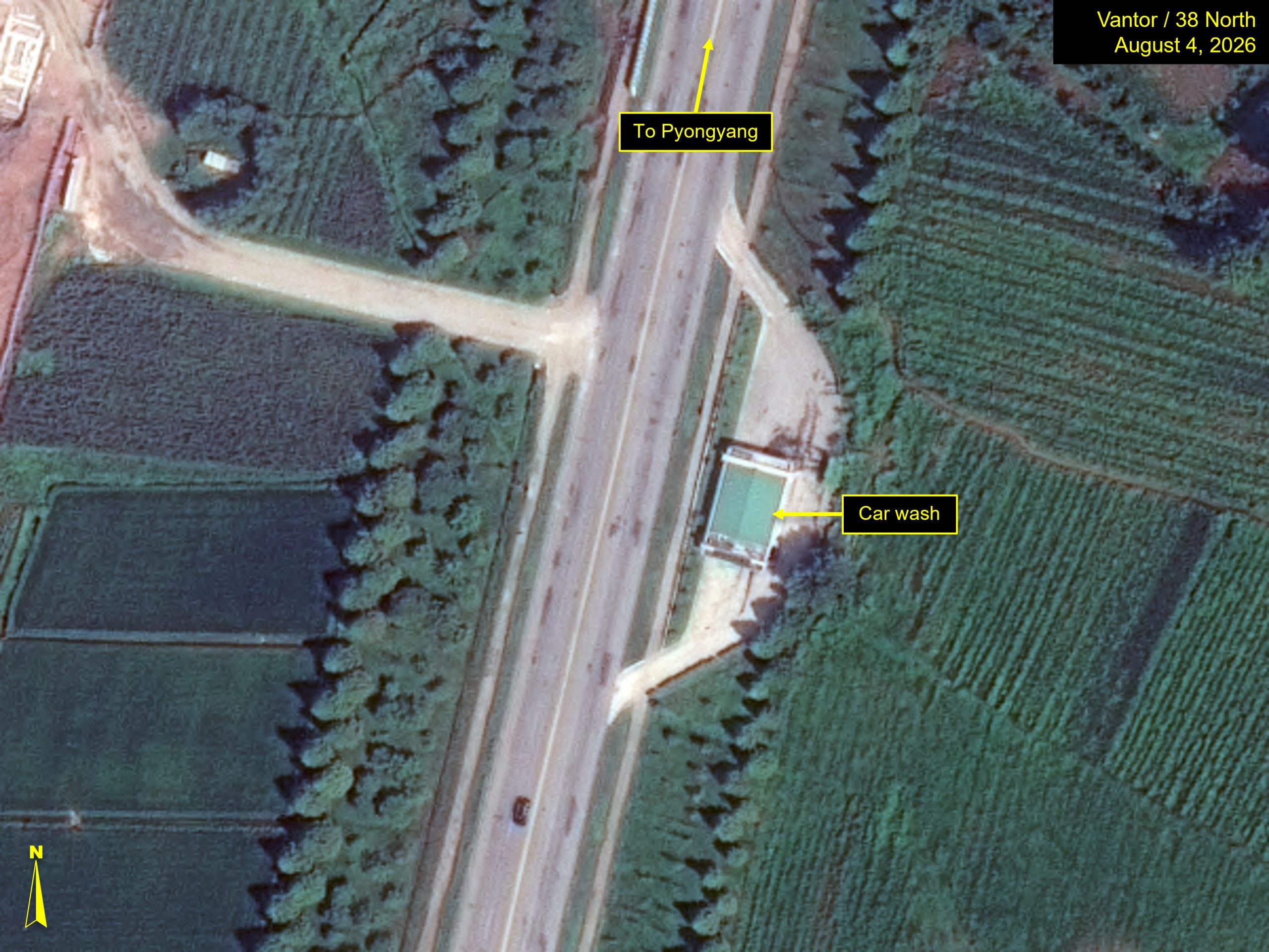
Most provincial capitals are also well-connected, although not all are connected to the highway system. Many are interconnected with Class 1 roads, which are managed by the central government.
There are four major motorways all originating in Pyongyang and heading north, south, east and west. The motorways are paved and generally have two lanes going in each direction. In the last few years, toll stations have appeared along these routes and drivers can pay in cash or via smartphone app.
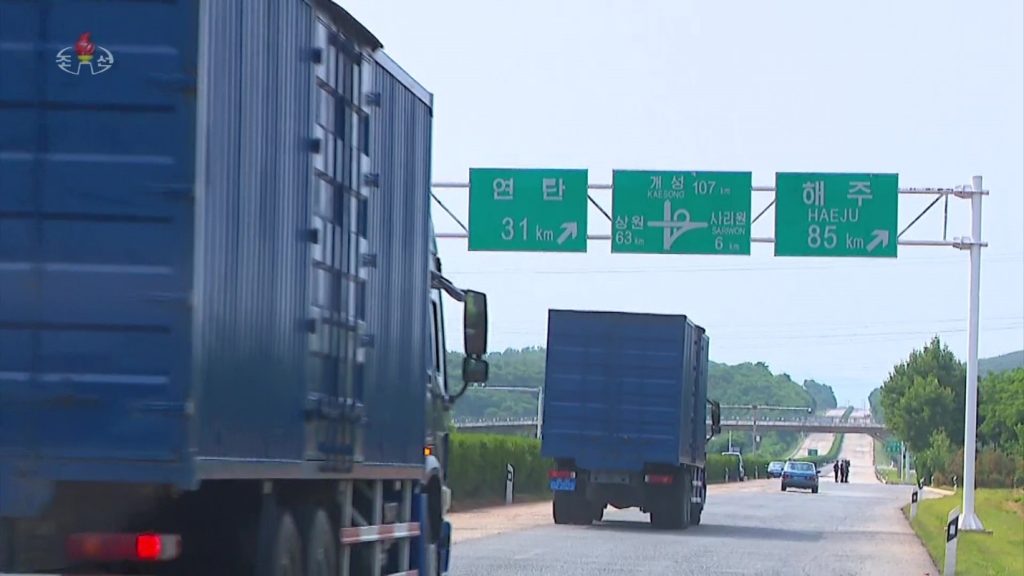
Haeju is not situated on a motorway, but is the origin of the fully paved Haeju-Sariwon Road, a Class 1 road. The road was remodeled in 2025 and is the central arterial road in South Hwanghae province. From Sariwon, connections to Pyongyang and Kaesong are possible via highways. There are also several Class 2 roads that connect Haeju with other nearby towns.
Kim Hyong Jik is not well connected. A single Class 2 road runs through the town connecting it to Turi-ri to the west. Here, the road splits to either run through the mountains to other small towns or to continue along the border. The border road originates at a bridge that was washed out in recent years by heavy rains, but has since been repaired.
Railways
North Korea’s railway network is extensive, covering over 5,300 kilometers (longer than South Korea’s railway network, which spans around 4,300 kilometers) and comprises 12 main railway lines and an additional 22 branch lines. All major cities and most large towns are connected to the network, which also has numerous stops in rural locations.
Approximately 80 percent of the network is electrified, which prevents the need for precious diesel fuel to be used but also means delays are common due to power supply issues. For example, the trip from Chongjin to Pyongyang is approximately the same distance as Seoul to Busan. On South Korea’s high-speed KTX train, it takes about two hours to travel this distance, while in North Korea, one escapee said the journey usually took about 10 hours, although it could take 3-4 days due to power and mechanical problems, they said.
While passenger rail does exist, the network’s main job is to transport goods across the country. The network has around 20,000 cargo rail cars compared to 1,700 passenger cars.
Pyongyang is connected to major towns across the country by rail and the main Pyongyang Station also receives international trains from China. It is the largest and most important railway station in the country.
The Haeju Youth Station is located east of the city center and is one end of the Hwanghae Youth Line that runs through South Hwanghae province to Sariwon in North Hwanghae. From Sariwon, trains connect to Pyongyang. Haeju Youth Station is also one end of the Ongjin Line, which starts in Ongjin and includes several freight spurs and a stop at West Haeju Station, the second railway station in the city.
In contrast, Kim Hyong Jik has no railway access. The nearest station is Phophyong Station on the Hyesan – Manpho Youth Line, which runs between its two namesake cities and is about 4 kilometers from Kim Hyong Jik.
This research was sponsored by The UniKorea Foundation.