

Beyond Pyongyang: Access to Electricity
As part of our series examining the socioeconomic disparity between Pyongyang and other cities in North Korea, we are looking at the differences North Koreans might experience, depending on where they live, across a variety of indicators including: access to electricity, telecommunications, industry, transportation infrastructure, and education. To do so, we utilized two examples as proxies: Haeju, a representative mid-sized provincial capital, and Kim Hyong Jik, a remote, rural county seat.
The first article looked at North Korea’s new five-year economic plan unveiled by Kim Jong Un at the Ninth Party Congress in February 2026. And in a second, we explored the country’s rural housing and rural industrial development initiatives of the last few years.
When Kim Jong Un kicked off the 20×10 regional development policy in 2024, he framed the initiative as bringing up the standard of living in “backward” rural areas. Using commercial satellite imagery, state media analysis, accounts of escapees and other data, these articles attempt to characterize how rural areas might be “backward” in comparison with other less remote areas.
Electricity Supply in North Korea
Access to electricity is one of the most impactful disparities between urban and rural life. North Korea does not have nearly enough electricity to satisfy demand throughout the country. Blackouts are common, even in Pyongyang, but their length and frequency vary widely between the capital city and more rural areas.
North Korea operates a two-tier power grid, with priority given to military and industrial establishments. According to escapees, the reality is that even industrial establishments and official buildings often do not get the power they need.
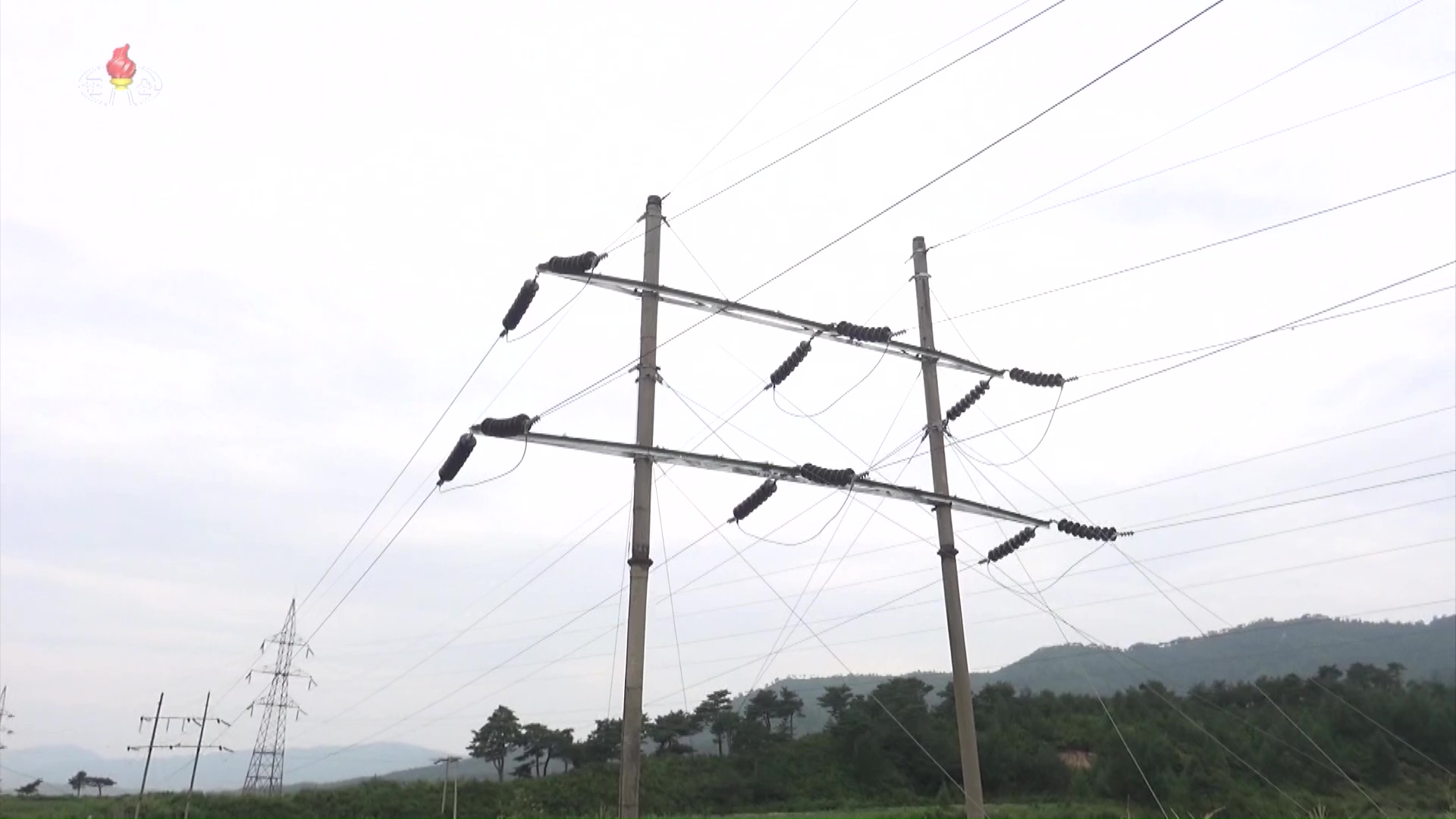
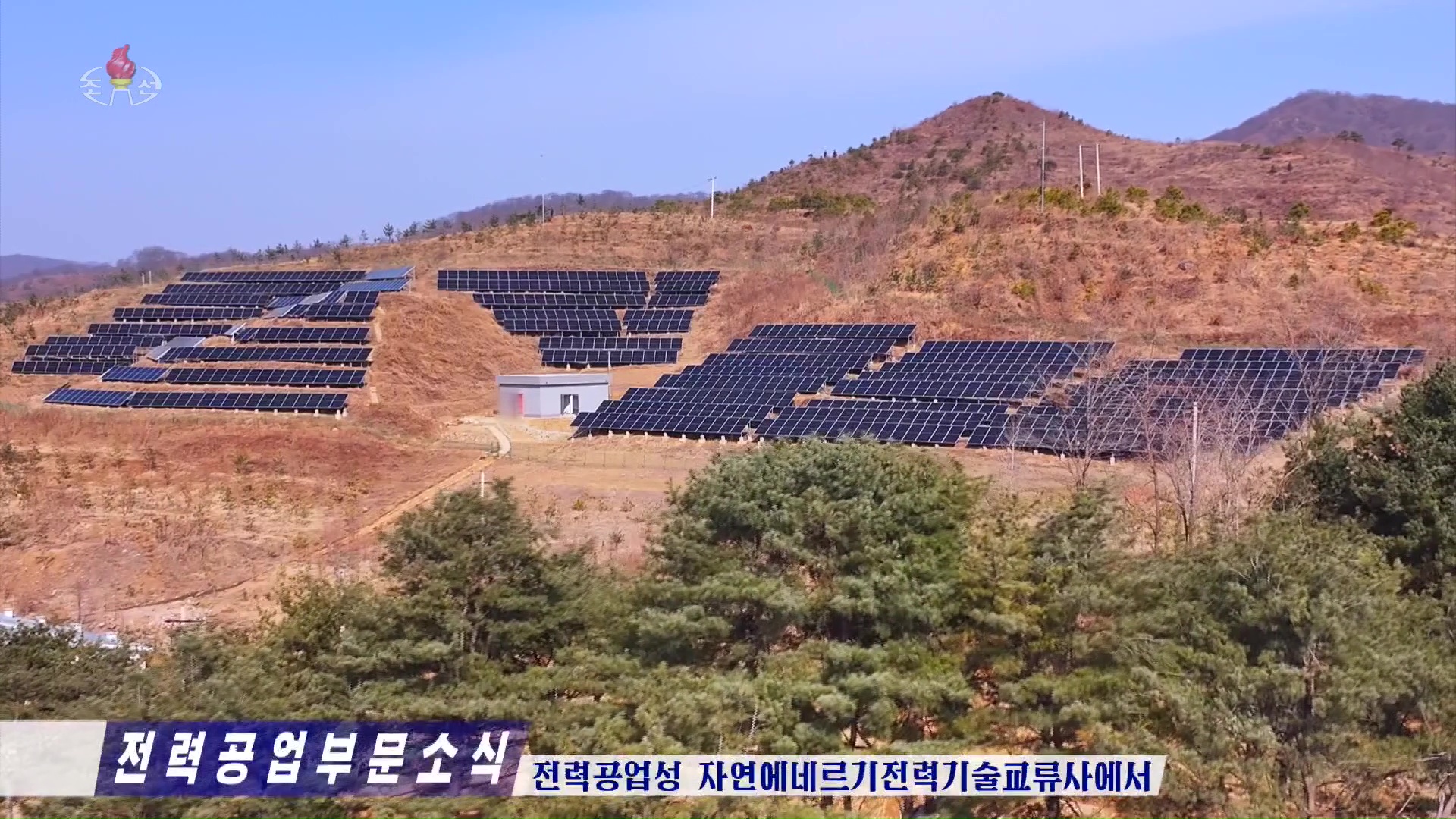
Households have even less electricity supply, usually receiving some in the morning and possibly at other times during the day. The amount of power received is proportional to the size of the town, with Pyongyang residents enjoying the largest supply and rural residents the smallest. The morning supply time is not fixed, making planning difficult on state-provided electricity supply alone. To compensate for these shortages, many households have a solar panel to power their household goods like lights and television. The panel typically charges a battery throughout the day, which will then power a low wattage device in the evening.
In 2024, around 60 percent of the country’s electricity generating capacity was hydro power while 40 percent was coal, according to estimates from South Korea’s government.
Over the last decade, there has been continued construction of hydro stations, but the focus has mostly shifted from large scale projects to smaller local and regional power generation stations.
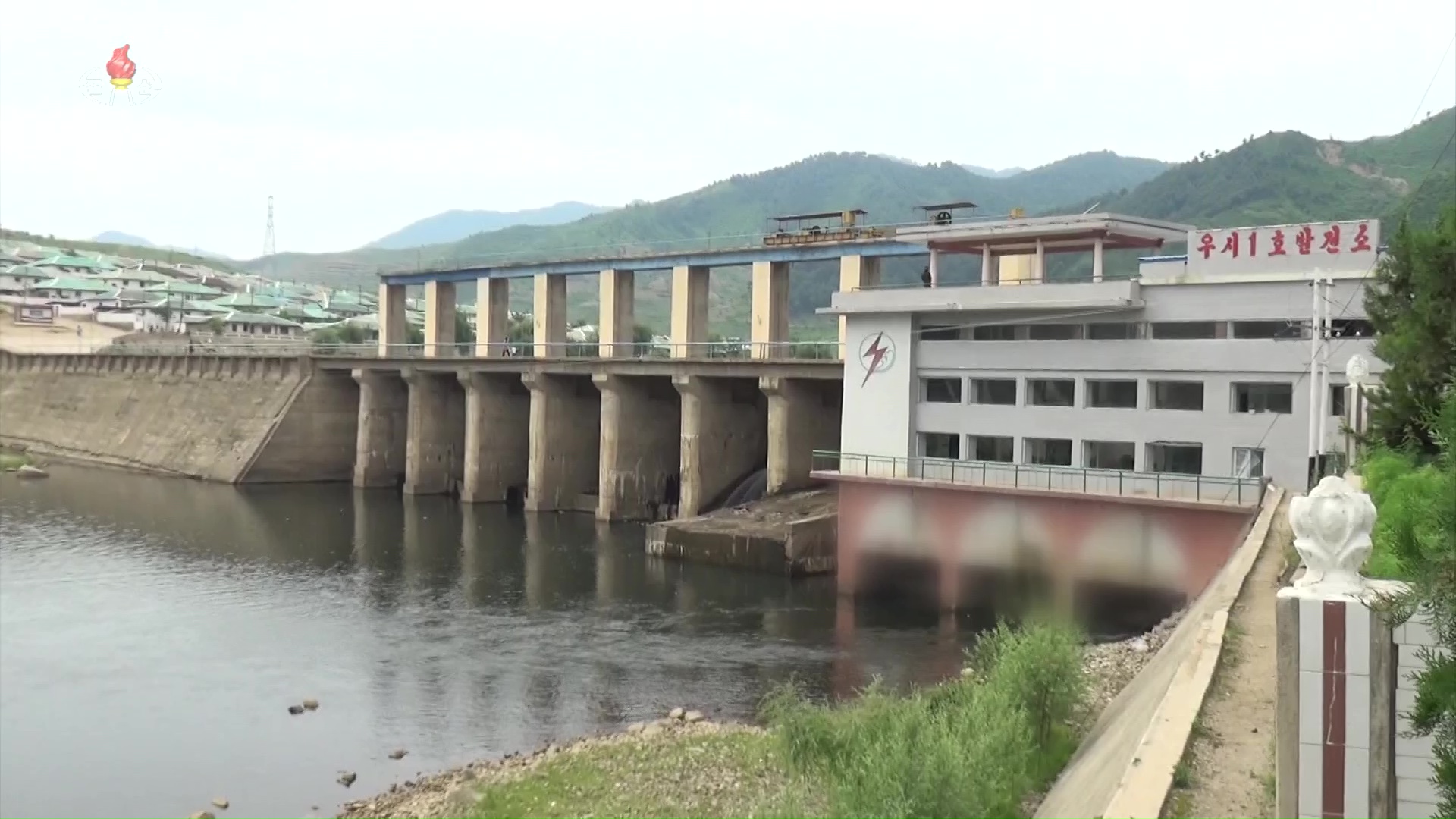
In that same time, there has been little to no investment in expanding coal generation capacity and no new coal stations have been constructed.
Solar energy represents a negligible portion of total grid power generation but is growing, according to estimates. The country has promoted the use of solar panels on industrial facilities and residential buildings. Some domestic solar panel manufacturing has begun, but the scale is generally small. Until recently, the country’s only large-scale solar generation power plant existed in Sinuiju but several new ones have been constructed in the last year.
The state has also been investing in upgrading the national electricity distribution grid and regular cites the need for abundant electricity as one of the challenges facing the nation. North Korea has also been experimenting with nuclear energy and an ELWR in Yongbyon appears to be in the start-up phase. While this likely has implications for the nuclear weapons program, it does have electricity generation capability when it officially begins operations.
Pyongyang
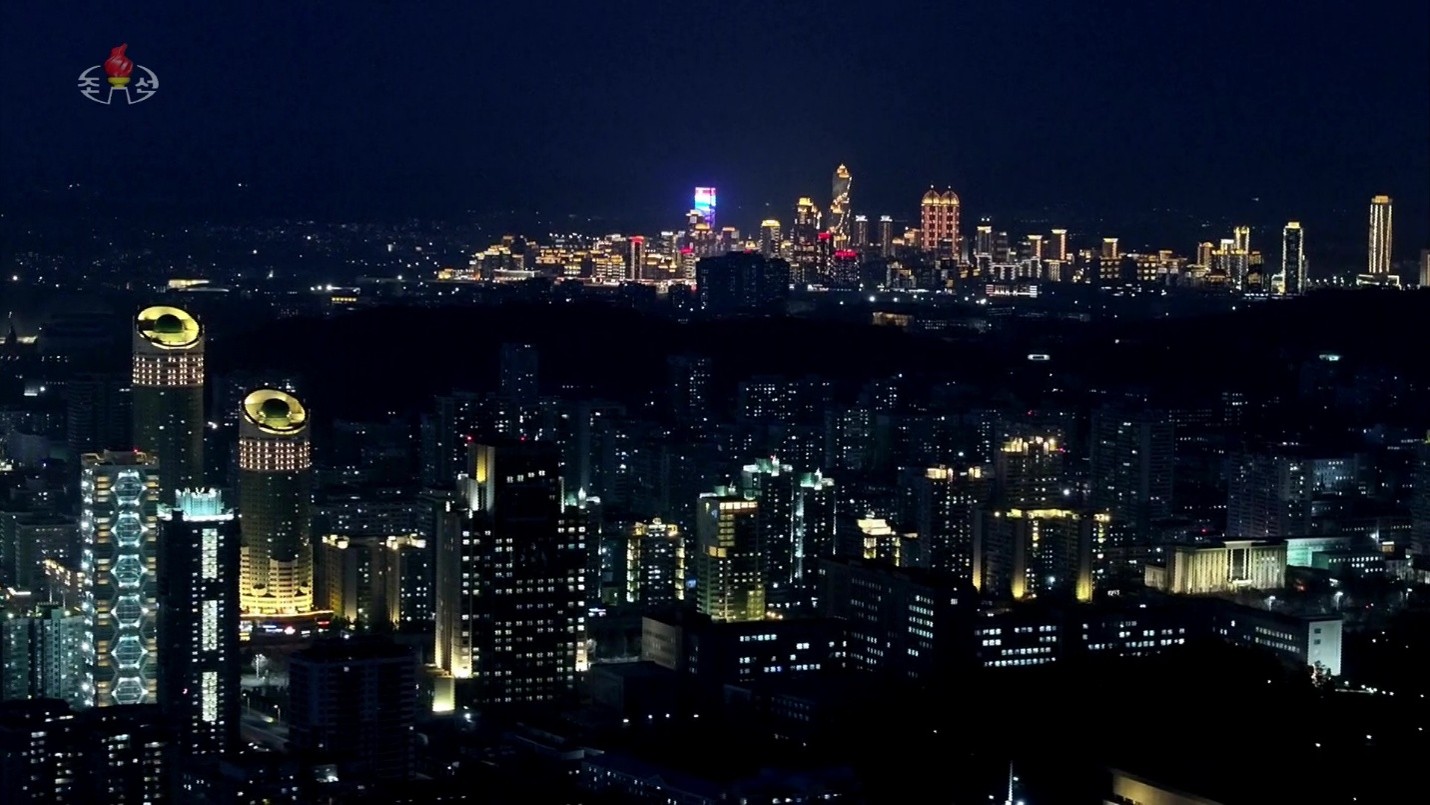
The capital city has the best access to electricity in the country. In past years, especially before the COVID–19 pandemic, reports of rolling blackouts were common. However, no recent visitors have noted any blackouts. If true, this suggests major improvements in electricity provision have been made. The city glitters in the nighttime shots, light is visible is thousands of homes and offices, cars and buses drive down well light streets and illuminated monuments and fountains are vibrant with color. There are even external light displays in the city center. Close examination of recent photos and videos of the city also show an increasing number of power-hungry air conditioning units on buildings, including residential ones, further suggesting better electricity access.
Haeju
Haeju has several connections to the North Korean power grid and is close to the South Hwanghae Power Transmission and Distribution station. There is a hydro power station across a river to the east of the city, and the nearby Haeju Tidal Power Station is also currently under construction. Historically, North Korea has not made much use of tidal power, but some of the country’s west coast areas enjoy large differences in low and high tide levels making tidal power potentially beneficial.
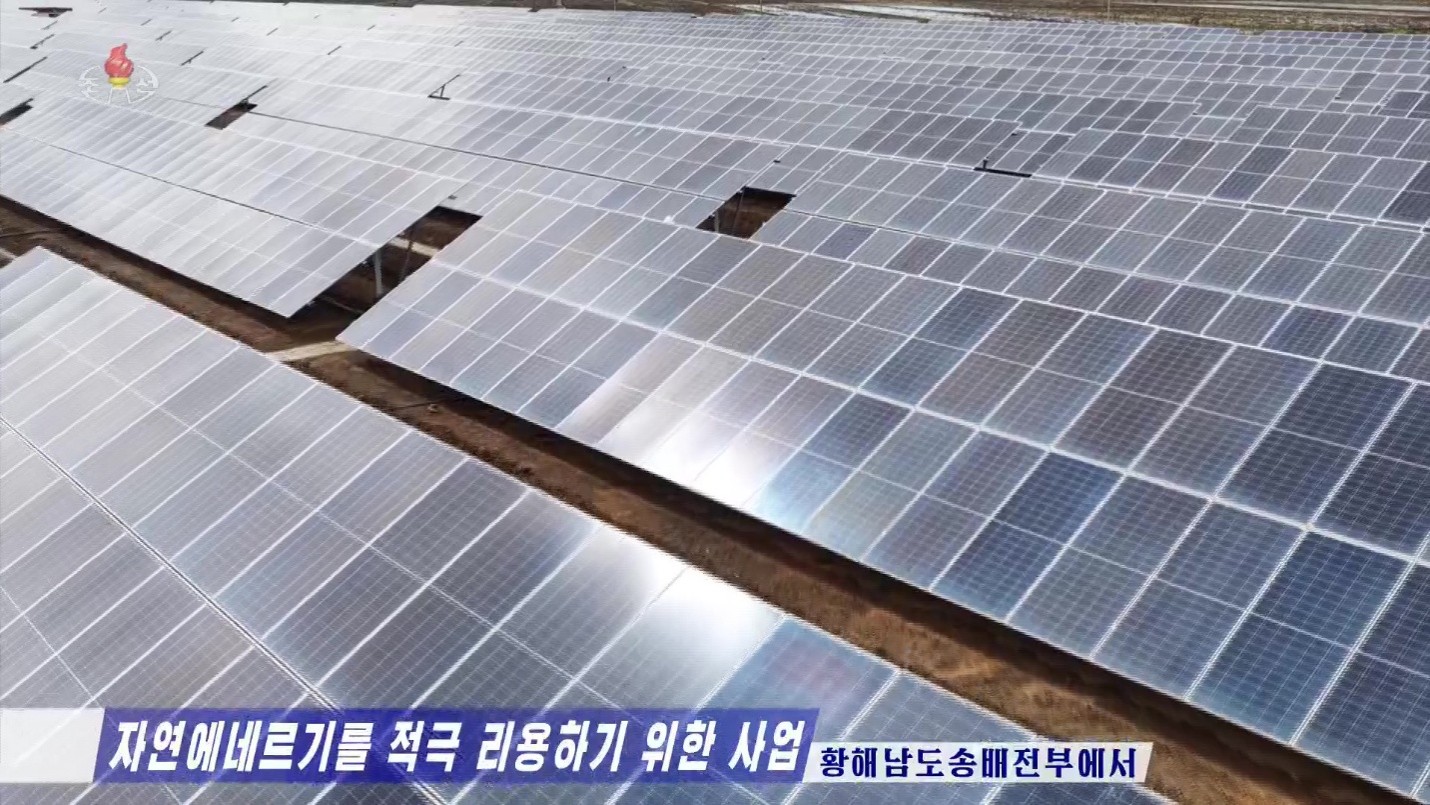
The city is also home to a new solar power station that is said to have an output of 10,000kW. The power station is run by the provincial energy department and likely serves local needs and feeds some power into the national electricity grid.
Kim Hyong Jik
From China, the living conditions of North Korea’s border villages are easily observed. Electricity is available, but the supply isn’t nearly as plentiful as in larger cities or the capital. Like much of rural North Korea, factories and municipal buildings get some power but citizens are left to fend for themselves for much of the day. In the past, some escapees have talked about only getting power for an hour a day, or even less.
Kim Hyong Jik has a single electricity supply line that likely does not supply enough electricity for the entire town. Despite its location on the Yalu River, there is no hydro power station near the city. The town is built around a paved road and a large paved square that includes a leadership statue. As is typical in North Korea, the statue likely remains lit all night as electricity supply is prioritized for statues.
If rural residents turn on Korean Central Television just before the main 8pm evening news, they’re likely to see the aerial image of a well-lit and colorful Pyongyang cityscape at night. It is a far cry from the poorly lit border village life. Such disparity in stark display maybe one of the reasons behind Kim Jong Un’s rural development initiatives. Seeing such images on TV every night, alongside reports of new tower blocks opening for happy urban residents, can undermine a narrative of social unity.
Night Lights
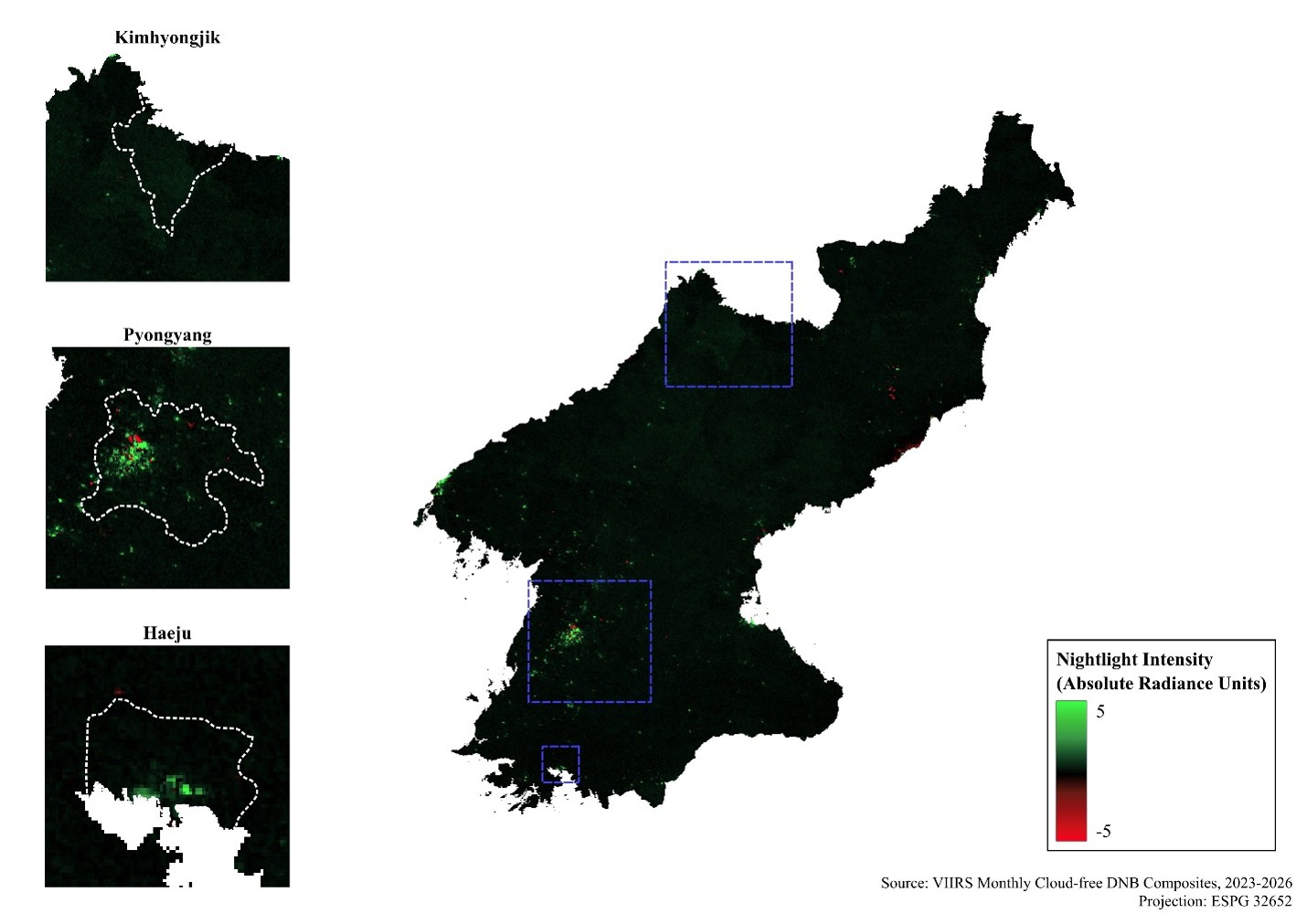
A satellite analysis of nighttime light emitted from North Korea shows a gradual increase in the amount of light visible from space, which could suggest increased availability of electricity.A closer look at trends over the past three years (June 2023 – June 2026) shows that on the whole,North Korea saw increases in nighttime luminosity.
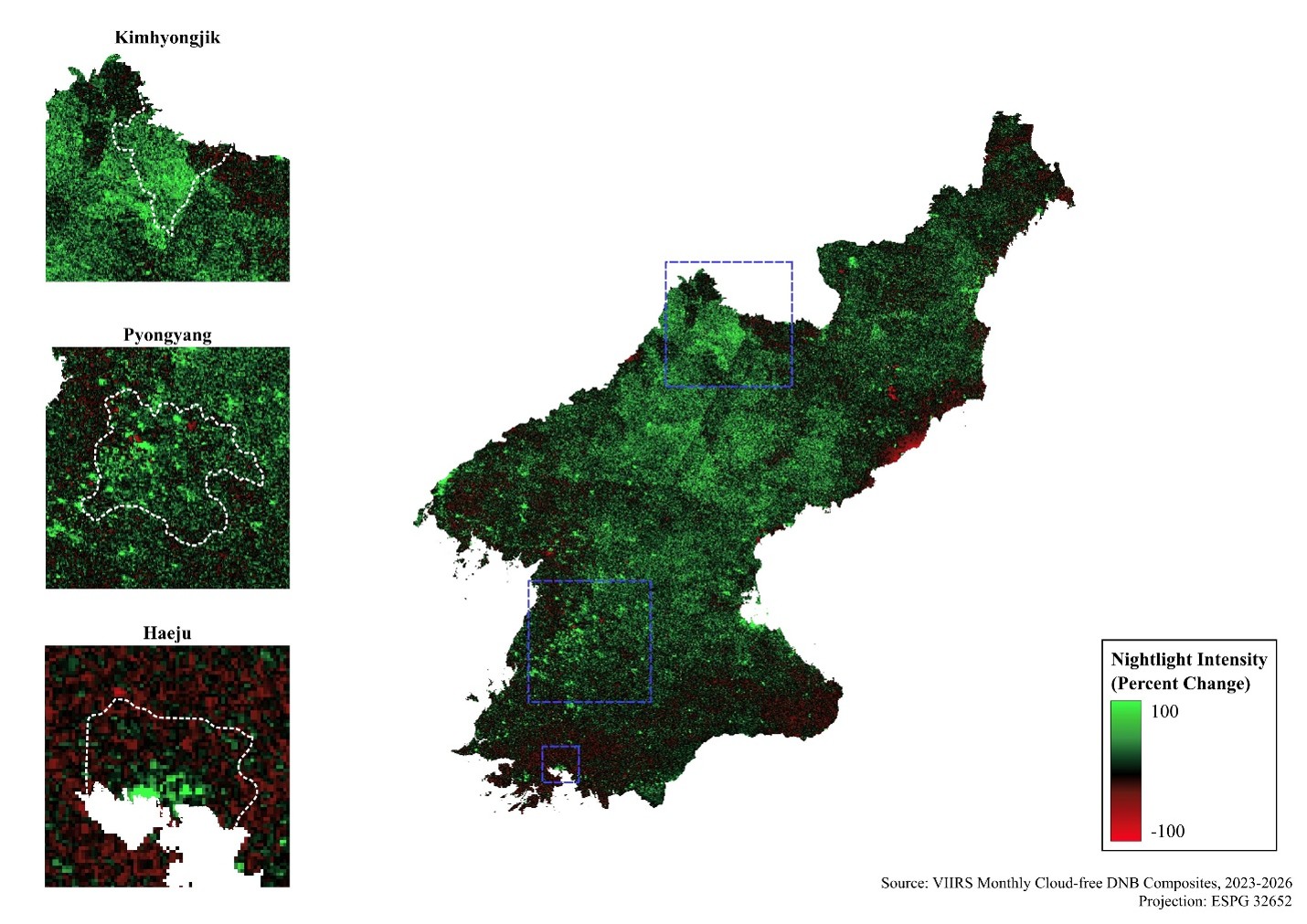
Despite the overall increase in nighttime luminosity during this period, the magnitude of change was not uniform across the country. Pyongyang, Haeju, and Kim Hyong Jik, for instance, had larger increases in nighttime luminosity than North Korea generally. Pyongyang’s luminosity increase was concentrated near western urban districts, however, small pockets of decline in the north were observed. Haeju shows strong and concentrated nighttime luminosity growth near its southern ports. Kim Hyong Jik shows slight, but widespread, increases, although these are difficult to distinguish given the rural county’s overall low nighttime luminosity.
Looking at the change in lighting as a percent change for each pixel makes differences in low luminosity areas (such as rural areas like Kim Hyong Jik) more visible.[1] With this additional map, we can see that Kim Hyong Jik’s growth in nighttime luminosity was generally uniform, with the exception of the northeast corner of the county. Pyongyang’s growth was also generally uniform, with the exception of stronger, dispersed pockets of growth near western urban districts and a few small pockets of decline in the north. Haeju again shows strong and concentrated nighttime luminosity growth near its southern ports, with slight declines in nighttime luminosity outside of this zone.
To better understand this level of luminosity, each city was compared against a comparable Mongolian city in June 2026.
- Pyongyang was compared to Ulaanbaatar, a capital city situated in a developing, urbanizing economy, although Ulaanbaatar is larger and less dense (4,532 km2 administrative boundary and about 1.68 million people) than Pyongyang (2,715 km2 administrative boundary and about 4 million people).
- Haeju was compared to Arvaikheer, a provincial capital city of similar size (211 km2 administrative boundary) to Haeju (223 km2), although with a smaller population (about 39,000) compared to Haeju (about 242,000).
- Kim Hyong Jik was compared to Bornuur, which is a closely sized rural administrative division (1,240 km2 administrative boundary compared to Kim Hyong Jik’s 1,195 km2) with a smaller population (around 5,000 people) than Kim Hyong Jik (around 58,000 people).
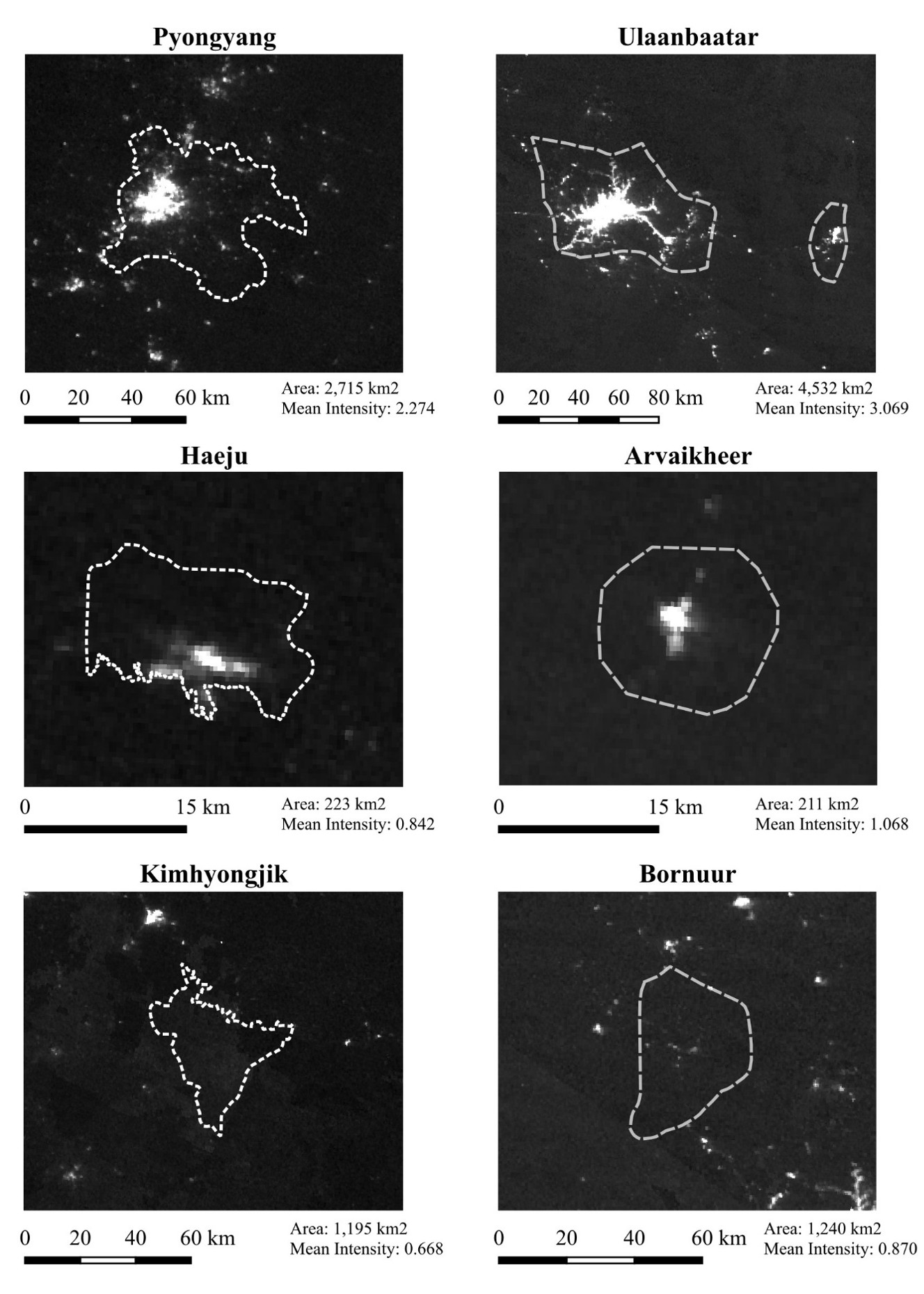
In each of these comparisons, Mongolia’s cities, even in the rural areas, were around 30% brighter than North Korean cities of comparable size.
- Pyongyang and Ulaanbaatar: Mean nightlight intensities in June 2026 (absolute radiance units) are 2.274 for Pyongyang and 3.069 for Ulaanbaatar, meaning Ulaanbaatar is approximately 35% brighter on average than Pyongyang at night.
- Haeju and Arvaikheer: Mean nightlight intensities in June 2026 (absolute radiance units) are 0.842 for Haeju and 1.068 for Arvaikheer, meaning Arvaikheer is approximately 27% brighter on average than Haeju at night.
- Kim Hyong Jik and Bornuur: Mean nightlight intensities in June 2026 (absolute radiance units) are 0.668 for Kim Hyong Jik and 0.871 for Bornuur, meaning Bornuur is approximately 30% brighter on average than Kim Hyong Jik.
Thus, while nightlight intensity has increased in North Korea, implying some improvement in electricity provision, it still lags behind similar developing countries.
This research was sponsored by The UniKorea Foundation.
- [1]
Low-light artifacts (such as minor over-corrections or under-corrections when satellite images are corrected for stray light) that are barely visible in an absolute radiance map are amplified in a percent change map. Additionally, percent change maps make luminosity differences in high luminosity areas less visible. For instance, an increase in luminosity by 0.1 absolute radiance units for an area that began with 0.1 absolute radiance units (a rural area) would show a 100% increase on a percent change map, while that same increase for an area that began with a luminosity of 1 absolute radiance unit would only show a 10% increase.