

Beyond Pyongyang: North Korea’s Industrial Landscape
As part of our series examining the socioeconomic disparity between Pyongyang and other cities in North Korea, we are looking at the differences North Koreans might experience, depending on where they live, across a variety of indicators including: access to electricity, telecommunications, industry, transportation infrastructure, and education. To do so, we utilized two examples as proxies: Haeju, a representative mid-sized provincial capital, and Kim Hyong Jik, a remote, rural county seat.
The first article looked at North Korea’s new five-year economic plan unveiled by Kim Jong Un at the Ninth Party Congress in February 2026. And in a second, we explored the country’s rural housing and rural industrial development initiatives of the last few years.
When Kim Jong Un kicked off the 20×10 regional development policy in 2024, he framed the initiative as bringing up the standard of living in “backward” rural areas. Using commercial satellite imagery, state media analysis, accounts of escapees and other data, these articles attempt to characterize how rural areas might be “backward” in comparison with other less remote areas.
This installment will look at industry throughout North Korea—what types of factories and industries are common in each area and how the 20×10 regional industrial plan has impacted Kim Hyong Jik, Haeju, and Pyongyang.
Industry and the 20×10 Regional Development Plan
When Kim Jong Un announced the 20×10 regional development plan, the primary focus was on light industry. In the first year, three factories were built in each of the areas selected: a clothing, a foodstuffs, and a daily necessities factory. The idea of building regional industrial bases was to bolster local economies, reducing their dependence on the central state.
A few years into the 20×10 plan, the overall concept of regional industrial capacity was expanded, as reflected at the 9th Workers’ Party Congress. The meeting readout outlined Kim’s desire to upgrade key industries over the forthcoming five-year plan, particularly citing metals, chemicals, electricity, and machinery. This broadening of industrial goals—both within the 20×10 framework and more broadly—reflects the regime’s interest in expanding domestic manufacturing capabilities.
While the reporting from the 9th Party Congress was limited, additional goals have been set in subsequent meetings. A North Korean state media readout from the March 2026 Supreme People’s Assembly called for increasing the country’s industrial output by 1.5 times during the next five-year plan. However, it also acknowledged that energy challenges—specifically, electricity and coal—are standing in the way of the country’s ability to meet this goal. This suggests greater efforts to increase energy production and supply are also a critical component of both the 20×10 policy and broader industrial expansion plans, even if those details have not been externally disclosed.
Previous studies have shown that 20×10 plan implementation has met its annual goals to-date. North Korea has shown time and time again that construction of buildings is possible, even with limited resources. But physical construction is only a fraction of the larger picture. It is unclear whether these efforts can actually build local industrial capacity that can be sustained through local supply chains given the scarcity of resources, equipment, and industrial know-how in many of these rural areas.
The high expectations, coupled with real-world structural constraints, are a recipe for frustration—at both the state and local levels—and potential public resentment despite efforts seemingly aimed at raising living standards. In particular, the state has shifted accountability for sustaining production to the local communities, requiring them to source their own materials and inputs. While the goal may be to encourage the development of local supply chains, no assistance appears to be provided to the localities to accomplish this, imposing a costly and logistically challenging burden onto them. Failure to operate the factories and meet demand quotas are likely to be criticized by the state and can lead citizens to see the factories as not “worth the trouble” and ultimately not benefitting the population as the purported intention.
Pyongyang
Pyongyang is clearly not the primary target for bolstering local industry; however, the city and its surrounding areas have benefitted from the 20×10 regional industrial plan. Industry in Pyongyang ranges from consumable goods to more highly-technical production, particularly tied to defense industry, ranging from semiconductors to missiles and weapons production. Notably, some factories are thought to be dual-use. The South Korean government estimates that North Korea is operating over 300 munitions factories under different cover names. The security afforded to the area due to the city’s capital status and presence of elites lends itself well to the capital being a hub of defense production.
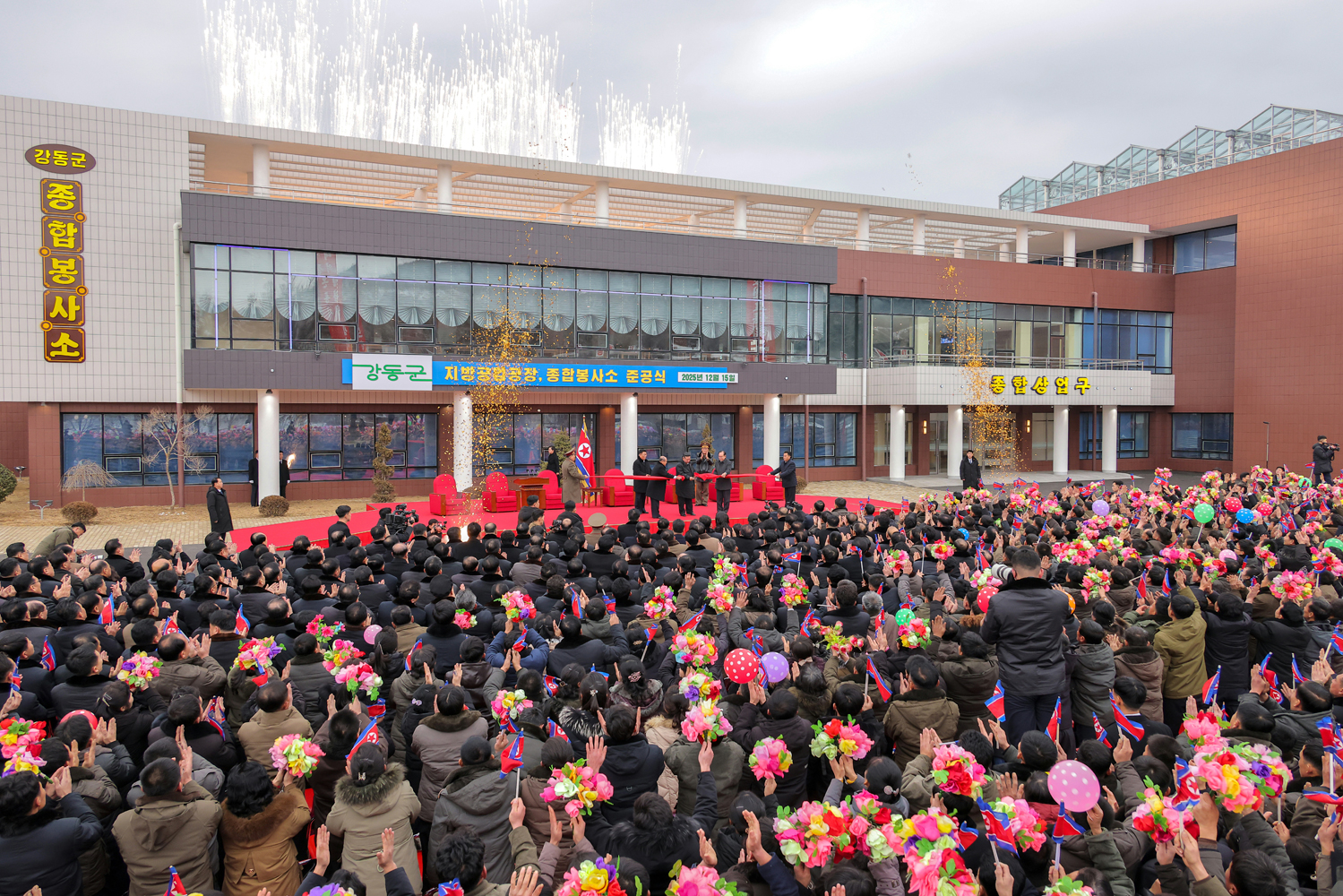
Suburbs of the capital have received factories and other facilities as part of the 20×10 initiative. In December 2025, Kim Jong Un, along with his wife and daughter, attended the inauguration ceremony of Kangdong’s flagship 20×10 factories in addition to a hospital and leisure complexes. His attendance at this ceremony demonstrates a certain level of importance of this particular area, as Kim has attended very few opening ceremonies each project year. This special attention could be due to the area’s proximity to key military facilities, also raising questions about whether these factories may have some dual use purpose.
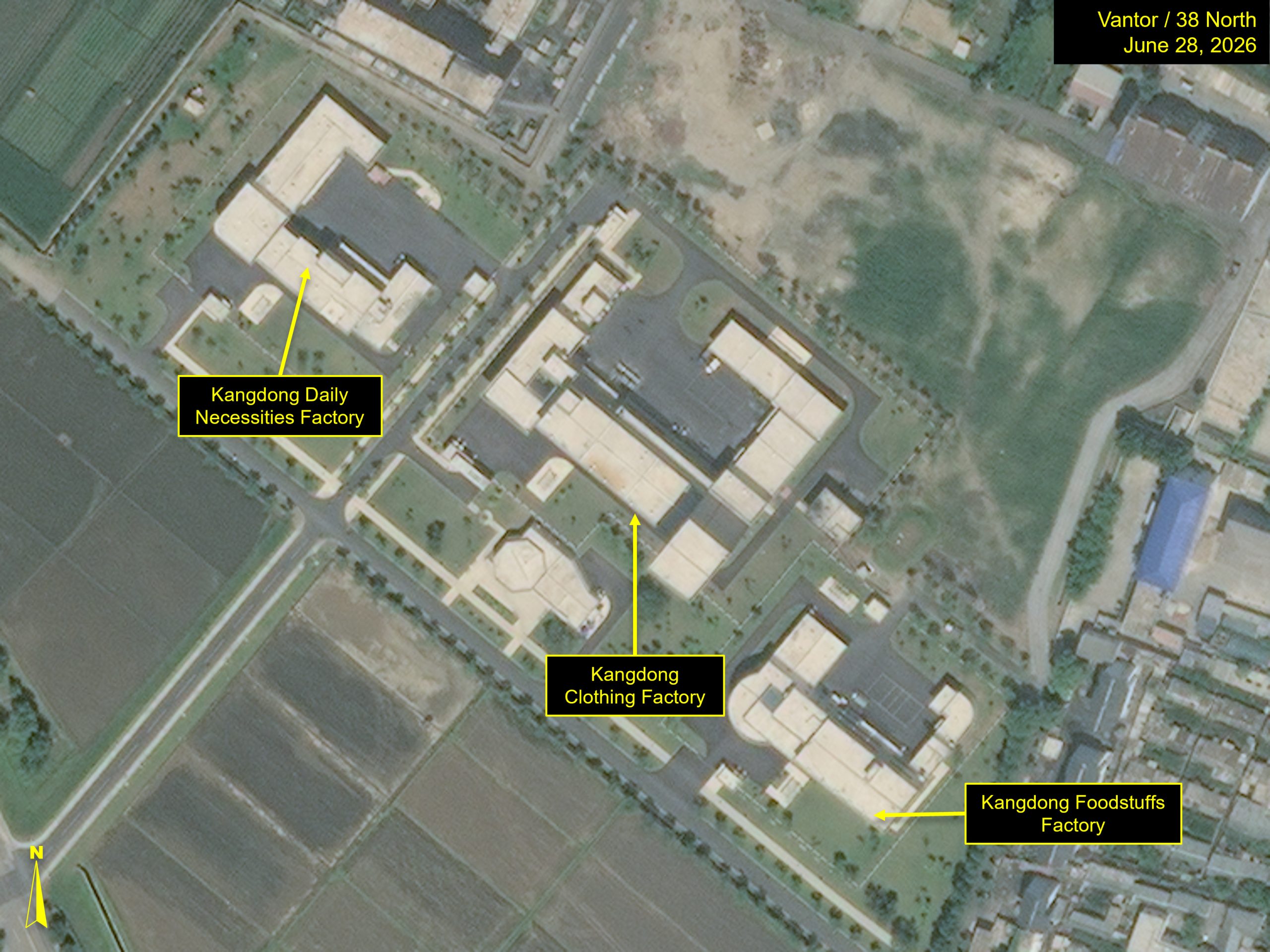
The supply chain issues found in other 20×10 areas are likely not experienced in Pyongyang. As the nation’s capital, with the most robust transportation infrastructure in the country, it is likely that consistent central government support is being provided from construction through operation at factories and facilities across Pyongyang and its suburbs.
Haeju
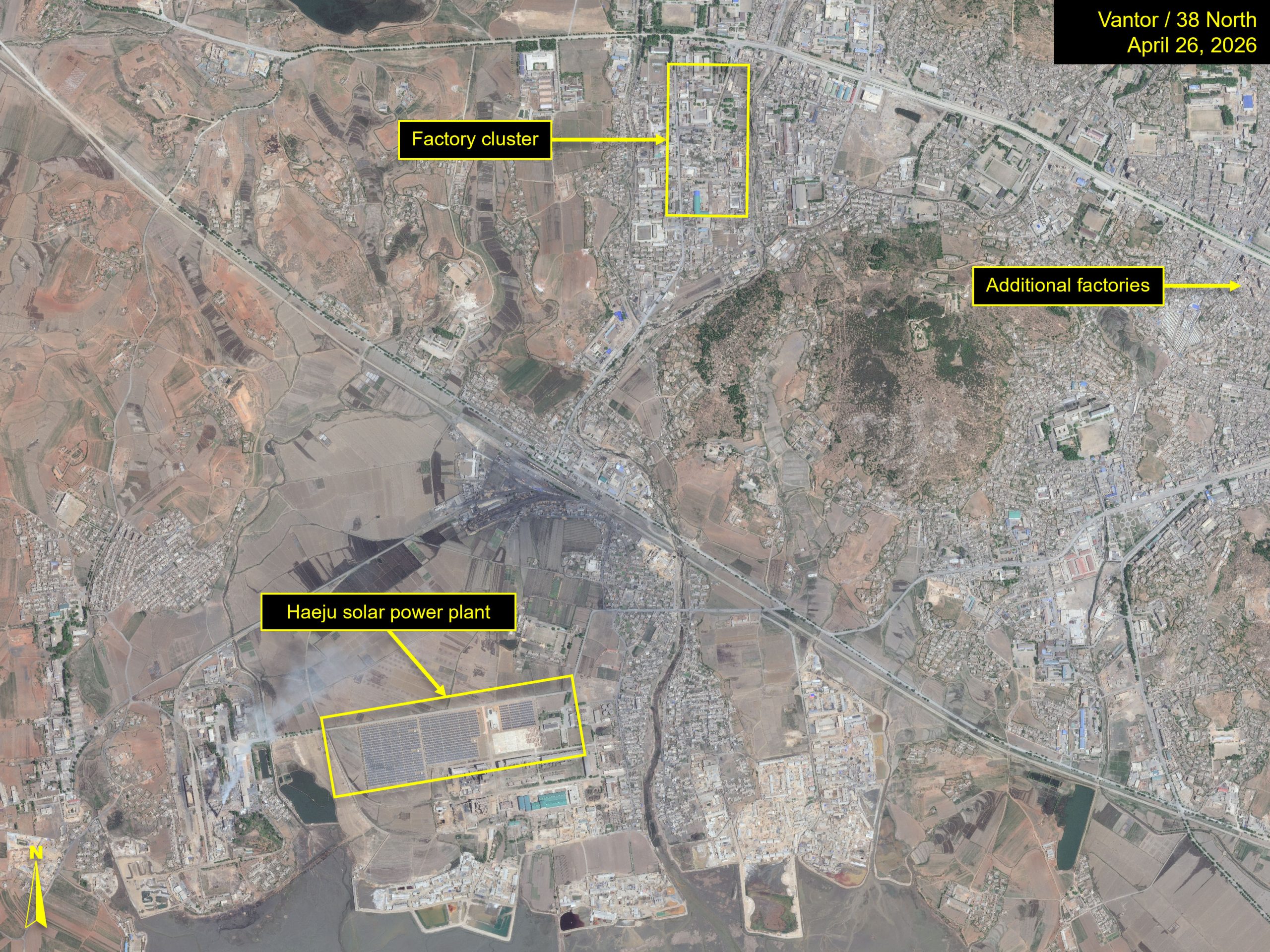
Haeju has predominantly been associated with chemical factories and the former Haeju Cement Factory, which closed in the early 2000s. It has also been highlighted in state media for its agricultural machinery and production facilities. A focus on regional development has brought additional factories to the city (or renovated existing ones), namely, the Mt. Suyang Eunha General Foodstuffs Factory, Haeju Tile Factory, Haeju Agricultural Machinery Factory, and factories producing school uniforms and children’s footwear. The Haeju Student Footwear Factory was completed in December 2024, although not explicitly called out as a 20×10 factory.
Located on the west coast of the country, Haeju is home to the second largest port on the coast, behind Nampho Port. It was once proposed as a Special Economic Zone to handle cargo linked to the Kaesong Industrial Complex, but this never came to fruition.
Recently, North Korea opened its largest solar farm in Haeju in the spring of 2026. The scale of the farm—with a total output of 10,000 kilowatts—is meant to serve as a model for other solar projects throughout the country. This installment is likely intended to generate electricity to power factories and other facilities in the area. Beyond serving as a “model” solar farm, this facility likely indicates desires to create some level of energy independence to alleviate any strain that construction and operation of new factories place on the already-weak electricity grid. This implies that factories in Haeju may be better able to operate consistently than other areas of the country, such as Kim Hyong Jik.
Haeju’s factories are often cited in state media for science and technological advancements. In the chemical realm, the Haeju Calcium Carbonate Production Station has been hailed in state media as implementing a process developed at Haeju Kim Jong Thae University of Education to manufacture an edible form of calcium carbonate, often used as a calcium supplement. Haeju Chemical Factory was reported to have built a new process to improve paint quality.
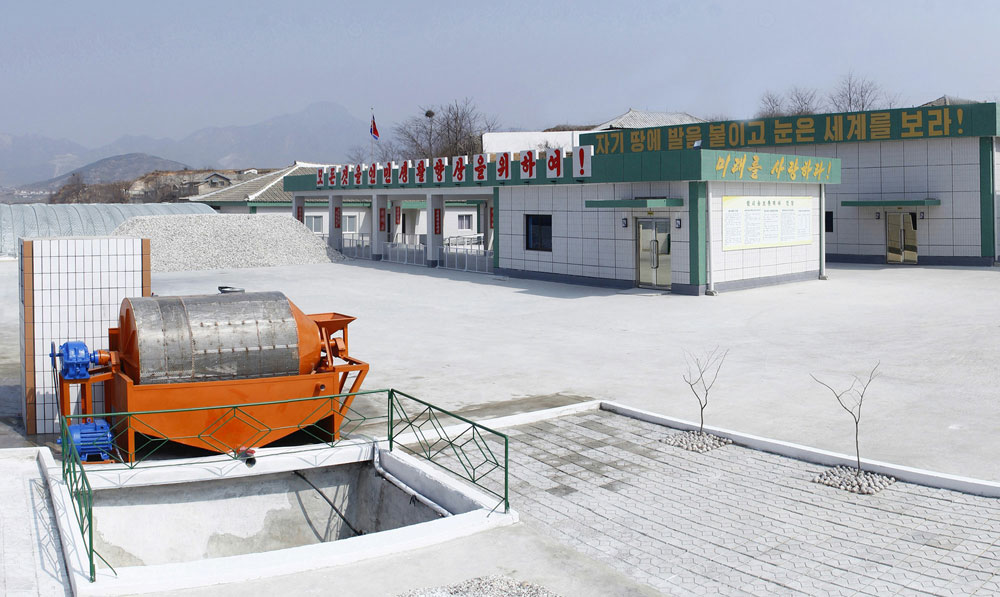
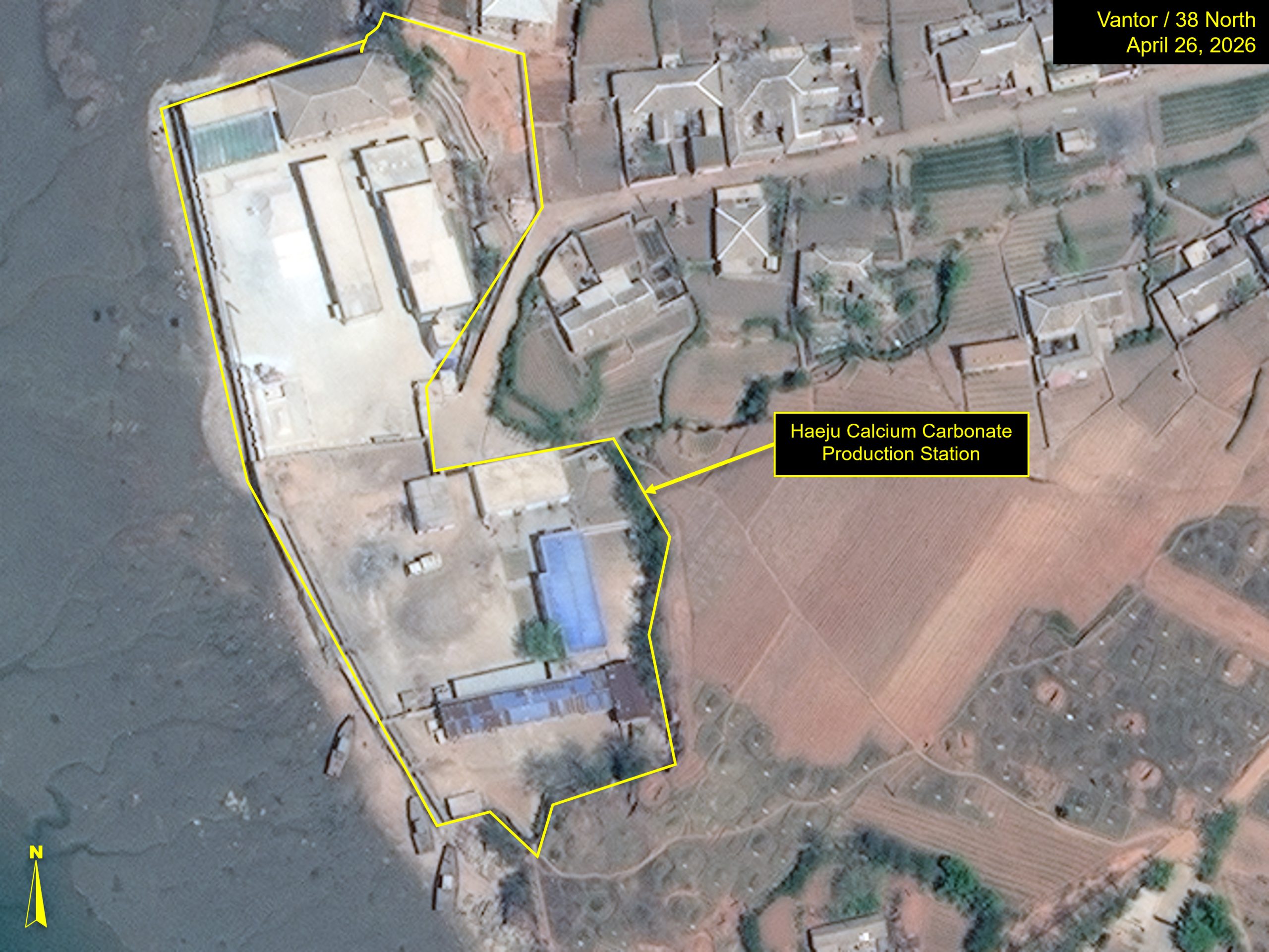
Factories in Haeju have also been mentioned in a positive light as producing materials to augment regional development, like the Haeju Brick Factory and nearby Suyangsan Finishing Building Materials Factory. A September 2025 KCNA article highlighted an equipment assembly station in Haeju “manufacturing relevant equipment and equipment needed for production processes to be built to suit regional characteristics.”
Based on state media alone, it is evident that Hajeu has several points of industry that the state keeps an eye on, and often those that require more technically-complex manufacturing than what other 20×10 facilities may be responsible for. Factories in Haeju appear to be much better equipped to meet production and construction goals than areas like Kim Hyong Jik. Although, given the industrial base that existed there before the 20×10 initiative began, the new facilities appear to do little to bolster the region’s production capacity.
Kim Hyong Jik
Due to its remote location and lack of accessibility to the rest of the country, Kim Hyong Jik county does not have any one characteristic industry to point to and, in fact, few factories in the county have been identified or discussed in state media.
Before the COVID-19 border closures, the county’s proximity to China made cross-border smuggling a common practice and form of economic activity for its residents. Otherwise, agricultural production has driven the area’s economy.
In 2024, the first year of the 20×10 regional development plan, Kim Hyong Jik county was the one area in Ryanggang province selected to receive a first round of factories. Within the plan, one region from each Ryanggang and Pyongyang are chosen each year, whereas other regions select two areas per year.
In February 2025, Korean Central Television broadcast a feature on the opening ceremonies for the Kim Hyong Jik General Factory, which includes factories for: foodstuffs, daily necessities, clothing, and paper. According to RFA reports, the factories were expected to be completed during summer 2024, but were delayed, first by the announcement of three additional facilities and a July flood that damaged railways and became the government’s priority. This resulted in resource shortages, like cement, rebar, and eventually even electricity—as the state shifted the burden of sourcing further construction supplies onto the county. The factories were eventually completed in February 2025 and the ceremony was heavily promoted on state television.
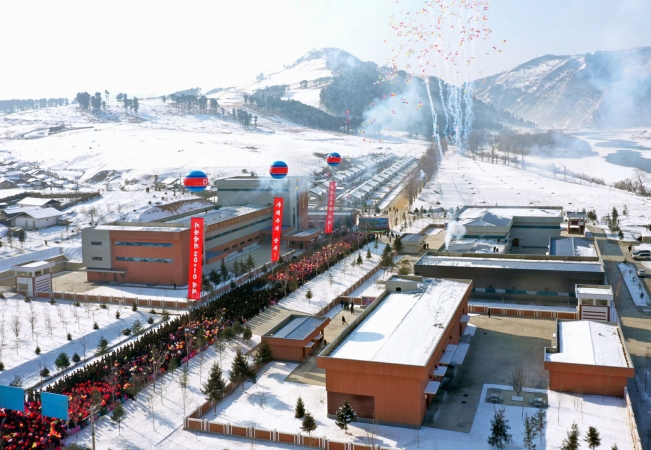
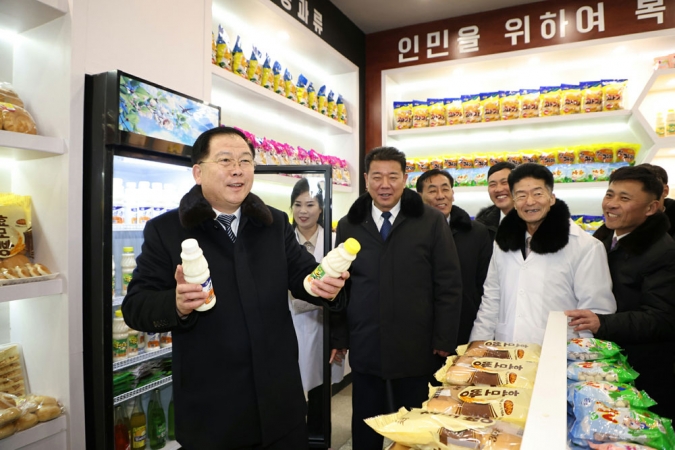
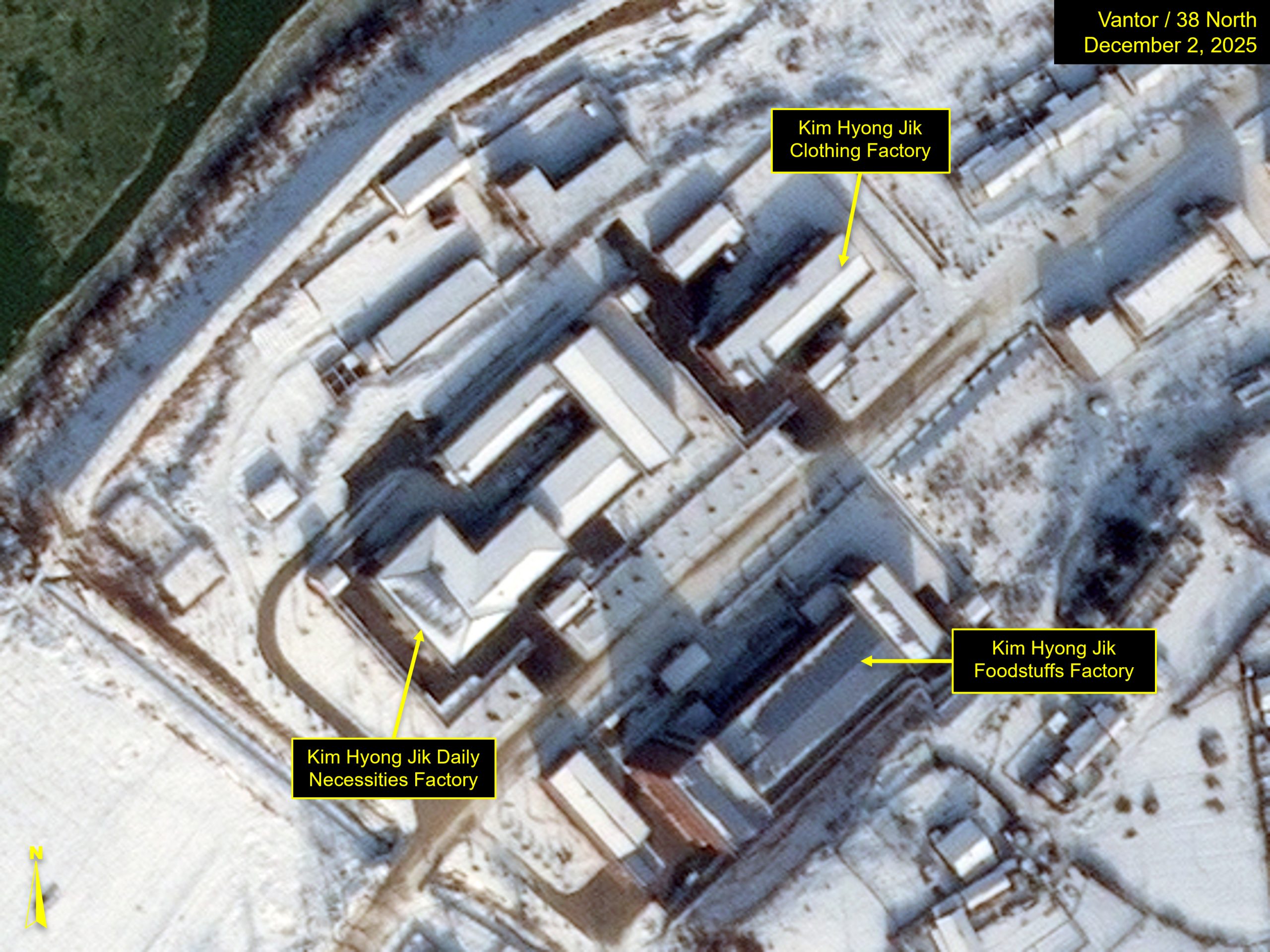
This example illustrates the challenges of operating in rural regions of North Korea. None of the setbacks, resource constraints, or construction delays are new or unique to this project. Even on well-resourced, high-profile projects like the Pyongyang General Hospital and the Wonsan-Kalma Beach Resort, construction delays were common for a range of reasons. However, for a poor rural county like Kim Hyong Jik, several factors likely added to the delays, such as scarce existing resources (material and fiscal), insufficient power supply, and underdeveloped transport infrastructure to even bring in new materials and supplies. This demonstrates how much more difficult industrial development is for an area like Kim Hyong Jik versus Haeju and Pyongyang, where a lack of economic infrastructure creates inordinate disadvantages for the county in trying to achieve the state’s goals, even without outside factors like natural disasters.
Beyond the construction, some reports assert that the factories in Kim Hyong Jik have not been able to keep up production and cite poor quality of the manufactured goods, despite the state media reports boasting production growth and high-quality products. Moreover, anecdotal evidence suggests residents still rely on markets for the products being produced in the new factories, often imported from Hyesan, defeating the purpose of localized industry. While the reality of the situation cannot be confirmed through satellite imagery or corroborated with sufficient on-the-ground reports, it is easy to see how these remote areas, lacking government assistance, would struggle to achieve the same productions metrics as seen in bigger and more important cities.
This research was sponsored by The UniKorea Foundation.